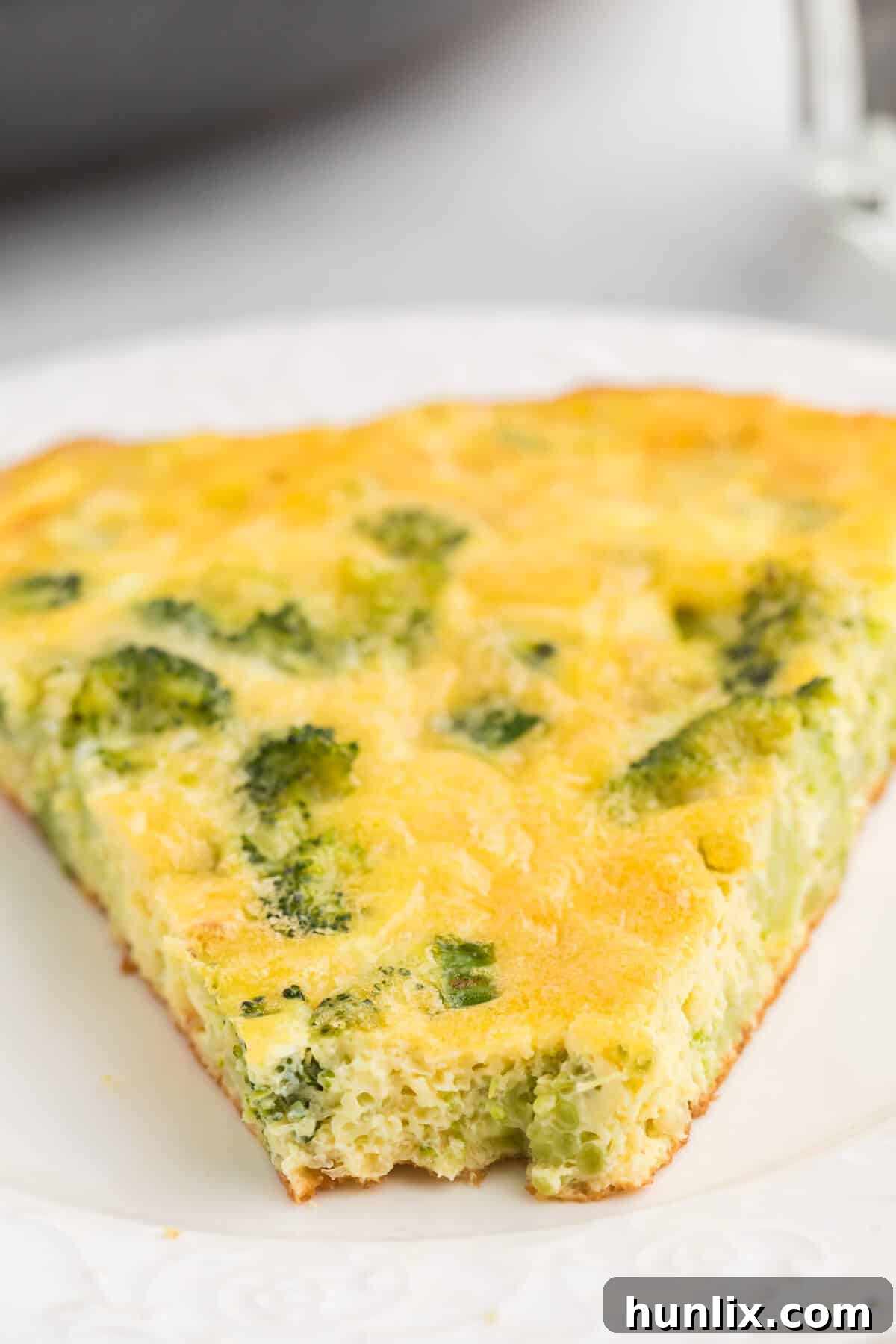
Welcome to the ultimate guide to creating a truly delightful and incredibly easy oven-baked Broccoli Frittata. This timeless classic brings together the wholesome goodness of broccoli and the comforting richness of cheese in a dish that’s perfect for any meal of the day. Whether you have fresh florets or a bag of frozen broccoli on hand, this recipe is designed to be quick, convenient, and utterly delicious. Dive into a culinary experience that promises minimal effort and maximum flavor, transforming simple ingredients into a gourmet-like masterpiece.
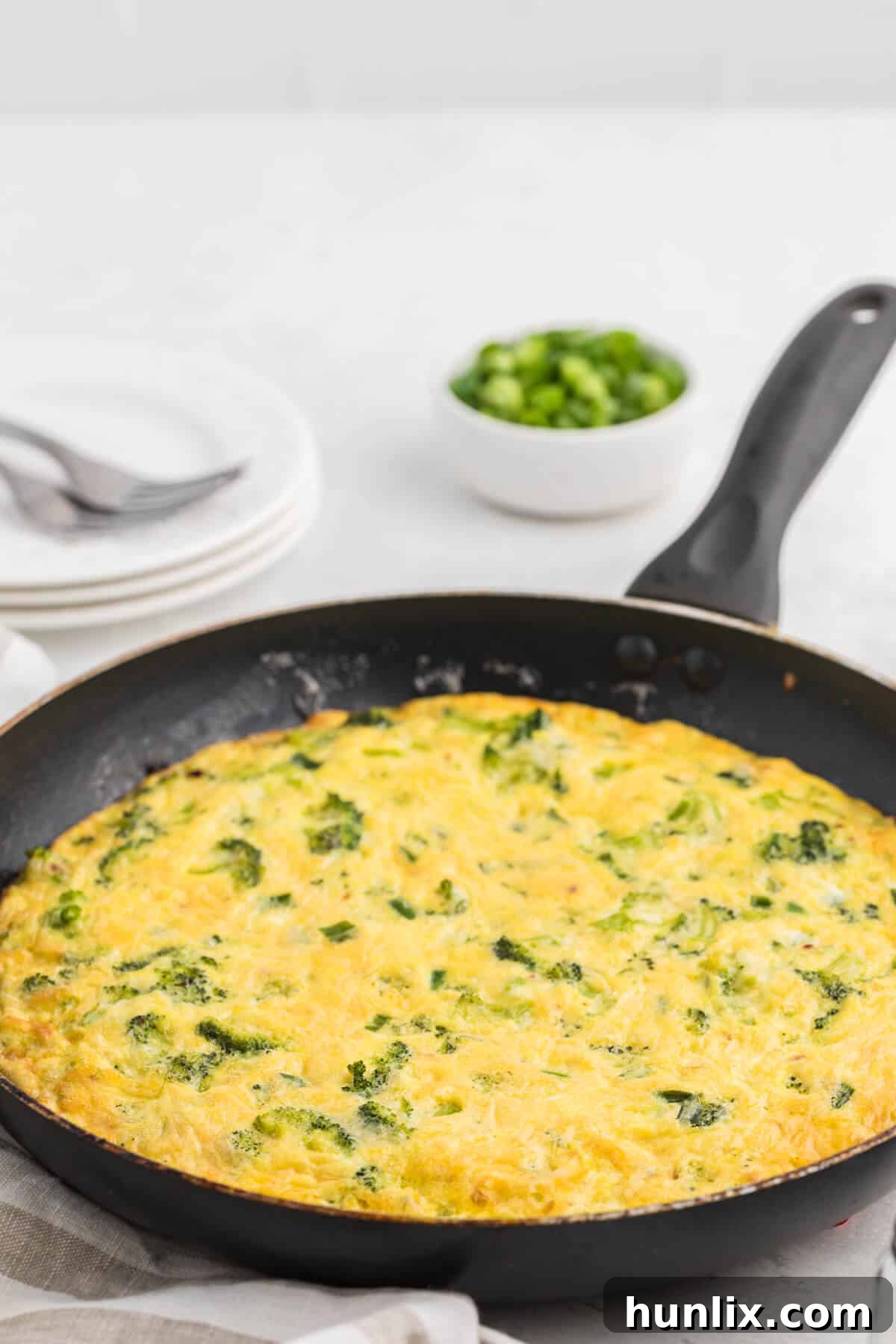
Imagine a light, fluffy egg dish, subtly seasoned, where vibrant green broccoli florets are perfectly integrated, adding both texture and a nutritional boost. This broccoli frittata is an excellent way to effortlessly incorporate more fresh vegetables into your diet, even for those who might be hesitant about greens. The delicate flavors of the eggs and carefully selected spices harmonize beautifully, making the broccoli a welcome addition rather than an overpowering element. Visually, the bright green of the broccoli against the golden yellow of the eggs creates an appealing presentation, making this a fun and impressive dish to share with family or at social gatherings.
This recipe exemplifies simplicity, proving that extraordinary meals don’t require complicated steps or extensive culinary expertise. All you truly need are a few basic ingredients, a reliable medium-sized mixing bowl, an ovenproof nonstick skillet, and a preheated oven. Chances are, most of these items are already staples in your kitchen. So, prepare to embark on a delightful cooking adventure that will reignite your love for egg-based dishes and introduce you to the sheer joy of a homemade frittata that’s both quick and immensely satisfying.
Why You’ll Adore This Broccoli Frittata Recipe
This Broccoli Frittata isn’t just another meal; it’s a versatile and delicious creation that caters to various tastes and dietary preferences. Here’s why it’s bound to become a new favorite in your recipe collection:
- The Ultimate Brunch Centerpiece: Elevate your weekend brunches or special occasion showers with this elegant yet approachable dish. Its light, airy texture and colorful presentation make it an instant crowd-pleaser that feels fancy without the fuss. It pairs beautifully with everything from fresh fruit salads to savory bacon, offering a sophisticated touch to any spread.
- A Deliciously Low-Carb Option: For those mindful of their carbohydrate intake, this frittata is a dream come true. Often described as a “crustless quiche,” it delivers all the rich flavors and satisfying textures of a traditional quiche but without the added carbs from a pastry crust. It’s an excellent choice for keto-friendly or low-carb diets, proving that healthy eating can still be incredibly flavorful and filling.
- Remarkably Easy to Prepare: Don’t let its impressive appearance fool you; this is an incredibly straightforward recipe suitable for cooks of all skill levels. Even if you’re making a frittata for the very first time, the clear, step-by-step instructions ensure a perfect result every time. With minimal hands-on time and simple cooking techniques, you can achieve a professional-quality dish with ease.
- Packed with Nutrition: Beyond its delicious taste, this vegetable frittata is a powerhouse of essential nutrients. Broccoli is renowned for its high fiber content, vitamins C and K, and various antioxidants, while eggs provide a complete source of protein, essential amino acids, and vital vitamins like D and B12. It’s a wholesome meal that fuels your body and keeps you feeling satisfied.
- Incredibly Versatile: Adaptability is key in any great recipe, and this frittata shines in that aspect. It’s a fantastic canvas for incorporating different vegetables, cheeses, or even a touch of lean protein. This flexibility means you can customize it to suit your preferences, seasonal availability, or whatever ingredients you happen to have on hand, ensuring it never gets boring.
Essential Ingredients for Your Frittata
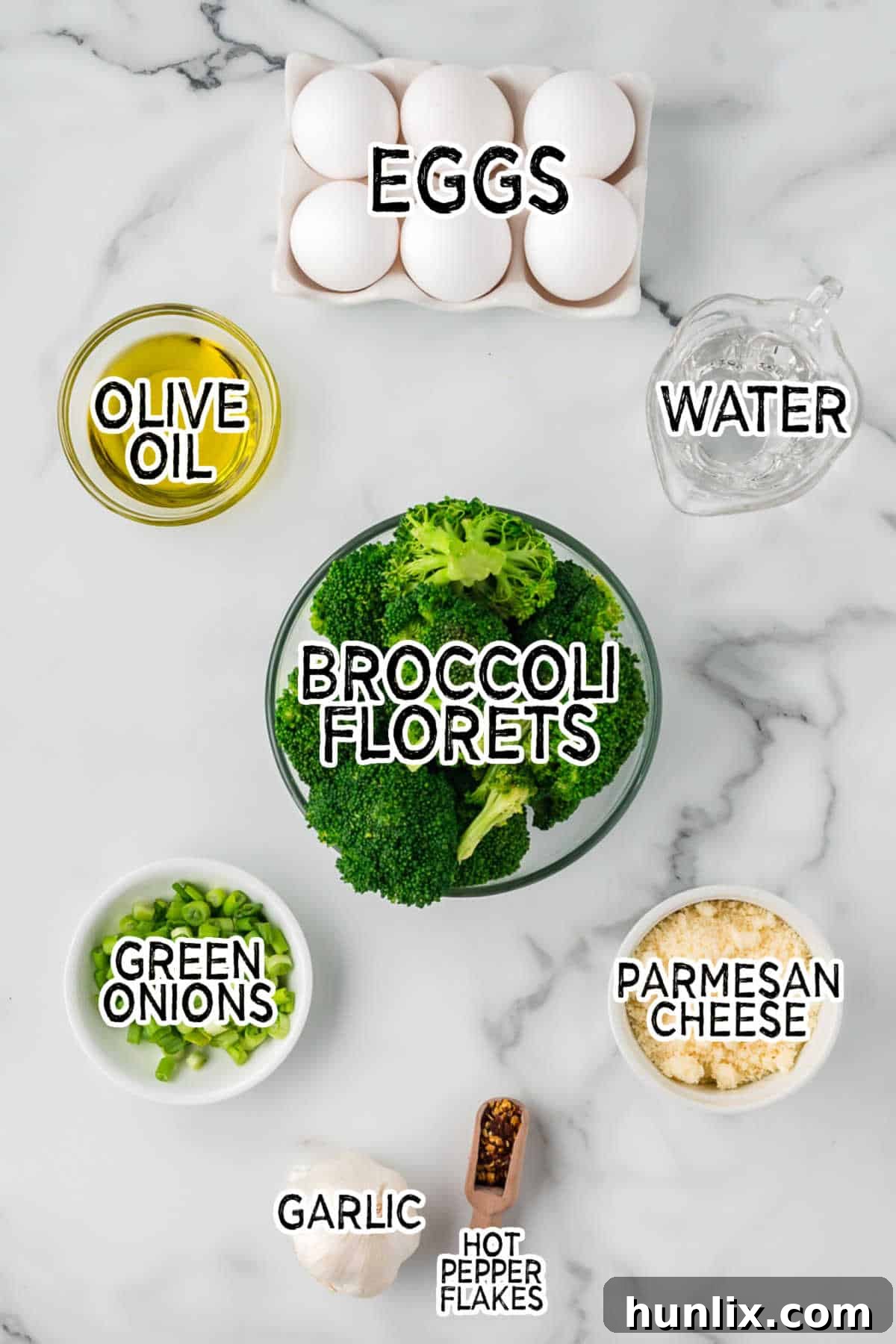
Crafting the perfect broccoli frittata starts with fresh, quality ingredients. Below is a detailed look at what you’ll need, along with tips for selection and preparation. The complete printable recipe card with exact measurements and detailed instructions can be found at the bottom of this post.
- Broccoli Florets: The star of our dish! Aim for about 3 cups of fresh broccoli florets, cut into small, uniform, bite-sized pieces. This ensures they cook evenly and are easy to eat. If using frozen broccoli, ensure it’s thawed and drained thoroughly to prevent excess moisture in the frittata.
- Water: Used for steaming the broccoli to a perfect tender-crisp texture before it’s incorporated into the egg mixture. This crucial step prevents a watery frittata and enhances the broccoli’s natural sweetness.
- Extra Virgin Olive Oil: A staple for sautéing and adding a rich, slightly peppery flavor. Two tablespoons are used in total—one for sautéing the aromatics and the other for coating the skillet before adding the egg mixture, ensuring a beautiful golden crust and preventing sticking.
- Red Pepper Flakes: A touch of heat to awaken the palate. A quarter teaspoon adds a subtle warmth, but feel free to adjust this amount to your personal preference. Omit entirely for a milder flavor, or increase for a bolder kick.
- Garlic: Freshly minced garlic (about 3 cloves) provides an incredible aroma and savory depth that truly elevates the frittata’s flavor profile. Always opt for fresh garlic over powdered for the best results.
- Green Onions: Sliced thinly, green onions contribute a mild, sweet onion flavor and a beautiful splash of bright green color. They add a fresh, herbaceous note that complements the other ingredients wonderfully.
- Large Eggs: The foundation of any frittata! You’ll need 8 large eggs, which provide the fluffy, rich base for the entire dish. Ensure they are fresh for the best texture and flavor.
- Parmesan Cheese: About 1 cup of grated Parmesan cheese introduces a nutty, salty, umami flavor that pairs perfectly with the broccoli and eggs. While optional, it adds a layer of complex flavor that makes the frittata irresistible. For those who prefer a different cheese, sharp cheddar or a mix of Italian cheeses are excellent alternatives.
- Salt and Black Pepper: Essential seasonings that enhance all the other flavors. Season generously to taste throughout the cooking process.
Step-by-Step Guide: How to Make Broccoli Frittata
Creating this delightful broccoli frittata is a straightforward process, broken down into a few simple steps. Follow these instructions carefully to achieve a perfectly cooked, flavorful dish:
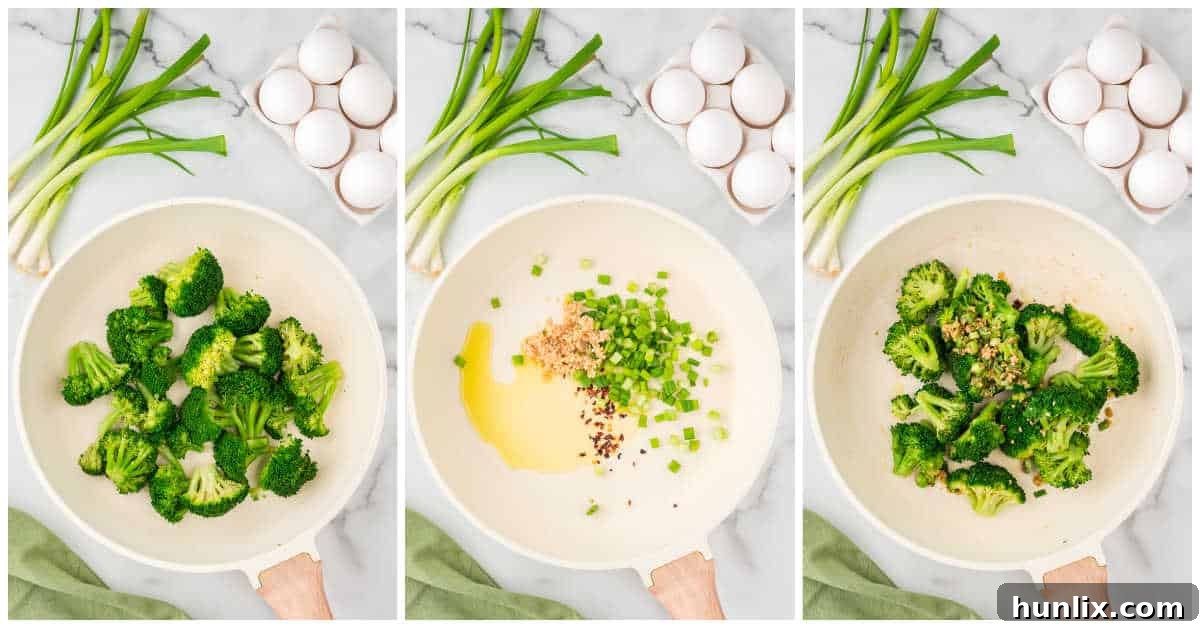
- Step One: Prepare the Broccoli. In a 10-inch oven-safe skillet, combine the chopped broccoli florets and 1 cup of water. Bring the water to a boil over medium-high heat. Once boiling, reduce the heat to medium, cover the skillet, and cook until the broccoli is tender-crisp, which should take approximately 2 to 3 minutes. The goal is to soften the broccoli slightly without making it mushy. Uncover the skillet, increase the heat to medium-high, and continue to cook until all the water has evaporated, typically about 4 minutes. This step is crucial for preventing a watery frittata.
- Step Two: Sauté the Aromatics. Once the water has completely evaporated from the skillet, add 1 tablespoon of extra virgin olive oil to the same pan. Stir in the hot pepper flakes, minced garlic, and thinly sliced green onions. Sauté these aromatics over medium heat for 1 to 2 minutes, or until they are lightly browned and fragrant. This step releases their delicious flavors and adds depth to the frittata. Once cooked, transfer the aromatic mixture to the broccoli in a bowl, mixing them together gently.
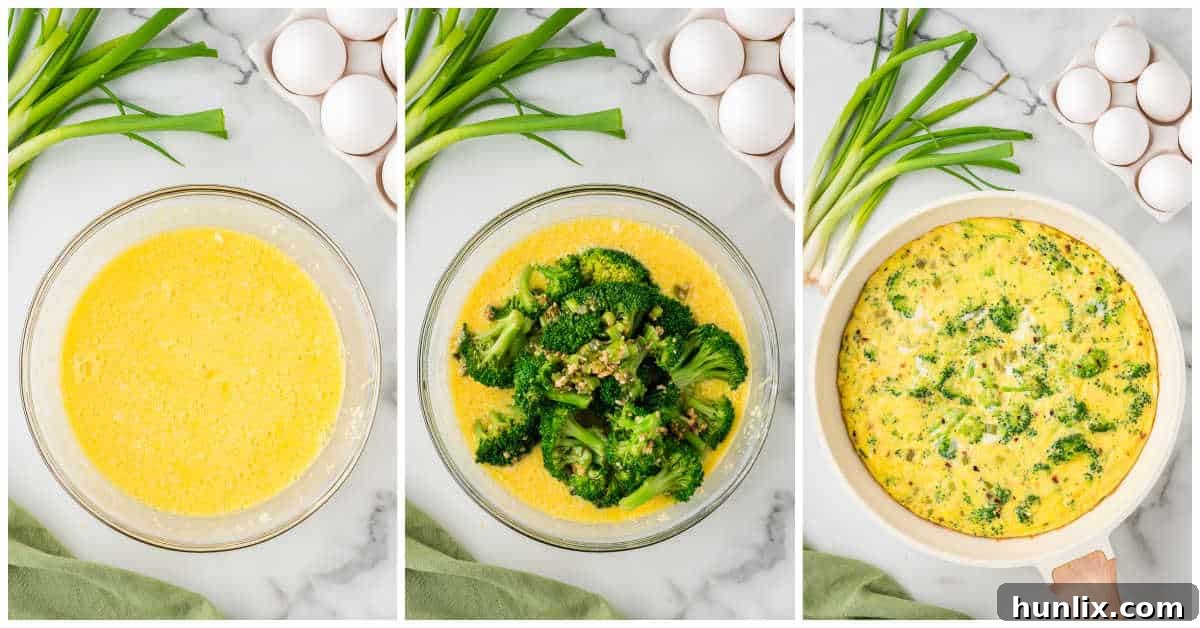
- Step Three: Combine Eggs and Broccoli Mixture. In a large mixing bowl, beat the 8 large eggs vigorously until they are light and frothy. Stir in the grated Parmesan cheese until well combined. Then, gently fold in the cooked broccoli and aromatic mixture. Ensure the vegetables are evenly distributed throughout the egg mixture. Season generously with salt and black pepper to taste.
- Step Four: Begin Stovetop Cooking. Carefully wipe out the skillet you used earlier to remove any residual bits. Heat the remaining 1 tablespoon of olive oil over medium heat until shimmering. Pour the egg and broccoli mixture into the heated skillet, spreading it evenly across the bottom. Do not stir the mixture once it’s in the pan. Allow it to cook undisturbed over medium-low heat for about 5 to 6 minutes, or until the edges begin to set and pull away from the sides of the pan, and the bottom is lightly golden.
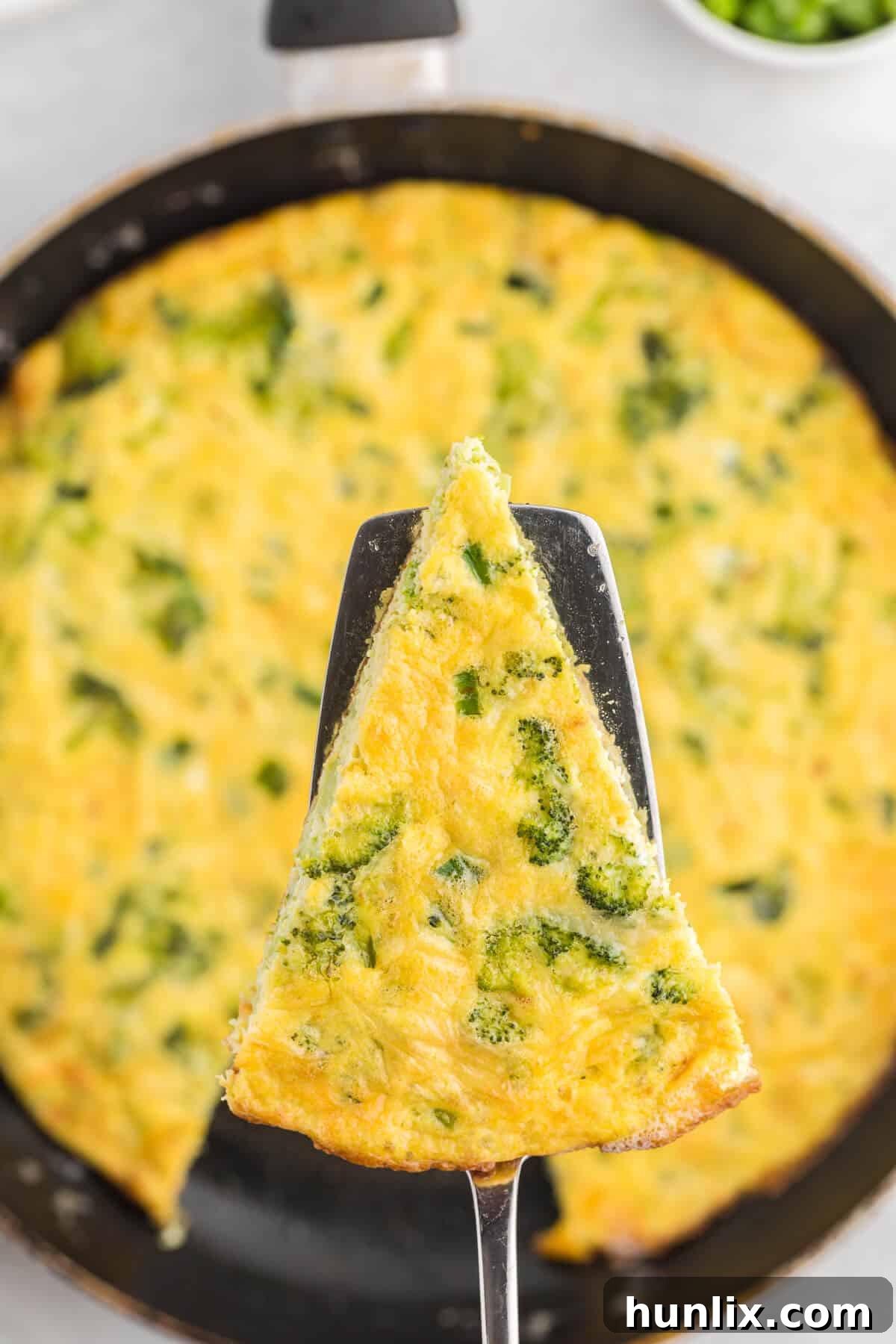
- Step Five: Finish in the Oven and Serve. Once the edges are set, transfer the skillet to a preheated 400°F (200°C) oven. Bake for approximately 10 minutes, or until the frittata is completely set in the center and the top is lightly golden brown. Remove the frittata from the oven and let it stand for 2 minutes before slicing. This allows it to firm up slightly and makes for cleaner wedges. Cut into individual wedges and serve warm.
Recommended Equipment for a Perfect Frittata
While this recipe is incredibly simple, having the right tools can make the process even smoother and ensure the best results for your broccoli cheddar frittata. Here are a few key pieces of equipment I highly recommend:
- Cutting Board: A sturdy cutting board is essential for safely and efficiently chopping your broccoli florets, garlic, and green onions. Choose one that provides a stable surface and is easy to clean.
- Garlic Press: While mincing garlic with a knife is always an option, a garlic press offers a quick and effortless way to get finely minced garlic, saving you time and effort in preparation.
- Oven-Safe Nonstick Skillet (10-inch): This is arguably the most crucial piece of equipment for a frittata. A 10-inch skillet allows for the perfect thickness and ensures even cooking. The nonstick property is vital for easy release, and being oven-safe allows for a seamless transition from stovetop to oven, minimizing dishes.
- Large Mixing Bowl: Necessary for comfortably beating the eggs and thoroughly combining all your ingredients.
- Whisk or Fork: For aerating the eggs to achieve that desirable fluffy texture.
Delightful Pairings: What to Serve with Broccoli Frittata
This versatile broccoli frittata can effortlessly stand alone as a light breakfast or lunch entrée, but it also shines when paired with complementary dishes. Whether you’re aiming for a hearty brunch or a simple supper, these suggestions will complete your meal:
- Slow Cooker Ham & Potato Hash: For a robust and satisfying brunch, the savory flavors of ham and potato hash beautifully complement the lightness of the frittata.
- Double Orange Muffins: Add a touch of sweetness and citrusy brightness with these flavorful muffins, creating a balanced and exciting meal.
- Rainbow Fruit Salad: A refreshing and colorful fruit salad provides a lovely contrast in texture and taste, offering a burst of natural sweetness and vitamins.
- Zucchini Bread: A slice of moist zucchini bread offers a comforting and slightly sweet accompaniment, perfect for rounding out your meal.
- Crisp Green Salad: A simple mixed green salad with a light vinaigrette is always a good idea to add freshness and crunch.
- Toasted Sourdough or Baguette: Perfect for soaking up any lingering flavors and adding a satisfying chewiness.
Creative Variations and Simple Substitutions
One of the joys of cooking a frittata is its incredible adaptability. This broccoli frittata recipe is a fantastic base, but don’t hesitate to get creative with variations and substitutions to suit your taste, dietary needs, or what’s available in your pantry:
- Cheese Swaps: While Parmesan cheese offers a delightful nutty flavor, feel free to experiment! Instead of Parmesan, use sharp cheddar cheese for a classic, comforting taste, or try crumbled feta for a tangy Mediterranean twist, goat cheese for creaminess, or a Monterey Jack for a milder, meltier finish.
- Utilize Leftover Vegetables: Frittatas are excellent for clearing out your fridge! Incorporate any leftover cooked vegetables you have on hand. Think sautéed bell peppers, spinach (wring out excess water), mushrooms, cherry tomatoes, or even roasted asparagus. Just ensure they are pre-cooked and not too watery.
- Lighten it Up with Egg Whites: For a lighter, lower-cholesterol option, make an egg white frittata. Simply use only egg whites instead of whole eggs. You’ll achieve a similar fluffy texture with a slightly milder flavor profile.
- Add Protein Power: Introduce some meaty goodness by adding cooked, crumbled bacon (pork or turkey bacon both work wonderfully), diced ham, or even shredded chicken to the frittata mixture. This transforms it into an even heartier meal.
- Herbaceous Additions: Fresh herbs can significantly brighten the flavor. Stir in finely chopped fresh chives, dill, parsley, or basil along with the green onions for an extra layer of aromatic complexity.
- Spice It Up Differently: Beyond red pepper flakes, consider a pinch of smoked paprika for a smoky depth, a dash of onion powder for more allium flavor, or a sprinkle of dried oregano for an Italian flair.
Storage and Reheating Instructions
One of the many advantages of a frittata is how well it stores, making it an ideal candidate for meal prepping. If you have leftovers, allow the frittata to cool completely to room temperature. Then, transfer it to an airtight container and store it in the refrigerator for up to 3 days. Many find that the flavors meld and deepen overnight, making it taste even better the next day.
To reheat, you can gently warm individual slices in a microwave until heated through, or for a crispier exterior, place slices on a baking sheet and reheat in a preheated oven at 300°F (150°C) for about 10-15 minutes. This helps maintain its texture better than microwave reheating. It can also be enjoyed cold or at room temperature, making it perfect for packed lunches or quick snacks.
Pro Tips and Smart Tricks for Your Broccoli Frittata
Achieving a perfectly tender and flavorful frittata is easy with a few insider tips:
- Make it Ahead of Time: This frittata is a fantastic make-ahead option. Prepare and bake it the night before, then store it covered in the refrigerator. Simply reheat individual portions in the oven or microwave before serving for a quick and delicious breakfast or brunch. This is a game-changer for busy mornings.
- Elevate with Toppings: A frittata is a blank canvas for delicious toppings! Enhance your serving with a dollop of sour cream or Greek yogurt, a sprinkle of sharp cheddar cheese, fresh chopped parsley or chives, a drizzle of hot sauce, or even a spoonful of fresh salsa or diced avocado for added creaminess and flavor.
- Control the Spice Level: The amount of red pepper flakes is entirely adjustable to your heat preference. If you prefer a milder frittata, simply omit the red pepper flakes. For an extra layer of savory flavor without the heat, consider adding a pinch of smoked paprika or a dash of onion powder instead.
- Boost the Seasoning: Don’t be shy with seasoning! Besides salt and black pepper, consider adding a pinch of garlic powder or a sprinkle of your favorite all-purpose seasoning blend to the egg mixture. Taste and adjust before baking to ensure optimal flavor.
- Avoid Overcooking: A perfectly cooked frittata is tender and just set, not rubbery. Keep a close eye on it in the oven; it’s done when the center no longer jiggles, and the edges are lightly golden.
Understanding What a Frittata Is
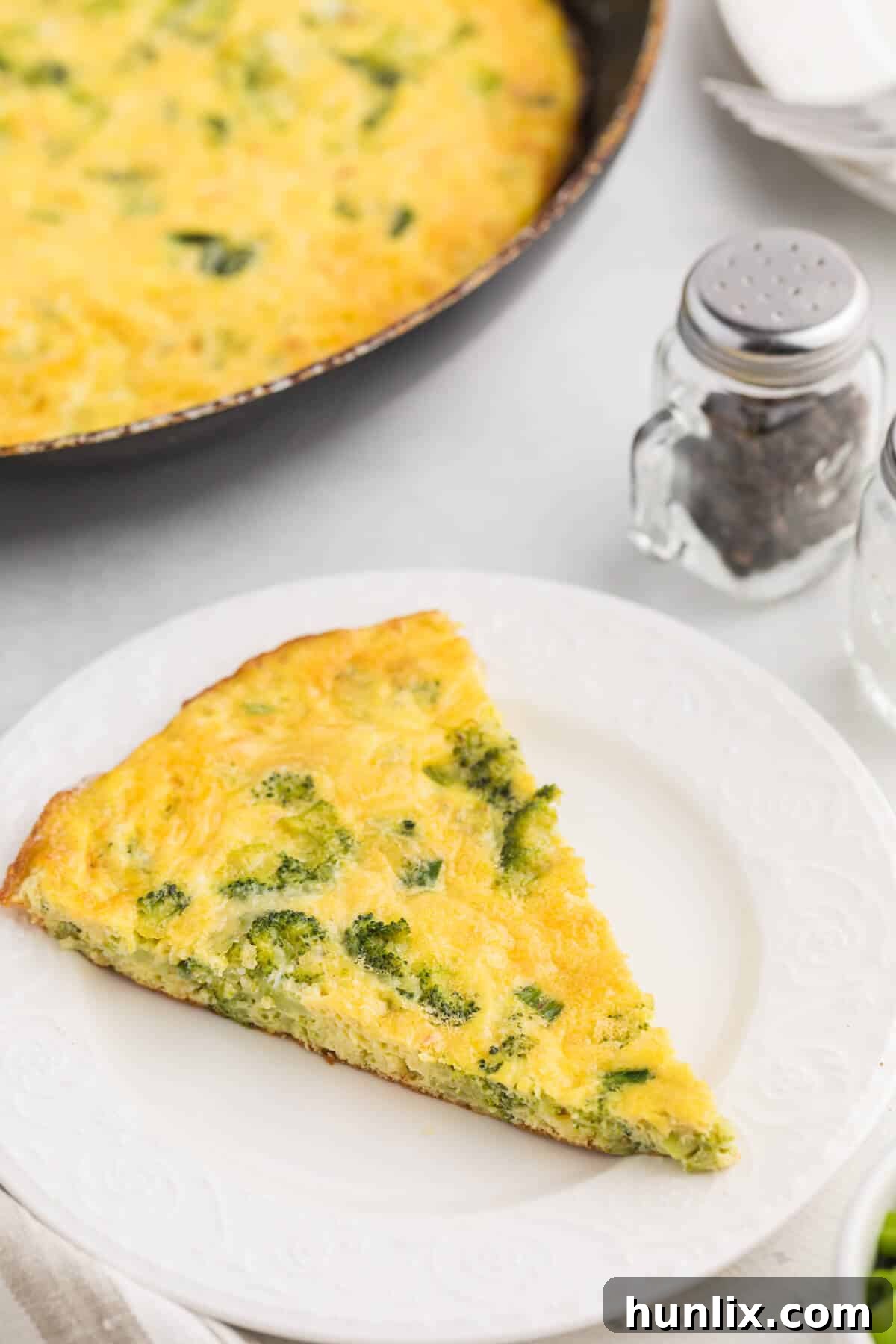
At its heart, a frittata is an Italian egg-based dish similar to an omelet or a crustless quiche, typically enriched with various ingredients like vegetables, meats, herbs, and cheese. The defining characteristic of a frittata is its cooking method: it begins cooking on the stovetop and then finishes baking in the oven. This two-stage cooking process results in a beautifully puffy, tender, and evenly cooked egg dish that can be served hot, warm, or at room temperature. It’s an incredibly versatile and forgiving meal, making it ideal for breakfast, brunch, lunch, or even a light dinner. Often described as an “open-faced omelet,” a frittata is usually thicker and cooked slower, allowing fillings to be fully incorporated into the egg mixture rather than folded inside.
Frittata vs. Omelet vs. Quiche: What’s the Difference?
While all three are delicious egg dishes, they each have distinct characteristics:
Frittata: As discussed, a frittata starts on the stovetop in an oven-safe skillet and finishes baking in the oven. The fillings are mixed directly into the beaten eggs and cooked throughout. Frittatas are typically served in wedges, much like a pie, and are often made to serve multiple people.
Omelet: An omelet is cooked entirely on the stovetop. The beaten eggs are poured into a hot pan and cooked until just set. Fillings are then added to one half of the omelet, and the other half is folded over, creating a pocket. Omelets are usually made and served individually, typically for one person.
Quiche: A quiche is similar to a frittata in its fillings and overall texture but is fundamentally different due to its crust. A quiche is an egg custard baked in a flaky pie crust, either savory or sweet. This makes a frittata a fantastic “crustless quiche” alternative for those looking to reduce carbs or skip the pastry-making process.
Expert Tips to Prevent a Watery Frittata
One common concern when making a vegetable-heavy frittata is ending up with a watery or soggy result. The key to preventing this lies in proper preparation of your vegetables. The easiest and most effective way to ensure your frittata remains firm and flavorful is to thoroughly cook or steam your vegetables before incorporating them into the egg mixture.
This is precisely why we steam the broccoli first and cook it until all the water has evaporated. Vegetables naturally release moisture as they cook. If you add raw or undercooked vegetables directly to the egg mixture, that moisture will seep out during baking, leading to a watery, unpleasant frittata. Pre-cooking and allowing the vegetables to dry out slightly ensures that only their flavor and texture are added, not excess liquid.
Can I Use a Pie Plate Instead of a Skillet?
Absolutely! You can certainly use a pie plate or an oven-safe baking dish if you don’t have an oven-safe skillet or prefer not to use one. However, it will mean a slight adjustment in your cooking process and potentially washing an extra dish. To adapt the recipe:
Follow all the initial steps in the recipe card: steam the broccoli, sauté the aromatics, and combine them with the beaten eggs and cheese in a separate bowl. When you reach Step Four, instead of pouring the mixture back into the skillet for stovetop cooking, simply pour the entire egg and vegetable mixture into a lightly oiled (or parchment-lined) pie plate or baking dish. Place the pie plate directly into the preheated 400°F (200°C) oven. The baking time will likely need to be adjusted slightly, usually increasing to about 15-20 minutes, or until the center is fully set and the top is golden. Keep an eye on it to ensure it doesn’t overcook.
Using Frozen Broccoli Florets: A Practical Guide
Yes, absolutely! Frozen broccoli florets are a perfectly acceptable and convenient alternative to fresh broccoli for this frittata recipe. They offer a great time-saving option without compromising too much on flavor or nutrition. However, a crucial step to ensure the best results is to allow your frozen broccoli to thaw completely before adding it to the frittata mixture. Frozen vegetables tend to hold a lot of water, which can make your frittata watery if not properly managed.
You can thaw your broccoli in a couple of ways:
- Quick Thaw: Place the frozen florets in a colander and run cold water over them until they are fully thawed. Make sure to pat them very dry with paper towels afterward to remove as much excess moisture as possible.
- Overnight Thaw: For a slower, more hands-off approach, simply transfer the bag of frozen broccoli to your refrigerator the night before you plan to cook. This allows it to thaw gradually. Again, ensure you pat them dry before use.
While I personally enjoy the slightly crisper texture and vibrant flavor of fresh broccoli, frozen broccoli is a fantastic pantry staple and will still yield a delicious and healthy frittata. Just remember that critical step of thawing and draining!
Achieving Fluffier Eggs in Your Frittata
The secret to a wonderfully light and fluffy frittata lies in how you prepare your eggs. The best way to achieve a superior fluffy texture is to incorporate plenty of air into the eggs before mixing in the other ingredients. Here’s how:
- Whip Vigorously: Instead of just gently mixing, use a whisk, immersion blender, or even a hand mixer to whip the eggs. Beat them until they are light, pale yellow, and noticeably frothy with tiny bubbles on the surface. This aeration process is what creates that desired airy, fluffy consistency in the final frittata.
- Timing is Key: Whip the eggs first, before you add the broccoli mixture or cheese. Once they are frothy, gently fold in your pre-cooked broccoli and cheese. Overmixing after the fillings are added can deflate some of the air you’ve incorporated.
Knowing When Your Frittata Is Perfectly Done
Ensuring your frittata is cooked through but not overdone is essential for the best texture. Here are the key indicators to tell when it’s ready to come out of the oven:
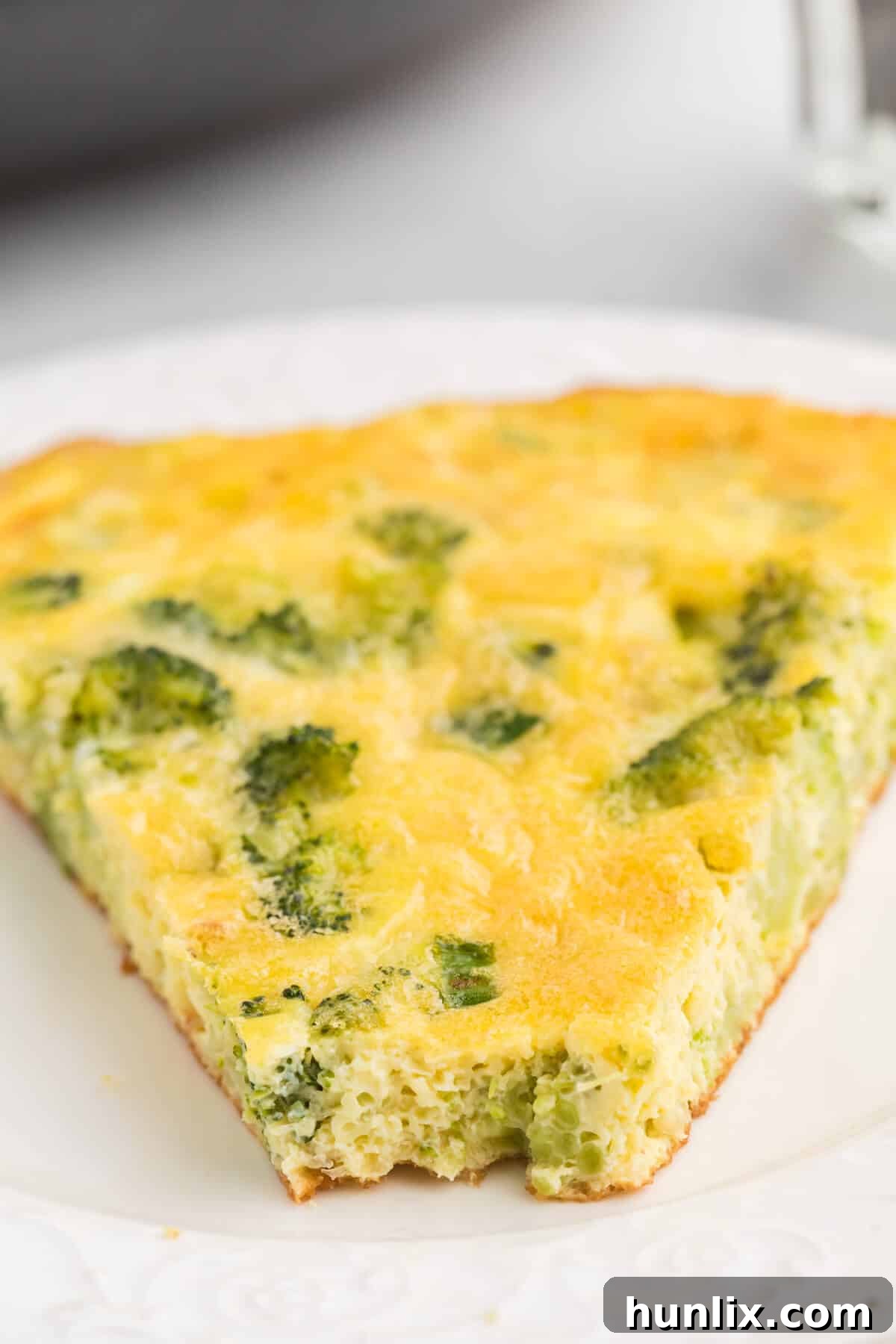
- The Jiggle Test: Gently jiggle the skillet while it’s still in the oven (or immediately after carefully pulling it out). If the center of the frittata still appears liquid or significantly wiggles, it needs a bit more time to cook. A fully cooked frittata will have a set, stable center that doesn’t jiggle.
- Visual Cues: Look for the edges to be lightly golden brown, indicating they are fully cooked and slightly caramelized. The top surface of the frittata should also be set and appear opaque, often with a hint of golden color.
Once you observe these signs – a set center, lightly golden edges, and no visible liquid – your broccoli frittata is done. Remember to let it rest for a couple of minutes after removing it from the oven; this allows it to firm up slightly, making for cleaner slices.
Understanding Why Your Frittata May Go Flat
It’s completely normal for a frittata to “fall” or deflate slightly once it’s removed from the oven. This is not an indication of a cooking error but rather a natural scientific process. When you whip eggs, you incorporate air, which expands in the heat of the oven, causing the frittata to puff up beautifully. As the frittata cools, this trapped air contracts, leading to a slight deflation. Frittatas are not designed to remain as puffy as, say, a soufflé; their characteristic texture is dense, yet tender and moist. So, if your frittata loses some of its height after baking, rest assured that it’s simply behaving as it should!
Frequently Asked Questions About Frittatas
Yes, you can absolutely freeze frittata! This makes it an excellent option for future meals or meal prepping. To freeze, first allow your baked frittata to cool completely to room temperature. Then, you can either wrap individual slices or the whole frittata tightly in plastic wrap, followed by a layer of aluminum foil, or place them in a freezer-friendly, airtight container. Store it in the freezer for up to 2-3 months. When you’re ready to enjoy it again, I recommend thawing it overnight in the refrigerator before reheating gently in the oven or microwave.
This particular broccoli frittata recipe is wonderfully adaptable for a dairy-free diet. In fact, it’s almost entirely dairy-free as written! The only ingredient you would need to omit is the Parmesan cheese. Unlike many quiche or frittata recipes, this one doesn’t call for whole milk, heavy cream, or other dairy products in the egg base, relying solely on whole eggs for its rich texture. You can easily substitute the Parmesan with a dairy-free cheese alternative if desired, or simply leave it out; the frittata will still be incredibly flavorful with the broccoli and aromatics.
The beauty of a frittata is its versatility in serving temperature! While we often love to eat this broccoli frittata warm, fresh out of the oven after resting for a few minutes, it is equally delicious served cold or at room temperature. This makes it an ideal dish for picnics, potlucks, or simply as a convenient grab-and-go breakfast or lunch. If you prefer it chilled, feel free to make it the night before and let it cool completely in the refrigerator.
This recipe, as specified, is designed to yield approximately six generous servings. The exact number can vary slightly depending on how large you cut each wedge, but a 10-inch frittata typically provides enough for 6 people as a main dish or more if served as part of a larger brunch spread.
More Delicious Frittata Recipes to Explore
If you’ve fallen in love with the ease and versatility of this Broccoli Frittata, you’ll be delighted to know there are countless other delicious frittata variations to try. Here are some of my other favorite frittata recipes that I’m sure you’ll enjoy:
- Pancetta and Onion Frittata: A savory delight featuring crispy pancetta and sweet caramelized onions for a richer flavor profile.
- Bacon and Gouda Frittata: The smoky goodness of bacon combined with the creamy, slightly sweet notes of Gouda cheese makes this an irresistible option.
- Zucchini Frittata: A fresh and flavorful frittata that’s perfect for using up summer zucchini, often paired with sweet red peppers.
- Turkey Bacon Frittata: A lighter alternative to traditional bacon, offering a satisfying protein boost without the heavier fat content.
Beyond frittatas, if you’re craving more broccoli-inspired dishes, be sure to try my Broccoli Cheddar Soup and Broccoli Salad. And for those who can’t get enough of egg recipes, explore my Oven Scrambled Eggs, Salsa Deviled Eggs, and Ham & Egg Muffin Tin Eggs. Happy cooking!
Follow me on Instagram @simplystacieblog, Facebook at Simply Stacie, TikTok @simplystacierecipes or Pinterest at @simplystacie and let me know how you liked this recipe and my other recipes.
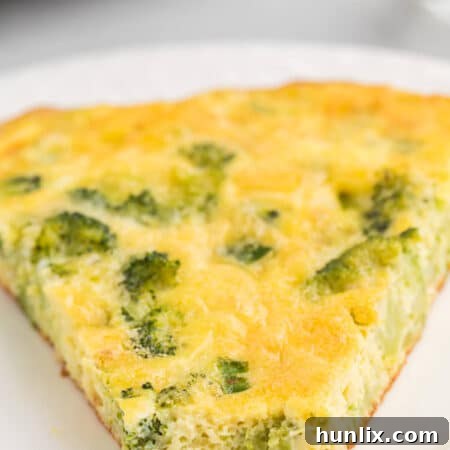
Broccoli Frittata
SAVE THIS RECIPE!
Enter your email and we’ll send this recipe to your inbox.
Ingredients
- 3 cups chopped broccoli florets
- 1 cup water
- 2 tbsp extra virgin olive oil
- ¼ tsp hot pepper flakes
- 3 cloves garlic minced
- 3 green onions thinly sliced
- 8 large eggs
- 1 cup Parmesan cheese grated
Instructions
-
In a 10-inch skillet, bring broccoli and water to a boil. Cover and cook over medium heat until tender-crisp, about 2 to 3 minutes. Uncover and cook over medium-high heat until no water remains, about 4 minutes.
-
Add 1 tablespoon of oil, hot pepper flakes, garlic and green onions to pan; cook until lightly browned, 1 to 2 minutes. Add to broccoli.
-
In a large bowl, beat eggs and cheese. Stir in broccoli mixture.
-
Wipe out the skillet; heat remaining oil over medium heat. Pour in egg mixture, spreading evenly. Do not stir. Cook over medium-low heat for about 5 to 6 minutes.
-
Place skillet in 400°F oven; bake for 10 minutes. Let stand for 2 minutes. Cut into wedges & serve.
Equipment
-
Cutting board
-
Garlic press
-
Non-stick skillet
Nutrition
The information shown is an estimate provided by an online nutrition calculator. It should not be considered a substitute for a professional nutritionist’s advice.
Did you make this recipe?
I’d love to see it! Make sure to share it on your favorite social platform.
Pin Recipe
Rate this Recipe
Want Even More Recipes?
Join Moms Best Recipes to find more delicious family recipes.