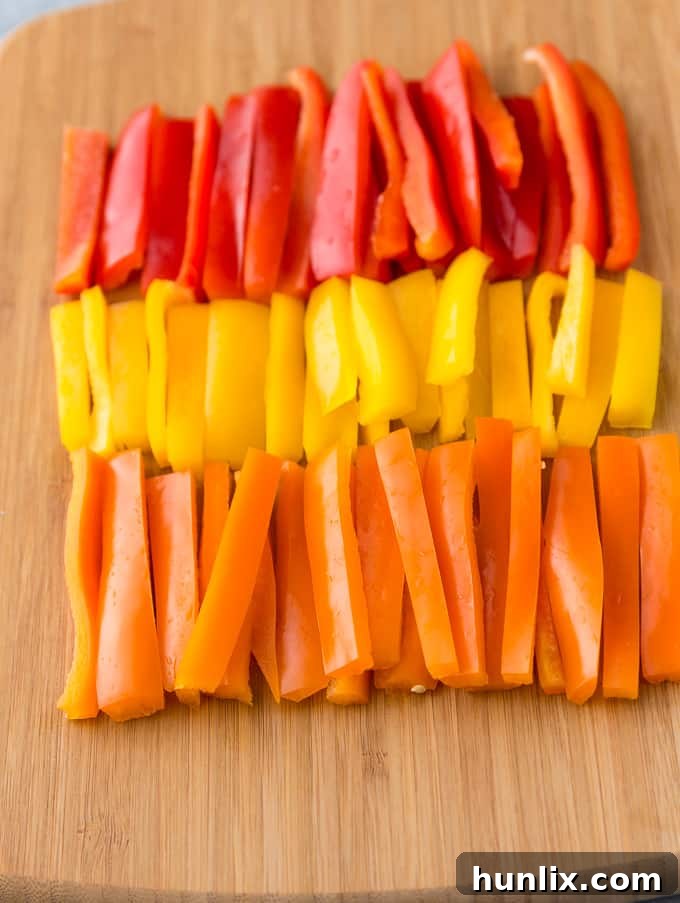
For years, many of us have approached the task of cutting bell peppers with a method that was, frankly, far from ideal. Whether you’ve struggled with removing the seeds and membranes, ended up with uneven pieces, or felt like you were wasting precious pepper flesh, you’re not alone. I certainly spent over three decades navigating the challenges of pepper preparation the hard way, wishing for a simpler, more efficient technique. What if I told you there’s a revolutionary method that will not only make your kitchen prep easier but also safer and less wasteful? Prepare to discover the ultimate bell pepper cutting hack that will transform your cooking experience forever.
This post contains affiliate links, meaning if you make a purchase through my links, I may earn a commission at no extra cost to you.
The inspiration for this ingenious technique came from an unexpected source: a Craftsy class with the acclaimed chef Rick Rodgers, titled “All About Pork.” While the class focused on pork, Chef Rodgers generously shared a game-changing tip for bell pepper preparation that instantly clicked with me. It’s one of those kitchen revelations that, once learned, makes you wonder how you ever managed without it. This method simplifies the entire process, making it incredibly intuitive and satisfying. Once you witness its elegance and efficiency, you’ll undoubtedly abandon your old ways, just as I did!
Mastering the Bell Pepper: The Ultimate Cutting Hack for Faster, Safer Prep
This innovative bell pepper cutting technique isn’t just about speed; it’s about creating a stable, flat surface that makes subsequent dicing, chopping, or slicing into strips an absolute breeze. It’s fundamentally about deconstructing the pepper in a way that minimizes fuss, maximizes usable flesh, and enhances safety in the kitchen. No more struggling with wobbly peppers or awkwardly scooping out seeds. This hack provides a clean, efficient starting point for any culinary application, whether you need finely minced pieces for a delicate sauce or robust chunks for a hearty stir-fry. It truly is the easiest way to cut bell peppers, ensuring perfect results every time.
Why This Method is a Game-Changer for Bell Pepper Preparation
Traditional methods often involve halving the pepper, then attempting to carve out the core and ribs, leading to uneven cuts, wasted edible parts, and a generally messy process. This new approach eliminates those frustrations entirely. By creating a flat, manageable piece of pepper flesh, you gain unparalleled control over your knife, resulting in precise, uniform cuts every single time. This consistency is not just aesthetically pleasing; it’s crucial for even cooking, especially in dishes where different vegetables need to cook at the same rate. Moreover, it significantly reduces the amount of edible bell pepper that gets discarded, contributing to less food waste in your kitchen. This is a bell pepper cutting hack that every home cook needs to know.
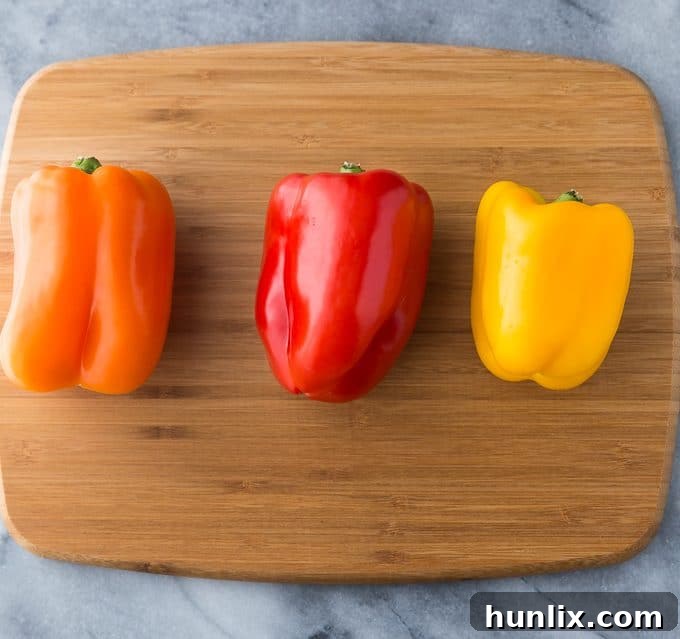
Step-by-Step Guide: How to Cut a Bell Pepper the Easy Way
Before you begin, ensure you have a sharp chef’s knife and a sturdy cutting board. A sharp knife is not only more efficient but also safer, as it requires less force and is less likely to slip. Always wash your bell pepper thoroughly under cold running water to remove any dirt or debris before you start.
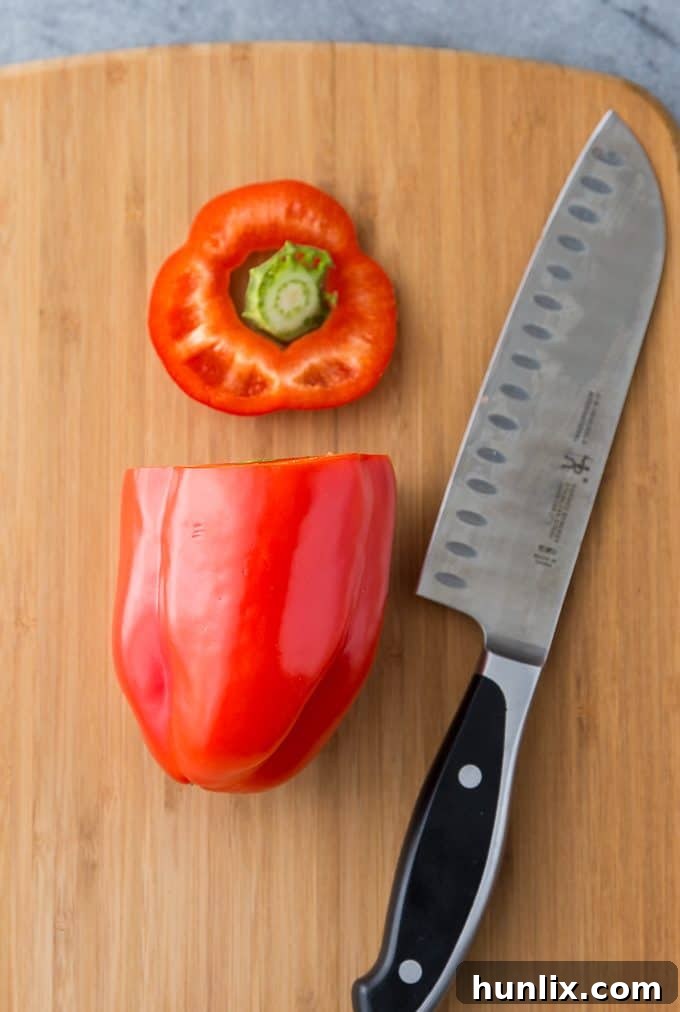
Step 1: Slice Off the Top
Begin by placing the bell pepper upright on your cutting board, making sure it’s stable. Using your sharp knife, make a clean, horizontal cut across the very top of the pepper, just below where the stem begins. The goal here is to remove the stem and a small portion of the top, creating a stable, flat base from which to work. This initial cut is crucial for setting up the rest of the process, allowing you to easily access the interior of the pepper without contending with the tough stem.
Step 2: Remove the Bottom
Next, carefully flip the bell pepper over, so the newly cut top is now resting on the board. Make another precise, horizontal cut across the very bottom of the pepper. Similar to the top cut, this removes the base and any tough white core material, giving you another flat, stable surface. By removing both ends, you essentially create a cylindrical ‘tube’ of pepper flesh, free from the conical shape that often makes cutting difficult. This also means you’ll have less internal core to deal with later, significantly streamlining the process of preparing bell peppers.
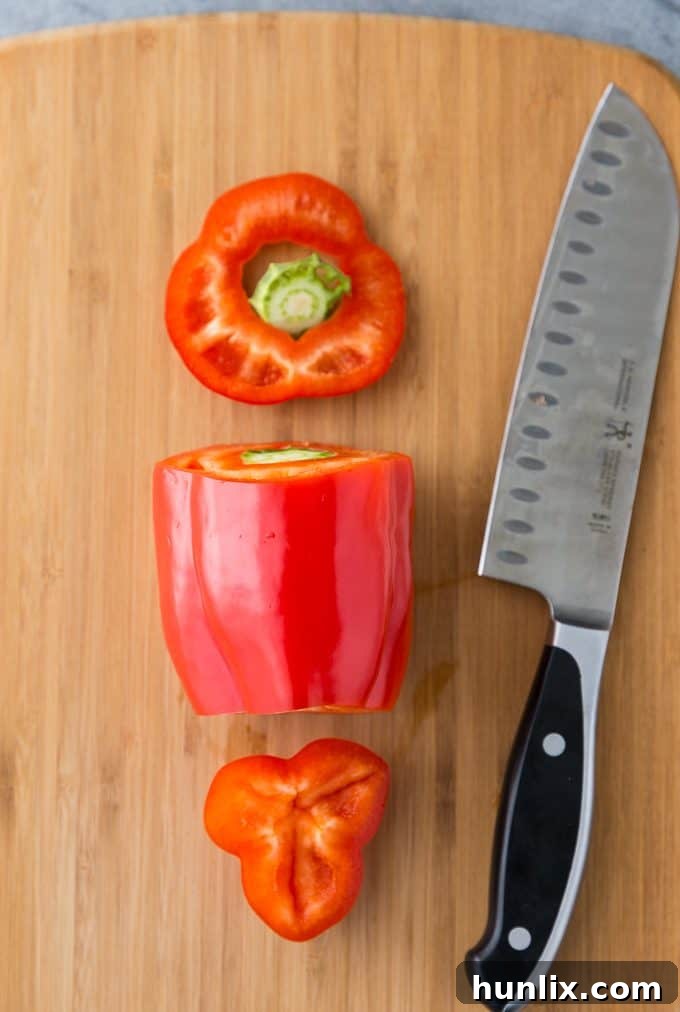
Step 3: Make a Single Vertical Slit
Now, lay the trimmed bell pepper on its side on the cutting board. Identify one of the natural ridges or a relatively flat side. Carefully make a single, long vertical slit down one side of the pepper, cutting all the way through the flesh. This cut should extend from the top opening to the bottom opening. The purpose of this slit is to allow you to easily unroll and flatten the pepper, transforming its curved structure into a manageable, flat sheet. This is a pivotal step in achieving the perfectly flat surface for cutting various bell pepper shapes.
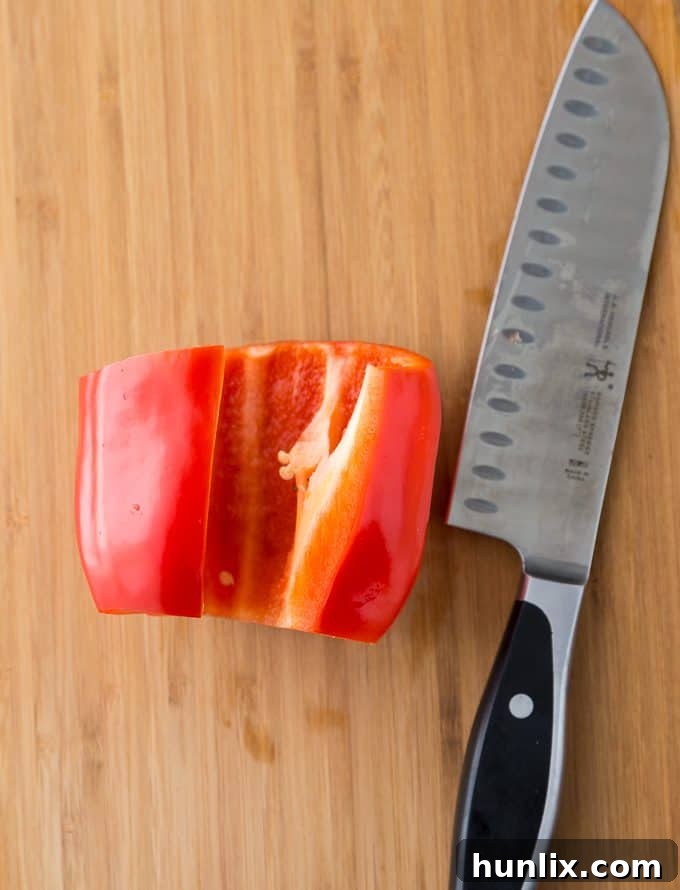
Step 4: Unfurl and Clean
With the slit made, gently open up the bell pepper, laying it completely flat on your cutting board with the vibrant skin side down and the inner, seedy side facing up. You’ll now easily notice the white ribs and any remaining seeds. Using your knife, carefully slice off these white ribs. They can be slightly bitter and have a tougher texture than the vibrant flesh, and removing them contributes to a better mouthfeel. Scrape away any lingering seeds using the back of your knife or your fingers. The goal is to create a perfectly flat, clean piece of pepper flesh, ready for your desired cut. This step ensures you maximize the edible portion and achieve a consistent texture in your dishes, making this an incredibly efficient way to prepare bell peppers.
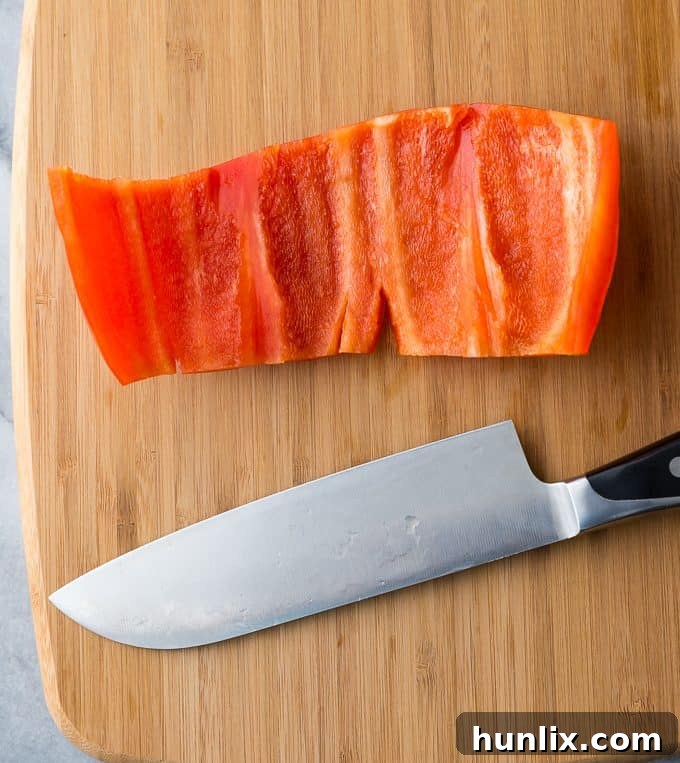
Step 5: Slice, Dice, or Chop with Ease
Now that you have a beautifully flat, seedless, and rib-free piece of bell pepper, the rest is incredibly simple. You can now effortlessly slice it into thin strips for fajitas or stir-fries, dice it into small cubes for salads or omelets, or chop it into larger chunks for roasting or stews. The flat surface provides maximum stability and control, allowing for quick, precise, and uniform cuts. It’s truly remarkable how much easier and more enjoyable bell pepper preparation becomes with this simple yet effective hack! This is the core of how to cut bell peppers efficiently for any recipe.
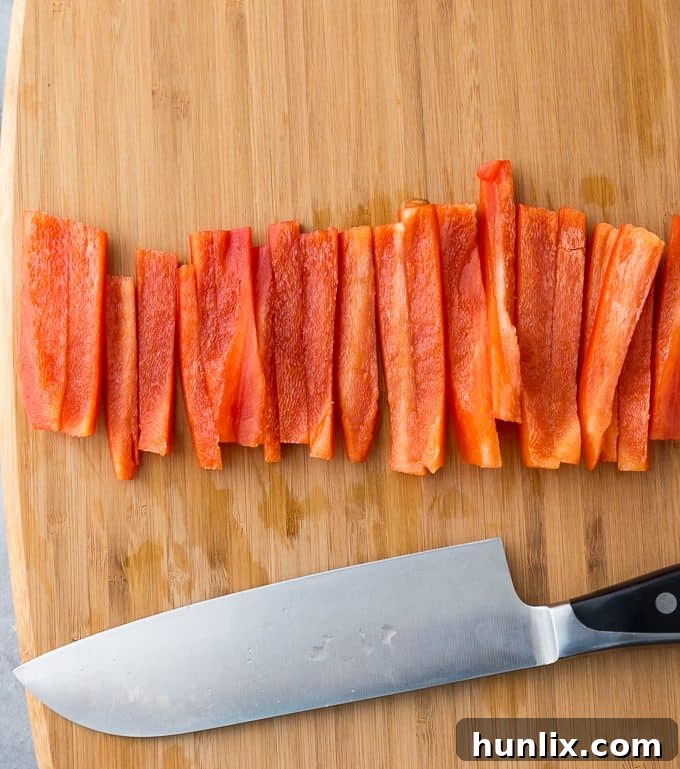
The Unbeatable Advantages of This Bell Pepper Cutting Method
Once you adopt this ingenious technique for preparing bell peppers, you’ll quickly realize its numerous benefits extend beyond mere simplicity:
- Significantly Reduces Waste: By efficiently removing the core and ribs, you maximize the amount of edible bell pepper flesh, reducing food waste and making your grocery budget go further. This ensures you get the most out of every bell pepper.
- Boosts Kitchen Efficiency: This streamlined process drastically cuts down on prep time. No more fiddling with stubborn seeds or trying to stabilize a wobbly pepper. You’ll be amazed at how quickly you can prep a batch of peppers.
- Enhances Safety: Working with a flat, stable surface minimizes the risk of knife slips and accidents, making bell pepper preparation much safer, especially for novice cooks. Safety in the kitchen is paramount.
- Ensures Uniformity: Achieving perfectly consistent slices, dices, or chunks is effortless. Uniform cuts are essential for even cooking and professional-looking dishes, guaranteeing better results in your cooking.
- Versatility for All Recipes: Whether you need fine julienne strips for an Asian stir-fry, small dice for a salsa, or large chunks for a roasted vegetable medley, this method provides the perfect foundation for any culinary creation.
- Works for All Bell Pepper Types: Red, green, yellow, orange, or even purple – this hack is universally applicable to all colors and sizes of bell peppers, ensuring consistent results every time you prepare them.
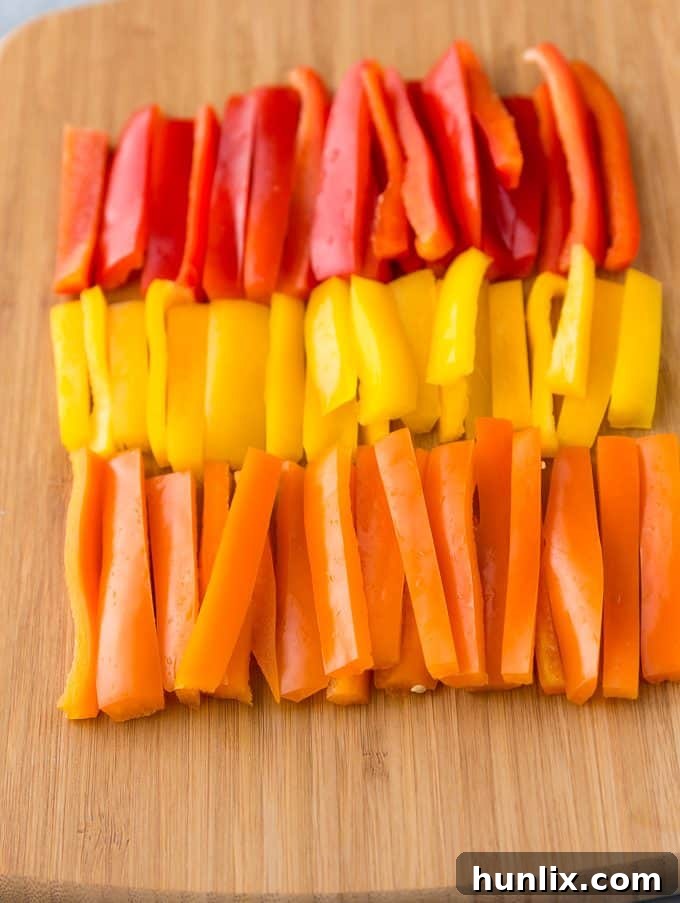
Beyond the Cut: Bell Pepper Facts and Storage Tips
Bell peppers are not just beautiful and versatile; they’re also packed with nutrition. They are an excellent source of Vitamin C (often more than an orange!), Vitamin A, and various antioxidants, making them a fantastic addition to a healthy diet. Different colors offer slightly different flavor profiles: green peppers tend to be more bitter and less sweet, while red, yellow, and orange peppers are sweeter and fruitier, ripening from green. This variation makes them suitable for a wide range of culinary applications, from raw snacks to cooked dishes, truly enhancing your meal prep game.
Creative Ways to Use Your Perfectly Cut Bell Peppers:
- Quick Snacks: Once perfectly cut, these vibrant pieces are ideal for a healthy snack. Pair them with your favorite ranch dip, hummus, or a creamy avocado spread.
- Salads: Add a burst of color and crunch to any salad, from a simple garden salad to a complex grain bowl. They’re a perfect addition to boost freshness.
- Stir-Fries & Fajitas: Uniform strips cook evenly and add delicious flavor and texture to Asian-inspired stir-fries or Mexican fajitas.
- Roasted Vegetables: Chunks of bell pepper caramelize beautifully when roasted alongside other vegetables like zucchini, onions, and carrots, bringing out their natural sweetness.
- Omelets & Scrambles: Finely diced peppers integrate perfectly into eggs, adding sweetness and a nutritional boost to your breakfast.
- Soups & Stews: Bell peppers provide depth, natural sweetness, and a lovely texture to many savory dishes, from chili to minestrone.
- Salsas & Relishes: Finely diced bell peppers are a staple in fresh salsas, offering a delightful crunch and vibrant flavor that brightens up any meal.
Once you’ve prepped your bell peppers using this easy method, you can store any unused portions in an airtight, reusable container in the fridge for a few days. This makes meal prep even more efficient, as you’ll have ready-to-use ingredients on hand for quick snacks or future cooking endeavors. Just ensure they are dry before storing to prolong their freshness and maintain their crisp texture.
Common Bell Pepper Cutting Mistakes (and How This Hack Solves Them)
Many home cooks struggle with bell peppers due to common pitfalls that this method elegantly circumvents:
- Cutting Into a Wobbly Sphere: Trying to cut a round pepper without first creating a flat surface is a recipe for disaster and potential injury. Our method ensures stability from the first cut, significantly increasing safety.
- Excessive Waste Around the Core: Scooping out the core often means losing a significant amount of edible flesh, which is inefficient and costly. By cutting off the top and bottom and then unrolling, you minimize waste to almost nothing.
- Uneven Pieces: Without a flat surface, it’s difficult to achieve uniform slices or dices, leading to some pieces overcooking while others remain undercooked. This hack provides a perfect canvas for precision and consistency.
- Messy Seed Removal: Seeds tend to scatter everywhere when you cut through the core, creating a cleanup headache. Unfurling the pepper allows for quick and contained seed removal, making the process much cleaner.
Ready to Practice Your New Skill?
This bell pepper cutting method is not just a hack; it’s a fundamental shift in how you approach vegetable preparation. It empowers you to tackle bell peppers with confidence, knowing you’ll achieve perfect results every time. I truly hope this guide helps you immensely in your kitchen prep work, making your cooking journey more enjoyable and efficient. Once you master this method for how to cut bell peppers, you’ll wonder why you ever did it any other way.
To put your newfound skills to the test, why not try one of these delicious recipes that feature bell peppers? They’re perfect for practicing your precise cutting techniques and enjoying the fruits of your labor:
- Asian Chicken Wings
- Mediterranean Brunch Bake
- Mustard Chicken Salad
Share Your Thoughts!
We’re always eager to hear from our community. How do you normally cut your bell peppers? Have you tried this method before, or is this bell pepper cutting hack a brand new revelation for you? Share your experiences and any additional tips in the comments below!