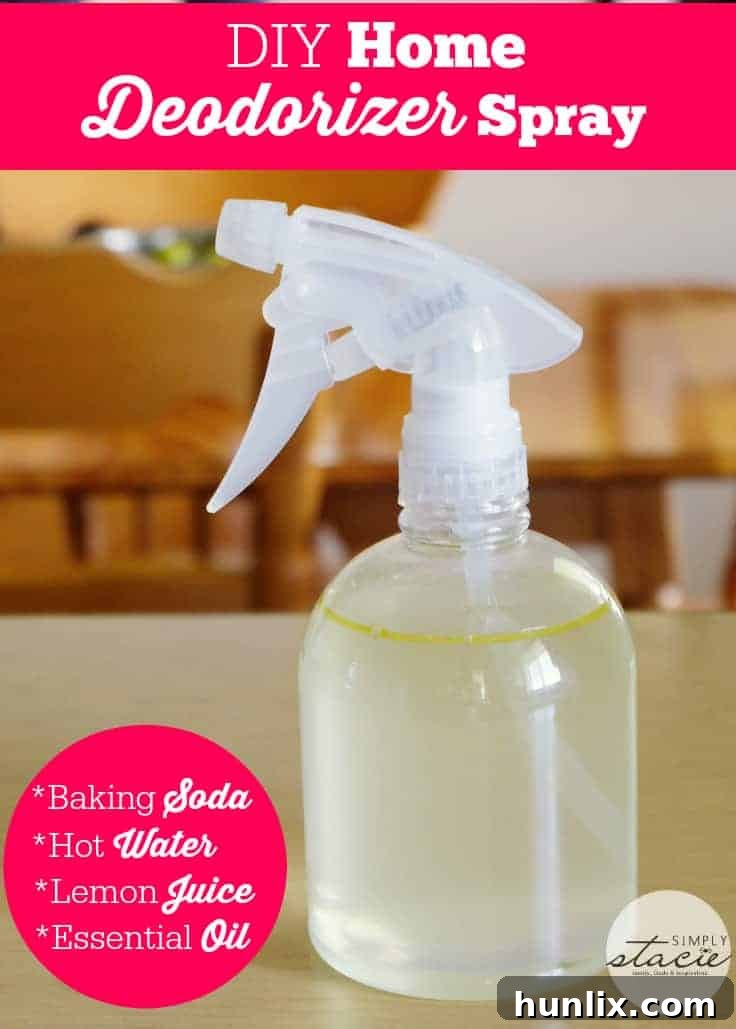
Transforming your living space into a sanctuary of freshness doesn’t require harsh chemicals or expensive store-bought solutions. In a world increasingly leaning towards natural and sustainable living, creating your own DIY Home Deodorizer Spray is a simple yet incredibly effective way to keep your home smelling clean and inviting. Just a few months ago, I found myself captivated by the world of essential oils, accumulating a collection with a fervent enthusiasm. Now, the delightful challenge lies in discovering innovative ways to integrate these aromatic wonders into my daily home routine. This homemade room spray stands out as one of the easiest and most rewarding methods.
For anyone sharing their abode with furry friends, energetic children, or even just the everyday hustle and bustle, maintaining a consistently fresh environment can feel like an uphill battle. With three lively cats, two active kids, and a loving husband, my home frequently calls for a breath of fresh air. This natural deodorizer spray is not only incredibly quick to prepare but also allows for complete customization, letting you infuse your space with the precise aroma you desire based on your chosen essential oil. Say goodbye to stale odors and welcome a naturally vibrant scent into every corner of your house with this effortless and eco-friendly solution.
Craft Your Own Natural Home Deodorizer Spray: A Simple Guide to Freshness
This post contains affiliate links, meaning if you make a purchase through my links, I may earn a small commission at no extra cost to you.
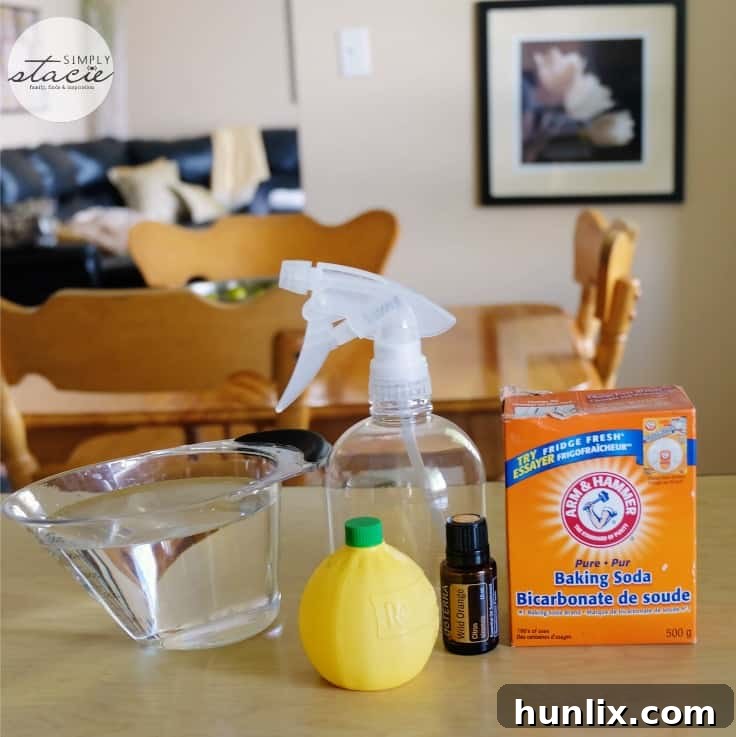
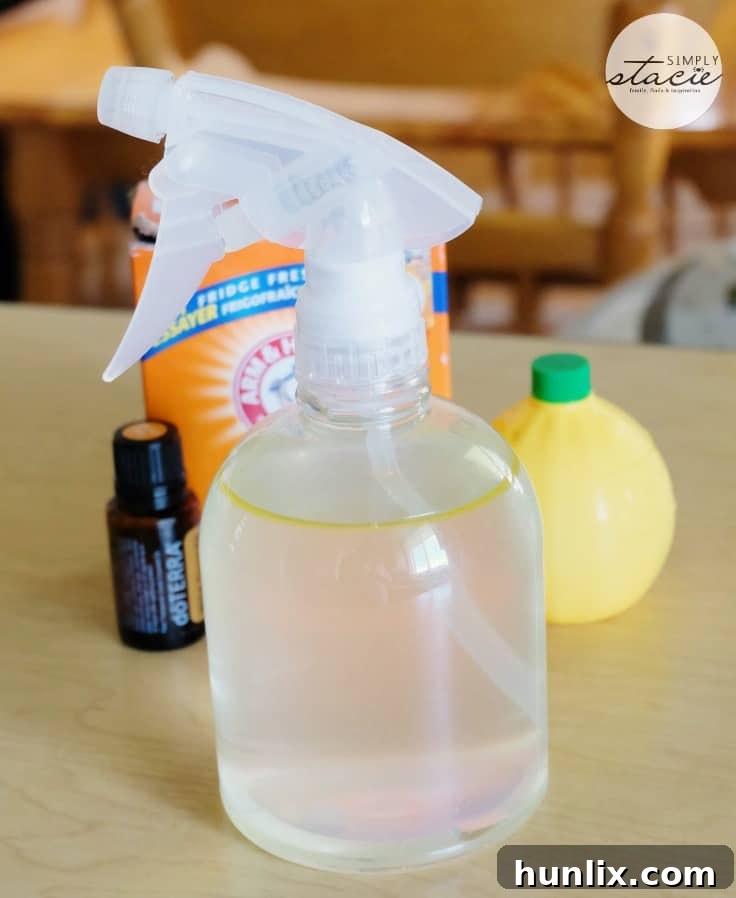
Embracing a more natural approach to home care often starts with ingredients you already have on hand. Beyond your preferred essential oil, the components for this powerful yet gentle homemade room spray are likely staples in your kitchen pantry and fridge. You’ll need a few common items: baking soda, a well-known natural odor absorber; fresh lemon juice, celebrated for its cleansing properties and bright scent; hot water, serving as the perfect solvent; and, of course, your chosen essential oil to lend its therapeutic fragrance. For my batch, I opted for vibrant orange essential oil, whose uplifting and invigorating aroma never fails to energize my spirits and refresh my living space. This blend of simple ingredients creates a potent, non-toxic solution to common household odors, ensuring your home always smells its best without relying on artificial fragrances or harsh chemicals.
Why Choose a DIY Home Deodorizer Spray for Your Space?
The allure of commercial air fresheners is undeniable – a quick spritz and your home instantly smells “clean.” However, many of these products are laden with synthetic fragrances and volatile organic compounds (VOCs) that can be detrimental to indoor air quality and, consequently, our health. Opting for a DIY natural deodorizer offers a multitude of compelling benefits, making it a superior choice for a healthier and more pleasant living environment:
- Healthier Indoor Air: By controlling every ingredient, you eliminate exposure to phthalates, parabens, and other harmful chemicals often found in store-bought sprays. This creates a significantly safer and cleaner breathing environment for your entire family, including children and pets, reducing potential irritants and allergens.
- Remarkably Cost-Effective: The base ingredients for this homemade spray – baking soda, lemon juice, and water – are incredibly inexpensive and readily available. This makes it a highly budget-friendly alternative to continuously purchasing commercial products, saving you money in the long run.
- Unparalleled Scent Customization: With the vast array of essential oils available, the possibilities are truly endless! You can perfectly tailor your spray to suit your current mood, the changing seasons, or specific odor problems. Whether you desire calming lavender for bedrooms, energizing peppermint for workspaces, or a festive blend for holidays, your home can reflect your personal aromatic preferences with ease.
- Environmentally Friendly Choice: Reducing your reliance on single-use plastic spray bottles and chemical formulations contributes positively to environmental sustainability. By making your own, you minimize plastic waste and avoid releasing synthetic compounds into the atmosphere, aligning with a greener lifestyle.
- Effective Odor Neutralization, Not Just Masking: Unlike many commercial air fresheners that merely attempt to mask unpleasant odors with stronger perfumes, the baking soda and lemon juice in this DIY spray work synergistically to actively absorb and neutralize odors at their source. This leaves behind a genuinely clean and fresh scent, rather than a temporary cover-up.
The Powerful Science Behind Our Ingredients
Each component of this homemade room spray plays a crucial and distinct role in its overall effectiveness, transforming simple pantry items into a powerful and natural odor eliminator. Understanding these roles helps appreciate the simplicity and genius of the blend:
- Baking Soda (Sodium Bicarbonate): This unassuming household staple is a miraculous natural deodorizer. Its unique amphoteric chemical structure allows it to react with and neutralize both acidic and basic odor molecules, rather than just covering them up. Whether you’re battling stubborn pet odors, lingering cooking smells, or general staleness that pervades a home, baking soda is your first and most effective line of defense, trapping those unpleasant molecules.
- Lemon Juice: Beyond its refreshing, bright, and zesty aroma, lemon juice is a formidable natural disinfectant and deodorizer. Its inherent acidic properties are excellent for breaking down odor-causing bacteria and grime on a molecular level, contributing significantly to a truly clean environment. Furthermore, its natural fragrance leaves behind an unmistakable scent of purity and upliftment, making any space feel instantly revitalized. Using freshly squeezed lemon juice is always recommended for optimal potency and a vibrant, authentic scent.
- Hot Water: Serving as the primary solvent in our recipe, hot water is essential for creating a homogenous mixture. Its warmth helps to thoroughly dissolve the baking soda, ensuring that it is evenly distributed throughout the spray. This crucial step prevents clogging in your spray bottle’s nozzle and guarantees that the powerful odor-absorbing properties of the baking soda are fully active in every spritz. Hot water also aids in dispersing the essential oils more effectively within the solution.
- Essential Oils: These highly concentrated plant extracts are undoubtedly the heart and soul of your spray’s fragrance and therapeutic benefits. They not only impart a delightful, customizable scent but many also possess inherent natural antibacterial, antiviral, and antifungal properties, contributing to a truly hygienic and purified environment. The careful selection of your essential oil allows for endless customization of your home’s unique aroma profile, reflecting your personal taste and desired atmosphere.
Choosing Your Essential Oils: A Scent for Every Mood and Purpose
The true beauty and versatility of a DIY essential oil spray lie in its incredible adaptability. You have the freedom to switch up the essential oils you use based on your personal preference, the current season, or the specific need of your home environment. Here are some popular choices, along with their distinct benefits and aromatic profiles:
- Citrus Oils (Lemon, Sweet Orange, Grapefruit, Bergamot, Lime): These oils are universally loved for their invigorating, uplifting, and purifying properties. They are exceptionally effective at neutralizing strong odors, promoting a sense of cleanliness, and infusing spaces with energy and positivity. Sweet Orange, as I frequently use, offers a particularly warm, cheerful, and welcoming aroma.
- Lavender: Renowned for its calming and deeply relaxing properties, lavender essential oil is absolutely perfect for bedrooms, nurseries, or any area where you wish to foster an atmosphere of tranquility and peace. Beyond its soothing scent, it also possesses mild antibacterial qualities, adding to the cleanliness.
- Peppermint: This is a wonderfully refreshing and stimulating oil that can instantly help clear the air, sharpen focus, and even act as a natural deterrent for certain pests. Its crisp, clean aroma makes it a fantastic choice for kitchens, bathrooms, or home workspaces where you need an invigorating boost.
- Eucalyptus & Tea Tree Oil: Both of these are exceptionally powerful purifiers, boasting strong antibacterial, antiviral, and antifungal properties. They are ideal for tackling tough odors in bathrooms, laundry rooms, or combating persistent musty smells. A note of caution: always use tea tree oil carefully, especially around pets, as it can be toxic if ingested.
- Frankincense & Myrrh: These ancient resins offer wonderfully grounding, warm, and sophisticated aromas. They are excellent for creating a serene, meditative, and luxurious atmosphere, perfect for living rooms or contemplative spaces.
- Creative Essential Oil Blends: Don’t be afraid to experiment and unleash your inner alchemist! A few drops of lemon combined with a few drops of lavender can create a wonderfully balanced and fresh scent. Peppermint and eucalyptus make an excellent, stimulating, and refreshing blend for areas requiring a deep cleanse. Always ensure you choose high-quality, pure essential oils from reputable sources for the best results, therapeutic benefits, and utmost safety.
Step-by-Step Instructions for Your Natural Deodorizer Spray
Creating your very own homemade room spray is remarkably straightforward, requiring minimal effort for maximum impact and a naturally fresh home. Here’s a detailed guide on how to whip up a batch quickly and efficiently:
- Prepare Your Base Liquid: Begin by adding one cup of hot water into a clean measuring cup or a small mixing bowl. The warmth of the water is not merely for convenience; it significantly aids in dissolving the baking soda more efficiently and thoroughly, which is a crucial first step for a clear and effective spray.
- Dissolve the Baking Soda Completely: Next, add half a teaspoon of baking soda to the hot water. Stir the mixture vigorously and thoroughly until you can no longer see any visible grains of baking soda. It must be completely dissolved. This step is absolutely critical for preventing clogging in your spray bottle’s nozzle and ensuring that the powerful odor-absorbing properties of the baking soda are well distributed throughout your solution.
- Infuse with Citrus and Essential Oils: Once the baking soda is dissolved, incorporate six drops of fresh lemon juice into the mixture. The lemon juice adds an extra layer of odor neutralization and a bright, clean scent. Follow this by adding approximately 20 drops of your chosen essential oil (or a blend of oils). You have the flexibility to adjust the amount of essential oil to achieve your desired scent strength and aromatic intensity.
- Combine All Ingredients Thoroughly: Gently but thoroughly stir the entire mixture once more to ensure that all the ingredients are well combined. It’s important to remember that essential oils and water naturally separate, so a good stir at this stage helps to temporarily emulsify them, preparing the solution for bottling.
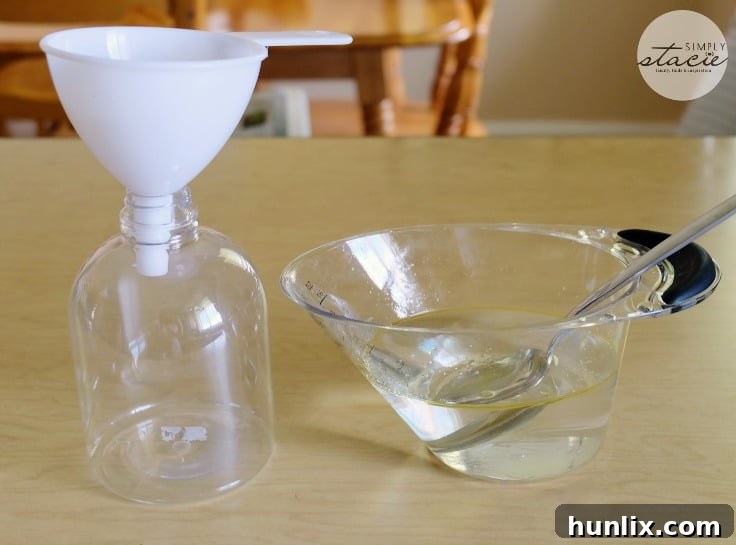
- Transfer to a Spray Bottle: Carefully pour the finished solution into a clean, empty spray bottle. To significantly minimize mess and ensure every drop of your precious concoction makes it into the bottle, using a small funnel is highly recommended. Opaque glass bottles are often preferred for essential oil sprays as they help protect the oils from light degradation, prolonging their potency.
Usage Tips and Best Practices for Maximum Freshness
Once your natural air freshener is ready, knowing how to use it most effectively will significantly enhance its odor-eliminating capabilities and fill your home with lasting, delightful freshness. Here are some essential pro tips to get the most out of your homemade spray:
- Shake Vigorously Before Each Use: This is arguably the most important tip for any DIY essential oil spray! Essential oils are not water-soluble and will naturally separate and float to the top. Always give your spray bottle a very good, vigorous shake before each and every spritz. This ensures that the ingredients are re-emulsified, distributing the scent and active deodorizing agents evenly throughout the solution, maximizing its effectiveness.
- Target Odor Hotspots Directly: Spray generously into the air where odors tend to linger, such as after cooking, in pet areas, or in bathrooms. You can also spray directly onto fabrics like curtains, carpets, rugs, upholstered furniture, and pet bedding. Before spraying on any new fabric or delicate material, always perform a discreet patch test on an inconspicuous area first to ensure there is no staining or discoloration, especially with darker-colored essential oils.
- Establish a Daily Refresh Routine: A few deliberate sprays daily in high-traffic areas or spaces prone to strong odors (like the kitchen, bathroom, or entryway) can help maintain a continuously fresh and inviting environment. Regular application prevents odors from building up, making your home consistently pleasant.
- Specialized Use in “John’s Domain”: In my home, this particular bottle finds its permanent place downstairs in what we affectionately call John’s domain. My poor husband is incredibly sensitive to a wide range of smells, particularly artificial fragrances. A regular spritz of this natural concoction significantly helps in keeping things fresh and pleasant for him without overwhelming his senses with any artificial perfumes or harsh chemicals, making it a tailored solution for individual needs.
- Expand Beyond Air Freshening: This versatile spray can also be repurposed as a quick fabric refresher for clothes that aren’t quite ready for the laundry pile but need a little lift. It’s also excellent for freshening up gym bags, shoe closets, car interiors, or even musty drawers, adding a burst of natural scent wherever it’s needed.
Troubleshooting and Optimal Storage for Your DIY Spray
While making this DIY spray is wonderfully simple, a few practical tips can help ensure you get the most out of it and maintain its effectiveness over time:
- Understanding Oil Separation: As previously mentioned, the natural incompatibility of essential oils and water means they will always separate when left to sit. This is completely normal and expected. It simply reinforces the importance of shaking the bottle thoroughly before every single use to ensure an even distribution of ingredients.
- Addressing Nozzle Clogging: If you find that your spray bottle nozzle becomes clogged, it’s most likely due to undissolved baking soda. This issue can be prevented by ensuring you stir the baking soda into the hot water exceptionally well during the initial mixing stage until it’s completely clear. If clogging does occur, a quick rinse of the nozzle under hot running water can often clear the obstruction.
- Optimal Shelf Life and Storage: Since this spray is made with natural ingredients and does not contain any artificial preservatives, it’s best to use it within 2-3 weeks for optimal freshness and potency of the essential oils. To preserve the integrity and aromatic qualities of your essential oils, always store the spray bottle in a cool, dark place, away from direct sunlight or extreme temperature fluctuations. To avoid waste, consider making smaller batches more frequently if you don’t use it up quickly.
Unleash Your Creativity: Customization and Beyond
The true brilliance of this homemade deodorizer lies in its infinite potential for customization. This allows you to truly personalize the aromatic experience of your home. Don’t hesitate to experiment with different essential oil blends to create unique aromas that perfectly match your preferences and needs:
- For a Tranquil Spa-Like Feel: Combine the soothing notes of lavender with the gentle, calming aroma of Roman chamomile or cedarwood for a truly relaxing atmosphere in bathrooms or bedrooms.
- For an Energizing Boost: Mix the crisp, invigorating scent of peppermint with the uplifting and cheerful aroma of wild orange or lemon for a refreshing burst of energy in kitchens or home offices.
- For a Festive Seasonal Atmosphere: Create warmth and coziness with a blend of cinnamon bark, clove bud, and sweet orange essential oils, perfect for holiday seasons or autumn evenings.
- For Ultimate Purification and Cleanliness: Blend the powerful cleansing properties of lemon, tea tree, and eucalyptus essential oils for an intensely purifying and revitalizing spray ideal for deep cleaning days.
Beyond its primary function as an air freshener, this versatile spray can also seamlessly double as a gentle surface cleaner for quick wipe-downs in bathrooms and kitchens. Always remember to test it on an inconspicuous area first to ensure compatibility with your surfaces. It’s an empowering and satisfying step towards cultivating a cleaner, greener, and ultimately more fragrant home, all on your terms and tailored to your unique lifestyle. Embrace the journey of natural living and discover the profound impact of creating a truly personalized, fresh, and inviting environment.
Ready to infuse your home with delightful, natural aromas and banish unwanted odors for good? This DIY Home Deodorizer Spray is your perfect starting point. It’s a simple, cost-effective, and powerful recipe that yields remarkable results, effortlessly transforming your living spaces into havens of freshness, well-being, and customized scent. Embrace the joy of natural living and create an aromatic experience that truly reflects your home’s unique character and your personal preferences.
What essential oil or blend will you choose to make your home smell wonderfully fresh with your new Homemade Deodorizer Spray? Share your favorite scents and combinations in the comments below – we’d love to hear your ideas!
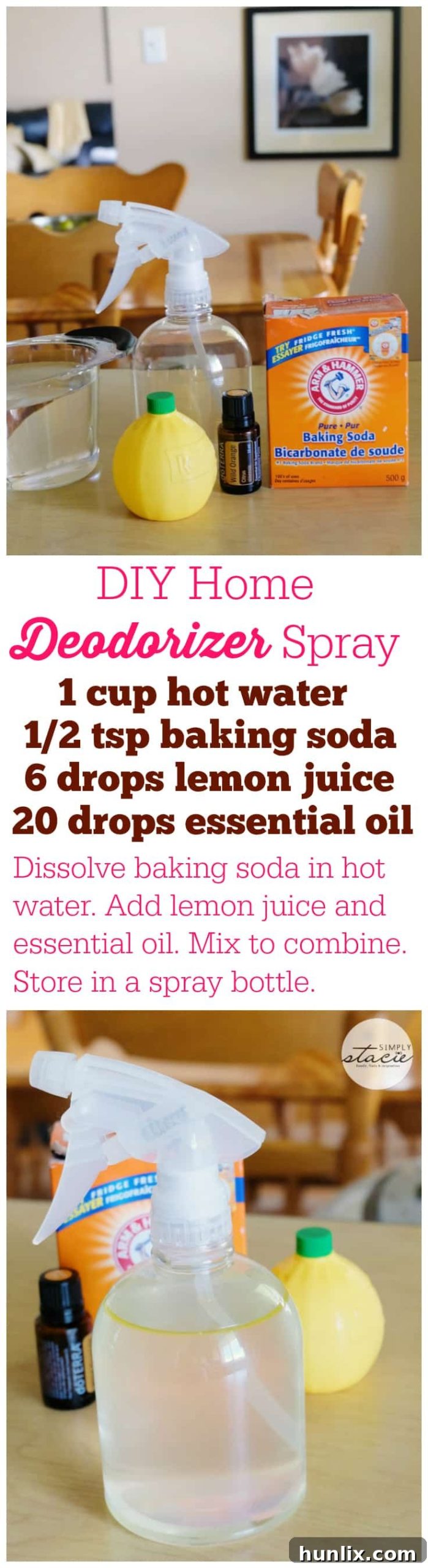
Easy DIY Home Deodorizer Spray Recipe
- 1 cup hot water
- 1/2 tsp baking soda
- 6 drops of lemon juice (freshly squeezed for best results)
- 20 drops of your favorite essential oil (e.g., orange, lavender, lemon, peppermint)
- In a clean spray bottle or a mixing bowl, combine 1 cup of hot water with 1/2 teaspoon of baking soda. Stir vigorously and thoroughly until the baking soda is completely dissolved. This step is crucial for preventing nozzle clogs.
- Add 6 drops of fresh lemon juice and 20 drops of your chosen essential oil to the mixture. Stir gently to combine all ingredients, ensuring the oils are as dispersed as possible.
- Carefully pour the finished mixture into a clean spray bottle. Using a small funnel can be very helpful here to avoid spills.
- Shake well before each use to emulsify the oils and water, ensuring an even distribution of scent and deodorizing agents. Spray into the air or onto fabrics to refresh your home naturally. For optimal freshness and to preserve essential oil potency, store the spray in a cool, dark place.