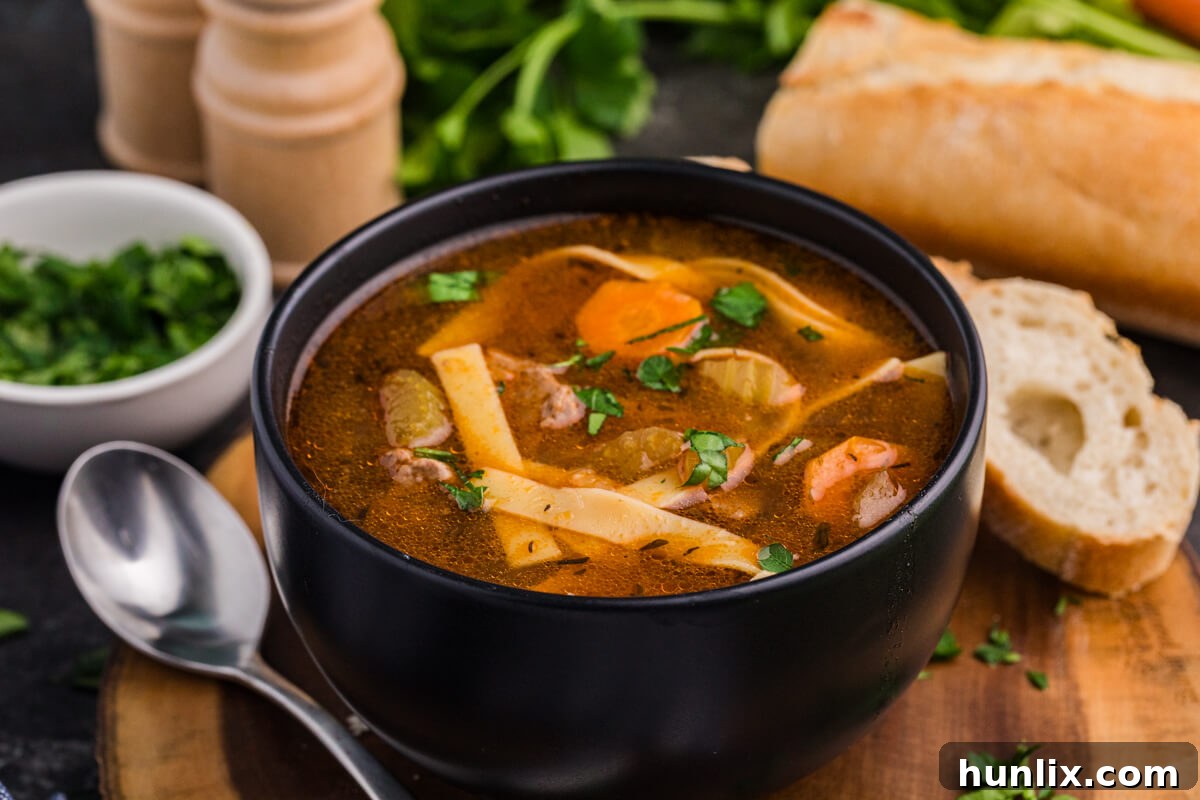
Hearty & Comforting Beef Noodle Soup: Your Ultimate Homemade Recipe Guide
There’s nothing quite like a steaming bowl of homemade Beef Noodle Soup to warm you from the inside out. This classic dish features generously sized chunks of tender beef, perfectly cooked egg noodles, and a rich, deeply savory broth that simmers to perfection on your stovetop. It’s a no-fuss, incredibly satisfying soup that serves as a complete and comforting meal, ideal for chilly evenings or whenever you crave a hearty, soul-soothing dish.
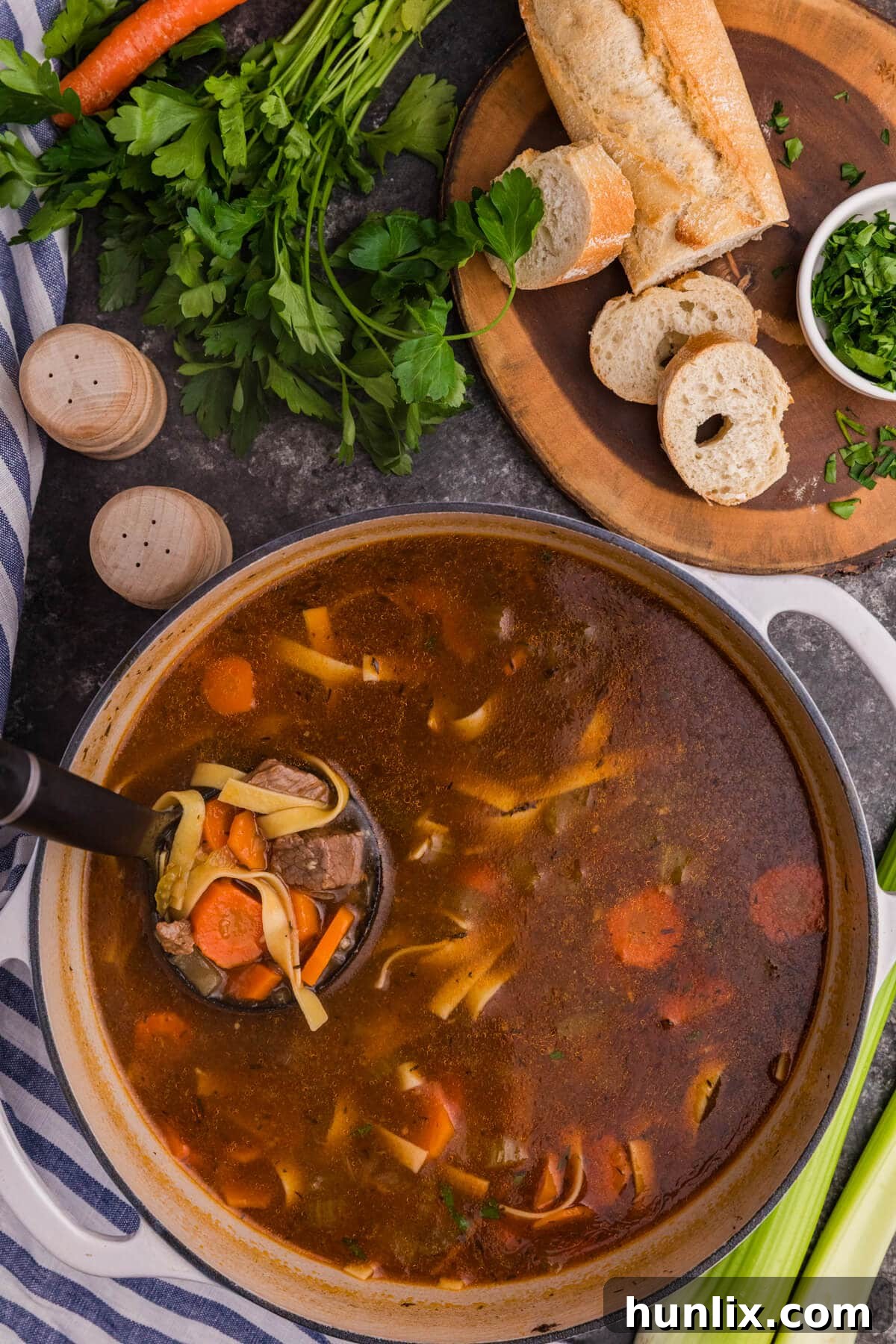
This recipe for Beef Noodle Soup is a personal favorite, one I find myself returning to repeatedly. It’s especially welcome when the temperatures drop, or when my family needs that special kind of comfort that only a truly delicious bowl of soup can provide. And if you’re fortunate enough to have leftovers, you’ll discover a delightful bonus: this soup often tastes even better the next day, as the flavors meld and deepen.
Why Choose Beef Noodle Soup?
When most people think of classic noodle soups, chicken noodle soup often comes to mind first. It’s the beloved childhood remedy, the go-to during cold season, and a staple for many kitchens. While chicken noodle soup holds a special place, beef noodle soup offers a distinct, equally rewarding experience that deserves just as much adoration.
The magic of beef noodle soup lies in its profound depth of flavor. The broth, built upon browned beef and aromatic vegetables, develops a richer, more complex profile compared to its chicken counterpart. This deep, umami-rich foundation, combined with succulent, fork-tender chunks of beef, creates a more substantial and incredibly satisfying meal. It’s perfect for those moments when you’re truly hungry and need something that feels both indulgent and nourishing. The robust flavors and hearty ingredients make it an excellent choice for a filling family dinner that leaves everyone feeling content.
Essential Ingredients for the Perfect Beef Noodle Soup
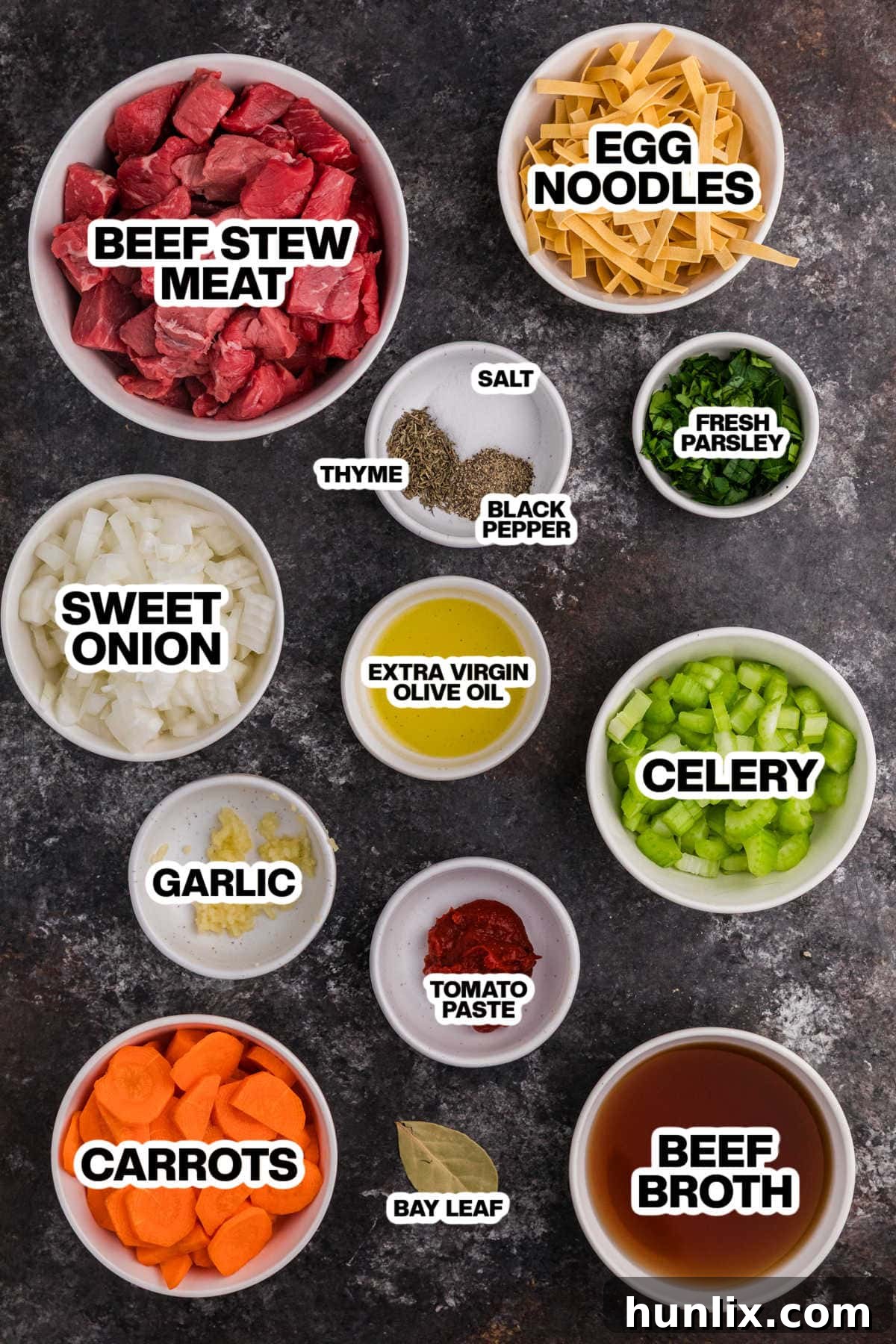
Crafting an outstanding beef noodle soup begins with selecting quality ingredients. Each component plays a vital role in building the layered flavors that make this soup so irresistible. Below, we detail the key ingredients and offer tips for choosing and preparing them.
- Extra Virgin Olive Oil: This serves as the initial fat for browning the beef and sautéing the vegetables. Using a good quality olive oil enhances the overall flavor foundation. You’ll divide it between these two crucial cooking steps.
- Beef Stew Meat: For the most tender results, choose well-marbled beef stew meat, often cut from the chuck. Ensure you cut it into evenly sized, bite-sized pieces. This consistency is crucial for even cooking, ensuring every piece becomes beautifully tender during the slow simmer.
- Sweet Onion: Diced sweet onion contributes a foundational sweetness and aromatic depth to the broth. Dice it uniformly so it softens completely and melts into the soup, adding flavor without noticeable chunks.
- Carrots: Carrots add natural sweetness and a vibrant color. Slice them on the thicker side (about ¼ to ½ inch) to prevent them from becoming overly soft or mushy during the longer simmering time. They should retain a pleasant bite.
- Celery: Celery brings a classic aromatic element to the soup. If your celery stalks are particularly thick, consider slicing them thinner than the carrots to ensure they cook evenly and become tender alongside the other vegetables.
- Garlic: Freshly minced garlic is non-negotiable for its pungent, aromatic power. Add it toward the end of the vegetable sautéing process to prevent it from burning, which can turn bitter.
- Beef Broth: The quality of your beef broth directly impacts the flavor of your soup, as it forms the backbone of the entire dish. Opt for a high-quality, low-sodium beef broth to allow for better control over the final salt content. Homemade beef broth will, of course, yield the most incredible results.
- Tomato Paste: A small amount of tomato paste is a secret weapon. It doesn’t make the soup taste like tomato but instead adds a subtle richness, depth, and a touch of umami, beautifully complementing the beef flavor.
- Salt: Proper seasoning is key. Season the beef generously before browning to enhance its natural flavors. You’ll then adjust the salt again at the end of cooking for the perfect overall balance.
- Black Pepper: Freshly ground black pepper offers a superior, more robust flavor compared to pre-ground varieties. Season the beef initially and adjust to taste at the end.
- Dried Thyme: Thyme is an excellent herb for beef, providing an earthy, slightly minty note. A little goes a long way; stick to the measured amount to enhance the beef without overpowering the other flavors.
- Bay Leaf: One bay leaf adds a subtle, herbaceous depth as the soup simmers. Remember to remove it before serving, as it is not meant to be eaten.
- Egg Noodles: Wide or medium egg noodles are the ideal choice for this soup. Their soft texture and ability to absorb the rich broth make them incredibly comforting. They also hold up well without becoming too mushy.
- Fresh Parsley: While optional, a sprinkle of freshly chopped parsley as a garnish adds a bright pop of freshness, color, and a herbaceous finish just before serving.
Step-by-Step Guide: How to Make Beef Noodle Soup
Creating this delicious Beef Noodle Soup is a straightforward process, but following these steps carefully ensures a flavorful and perfectly textured result. From browning the beef to simmering the broth, each stage builds upon the last to create a truly memorable meal.
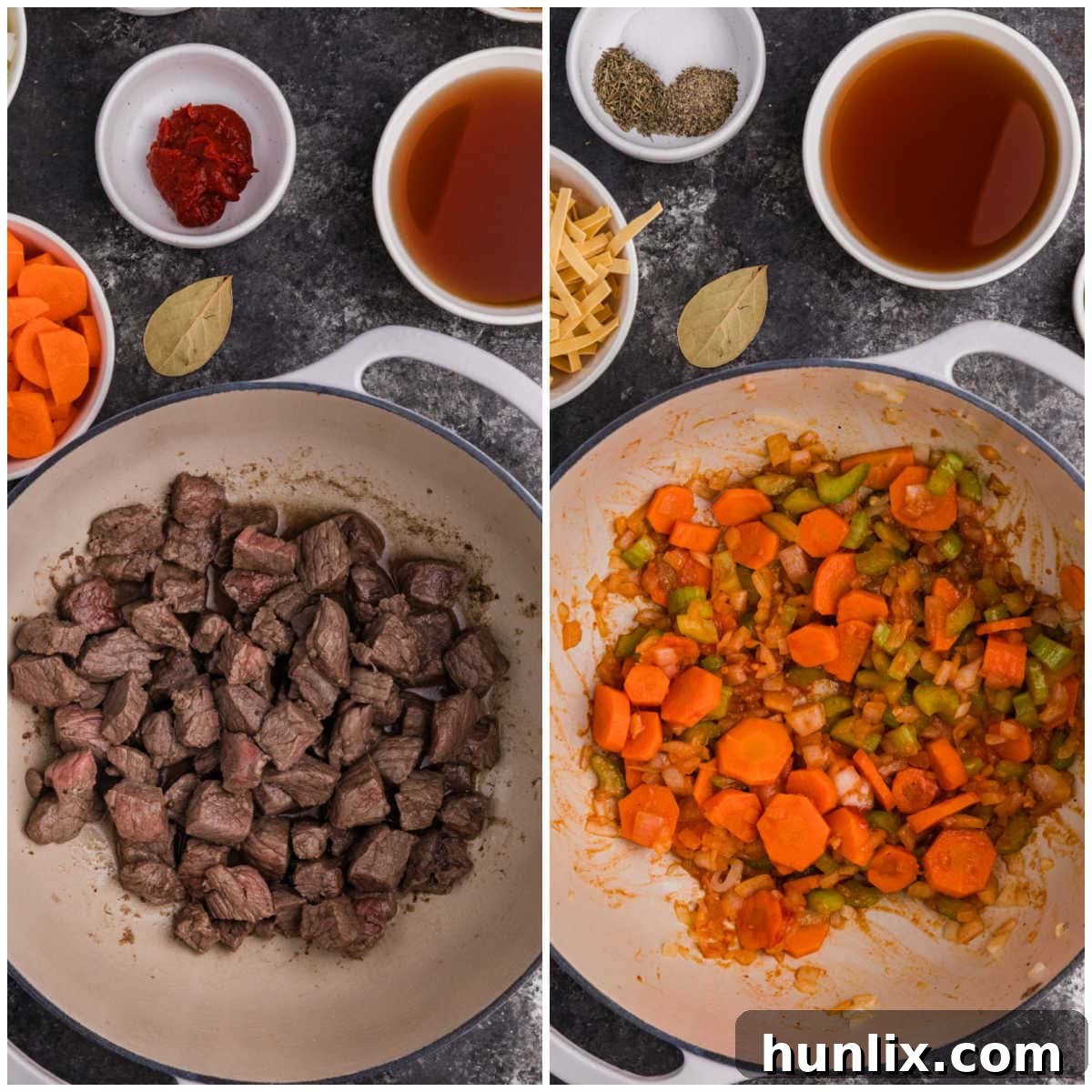
- Step One: Brown the Beef. In a large, heavy-bottomed pot or Dutch oven, heat 1 tablespoon of olive oil over medium-high heat. Pat the beef stew meat dry with paper towels; this is crucial for achieving a good sear instead of steaming. Season the dried beef generously with salt and black pepper. Working in batches to avoid overcrowding the pan, add the beef and cook until deeply browned on all sides. This browning creates a rich, caramelized crust that adds immense flavor to your broth. Remove the browned beef and any accumulated juices to a clean plate and set aside.
- Step Two: Sauté the Aromatics. Reduce the heat to medium in the same pot. Add the remaining 1 tablespoon of olive oil. Introduce the diced onion, sliced carrots, and sliced celery. Cook for 5 to 7 minutes, stirring occasionally, until the onions have softened and become translucent. As you cook, be sure to scrape up any browned bits (fond) from the bottom of the pot with a wooden spoon; these bits are packed with flavor and will dissolve into your broth. Finally, add the minced garlic and cook for just 30 seconds more, or until fragrant, being careful not to burn it.
- Step Three: Build the Broth. Stir the tomato paste into the sautéed vegetables and cook for 1 minute, allowing it to slightly darken and deepen in flavor. Return the browned beef and any reserved juices to the pot. Pour in the beef broth, then add the measured salt, black pepper, dried thyme, and the bay leaf.
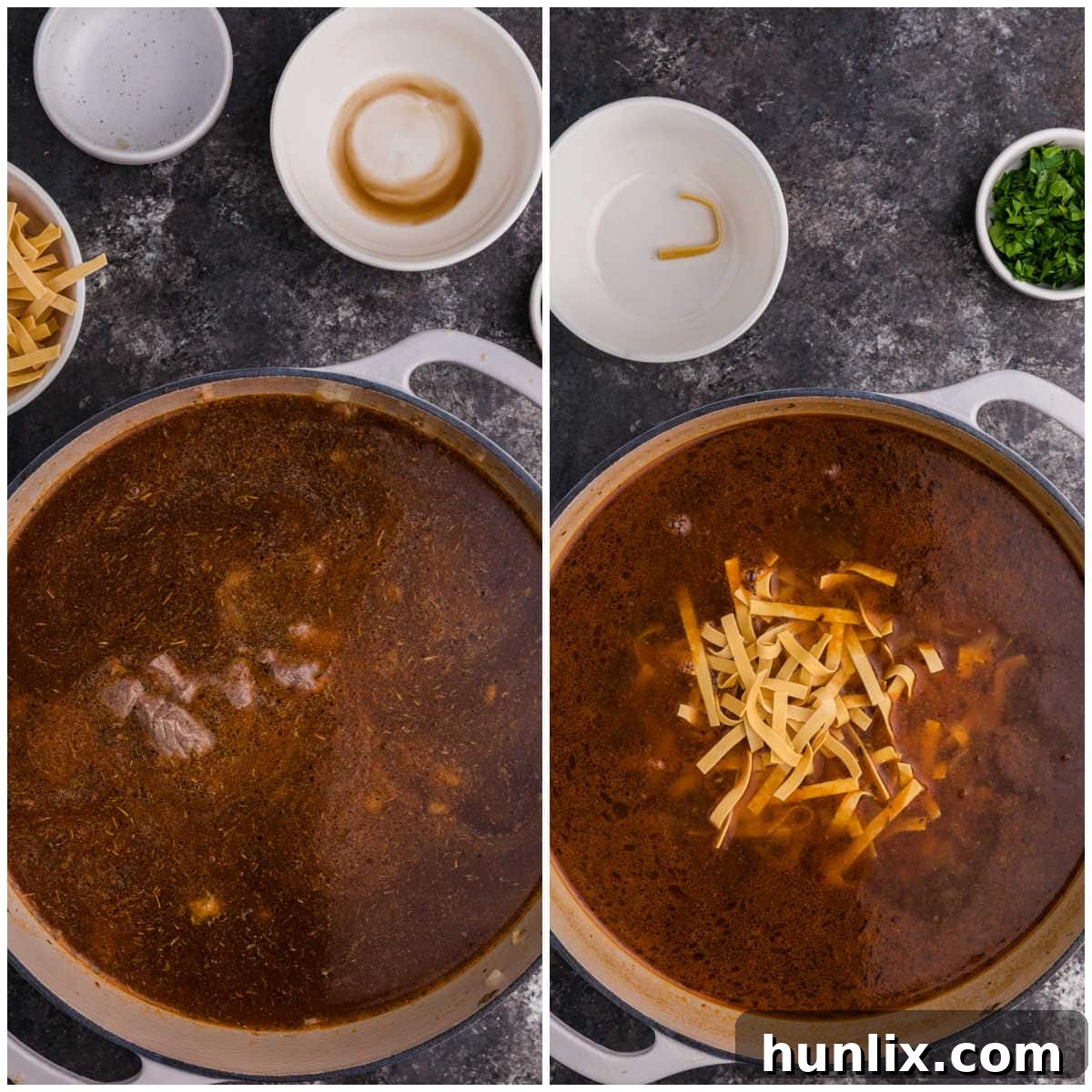
- Step Four: Simmer for Tenderness. Bring the soup to a gentle boil over medium heat. Once boiling, immediately reduce the heat to low, cover the pot, and let it simmer for 1 hour. Stir occasionally to prevent anything from sticking to the bottom. This slow, gentle simmer is essential for breaking down the beef and allowing it to become incredibly tender.
- Step Five: Cook the Noodles. After 1 hour, or once the beef is tender, stir in the egg noodles. Increase the heat slightly to maintain a gentle simmer (uncovered) and cook for 8 to 10 minutes, or until the noodles are al dente and tender. Be careful not to overcook them, as they will continue to soften slightly after the heat is removed.
- Step Six: Finish and Serve. Carefully remove and discard the bay leaf. Taste the soup and adjust the seasoning as needed, adding more salt or pepper to your preference. Ladle the hot soup into individual bowls. For an added touch of freshness and color, garnish each serving with a sprinkle of chopped fresh parsley, if desired. Serve immediately and enjoy!
Creative Variations and Smart Substitutions for Your Beef Noodle Soup
While the classic Beef Noodle Soup recipe is wonderful on its own, it’s also incredibly versatile. Don’t hesitate to experiment with these variations and substitutions to tailor the soup to your taste, dietary needs, or what you have on hand.
- Experiment with Different Cuts of Beef: If beef stew meat isn’t available, a chuck roast cut into 1-inch cubes works exceptionally well. Like stew meat, chuck roast benefits from a long, slow simmer, becoming incredibly tender and infusing the broth with deep, beefy flavor. Other options include beef shank or even short ribs, though these might require slightly longer cooking times for maximum tenderness.
- Swap Out the Noodles: Wide egg noodles are a traditional choice for their comforting texture, but feel free to get creative. Rotini or fusilli pasta can add an interesting spiral texture that catches more broth. Even broken spaghetti or ditalini can work in a pinch for a different mouthfeel. For a gluten-free option, use gluten-free pasta, adding it towards the end of cooking as per package directions.
- Boost the Veggies: To make your soup even more nutritious and colorful, add extra vegetables during the last few minutes of cooking. Frozen peas or corn can be stirred in directly without thawing. Sliced bok choy or green beans also make excellent additions, offering extra texture and freshness. You can also add diced potatoes or parsnips along with the carrots and celery for a more substantial vegetable blend.
- Control Sodium Levels: If you’re mindful of sodium intake, always opt for low-sodium beef broth. This gives you complete control over the salt content, allowing you to season the soup precisely to your liking at the end of the cooking process.
- Explore More Herbs: Beyond thyme, a pinch of dried rosemary or marjoram can introduce a slightly different, yet equally delicious, flavor profile. These herbs pair wonderfully with beef. Fresh herbs like a sprig of rosemary or a few sprigs of fresh parsley can be added during the simmer and removed before serving for a brighter, more complex aroma.
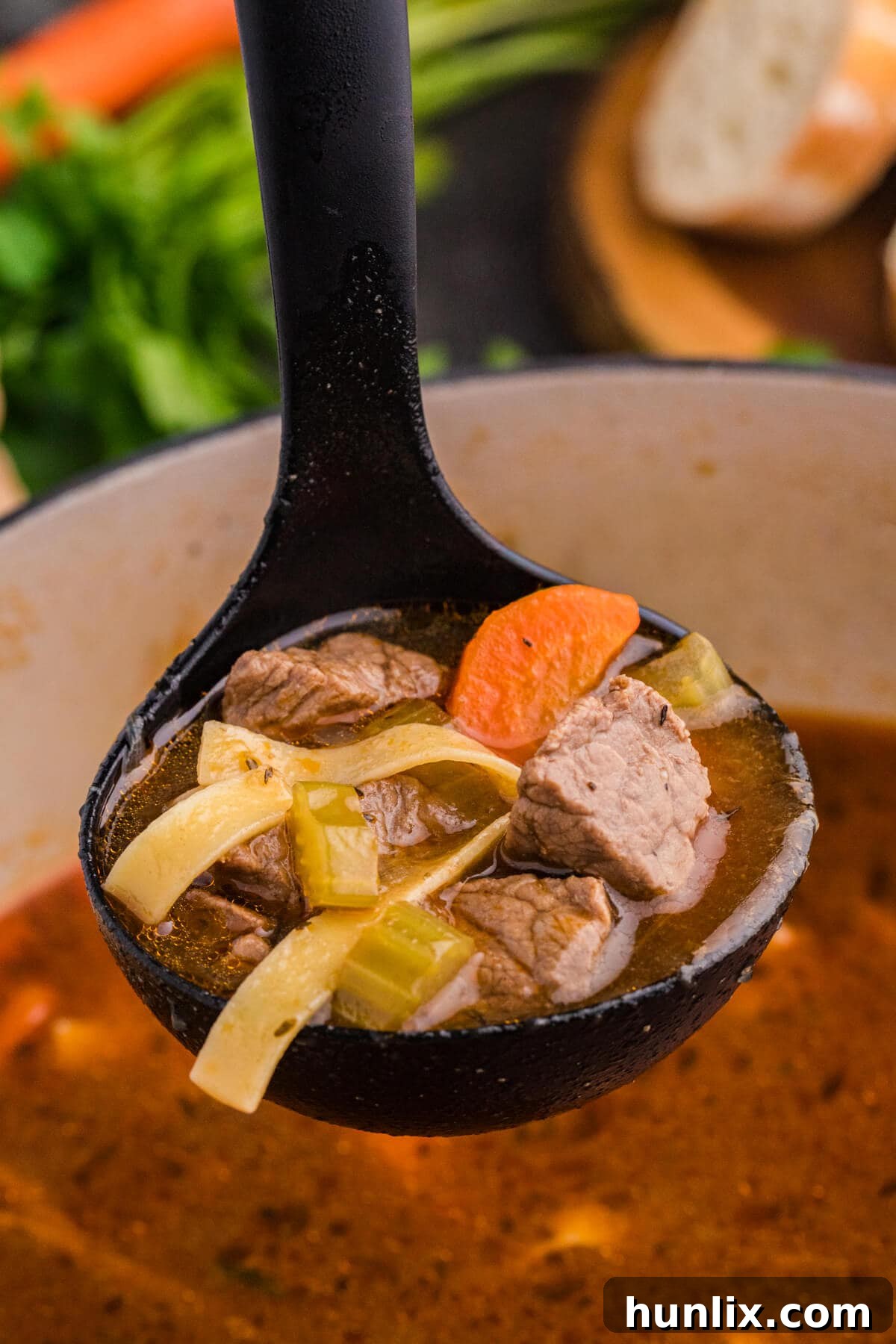
- Slow Cooker Adaptation: For a hands-off approach, convert this recipe for your slow cooker. First, brown the beef on the stovetop as directed – this step is crucial for flavor and shouldn’t be skipped. Then, transfer the browned beef and all other ingredients (except the noodles) to your slow cooker. Cook on low for 7 to 8 hours, or on high for 3-4 hours, until the beef is meltingly tender. Add the egg noodles during the last 30 minutes of cooking, and continue cooking until they are tender.
- Freezer-Friendly Preparation: If you plan to freeze portions of this soup for later, it’s best to omit the noodles during the initial cooking. Cook the soup base without them. When you’re ready to enjoy, thaw the soup overnight in the refrigerator, reheat it on the stovetop, and cook fresh egg noodles separately. Add the freshly cooked noodles to your hot soup just before serving to prevent them from becoming mushy.
Storage, Reheating, and Freezing Your Beef Noodle Soup
Proper storage is essential to enjoy your delicious Beef Noodle Soup for days to come. Here’s how to keep it fresh, reheat it perfectly, and even freeze it for future meals.
- Refrigerator Storage: Allow the soup to cool down completely to room temperature before transferring it to an airtight container. Store it in the refrigerator for up to 4 days. It’s important to note that the egg noodles will continue to absorb broth as the soup sits, causing it to thicken over time. This is perfectly normal.
- Reheating Instructions: To reheat leftovers, gently warm the soup on the stovetop over medium-low heat, stirring occasionally, until it’s heated through. Alternatively, you can reheat individual portions in the microwave. Since the noodles will have absorbed liquid, the soup might be thicker than originally. To restore it to its desired consistency, add a splash of extra beef broth or water while reheating, stirring until it loosens up.
- Freezing for Later: For optimal results when freezing, prepare and cook the soup without adding the noodles. Noodles tend to become mushy and absorb too much liquid when frozen and thawed. Once the noodle-free soup base has cooled completely, transfer it to freezer-safe containers or heavy-duty freezer bags, leaving some headspace for expansion. It can be stored in the freezer for up to 3 months. When you’re ready to serve, thaw the soup overnight in the refrigerator, then reheat it on the stove. Cook fresh egg noodles separately according to package directions and add them to the hot soup just before serving. This ensures the noodles retain their perfect texture.
Top Tips and Tricks for the Best Beef Noodle Soup
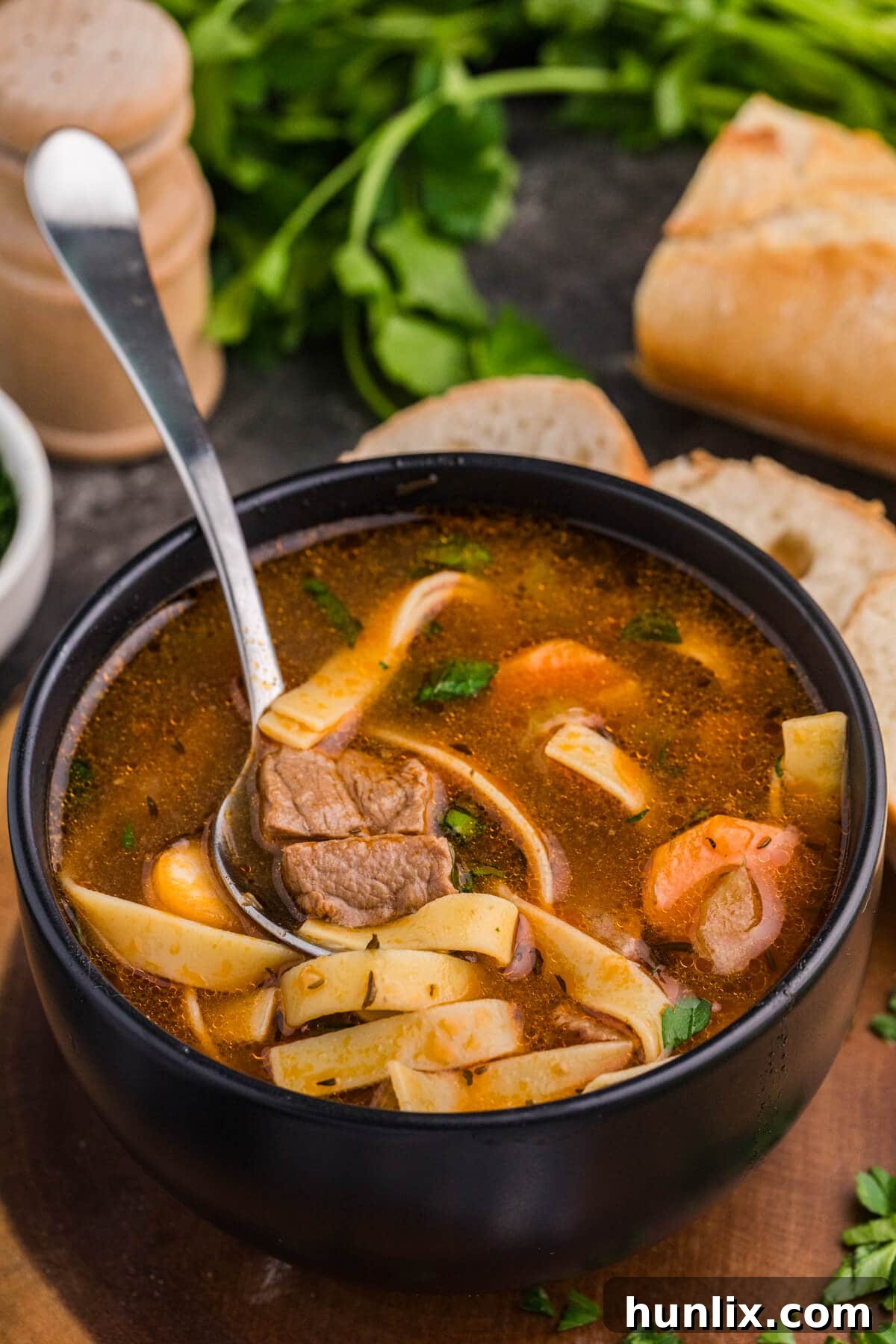
Achieving a truly exceptional Beef Noodle Soup often comes down to a few key techniques. These tips will help you elevate your homemade soup from good to absolutely outstanding, ensuring rich flavors and perfect textures every time.
- Always Brown the Beef in Batches: This is arguably the most crucial step for a flavorful soup. When beef is crowded in a pot, it steams rather than browns, leading to grey, less flavorful meat. Browning in smaller batches allows each piece to develop a deep, caramelized crust, which translates into a much richer, more complex broth. Don’t rush this step!
- Scrape Up Those Flavorful Bits (Fond): After browning the beef and sautéing the vegetables, you’ll notice browned bits stuck to the bottom of the pot. These are called “fond,” and they are packed with incredible savory flavor. As you add the liquids, use a wooden spoon to vigorously scrape up all those delicious bits. They will dissolve into the broth, adding remarkable depth and richness that you wouldn’t get otherwise.
- Maintain a Low and Slow Simmer: Patience is a virtue when it comes to tender beef. Keep the soup at a gentle, consistent simmer, not a rolling boil, once all ingredients are in. This allows the tough connective tissues in the beef to slowly break down, resulting in incredibly tender, melt-in-your-mouth chunks of meat without drying them out.
- Add Noodles Towards the End: Egg noodles cook relatively quickly. To prevent them from becoming mushy and overcooked, wait until the beef is fully tender and the broth has simmered sufficiently before adding them. This ensures the noodles retain their ideal texture and don’t turn into a starchy paste.
- Taste and Adjust Seasoning at the End: As the soup simmers, the broth naturally reduces and its flavors concentrate. The saltiness can also change. Therefore, it’s best to do your final seasoning adjustments (adding more salt or pepper) just before serving. This ensures the perfect balance of flavors and prevents the soup from becoming overly salty.
Frequently Asked Questions About Beef Noodle Soup
Q: Can I use fresh herbs instead of dried ones?
A: Absolutely! Fresh herbs can add a brighter, more vibrant flavor. If substituting, use about three times the amount of fresh herbs to dried herbs (e.g., 1.5 teaspoons of fresh thyme for 0.5 teaspoon dried). Add fresh herbs towards the end of the cooking process to preserve their delicate flavor.
Q: What kind of beef is best for stew meat?
A: Chuck roast is generally the best choice for beef stew meat due to its rich marbling and connective tissue, which breaks down beautifully during slow cooking, resulting in tender, flavorful beef. Other good options include beef round or short ribs.
Q: My soup is too thick after a day or two. What should I do?
A: This is common, as the noodles continue to absorb liquid. Simply add more beef broth or a little water when reheating, stirring until you reach your desired consistency. You might also need to adjust the seasoning again.
Q: Can I make this soup vegetarian?
A: While this is a beef noodle soup, you could adapt the concept to be vegetarian. Substitute the beef with hearty mushrooms (like cremini or portobello) or plant-based beef alternatives, and use vegetable broth instead of beef broth. The flavor profile would be different but still delicious.
More Hearty Beef Soup Recipes to Explore
If you loved this comforting Beef Noodle Soup, you might enjoy these other warming and delicious beef-based soup recipes:
- Beef and Barley Soup: A wholesome and satisfying soup packed with tender beef, hearty barley, and vegetables.
- Slow Cooker Beef Brisket and Vegetable Soup: Let your slow cooker do the work for this rich soup featuring melt-in-your-mouth beef brisket.
- Hamburger Soup: A quick and easy, family-friendly soup made with ground beef and plenty of vegetables.
Follow me on Instagram @simplystacieblog, Facebook at Simply Stacie, TikTok @simplystacierecipes or Pinterest at @simplystacie and let me know how you liked this recipe and my other recipes.
Beef Noodle Soup Recipe
Created by Stacie Vaughan
This classic Beef Noodle Soup is filled with tender beef, vegetables, and egg noodles in a flavorful broth. An easy, comforting dinner recipe.
Servings: 6
Prep Time: 20 minutes
Cook Time: 1 hour 30 minutes
Total Time: 1 hour 50 minutes
Ingredients
- 2 tbsp extra virgin olive oil
- 1 ½ lbs beef stew meat, cut into bite-sized pieces
- 1 medium onion, diced
- 2 carrots, peeled and sliced (thickly)
- 2 celery stalks, sliced
- 3 cloves garlic, minced
- 8 cups beef broth
- 1 tbsp tomato paste
- 1 tsp salt (plus extra to season beef)
- ½ tsp black pepper (plus extra to season beef)
- ½ tsp dried thyme
- 1 bay leaf
- 2 cups egg noodles, uncooked (wide or medium)
- Chopped fresh parsley for garnish (optional)
Instructions
- Heat 1 tablespoon of olive oil in a large pot or Dutch oven over medium-high heat. Dry beef with paper towels and season with salt and pepper. Working in batches to avoid overcrowding the pan, add the beef and cook until browned on all sides. Remove beef and juices to a plate.
- In the same pot, turn heat down to medium and add 1 tablespoon of olive oil. Add the onion, carrots, and celery. Cook for 5 to 7 minutes, until onions are softened, making sure to scrape up any browned bits from the bottom. Add the garlic and cook for 30 seconds.
- Stir in the tomato paste. Add the beef back to the pot along with the beef broth, salt, pepper, thyme, and bay leaf.
- Bring to a gentle boil, then reduce heat to low. Cover and simmer for 1 hour, stirring occasionally, until the beef is tender.
- Stir in the egg noodles and cook uncovered for 8 to 10 minutes, or until tender.
- Remove the bay leaf. Taste and adjust seasoning. Ladle into bowls and garnish with parsley if desired.
Notes
- Noodle control: Cook noodles separately if you plan on lots of leftovers so they don’t soak up too much broth.
- Vegetable swap: Add peas or corn at the end if you like a little sweetness and extra veggies.
- Storage: Store leftovers in an airtight container in the refrigerator for up to 4 days. Reheat gently on the stove and add extra broth if needed.
Nutrition (Estimated Per Serving)
Calories: 292kcal | Carbohydrates: 14g | Protein: 31g | Fat: 12g | Saturated Fat: 3g | Polyunsaturated Fat: 1g | Monounsaturated Fat: 6g | Trans Fat: 0.01g | Cholesterol: 81mg | Sodium: 1681mg | Potassium: 722mg | Fiber: 2g | Sugar: 2g | Vitamin A: 3457IU | Vitamin C: 4mg | Calcium: 63mg | Iron: 3mg
The information shown is an estimate provided by an online nutrition calculator. It should not be considered a substitute for a professional nutritionist’s advice.
Course: Soup
Cuisine: American
Keyword: beef soup, soup
Want Even More Recipes?
Join Moms Best Recipes to find more delicious family recipes and connect with other home cooks!