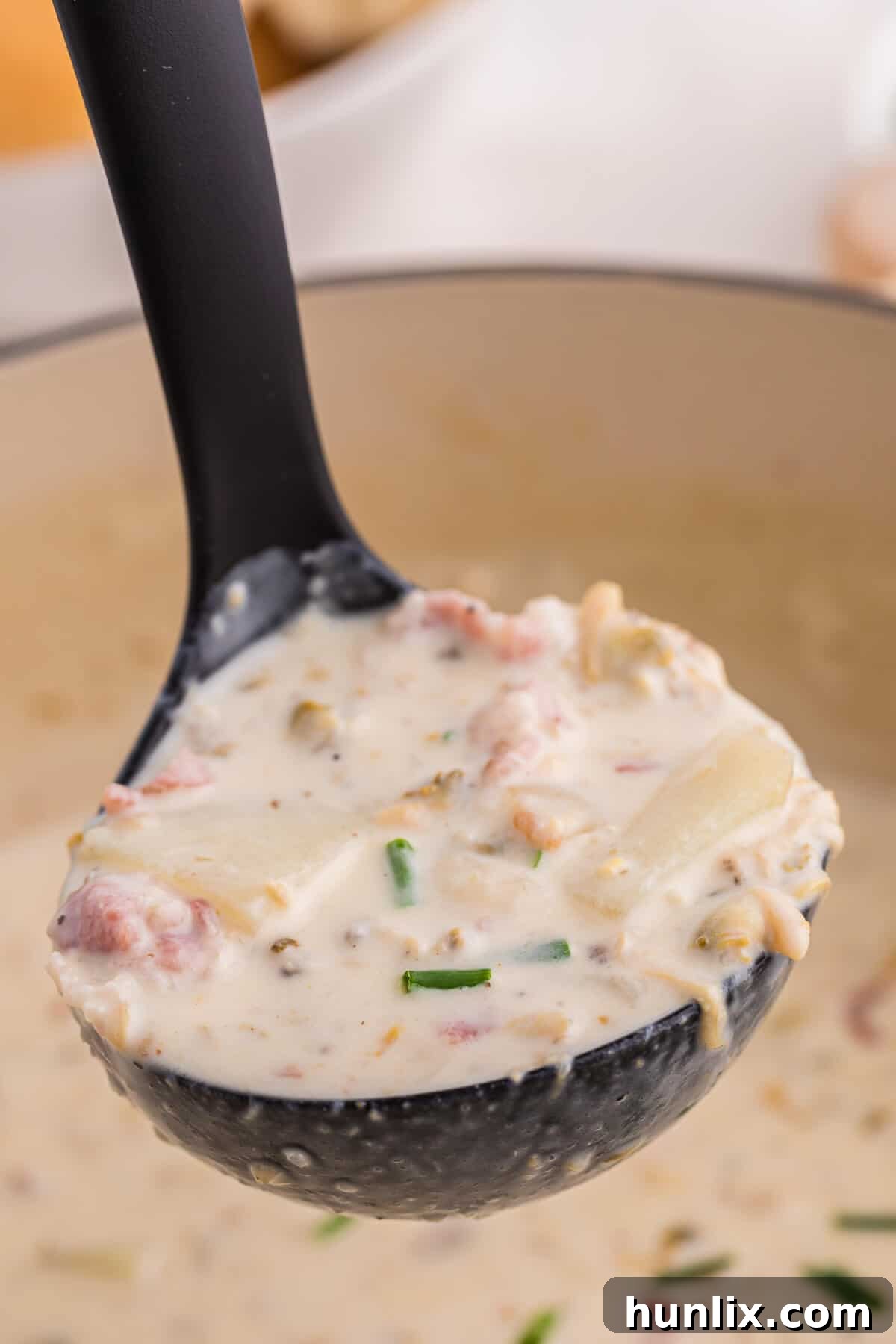
Unveiling the Timeless Comfort: The Ultimate New England Clam Chowder Recipe
There are few dishes that evoke a sense of warmth, tradition, and coastal charm quite like New England Clam Chowder. This iconic American classic, revered for generations, offers a deeply satisfying experience with its rich, creamy broth and an abundance of hearty ingredients. It’s more than just a soup; it’s a culinary hug, a symbol of home, and the ultimate comfort food perfect for gathering the family on a chilly evening, or simply transporting your taste buds to the picturesque shores of New England.
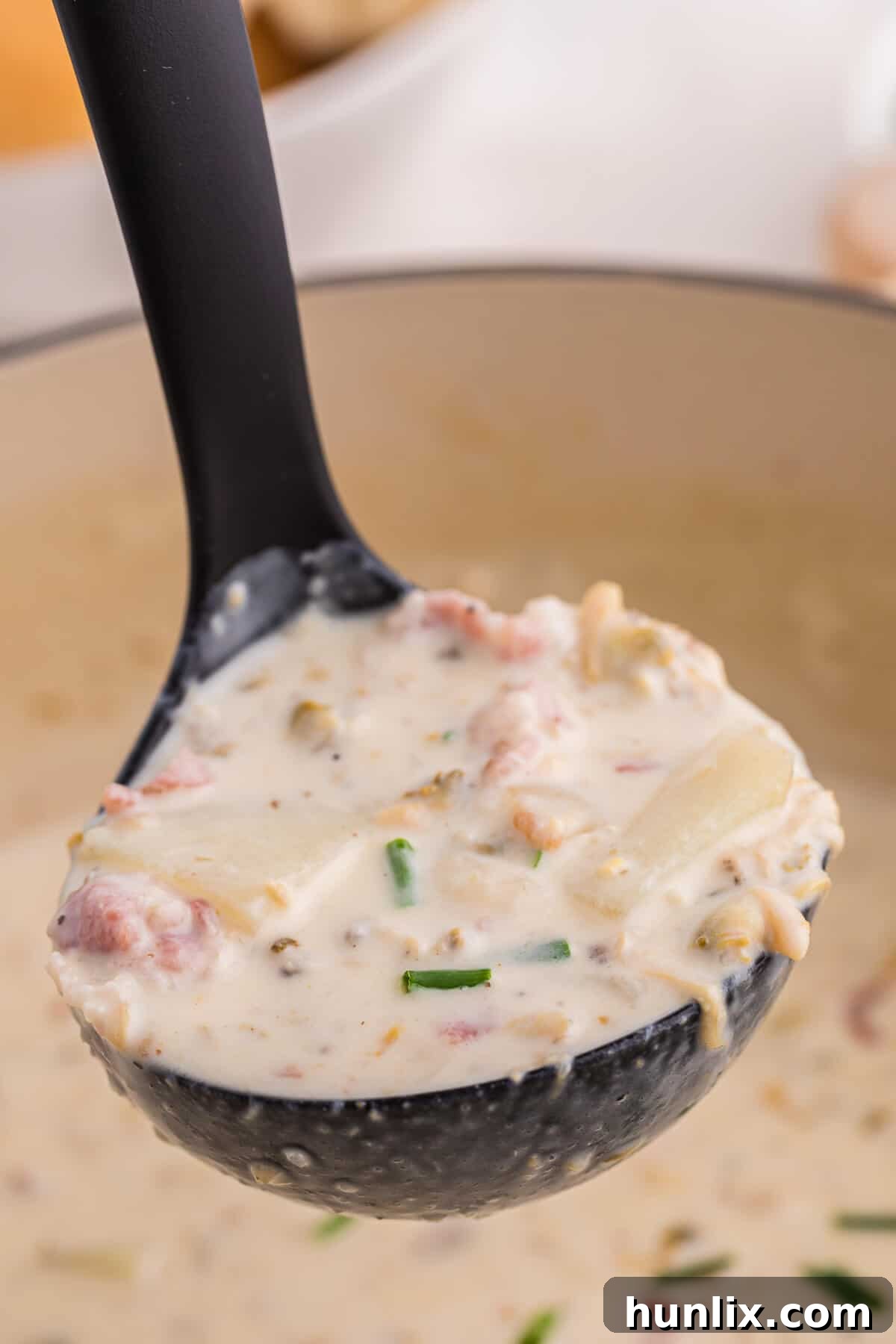
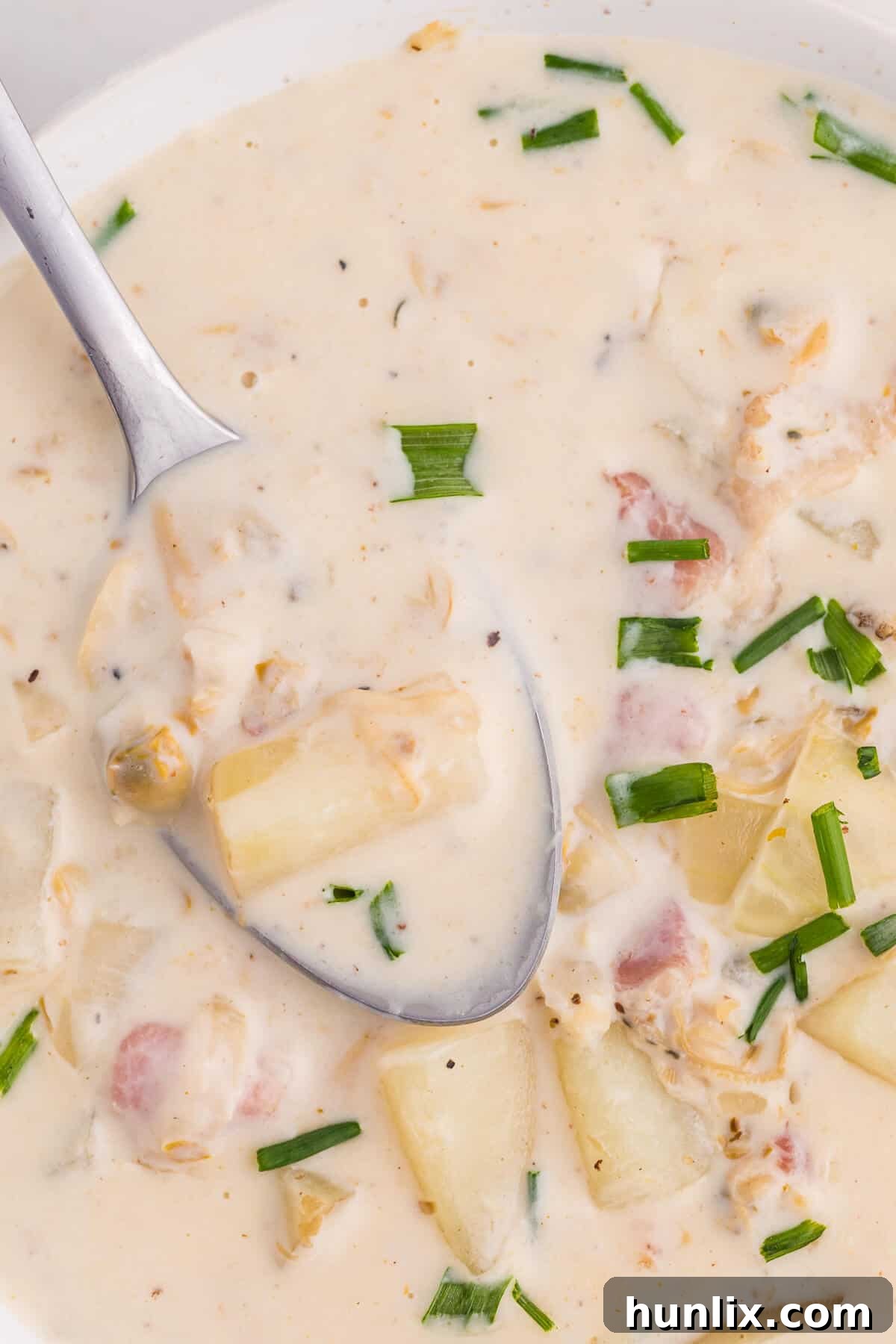
Each spoonful of this exquisite chowder is a symphony of flavors and textures. Imagine savoring tender, succulent clams, perfectly complemented by crispy, salty bacon, substantial chunks of tender potatoes, and a medley of aromatic vegetables. This harmonious blend creates a depth of flavor that a canned soup simply cannot replicate. Our homemade New England Clam Chowder recipe utilizes simple, readily available ingredients to deliver that authentic, rich flavor profile you’ve been craving.
Forget the supermarket aisle; the true magic of clam chowder lies in a homemade rendition. With just a little preparation and a dash of passion, you’ll soon be ladling out generous bowls of this savory masterpiece for your loved ones. The inviting aroma alone, as the soup gently simmers on your stove, is enough to make mouths water and anticipation build. This recipe promises a creamy, salty, and utterly delicious experience, right down to the very last comforting drop.
Why You’ll Fall in Love with This Creamy New England Clam Chowder
- Unparalleled Richness and Creaminess: At the heart of this chowder is a luxurious base crafted from half-and-half cream. This essential ingredient imparts an incredibly smooth, velvety texture that defines authentic New England clam chowder. It’s the perfect antidote to chilly days and an instant classic that transports you to coastal serenity, no matter the season.
- Abundant Savory Ingredients: This isn’t just a soup; it’s a meal. Our recipe generously loads the chowder with plump, tender fresh clams, perfectly diced potatoes that melt in your mouth, and savory bacon that adds a depth of smoky flavor. Each bite is satisfying, hearty, and utterly fulfilling, making it an ideal main course.
- Effortless Homemade Perfection: You might think a dish this delicious would be complicated, but this easy clam chowder recipe proves otherwise. With straightforward instructions and common kitchen staples, you can recreate this restaurant-quality dish in your own kitchen, impressing family and friends without stress.
- Endless Customization Potential: While the classic recipe is perfect as is, it also serves as a fantastic canvas for your culinary creativity. Feel free to experiment with various herbs like fresh thyme or bay leaves, introduce a hint of spice, or incorporate additional vegetables to suit your palate. This versatility ensures that your clam chowder can evolve into a new family favorite, tailored precisely to your preferences.
Essential Ingredients for Authentic Clam Chowder
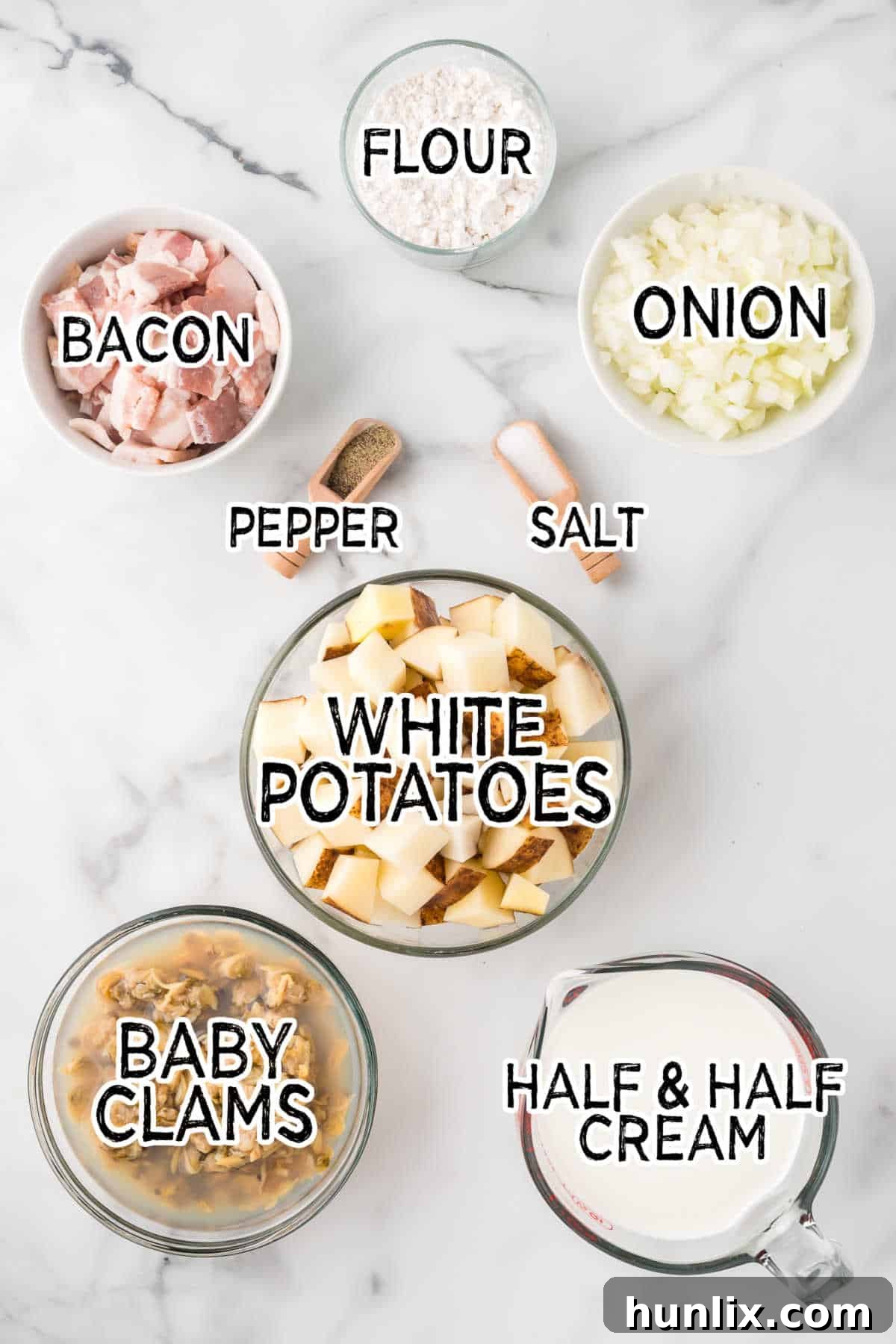
Crafting the perfect New England Clam Chowder begins with selecting high-quality ingredients. Each component plays a vital role in building the signature flavor and texture of this beloved dish:
- Bacon: More than just a topping, bacon is the flavor foundation of your chowder. As it cooks, it renders savory fat, which is then used to sauté the aromatics, infusing the entire dish with a rich, smoky depth. Don’t skip this crucial step for maximum flavor.
- Yellow Onion: Finely chopped yellow onion provides a delicate sweetness and aromatic base that beautifully balances the richness of the bacon and cream. It softens to become almost imperceptible in the final chowder, yet its contribution to the overall flavor profile is immense.
- All-Purpose Flour: This humble ingredient is key to achieving the luxurious, thick consistency that distinguishes authentic clam chowder. It creates a roux with the bacon fat, forming the creamy backbone of the soup.
- White Potatoes: Diced white potatoes add a satisfying heartiness and a creamy, starchy texture as they cook down. They absorb the wonderful flavors of the broth, becoming tender and comforting. Russet or Yukon Gold varieties also work wonderfully.
- Baby Clams: The undeniable star of the show! Baby clams deliver that quintessential seafood taste that makes New England clam chowder so beloved. For convenience, canned baby clams are an excellent choice. Remember to drain them, but crucially, *reserve the clam juice*. This flavorful liquid is indispensable for deepening the seafood essence of your chowder.
- Salt: A fundamental seasoning that enhances and amplifies the flavors of all the other ingredients, bringing them into perfect harmony. Adjust to taste, especially considering the saltiness of the bacon and clam juice.
- Pepper: A pinch of freshly ground black or white pepper adds a subtle warmth and a gentle kick, perfectly balancing the richness of the cream and other components without overpowering the delicate clam flavor.
- Half & Half Cream: This is the magic ingredient for that iconic creamy texture. Half-and-half provides richness without being overly heavy, allowing the other flavors to shine through while maintaining a smooth, velvety consistency. Whole milk or heavy cream can also be used, depending on desired richness.
Crafting the Best Homemade Clam Chowder: Step-by-Step
Making a truly memorable New England Clam Chowder at home is simpler than you might think. Follow these clear steps to achieve a perfectly creamy and flavorful result:
- Step One: Render Bacon and Sauté Onion
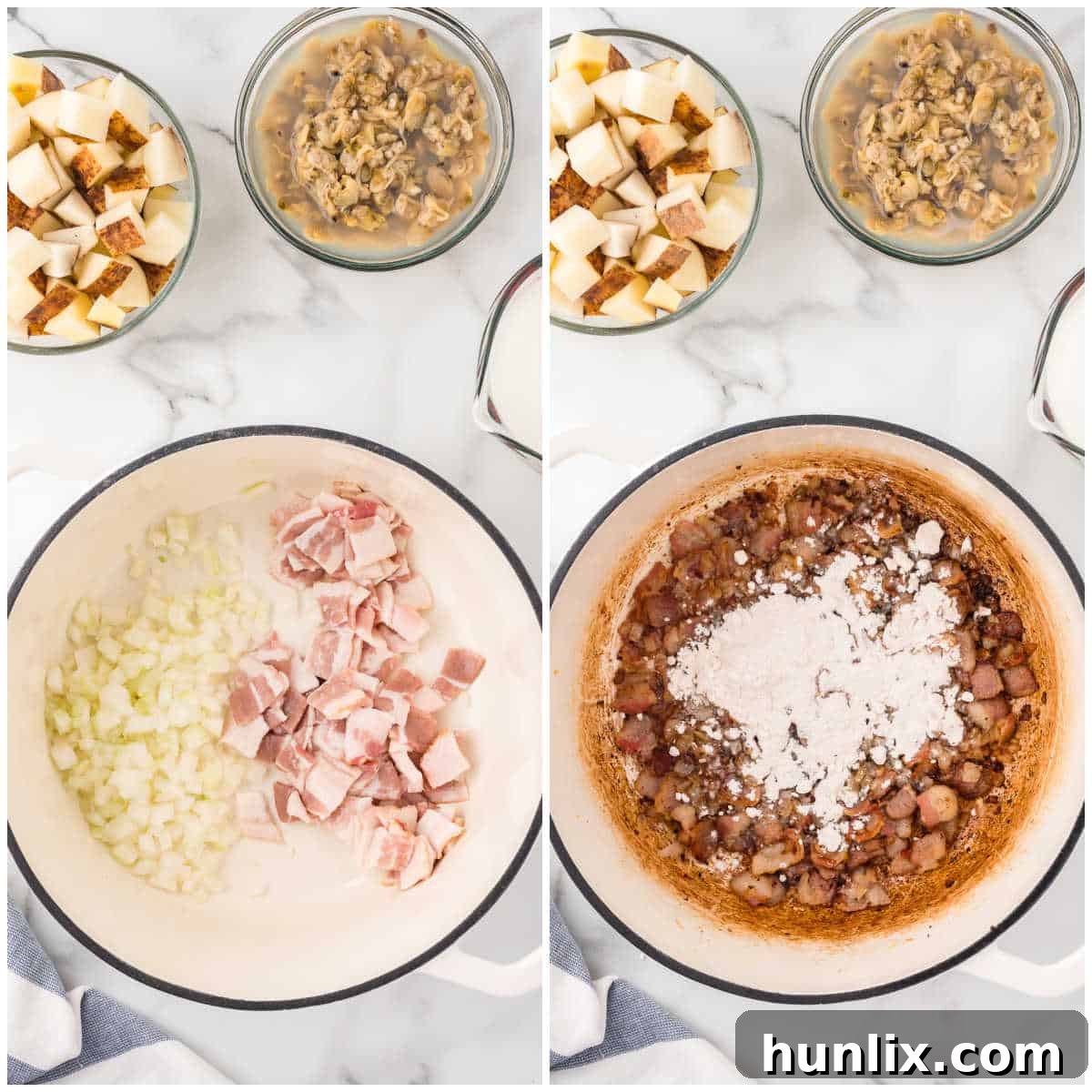
In a large, heavy-bottomed pot or Dutch oven, begin by cooking your chopped bacon over medium heat. Stir it occasionally to ensure even cooking and help it crisp up. As the bacon renders its fat, add the chopped yellow onion to the pot. Continue to cook, stirring frequently, until the bacon is beautifully crispy and the onion has softened and become translucent. This step is crucial for building the foundational flavor of your chowder. - Step Two: Create a Flavorful Roux
Once the bacon is cooked and the onion is tender, sprinkle the all-purpose flour directly into the pot. Stir constantly for at least 1 minute, allowing the flour to cook with the bacon fat and onion. This creates a roux, which is essential for thickening the chowder and preventing a raw flour taste.
- Step Three: Prepare Clam Liquid and Potatoes
Carefully drain your canned clams, ensuring you reserve all of the flavorful clam liquid. Measure the reserved liquid, and then add enough water to it to reach a total of two cups. This combination of clam juice and water forms the primary liquid base for your chowder, imbuing it with deep seafood notes. - Step Four: Simmer to Perfection
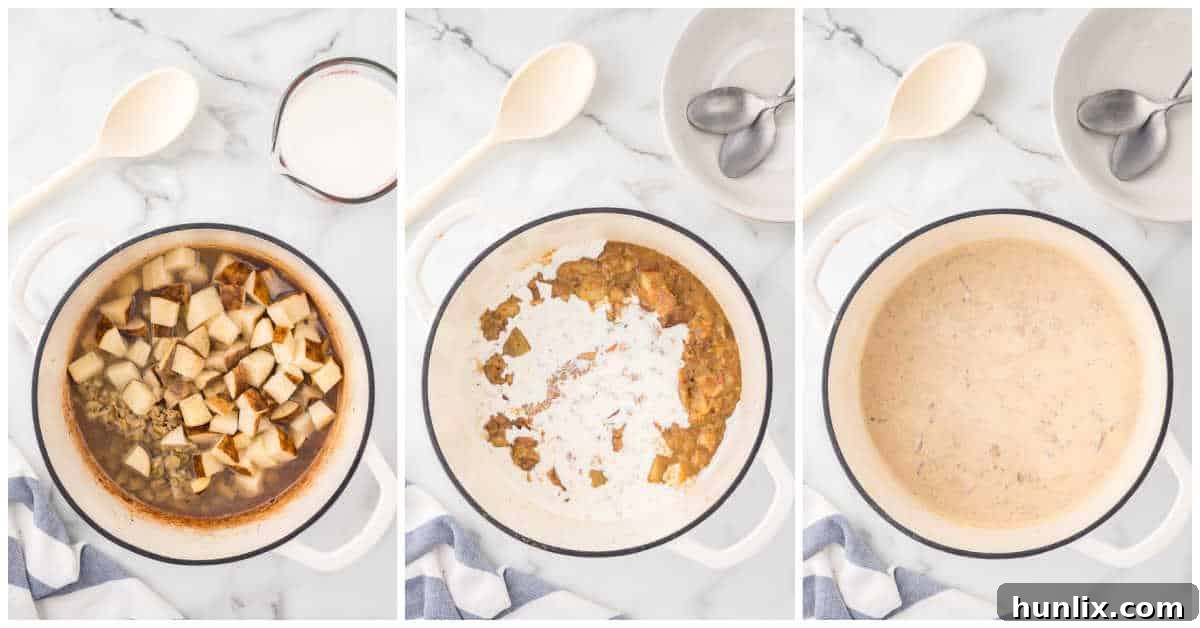
Now, add the drained clams, the prepared clam liquid mixture, diced potatoes, salt, and pepper into the pot with the bacon and onions. Stir everything together to combine. Increase the heat and bring the mixture to a gentle boil, then immediately reduce the heat to a low simmer. Cover the pot and allow it to cook for approximately 20 minutes, or until the potatoes are fork-tender. This simmering time allows the flavors to meld beautifully. - Step Five: Incorporate the Cream and Heat Through
Once the potatoes are tender, stir in the half & half cream. It’s important to add the cream towards the end of the cooking process to prevent it from curdling. Gently heat the chowder, stirring occasionally, just until it is thoroughly warmed through. Avoid boiling the chowder after adding the cream to maintain its silky texture. Serve immediately and enjoy!
Essential Equipment for Your Clam Chowder Journey
To ensure your New England Clam Chowder-making process is smooth and enjoyable, here’s a list of handy kitchen tools. This section may contain affiliate links, meaning we earn a small commission if you make a purchase through our links, at no extra cost to you.
- Dutch Oven: Ideal for even heat distribution and retaining warmth, perfect for simmering soups and stews.
- Sharp Knife: Essential for precise chopping of bacon, onions, and potatoes.
- Cutting Board: A sturdy surface for safe and efficient food preparation.
- Measuring Cups and Spoons: For accurate ingredient measurements, ensuring consistent results.
- Soup Ladle: The perfect tool for serving up generous portions of your delicious chowder.
Perfect Pairings: What to Serve with New England Clam Chowder
While New England Clam Chowder is incredibly satisfying on its own, pairing it with the right accompaniments can elevate your meal into a truly memorable dining experience. Here are some classic and delightful suggestions:
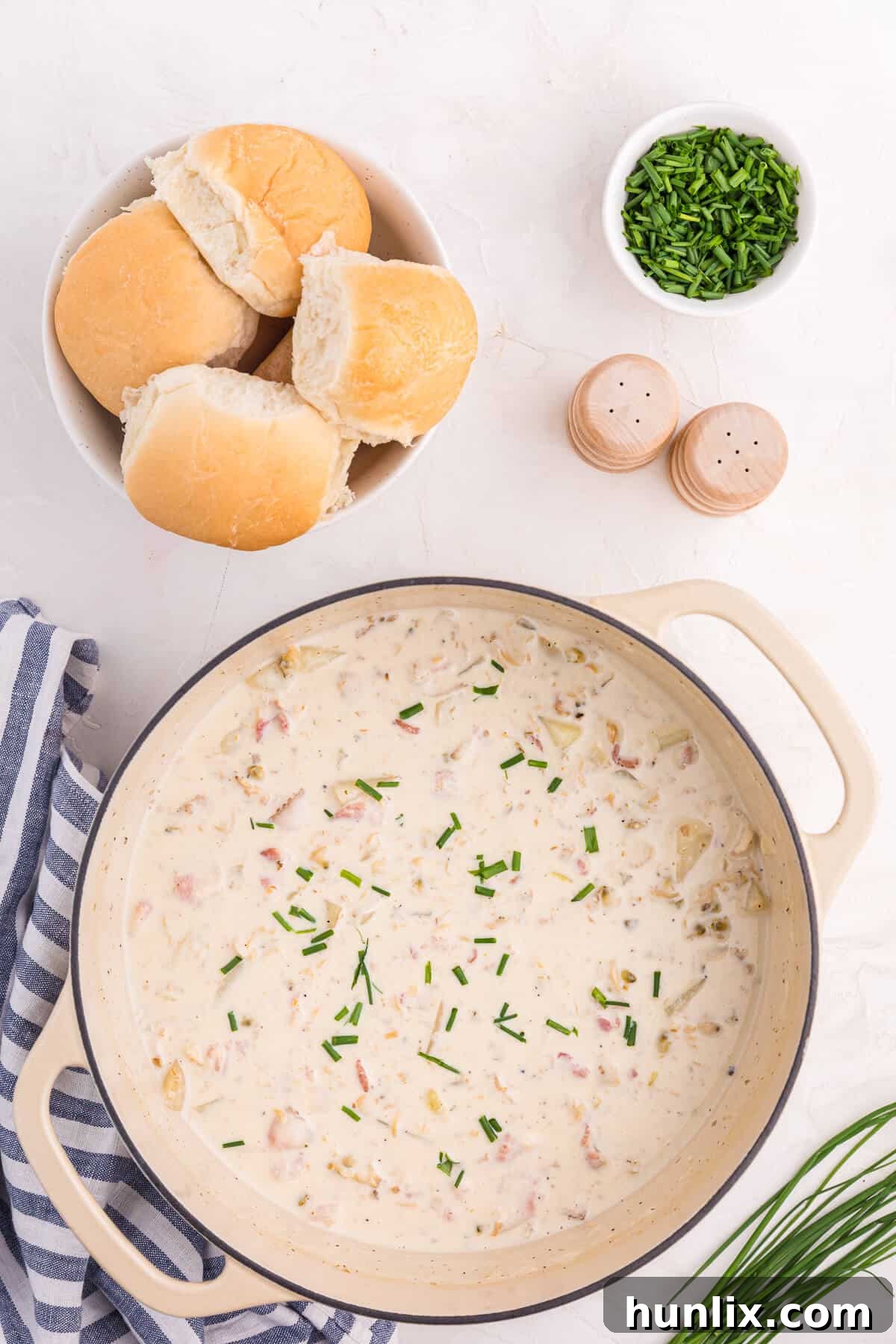
- Crusty Bread or Oyster Crackers: These are the quintessential companions to clam chowder. A warm, crusty loaf of sourdough or French bread is perfect for soaking up every last drop of the creamy broth, while crisp oyster crackers offer a delightful textural contrast and a salty crunch when crumbled over the top.
- Fresh Green Salad: To balance the richness of the chowder, a light and vibrant green salad is an excellent choice. Think mixed greens, cherry tomatoes, crisp cucumber, and perhaps some thinly sliced radishes, all tossed in a simple, zesty vinaigrette. It provides a refreshing counterpoint and adds a healthy element to your meal.
- Grilled or Steamed Vegetables: For additional color and nutrition, consider serving your chowder alongside a plate of lightly seasoned, grilled, or steamed vegetables. Asparagus spears, tender green beans, or zucchini planks make wonderful choices, offering fresh, crisp textures that complement the creamy soup.
- Sweet Corn on the Cob: There’s a natural affinity between corn and clams, making corn on the cob a fantastic seasonal side. Whether boiled, grilled with a hint of char, or oven-roasted, its natural sweetness and juicy kernels are a playful and delicious addition to any clam chowder meal.
Get Creative: Variations and Substitutions for Your Chowder
One of the beauties of this classic clam chowder recipe is its adaptability. Feel free to experiment with these variations and substitutions to tailor the dish to your taste, dietary needs, or what you have on hand:
- Potato Choices: While white potatoes are traditional, feel free to swap them for other varieties. Russet potatoes will give you a very starchy, creamy consistency, while red potatoes or Yukon Gold potatoes will hold their shape a bit better, offering a firmer bite.
- Broth Alternatives: Our recipe leverages the flavorful clam juice and water. However, for a different depth, you can certainly use clam stock, vegetable broth, or even chicken broth as your liquid base. Keep in mind that chicken broth will subtly alter the flavor profile.
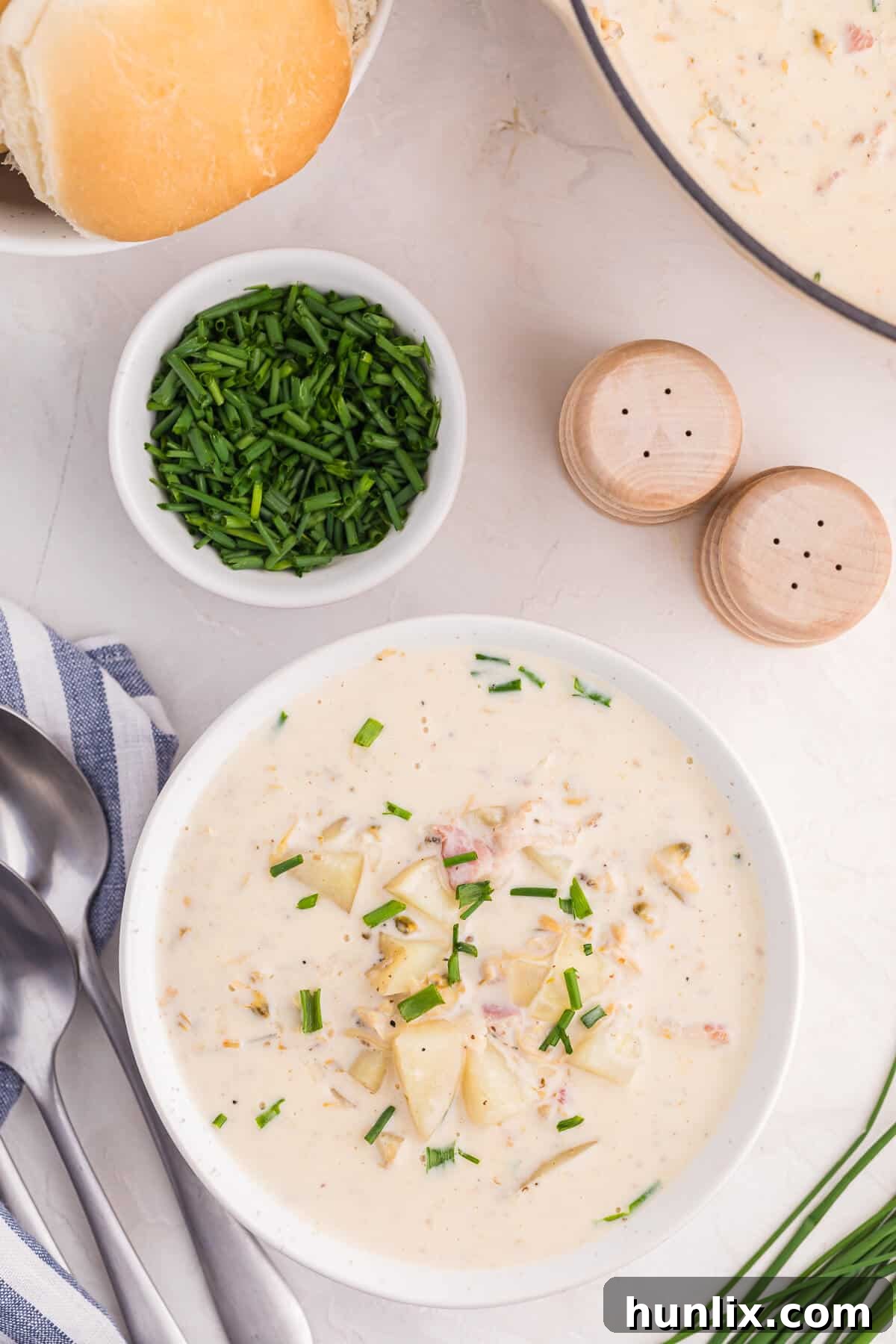
- Aromatic Herbs: Elevate the herbaceous notes of your chowder by adding fresh sprigs of thyme or a bay leaf during the simmering stage. These will infuse the broth with earthy undertones. For a fresh finish, garnish individual bowls with finely chopped fresh parsley or chives just before serving.
- Dairy Alternatives: If you’re lactose intolerant or prefer plant-based options, you can substitute the half-and-half with unsweetened coconut milk, almond milk, or another plant-based cream. Be aware that this may impart a slightly different flavor and texture, particularly with coconut milk, which adds a subtle sweetness.
- Clam Preferences: While canned clams offer great convenience and consistent results, don’t hesitate to use fresh or frozen clams if they’re available to you. If using fresh clams, ensure they are thoroughly cleaned to remove any sand or grit. For frozen clam meat, thaw them properly before adding. Each type will bring its unique nuance to the chowder.
- Bacon Innovations: The smoky flavor of bacon is integral, but you can experiment! Try thick-cut bacon for more substantial pieces or center-cut bacon for a leaner option. For a vegetarian version, you can omit the bacon entirely and start with a tablespoon of olive oil, or use a plant-based bacon alternative for a smoky essence. Turkey bacon can also be a lighter substitute.
Explore further with these delicious clam chowder variations:
- Hearty Corn Chowder: Add a cup or two of fresh, frozen, or canned corn kernels to the mix. The sweet burst of corn complements the clams beautifully and adds another layer of texture.
- Mixed Seafood Chowder: Transform your clam chowder into a luxurious seafood medley by incorporating other ocean delights. Shrimp, bay scallops, or firm white fish (like cod or haddock) can be added towards the end of the simmering process for an even richer and more diverse dish.
- “Loaded” Clam Chowder: For an indulgent twist, top your finished chowder with an array of garnishes. Think crispy bacon crumbles, finely diced green onions, a sprinkle of grated sharp cheddar cheese, or even a dollop of sour cream or crème fraîche.
- Spicy Clam Chowder: If you enjoy a bit of heat, introduce a pinch of cayenne pepper, a dash of your favorite hot sauce, or even a finely minced jalapeño during the sautéing stage. Adjust the amount to achieve your desired level of spice.
Proper Storage for Your New England Clam Chowder
To enjoy your homemade clam chowder for days to come, proper storage is key. Here’s how to keep it fresh and delicious:
- Refrigerating Leftovers: After enjoying your meal, allow any remaining clam chowder to cool down to room temperature. Once cooled, transfer it to an airtight container. Promptly refrigerate the container. Your chowder will maintain its quality and freshness in the refrigerator for up to 3-4 days. Always ensure it’s sealed well to prevent odors and maintain flavor.
- Freezing for Later: While it is possible to freeze clam chowder, be mindful that the cream content may cause a slight change in texture upon thawing (it can sometimes separate). To minimize this, let the chowder cool completely before transferring it to an airtight, freezer-safe container or a heavy-duty freezer bag. Squeeze out as much air as possible from freezer bags. Label and date the container. For optimal quality, store in the freezer for 2-3 months.
- Gentle Reheating: When you’re ready to indulge in your clam chowder again, the stovetop is the best method for reheating. Pour the chowder into a saucepan and heat it over medium-low heat. Stir occasionally to ensure even heating and prevent sticking or scorching on the bottom. If you find the chowder has thickened too much in the refrigerator, add a splash of milk or cream to achieve your desired consistency. Continue heating until it’s warmed through and reaches a safe internal temperature of 165°F (74°C). Crucially, avoid bringing the chowder to a rolling boil, especially after adding cream, as this can cause the dairy to separate or curdle.
Can I Prepare New England Clam Chowder in Advance?
Absolutely! Preparing New England Clam Chowder ahead of time is a fantastic idea, and many culinary enthusiasts argue that the flavors actually deepen and improve after a day or two in the refrigerator, allowing all the wonderful ingredients to meld together even further.
To make your clam chowder ahead of time, simply follow the recipe instructions as you normally would, cooking it completely through all the steps. Once the chowder is fully cooked and has achieved its creamy consistency, remove it from the heat source. It’s crucial to allow the chowder to cool down thoroughly to room temperature before storing. You can expedite this process by placing the pot in an ice bath or transferring the chowder to smaller, shallow containers.
Once completely cooled, transfer your homemade clam chowder to a clean, airtight container. Ensure the container is properly sealed to lock in freshness and preserve all those delightful flavors. Then, place the sealed container in your refrigerator. For the best taste and texture, it’s recommended to store your make-ahead chowder for no more than 2-3 days.
When you’re ready to serve your pre-made clam chowder, transfer it back into a pot or saucepan. Reheat it gently over medium-low heat on the stovetop. Remember to stir the chowder frequently during reheating. This ensures that the heat distributes evenly throughout the soup and prevents any ingredients from sticking to the bottom of the pot. Keep a close eye on the temperature and adjust the heat as necessary to avoid overcooking the delicate clams or causing the cream to separate. Reheat until just hot, and then serve with your favorite garnishes!
Expert Tips and Tricks for the Perfect Clam Chowder
- Build Flavor with Bacon Fat: Don’t underestimate the power of bacon! Cook your bacon until it’s beautifully crispy, then remove it from the pot (you can crumble it for garnish later). Use the flavorful rendered fat to sauté your onions and any other aromatics. This infused fat provides an incredible depth of smoky flavor that permeates the entire chowder.
- Perfectly Cooked Potatoes: To ensure your potatoes are tender but not mushy, you have a couple of options. You can either par-boil or steam them separately until they are just tender, then add them to the chowder for the final simmer. Alternatively, if adding raw, make sure to chop them into smaller, uniform pieces (about 1/2-inch cubes) so they cook thoroughly and evenly within the specified simmering time.
- Add Cream at the End for Smoothness: The golden rule for creamy soups! Always stir in your half-and-half or cream towards the very end of the cooking process, after the potatoes are tender and the base has simmered. Heating cream vigorously or boiling it can cause it to curdle, resulting in a grainy texture. Gentle heating until just hot will maintain that luxurious, smooth consistency.
- Don’t Waste Clam Juice: The liquid from canned clams is a treasure trove of flavor! Always reserve it and use it as part of your liquid base, topping it up with water or broth as needed. It significantly enhances the authentic clam flavor of your chowder.
Mastering the Consistency: How to Thicken Clam Chowder
Sometimes, even the best chowder can end up a little thinner than desired. Fear not, achieving that perfect, luscious thickness is easy with these tried-and-true methods:
- Crushed Oyster Crackers: One of the simplest and most traditional ways to thicken a watery clam chowder is by incorporating oyster crackers. Crush a handful of these savory crackers and stir them directly into your chowder during the last few minutes of cooking. The crushed crackers will absorb excess liquid, lending a pleasant, slightly starchy texture and an enhanced flavor to your chowder. It’s a classic trick that works wonders!
- Starch Slurry and Cream: If your chowder still lacks the desired luxurious thickness, a starch slurry is your best friend. In a small bowl, whisk together equal parts all-purpose flour or cornstarch with a small amount of cold water (or milk) until a smooth paste forms. Gradually add this slurry to your simmering chowder, stirring constantly to prevent lumps. Continue to stir gently until the chowder begins to thicken. After incorporating the slurry, if you wish to maintain the classic creamy richness, you can stir in an additional splash of heavy cream, ensuring it is heated gently and not boiled.
- Reduce Through Simmering: This method not only thickens your chowder but also intensifies its flavors. To reduce the liquid, keep the chowder at a low, gentle simmer, leaving the pot uncovered. This allows the excess liquid to evaporate slowly. Make sure to stir occasionally to prevent the soup from sticking to the bottom of the pot. Be patient, as this process can take some time, depending on how much liquid needs to be reduced. The concentrated flavors and thicker consistency will be well worth the wait.
What Exactly is Clam Chowder? A Culinary Deep Dive
Clam chowder is a delicious, hearty, and iconic soup that holds a special place in American culinary history. Originating in the Northeastern United States, particularly New England, it is typically characterized by a creamy, milk or cream-based broth, generously studded with tender clams, substantial chunks of potatoes, and savory onions, often thickened with flour or a roux.
The essence of the classic New England Clam Chowder (sometimes affectionately called “Boston Clam Chowder”) lies in its rich, velvety taste and wonderfully smooth texture. The preparation traditionally begins with rendering diced bacon or salt pork, which provides a flavorful fat for sautéing the foundational aromatics like onions. Then, tender potatoes and fresh or canned clams are added, all simmered together in a harmonious blend of clam broth and either half-and-half or rich cream. Common seasonings include a touch of thyme, white pepper, and occasionally finely diced celery, which adds a subtle freshness. The resulting dish is a soul-warming, deeply satisfying meal, perfect for a cold winter’s day, a coastal seafood feast, or anytime you crave true comfort.
A Taste of History: The Story of New England Clam Chowder
Humble Beginnings and Enduring Legacy
The venerable New England Clam Chowder boasts a history as rich as its flavor. Its origins are deeply intertwined with the culinary practices of early European settlers who arrived in the Northeastern region of America. It is widely believed that this delicious, hearty dish was introduced to the area by French, Nova Scotian, or British settlers, who brought with them traditions of thickening soups with ship’s biscuits or flour and incorporating local seafood. By the early 1700s, variations of clam chowder had already become a staple in New England households and coastal communities, valued for its ability to provide sustenance and warmth with readily available ingredients.
A testament to its early and enduring popularity, clam chowder was a featured item on the menu of Ye Olde Union Oyster House in Boston, America’s oldest continuously operating restaurant, which first opened its doors in 1836. This establishment proudly served the dish, cementing its status as a regional delicacy. The chowder’s fame even extended into classic American literature, finding a mention in Herman Melville’s renowned novel, Moby Dick, further illustrating its cultural embedding.
The defining characteristic of New England Clam Chowder, sometimes known as “Boston Clam Chowder,” is its luxurious milk or cream base. This creamy foundation is what gives the soup its signature thick, opulent, and satisfyingly hearty consistency, distinguishing it significantly from the thinner, broth-based chowders that were more common in other regions during the 19th and 20th centuries. The traditional ingredients—clams, potatoes, salt pork (or bacon), onions, and butter—have remained remarkably consistent over centuries, preserving the authentic taste that generations have cherished.
A Cultural Icon
Over the centuries, New England Clam Chowder has transcended its origins as a regional dish to become a truly iconic symbol of American cuisine. Its widespread appeal has extended far beyond the picturesque shores of New England, making it a beloved menu item in restaurants and homes across the entire nation. From bustling city eateries to quaint seaside diners, you’d be hard-pressed to find a place that doesn’t offer some rendition of this classic.
The enduring fame of clam chowder is partly due to its deep association with American identity and history. It has been romantically described as the “Yankee Doodle in a kettle,” a whimsical nod to its patriotic resonance. Its comforting presence is often linked with historical events, even finding an anecdotal connection to the Battle of Bunker Hill, fought during the American Revolutionary War. Beyond historical ties, New England Clam Chowder profoundly represents the rich seafood culture that defines the coastal communities of the region. With its perfect blend of fresh, wholesome ingredients and deeply familiar, comforting flavors, this dish continues to be an unwavering favorite among both locals and visitors seeking an authentic taste of American heritage.
Regional Delights: Clam Chowder Variations Across the United States
While New England Clam Chowder reigns supreme in its creamy glory, the United States is home to several other distinct and equally delicious clam chowder variations, each reflecting the culinary traditions and local ingredients of its region:
Manhattan Clam Chowder: A Tangy Twist
As its name boldly suggests, Manhattan Clam Chowder hails from the bustling metropolis of New York. This vibrant variant offers a striking contrast to its creamy New England cousin. The most notable difference is its distinctive tomato-based broth, which imparts a characteristic reddish hue and a delightful tangy flavor. This acidity provides a refreshing counterpoint to the richness of the clams and vegetables, appealing to those who prefer a lighter, more piquant chowder.
Beyond the signature tomatoes, Manhattan Clam Chowder typically features a colorful medley of ingredients such as diced onions, carrots, celery, and potatoes, all simmered with succulent clams. To further enhance its unique identity, this version is often seasoned with a blend of aromatic herbs like thyme, basil, and parsley, contributing an herbaceous depth that beautifully complements the tomato base.
Rhode Island Clam Chowder: The Clear and Simple Approach
Rhode Island Clam Chowder stands out even more dramatically than other regional varieties due to its refreshingly clear broth. This minimalist chowder deliberately omits both the cream (found in New England style) and the tomatoes (found in Manhattan style). This intentional simplicity allows the pure, natural flavors of the fresh clams to truly shine, making it a favorite among seafood purists.
The common components of Rhode Island Clam Chowder usually include tender clams, firm potatoes, savory onions, and occasionally a touch of celery, all simmered in a clear, briny clam broth. To subtly enhance its unique taste without masking the natural seafood essence, this chowder is often seasoned with classic herbs and spices such as bay leaves and freshly ground black pepper. Sometimes, a small amount of rendered bacon is included, not for creaminess, but to add a savory, smoky dimension to the clear broth.
Frequently Asked Questions About Clam Chowder
When embarking on the creation of an authentic and delicious New England Clam Chowder, the choice of clams can indeed significantly influence the final flavor and texture. While there are several options available, certain clam varieties are particularly well-suited for this creamy, comforting dish.
One of the most traditional and popular choices for clam chowder is the quahog (pronounced “KO-hog”), also known as a hard-shell clam. These clams are native to the northeastern United States and are prized for providing that classic, briny, and robust seafood flavor essential to authentic chowder. Quahogs possess a thick, somewhat chewy texture, which contributes a satisfying bite to the soup. When selecting quahogs, look for medium-sized, firm, hard-shell clams. Larger quahogs are often ground or chopped, as their meat can be quite tough.
Cherrystone clams are another excellent option for chowder. These are essentially younger, smaller quahogs. They offer a similarly sweet and briny flavor but tend to be more tender than their larger counterparts, making them a superb choice if you prefer a less chewy texture in your chowder.
For convenience and accessibility, canned chopped clams are a perfectly viable and often preferred alternative, especially if fresh quahogs or cherrystones are difficult to source in your area. Many beloved New England clam chowder recipes successfully use canned clams, which can still deliver a delicious, deeply flavorful chowder. When using canned clams, always pay close attention to the ingredients listed on the can, as some brands may include added salt or preservatives that could impact the overall taste.
Finally, if you’re looking for a more budget-friendly or readily available option, consider using frozen clam meat. While it might not replicate the exact “fresh-off-the-boat” flavor of live clams, frozen clam meat is an affordable and versatile choice. Just be sure to thaw the clams properly according to package instructions before incorporating them into your recipe to ensure the best possible texture and to prevent excess water from diluting your chowder.
Absolutely! Using fresh clams in your New England Clam Chowder recipe is an excellent way to impart an incredibly authentic, vibrant, and superior seafood flavor. The taste of fresh clams is often unmatched and can truly elevate your homemade chowder.
To properly prepare fresh clams for your chowder, it’s essential to clean them thoroughly. Start by soaking them in a bowl of cold, salted water for about an hour to encourage them to purge any sand or grit they may contain. After soaking, gently scrub the exterior of their shells with a stiff brush under running cold water to ensure they are spotlessly clean.
Once the clams are clean, you’ll need to cook them to open their shells. Place the cleaned clams in a large pot with a small amount of water or white wine (about half an inch deep), then cover the pot with a tight-fitting lid. Steam the clams over medium-high heat for approximately 5 to 10 minutes, or until all the shells have opened wide. It is crucial to discard any clams that do not open, as they are likely not fresh and could be unsafe to eat.
Once cooked, carefully remove the tender clam meat from their shells and roughly chop it into bite-sized pieces. Set the chopped clams aside. Crucially, remember to strain and save the clam cooking liquid. This flavorful broth is a potent ingredient that will significantly boost the clam essence in your soup, adding an unparalleled depth of flavor. Incorporate this strained liquid into your chowder’s base as directed in the recipe.
If fresh clams are not readily available in your area or if you find yourself short on time, don’t worry—you can still create a delicious and satisfying chowder using canned clams. Canned clams are a convenient and widely accessible option found in most grocery stores. When using canned clams, simply drain them well, reserving the clam juice to use in your recipe as a concentrated flavor booster. While canned clams may not quite replicate the delicate taste and texture of fresh clams, they still contribute wonderfully to a hearty and traditional chowder.
Discover More Savory Soups to Warm Your Soul
If you’ve enjoyed crafting this creamy New England Clam Chowder, we invite you to explore more comforting and flavorful soup recipes that are perfect for any occasion:
- Tomato Florentine Soup: A vibrant, herbaceous tomato soup enriched with spinach and a hint of cream.
- Hearty Carrot and Potato Soup: A wholesome and satisfying vegetarian option, blending sweet carrots with creamy potatoes.
- Luxurious Leek Cream Soup: Simple yet elegant, this soup showcases the subtle sweetness of leeks in a velvety cream base.
- Manhattan Clam Chowder: For those who prefer a tangy, tomato-based seafood soup with a distinct flavor profile.
- Rich Salmon Chowder: A delightful twist on classic chowder, featuring tender flakes of salmon and creamy goodness.
- Ultimate Seafood Chowder: A magnificent medley of various seafood, potatoes, and a creamy broth for an indulgent meal.
- Comforting Cheeseburger Chowder: A fun, family-friendly soup that captures all the flavors of a cheeseburger in a hearty bowl.
New England Clam Chowder
SAVE THIS RECIPE!
Enter your email and we’ll send this recipe to your inbox.
Video
Watch a video on how to make New England Clam Chowder:
Click here to watch the video

Ingredients
- 1 cup bacon chopped
- 1 cup yellow onion chopped
- ¼ cup all-purpose flour
- 2 cups white potatoes unpeeled and chopped
- 2 cans baby clams 5oz/142g cans, drained, juice reserved
- ¼ tsp salt
- pinch pepper
- 2 cups half & half cream
Instructions
-
In a large pot, cook bacon and onion over medium heat, stirring occasionally until bacon is cooked and onion is tender.
-
Add flour and stir constantly for 1 minute.
-
Drain clams, reserving liquid, Add enough water to clam liquid to measure two cups.
-
Stir clams, clam liquid, potatoes, salt and pepper into bacon and onions. Heat to boiling and then reduce heat. Cover and simmer about 20 minutes or until potato is tender.
-
Stir in cream. Heat, stirring occasionally, just until hot.
Equipment
-
Measuring cups
-
Dutch oven
-
Soup ladle
Nutrition
The information shown is an estimate provided by an online nutrition calculator. It should not be considered a substitute for a professional nutritionist’s advice.
Did you make this recipe?
I’d love to see it! Make sure to share it on your favorite social platform.
Pin Recipe
Rate this Recipe
Want Even More Recipes?
Join Moms Best Recipes to find more delicious family recipes.