
Dive into the delightful world of Cast Iron Skillet Chicken Pot Pie, a quintessential comfort food that brings together succulent chicken and a medley of garden vegetables in a rich, creamy sauce, all crowned with a golden, flaky layer of refrigerated biscuits. This incredible one-pot wonder simplifies weeknight dinners, offering a meal that’s not just easy and flavorful, but deeply satisfying to all your comfort food cravings.

Are you yearning for a hearty, comforting meal but dread the thought of spending hours in the kitchen? This cast iron skillet chicken pot pie recipe is your perfect solution. It delivers all the warmth, coziness, and deliciousness you crave, yet requires minimal prep time and effort. Designed for busy weeknights, this recipe truly has it all: it’s generously packed with tender chicken and wholesome vegetables, enveloped in a savory sauce, and topped with a beautifully golden-brown biscuit crust that’s utterly irresistible.
What makes this recipe truly stand out is its one-pot convenience. Every component, from sautéing the vegetables to baking the biscuits, happens right in your trusty cast-iron skillet. Imagine the magic as simple ingredients transform into a creamy, comforting, and utterly delicious meal that your entire family will adore. And the best part? With everything prepared and cooked in a single pot, cleanup is a breeze, leaving you more time to enjoy your evening. This effortless yet incredibly flavorful dish is destined to become a staple in your recipe rotation.
Why You’ll Love This Easy Skillet Chicken Pot Pie
This Cast Iron Skillet Chicken Pot Pie isn’t just another recipe; it’s a culinary experience designed for modern home cooks seeking convenience without compromising on flavor. Here’s why it will quickly become one of your go-to meals:
- Effortlessly Simple: Say goodbye to complicated culinary techniques and extensive ingredient lists. This recipe is incredibly straightforward, allowing you to create a nutritious and immensely satisfying meal in under an hour. With just a few common ingredients and minimal hands-on time, you’ll be amazed at the delicious results. It’s perfect for beginners and seasoned home cooks alike.
- The Ultimate One-Pan Wonder: The inherent beauty of cooking in a cast iron skillet lies in its incredible versatility. It seamlessly transitions from stovetop searing to oven baking, meaning you prepare your entire meal in one vessel. This translates to significantly less mess, fewer dishes to wash, and a quicker cleanup routine, giving you more precious time back in your busy week.
- Incredibly Versatile: This recipe serves as a fantastic canvas for your culinary creativity. You can easily adapt it to incorporate your family’s favorite vegetables, experiment with different herb and spice combinations, swap out the biscuit topping for another type of crust, or even use a variety of proteins. It’s a highly customizable dish that caters to diverse tastes and dietary preferences, ensuring it never gets boring.
- Pure Comfort in Every Bite: Chicken pot pie is the epitome of classic comfort food, and this skillet version delivers on every promise. The rich, creamy filling, combined with tender pieces of chicken and a light, flaky biscuit topping, creates a warm and deeply satisfying meal that wraps you in coziness. It’s the perfect dish for chilly evenings, a casual family gathering, or whenever you need a hearty, indulgent pick-me-up that feels like a hug in a bowl.
- Nutrient-Packed Goodness: Don’t let its comforting nature fool you; this pot pie is also a wholesome meal. It’s loaded with lean protein from the chicken, essential vitamins and fiber from the fresh vegetables, and satisfying carbohydrates from the biscuits. It’s a delicious way to ensure everyone at the table gets a good serving of nutritious ingredients.
Essential Ingredients for Your Skillet Chicken Pot Pie
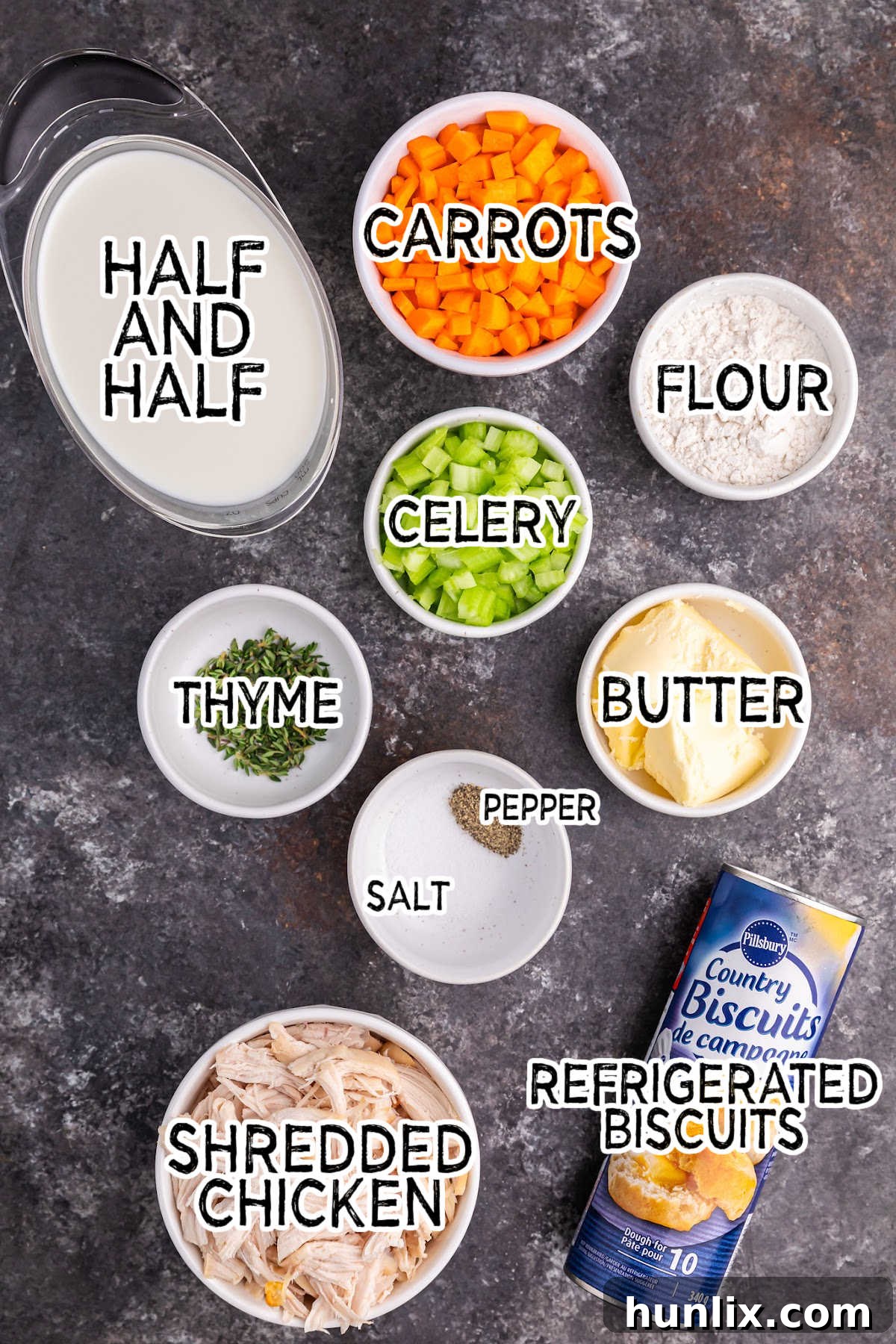
Crafting this savory pot pie requires a selection of readily available ingredients, most of which you likely already have in your pantry. The full printable recipe card with precise measurements and detailed instructions can be found further down this page.
- Salted Butter: The foundational element, used to create a rich base for our creamy sauce and to sauté the vegetables, imparting a deep, buttery flavor.
- All-Purpose Flour: This is crucial for creating the roux, a mixture of fat and flour that acts as the primary thickening agent for the pot pie filling, ensuring a perfectly creamy consistency.
- Half and Half: Provides the luxurious, velvety texture that defines a classic chicken pot pie sauce. Its balanced fat content makes the sauce rich without being overly heavy.
- Shredded, Cooked Chicken: The star protein of our dish. Using pre-cooked chicken, such as a store-bought rotisserie chicken or leftover roasted chicken, makes this recipe incredibly fast and convenient.
- Refrigerated Biscuits: These convenient biscuits form the golden, flaky, and irresistibly buttery topping, eliminating the need for making a crust from scratch.
- Diced Carrots: Adds a touch of natural sweetness, vibrant color, and essential nutrients to the vegetable medley, softening beautifully as they cook.
- Diced Celery: Contributes a subtle savory note, a hint of freshness, and a pleasant textural contrast to the other vegetables in the filling.
- Fresh Thyme: Infuses the entire filling with an aromatic, earthy flavor that complements the chicken and vegetables beautifully, enhancing the overall comfort profile.
- Salt: A fundamental seasoning that enhances and balances all the natural flavors within the dish, bringing everything together.
- Black Pepper: Adds a gentle warmth and a subtle, piquant spice to the creamy filling, rounding out the flavor profile.
- Optional Garnish: A sprinkle of fresh chopped parsley can add a final burst of color and a touch of fresh, herbaceous brightness just before serving.
How to Prepare Your Skillet Chicken Pot Pie: Step-by-Step Guide
Follow these simple, clear steps to create a show-stopping chicken pot pie right in your cast iron skillet. This method ensures maximum flavor with minimum fuss.
- Step One: Preheat Your Oven. Begin by setting your oven to preheat to 400°F (200°C). This crucial step ensures that your oven is at the correct temperature when the skillet is ready, guaranteeing that your biscuits will bake to a perfect golden crisp and the filling will heat evenly.
- Step Two: Melt the Butter. Place your cast iron skillet over medium heat on the stovetop. Add the specified amount of salted butter and allow it to melt completely, swirling the skillet to ensure an even coating across the bottom. Be careful not to let the butter burn.
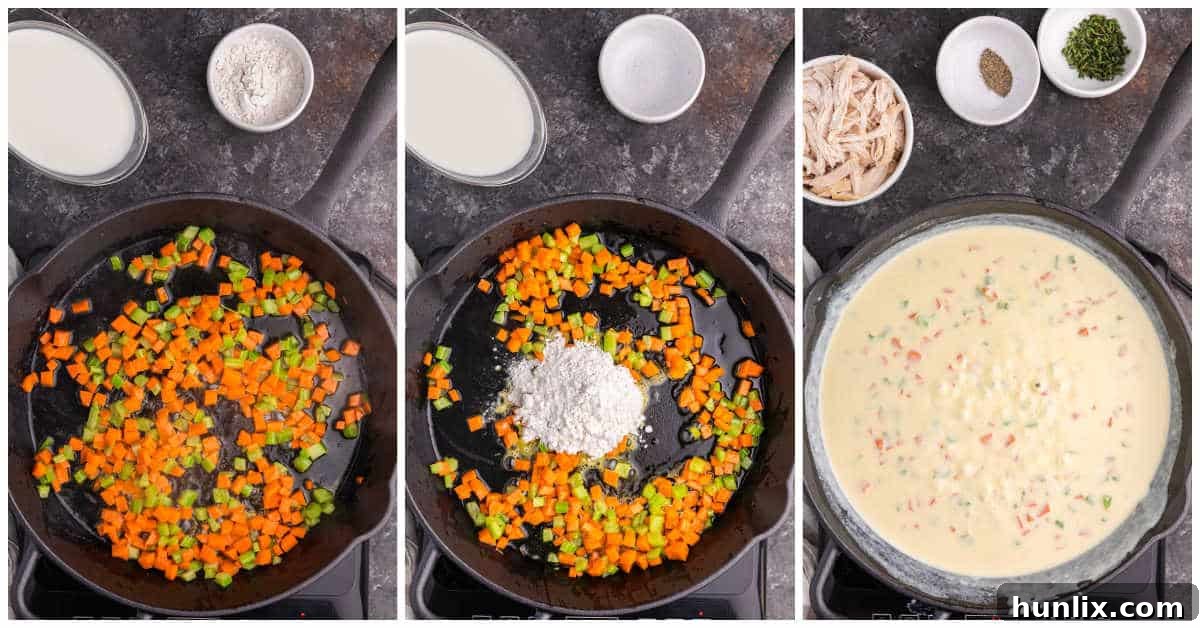
- Step Three: Sauté the Aromatics. Add the diced carrots and celery to the melted butter in the skillet. Cook these vegetables, stirring frequently with your spatula, for 7 to 8 minutes. Continue until the veggies have softened slightly but still retain a desirable tender-crisp texture. This step is vital for building the foundational flavor of your pot pie.
- Step Four: Create a Roux. Sprinkle the all-purpose flour evenly over the softened vegetables in the skillet. Stir constantly for 1 minute, ensuring the flour is thoroughly cooked and combined with the butter and vegetables. This brief cooking time is essential for cooking out the raw flour taste and creating a proper roux, which will effectively thicken your sauce.
- Step Five: Thicken the Creamy Sauce. Gradually pour in the half and half cream, stirring continuously to prevent lumps from forming. Continue to cook the mixture over medium heat, stirring frequently, for about 3 to 5 minutes. The sauce will progressively thicken to a rich, luscious, and creamy consistency that coats the back of a spoon, creating the perfect base for your pot pie.
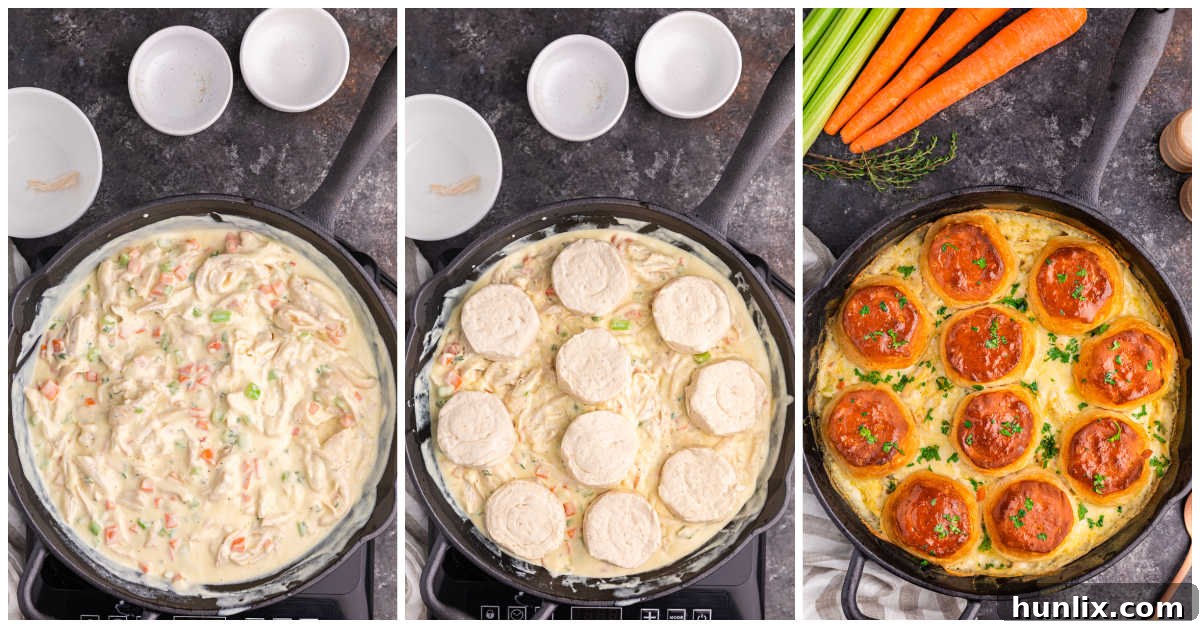
- Step Six: Incorporate Chicken and Seasonings. Once the sauce has thickened, remove the skillet from the heat. Stir in the shredded cooked chicken, fresh thyme, salt, and black pepper. Mix all ingredients thoroughly until everything is well coated in the creamy sauce, ensuring every bite is packed with savory flavor.
- Step Seven: Add the Biscuit Topping. Carefully arrange the refrigerated biscuits on top of the chicken and vegetable filling in the skillet. You can overlap them slightly or leave small gaps, depending on your aesthetic preference and how you want the crust to form. Ensure they are spaced somewhat evenly for optimal baking.
- Step Eight: Bake to Golden Perfection. Transfer the skillet directly to your preheated oven. Bake for 20 to 25 minutes, or until the biscuits are beautifully puffed, golden brown, and fully cooked through. The filling underneath should be visibly bubbly and hot, signaling it’s ready. Serve immediately and savor your homemade comfort food!
Essential Equipment for This Recipe
Having the right tools can significantly enhance your cooking experience and make this recipe even easier to execute. This post contains affiliate links for your convenience, which means I may earn a small commission at no extra cost to you if you make a purchase.
- Large cast iron skillet: This is the star piece of equipment for our one-pot meal, essential for its even heat distribution and ability to go from stovetop to oven. A 10-inch or 12-inch skillet works best.
- Scraper spatula: Ideal for stirring vegetables, scraping the bottom of the pan to prevent sticking, and ensuring all ingredients are well combined.
- Cutting board: A sturdy cutting board is essential for safely dicing your carrots, celery, and any other vegetables you choose to include.
- Sharp Knife: For efficiently and safely preparing your vegetables.
- Measuring Cups and Spoons: For accurate ingredient proportions, which are key to a perfectly balanced and flavorful pot pie.
- Oven Mitts: Absolutely crucial for safely handling the hot cast iron skillet, especially when transferring it to and from the oven.
What to Serve Alongside Your Skillet Chicken Pot Pie
While this chicken pot pie is a wonderfully complete and satisfying meal on its own, pairing it with a simple side can elevate your dining experience, add refreshing contrast, or introduce additional textures. Consider these delicious options for a full, comforting spread:
- Roasted Root Vegetables: A medley of roasted carrots, parsnips, and potatoes can add earthy sweetness and varied textures, complementing the pot pie’s flavors.
- Company Peas: Simple, vibrant green peas, perhaps lightly seasoned with butter and a pinch of mint, offer a refreshing contrast to the richness of the pot pie.
- Moroccan Beet Salad: For those seeking a lighter, zesty, and slightly exotic accompaniment, a beet salad provides a beautiful color and tangy flavor.
- Green Beans with Warm Pistachio Vinaigrette: A sophisticated and crunchy green side that adds a touch of gourmet elegance.
- Green Bean & Tomato Salad: A fresh, vibrant salad to balance the richness, offering a burst of summery flavors.
- A Simple Green Salad: Sometimes, the simplest choice is the best. A crisp mixed green salad with a light vinaigrette provides a refreshing counterpoint and adds lightness to the meal.
- Cranberry Sauce: A dollop of tangy cranberry sauce, either homemade or from a can, can add a surprising and delightful sweet-tart twist that cuts through the creaminess, especially during cooler months or holidays.
Creative Variations and Simple Substitutions
One of the true joys of cooking this skillet chicken pot pie is the freedom to customize it. This recipe is incredibly adaptable, allowing you to tailor it to your personal taste, dietary needs, or simply what ingredients you have on hand. Get creative and make this dish uniquely yours with these exciting variations and easy substitutions:
- Protein Power-Ups: While chicken is classic, the filling is welcoming to other proteins.
- Vegetarian Delight: For a delicious plant-based version, consider using firm tofu or tempeh, diced and sautéed until golden brown. Plant-based chicken substitutes also work wonderfully, providing a similar texture.
- Turkey Twist: Transform holiday leftovers! Shredded roasted turkey, whether from Thanksgiving or a simple weeknight roast, makes a fantastic substitute for chicken. Ground turkey can also be used for a different texture and quicker cooking.
- Seafood Sensation: Create a delightful seafood pot pie by swapping chicken for cooked shrimp, flaked crab meat, or diced white fish like cod or haddock. Ensure seafood is cooked through before adding it to the sauce to avoid overcooking during baking.
- Beef or Pork: Cooked and shredded beef (like pot roast leftovers) or pulled pork can also be used for a heartier, richer flavor profile, offering a robust alternative.
- Dynamic Herb & Spice Blends: Elevate the flavor profile with different aromatic additions.
- Classic Herbs: Beyond thyme, experiment with a blend of dried rosemary, sage, or savory to infuse your pot pie with a more traditional, comforting, and aromatic scent reminiscent of a holiday meal.
- Mediterranean Flair: A pinch of dried oregano and a touch of garlic powder can transport your pot pie to the Mediterranean, adding a brighter, more pungent flavor.
- Smoky Undertones: A tiny dash of smoked paprika or a whisper of cumin can add a subtle depth and warmth, especially if using a red meat alternative.
- Cheese Lover’s Dream: For an extra layer of indulgence and savory goodness, don’t hesitate to incorporate cheese.
- Melted into the Filling: Stir shredded sharp cheddar, nutty Gruyere, or a creamy white cheddar cheese into the warm filling just before adding the biscuits. It will melt into a gooey, irresistible center.
- Crispy Topping: Sprinkle a generous amount of shredded Parmesan or mozzarella over the biscuits during the last 10 minutes of baking for a bubbly, golden, and cheesy crust.
- A Zesty or Spicy Kick: If you enjoy a bit of heat to awaken your palate, spice things up to your liking.
- Subtle Heat: A pinch of red pepper flakes stirred into the sauce can add a gentle warmth without overwhelming the dish.
- Bolder Spice: Finely diced jalapeños (with seeds removed for less heat), a dash of cayenne pepper, or a few drops of your favorite hot sauce can create a zesty flavor explosion. Adjust the amount to your preferred spice level.
- Beyond Biscuits – Crust Alternatives: While refrigerated biscuits are a convenient and beloved favorite, explore other topping options for variety.
- Puff Pastry Perfection: A sheet of store-bought puff pastry, cut to fit the skillet, will bake into a golden, buttery, and incredibly flaky crust that’s visually stunning.
- Homemade Pie Crust: For a truly traditional pot pie experience, use a homemade pie dough for either a single top crust or a double-crust (bottom and top), depending on your preference.
- Potato Topping: For a hearty, shepherd’s pie-inspired twist, top the creamy chicken mixture with a layer of fluffy mashed potatoes. You can even broil it for a few minutes at the end to achieve a golden-brown, crispy potato crust.
- Vegetable Medley Makeover: Don’t limit yourself to just carrots and celery; the more veggies, the merrier!
- Frozen Vegetable Mix: For ultimate convenience and year-round availability, use a bag of frozen mixed vegetables (containing peas, corn, green beans, diced potatoes, etc.). Partially thaw them before adding to the skillet to prevent excess moisture and ensure even cooking.
- Seasonal Favorites: Incorporate fresh peas, corn kernels, sliced mushrooms, diced bell peppers (any color), or even blanched broccoli florets. Add softer vegetables like peas and corn later in the cooking process to prevent them from becoming mushy.
Storage and Reheating Instructions
While it’s rare to have leftovers of this incredibly delicious chicken pot pie (it tends to disappear quickly!), if you do, storing them properly ensures you can enjoy them again later. Allow your pot pie to cool completely to room temperature before transferring it to an airtight container. This helps prevent condensation and maintains freshness. It can then be stored safely in the refrigerator for up to 3-4 days. To reheat, you can warm individual portions in the microwave, or for a crispier biscuit topping, reheat the entire dish or larger portions in an oven preheated to 350°F (175°C) until warmed through, about 15-20 minutes. Cover loosely with foil if the crust starts to brown too much.

Can I Freeze Skillet Chicken Pot Pie?
Absolutely! This homemade chicken pot pie freezes beautifully, making it an excellent option for meal-prepping or having a comforting dinner ready on short notice. To freeze, ensure the entire pie has cooled completely to room temperature. You can freeze the entire skillet (if it’s freezer-safe) by tightly wrapping it in several layers of aluminum foil, then placing it into a large freezer bag or another freezer-safe container. Alternatively, divide individual portions into freezer-safe containers for convenient single servings. It will maintain its best quality in the freezer for 2-3 months.
When you’re ready to enjoy, transfer the frozen pot pie to the refrigerator to thaw overnight. Once thawed, reheat it in an oven preheated to 350°F (175°C) until it’s thoroughly warmed through and bubbling, typically 25-35 minutes for a whole pie or 15-20 minutes for individual portions. To prevent the biscuit crust from over-browning during reheating, you can cover it loosely with aluminum foil for the first part of the baking time.
Expert Tips and Tricks for a Perfect Pot Pie Every Time
Achieve an even more delicious and hassle-free chicken pot pie with these helpful tips and tricks, ensuring perfect results from your cast iron skillet:
- Mise en Place is Key: Before you even turn on the stove, take a few minutes to pre-measure and prepare all your ingredients: dice your vegetables, shred your chicken, and have all liquids and seasonings ready. This “mise en place” (everything in its place) approach makes the cooking process much smoother, more enjoyable, and prevents last-minute rushes or mistakes.
- Embrace Rotisserie Chicken: For the ultimate time-saving shortcut, a store-bought rotisserie chicken is your best friend. Simply shred the meat and use it as directed in the recipe. This not only saves you significant cooking time but also imparts a fantastic, pre-seasoned depth of flavor to your pot pie filling. Leftover chicken from previous meals also works perfectly, helping you reduce food waste.
- Achieve Biscuit Perfection: Keep a close eye on your biscuits as they bake. Oven temperatures can vary, and if they start to brown too quickly before the filling is thoroughly heated and bubbly, loosely tent the skillet with aluminum foil. This clever trick prevents the biscuit tops from scorching while allowing them to cook through and the filling to get perfectly hot. You’re aiming for a flaky, golden-brown crust, not a scorched or undercooked one.
- Customize Your Veggies: Feel free to adjust the vegetable mix to suit your family’s tastes and what’s in season. Peas, corn, green beans, sliced mushrooms, or even diced pre-cooked potatoes are wonderful additions that add extra variety, color, and nutrients. Remember to cook tougher vegetables a bit longer, or opt for frozen mixed vegetables for convenience, adding them partially thawed to minimize extra moisture.
- The Perfect Thickness: If, after adding the half and half, your filling seems a bit too thin for your liking, don’t fret! Simply make a slurry by whisking a small amount (1-2 tablespoons) of all-purpose flour or cornstarch with an equal part of cold water until smooth. Stir this mixture gradually into the simmering filling until it reaches your desired creamy, rich consistency.
- Make Ahead Magic: Save precious time on busy days by preparing the filling in advance. Cook the chicken and vegetable mixture according to the recipe, allow it to cool completely, and then refrigerate it in an airtight container for up to 2 days. When you’re ready to serve, simply reheat the filling in the skillet on the stovetop until warm, top with fresh refrigerated biscuits, and bake as directed.
- Handle Cast Iron with Care: Cast iron skillets retain heat exceptionally well, meaning they stay very hot long after coming out of the oven. Always use sturdy oven mitts or a thick kitchen towel when handling the hot skillet, especially when transferring it to and from the oven or to the table. Place it on a trivet or heat-resistant surface to protect your countertops.
- Flavor Layering: Don’t forget the importance of tasting and adjusting seasonings throughout the cooking process. A little extra salt, pepper, or a pinch more fresh thyme can make a significant difference in the final flavor profile, ensuring your pot pie is perfectly seasoned.
Can I Use a Regular Pie Dish Instead of a Skillet?
Yes, absolutely! While a cast iron skillet offers fantastic heat retention, goes from stovetop to oven seamlessly, and often enhances the rustic charm of the dish, you can certainly make this chicken pot pie in a regular pie dish or another oven-safe baking dish if you prefer or if you don’t own a cast iron skillet. Here’s how you can adapt the recipe without sacrificing flavor or quality:
- Step One: Prepare the Filling Separately. Begin by following the initial recipe instructions for preparing the creamy chicken and vegetable filling. Do this in a large saucepan or a separate skillet on your stovetop. Cook the vegetables, make the roux, add the half and half, and stir in the chicken and seasonings until the filling is thickened and perfectly seasoned.
- Step Two: Transfer to Pie Dish. Once the delicious filling is cooked and thickened to perfection, carefully transfer it from the saucepan or stovetop skillet into your regular pie dish (a 9-inch or 10-inch pie plate will typically work well). Ensure the filling is evenly distributed across the bottom of the dish.
- Step Three: Choose Your Crust. Instead of placing refrigerated biscuits directly on top of the filling in the original skillet, you have a couple of fantastic options for creating your crust in a traditional pie dish:
- Traditional Pie Dough: Roll out store-bought or homemade pie dough to fit the top of your pie dish. Place it carefully over the filling, then crimp the edges to seal them to the rim of the dish. For best results and to allow steam to escape, cut a few small slits in the top of the crust before baking.
- Puff Pastry: A sheet of store-bought puff pastry also makes a fantastic, golden, and incredibly flaky top crust. Simply cut it to size, place it over the filling, and perhaps brush with an egg wash for extra shine.
- Refrigerated Biscuits (as in original recipe): If you still want the convenience and flavor of the refrigerated biscuits, simply arrange them on top of the filling in the pie dish, just as you would in the cast iron skillet.
- Step Four: Bake to Golden Perfection. Bake the pie in your preheated oven at the same recommended temperature (400°F or 200°C). The baking time might vary slightly depending on your chosen crust type and the specific size and material of your pie dish, typically ranging from 25-35 minutes. Bake until the crust is beautifully golden brown and the filling is visibly bubbly and hot.
- Step Five: Monitor and Adjust. Keep a close eye on the pie as it bakes. If the edges of your crust (especially with pie dough) start to brown too quickly before the center is cooked, you can easily cover them loosely with strips of aluminum foil to prevent burning while the rest of the pie finishes cooking.
Utilizing Rotisserie Chicken for Maximum Convenience
Leftover or store-bought rotisserie chicken is truly a game-changer for this chicken pot pie recipe, offering an incredible time-saving advantage and a boost of savory flavor. Its pre-cooked tenderness and expertly seasoned profile instantly elevate your dish without any extra effort on your part. To incorporate it, simply shred the meat from a rotisserie chicken, discarding the skin and bones, and mix it into your pot pie filling as directed in the recipe. The robust, savory flavor of rotisserie chicken adds a delightful depth that makes your pot pie even more delicious and incredibly convenient to prepare, especially on busy weeknights when you need a hearty meal fast. It’s an excellent culinary hack for enjoying a wholesome, homemade meal without the extra step of cooking and shredding chicken from scratch, turning a classic comfort food into a quick and easy reality.

How to Tell When Your Skillet Chicken Pot Pie Is Done
Knowing precisely when your chicken pot pie has reached peak perfection is key to a satisfying and safely cooked meal. Look for these visual and temperature cues for the most accurate assessment:
- Golden Brown Crust: The most obvious and reliable indicator is the biscuit topping. It should be beautifully puffed up, uniformly golden brown, and look fully cooked, with no pale or doughy spots remaining. This signifies a perfectly baked crust that’s crisp on the outside and tender within.
- Bubbly Filling: Peek through any small gaps in the biscuits or gently shift one to check the filling underneath. It should be visibly hot and actively bubbling, especially towards the center and edges of the skillet. This vigorous bubbling indicates that the internal temperature has reached a safe level (at least 165°F or 74°C) and the filling is thoroughly warmed through.
- Internal Temperature (Optional but Recommended): For ultimate assurance, particularly if you’re concerned about food safety or the doneness of your chicken, you can insert an instant-read thermometer into the very center of the filling (making sure to avoid touching a biscuit or the bottom of the skillet). It should register at least 165°F (74°C) to ensure it’s fully cooked and safe to eat.
- Consistency: When you spoon out a portion of the pot pie, the filling should appear thick and creamy, coating the ingredients beautifully, rather than being thin, watery, or soupy. The sauce should cling to the chicken and vegetables.
It’s generally better to slightly overbake (within reason) than underbake to ensure a fully cooked and wonderfully delicious pot pie. Remember that residual heat will continue to cook the pie slightly after it comes out of the oven, and allowing it to rest will help the filling set further.
Chicken Pie vs. Chicken Pot Pie: What’s the Difference?
While often used interchangeably in casual conversation, “chicken pie” and “chicken pot pie” refer to culinary cousins with distinct characteristics that are worth understanding. Knowing the nuances can enrich your appreciation for these comforting dishes:
- Chicken Pie: Generally, a “chicken pie” is a broader term that implies a dish entirely encased in pastry. This means it traditionally features both a bottom crust and a top crust, fully enclosing the savory filling. It’s a versatile category that can encompass various sizes and styles, from individual hand pies (like pasties) to larger, more traditional double-crusted family pies. The crust itself can be flaky shortcrust, puff pastry, or even a richer, more robust dough. The filling can vary greatly, from a simple gravy to a creamy sauce, but the defining feature is the full pastry enclosure.
- Chicken Pot Pie: This term refers to a specific type of chicken pie, predominantly characterized by its deep-dish style and the presence of only a top crust. The “pot” in the name suggests it’s cooked in a pot, casserole dish, or, in our case, a cast iron skillet, with the pastry lid covering only the surface, much like a pot’s lid. The filling is almost always rich, creamy, and brimming with tender chicken and vegetables, designed to be scooped out with the flaky topping. Our Cast Iron Skillet Chicken Pot Pie fits this definition perfectly, utilizing the skillet as the “pot” and convenient refrigerated biscuits as the glorious, single-layer crust.
In essence, while all chicken pot pies are technically a type of chicken pie, not all chicken pies are chicken pot pies! The distinction lies primarily in the crust configuration (single top crust vs. double crust) and the traditional deep-dish presentation that allows the creamy filling to be the star beneath its flaky cap.
Why Is My Chicken Pot Pie Watery? Common Fixes for a Creamy Result
A watery chicken pot pie can be a common frustration after all your cooking efforts, but it’s usually easy to diagnose and remedy. Here are the main reasons why your pot pie filling might be too liquidy and how you can ensure a perfectly creamy result every time:
- Insufficient Thickening: This is the most common culprit. The filling relies on a roux (a cooked mixture of butter and flour) to thicken the liquid. Ensure you cook the flour long enough with the butter (as in Step Four of our recipe) before gradually adding the half and half. Then, simmer the sauce (Step Five) until it’s thick enough to coat the back of a spoon. If it’s still too thin, a cornstarch slurry (1 tablespoon cornstarch mixed with 1 tablespoon cold water) stirred into the simmering sauce at the end can provide a quick fix.
- Excess Moisture from Vegetables: Vegetables, particularly frozen varieties, naturally release water as they cook. If you’re using frozen vegetables, consider partially thawing and draining them well, or even briefly sautéing them before adding them to the sauce to cook off some of their excess moisture. For fresh vegetables, aim to cook them until they are tender-crisp, not mushy, as overcooked vegetables tend to release more liquid.
- Overcooking Vegetables: If your vegetables are overcooked before the liquid is added, their cell walls can break down excessively, releasing more liquid into the filling than intended. Timing is key to keep them tender yet firm enough.
- Wrong Liquid-to-Thickener Ratio: Always double-check the recipe’s liquid measurements. Adding too much broth, milk, or cream relative to the amount of flour or cornstarch used as a thickener will inevitably result in a thin, watery sauce. Precision in measurement is important for the desired consistency.
- Not Allowing It to Rest: Cutting into the hot pot pie immediately after removing it from the oven can release trapped steam and moisture, making the filling appear more watery than it actually is. Allowing the pot pie to rest for 10-15 minutes after baking gives the sauce time to set and thicken further, resulting in a perfectly creamy texture when served.
- Pan Size or Depth: Using a baking pan or skillet that’s too large or too shallow for the amount of filling can sometimes cause the filling to spread out too thinly, making it either dry out too quickly or appear watery due to insufficient depth for the sauce to coalesce properly.
By paying close attention to these factors, particularly the thickening process and vegetable preparation, you can ensure a perfectly thick, rich, and creamy chicken pot pie filling every time.
More Savory Pie Recipes You’ll Adore
If you’re a fan of comforting, hearty, and savory pies like our chicken pot pie, you’ll love exploring these other delicious and easy-to-make recipes that offer similar satisfaction:
- Impossible Cheeseburger Pie: A fun, creative, and deconstructed cheeseburger experience in a pie form, perfect for family dinners.
- Healthy Shepherd’s Pie: A lighter, yet still incredibly satisfying, take on the classic, hearty British dish, often topped with mashed sweet potatoes.
- Spaghetti Pie: An inventive and family-friendly pasta bake that transforms leftover spaghetti into a delicious and cheesy pie.
- Chicken Shepherd’s Pie: Another delightful poultry twist on a beloved comfort food, often featuring a creamy chicken and vegetable filling beneath a mashed potato topping.
- Rustic Bacon, Herb & Vegetable Pie: A flavorful and robust pie packed with fresh seasonal ingredients, enhanced by savory bacon and fragrant herbs.
Frequently Asked Questions About Skillet Chicken Pot Pie
This recipe is wonderfully designed for efficiency! You’ll spend approximately 10 minutes on active preparation time, gathering and dicing ingredients, and about 35 minutes on cooking (sautéing and baking). This means you can have this delicious pie, topped with buttery biscuits, ready to serve in about 45 minutes total. For the very best results and to allow the creamy filling to set perfectly, remember to let it rest for at least 10-15 minutes after removing it from the oven before cutting and serving.
This recipe is perfectly portioned to make approximately four generous and hearty servings. It’s an ideal choice for a cozy weeknight family dinner or a satisfying meal for a smaller gathering, offering a comforting and fulfilling experience for everyone at the table.
Yes, absolutely! While the recipe suggests using standard refrigerated biscuits for their convenience and classic taste, feel free to experiment with your favorite brand or even homemade biscuits. Flaky layer biscuits, buttermilk biscuits, or even cheddar biscuits can add a unique twist and delicious flavor to your pot pie topping, making it even more personalized.
A 10-inch or 12-inch cast iron skillet works best for this recipe. This size provides ample space for the creamy filling and allows the biscuits to spread and brown evenly. Ensure your skillet is well-seasoned to prevent sticking and to enhance the flavor development. A good quality, heavy-bottomed skillet will provide superior heat distribution for a perfectly cooked pot pie.
Certainly! This recipe is very versatile. You can easily add other vegetables like frozen peas, corn, green beans, diced bell peppers, or sliced mushrooms. If using fresh, harder vegetables, ensure they are diced small and cooked until tender. Softer vegetables like peas and corn can be added towards the end of the filling’s stovetop cooking time.
More Delicious Chicken Recipes to Explore
If you’re looking for more creative and delicious ways to enjoy chicken, a versatile and beloved protein, check out these fantastic recipes that are sure to become new family favorites:
- Pineapple Teriyaki Chicken: A sweet and savory dish that brings a taste of the tropics to your dinner table.
- Chicken Pesto Pizza: A flavorful pizza option featuring tender chicken and aromatic pesto, a refreshing change from traditional tomato sauce.
- Spicy Pepper Chicken: For those who enjoy a bit of heat, this dish combines tender chicken with vibrant peppers in a zesty sauce.
- Baked Chicken Parmesan: A classic Italian-American comfort food, featuring crispy chicken cutlets baked with marinara sauce and melted cheese.
- Buffalo Chicken Dip: A crowd-pleasing appetizer that’s creamy, spicy, and perfect for game nights or parties.
- Chicken Pot Pie Soup: All the comforting flavors of chicken pot pie in a hearty, creamy soup form, perfect for a lighter meal.
- Sour Cream Chicken Bake: A simple, creamy, and incredibly delicious chicken casserole that’s easy to assemble.
- Chicken Pot Pie Pasta: A creative fusion that combines the beloved flavors of pot pie with satisfying pasta.
Beyond chicken, you’ll also love exploring other skillet sensations like Skillet Mushroom Stroganoff for a hearty vegetarian option, baking delights such as Sour Cream Biscuits to accompany any meal, and convenient one-pan wonders like Chow Mein Skillet and Texas Beef Skillet.
Stay connected for more easy and delicious recipes that make mealtime a joy! Follow me on Instagram @simplystacieblog, Facebook at Simply Stacie, TikTok @simplystacierecipes, or Pinterest at @simplystacie. I’d absolutely love to hear how you enjoyed this recipe and any other culinary adventures you embark on with my guides!
Recipe: Cast Iron Skillet Chicken Pot Pie
Creator: Stacie Vaughan
Servings: 4
Prep Time: 10 minutes
Cook Time: 35 minutes
Total Time: 45 minutes
This Cast Iron Skillet Chicken Pot Pie is the ultimate comfort food, combining tender chicken and vegetables in a creamy sauce, all crowned with golden refrigerated biscuits. A perfect one-pot meal for easy, delicious weeknight dinners.
Ingredients
- 3 tbsp salted butter
- 1 cup diced carrots (peeled and diced)
- ½ cup diced celery
- 3 tbsp all-purpose flour
- 2 cups half and half cream
- 2 cups cooked chicken (shredded)
- 1 tbsp fresh thyme
- ½ tsp salt
- ¼ tsp pepper
- 1 can refrigerated biscuits (340g package, 10 biscuits)
- Fresh parsley (chopped, for garnish, optional)
Instructions
- Preheat the oven to 400°F (200°C).
- Melt butter in a cast iron skillet over medium heat.
- Add the carrots and celery and cook, stirring frequently, for 7 to 8 minutes, until veggies are softened.
- Add the flour to the skillet. Stir constantly for 1 minute.
- Stir in the half and half cream. Continue to cook over medium heat, stirring frequently, until thickened, about 3 to 5 minutes.
- Remove the pan from the heat. Add the chicken, thyme, salt, and pepper. Stir until all the ingredients are coated.
- Place the biscuits on top of the creamy sauce in the skillet.
- Bake for 20 to 25 minutes, or until the biscuits are golden brown and cooked through. Serve hot.
Notes
I used a can of Pillsbury Country Biscuits, but any refrigerated biscuits should work well.
Equipment
- Cast iron skillet
- Scraper spatula
- Measuring cups
- Sharp Knife
- Cutting Board
- Oven Mitts
Nutrition Estimates
The information below is an estimate provided by an online nutrition calculator and is intended for general guidance. It should not be considered a substitute for personalized professional nutritionist’s advice.
- Calories: 810 kcal
- Carbohydrates: 69g
- Protein: 30g
- Fat: 46g
- Saturated Fat: 18g
- Polyunsaturated Fat: 9g
- Monounsaturated Fat: 16g
- Trans Fat: 0.3g
- Cholesterol: 119mg
- Sodium: 1605mg
- Potassium: 735mg
- Fiber: 3g
- Sugar: 11g
- Vitamin A: 6208 IU
- Vitamin C: 6mg
- Calcium: 221mg
- Iron: 5mg
Course: Main Dishes
Cuisine: American
Keyword: chicken pot pie