The aroma of a perfectly roasted turkey is synonymous with the festive season, evoking warmth, family, and celebration. Whether you’re hosting your very first holiday dinner or you’re a seasoned chef looking to refine your technique, mastering the art of roasting a turkey is an essential skill for any home cook. This comprehensive guide is designed to empower you with the knowledge and confidence to prepare a show-stopping, succulent turkey that will be the centerpiece of your Thanksgiving, Christmas, or Easter feast. From safe thawing practices to achieving that coveted crispy skin and moist, flavorful meat, we’ll cover every crucial step to ensure your holiday meal is nothing short of spectacular.
For many, the turkey is the undisputed star of holiday tables, particularly during Thanksgiving celebrations in both Canada (observed in October) and the United States (in November). It also holds a cherished spot in countless Christmas dinner traditions and often makes an appearance for Easter Sunday lunch. While the idea of roasting a whole turkey can seem daunting at first, especially when faced with the task of preparing it, rest assured that with the right guidance and a few key techniques, you can transform a simple bird into an unforgettable culinary experience.
I recall my initial attempts at roasting a turkey – a mix of excitement and apprehension, particularly when it came to handling and preparing the bird. Over time, and with each holiday passed, I’ve learned the secrets to preventing dry, overcooked meat and instead, consistently deliver a turkey that is juicy, tender, and bursting with flavor. Forget the stress and trepidation of past holiday cooking; this year, let’s embark on a journey to create a beautifully cooked, moist, and utterly delicious turkey that will impress every guest at your table.
The Ultimate Guide to Roasting a Perfect Turkey
Achieving a perfectly roasted turkey involves more than just popping it into the oven. It’s about careful preparation, understanding cooking principles, and executing a few simple, yet critical, steps. Let’s delve into the techniques that will guarantee a moist, flavorful bird with golden, crispy skin every single time.
1. Thaw Safely and Properly Ahead of Time
One of the most common pitfalls in turkey roasting is improper thawing. A turkey that is still partially frozen when it goes into the oven will cook unevenly, leading to a frustrating scenario where some parts are overcooked and dry, while others remain dangerously undercooked. Safe thawing is not just about convenience; it’s a critical food safety measure to prevent bacterial growth and ensure your turkey cooks through consistently.
The safest and most recommended method for thawing a frozen turkey is in the refrigerator. This slow, controlled thaw ensures the turkey remains at a safe temperature throughout the process. Plan ahead, as this method requires considerable time. Generally, you’ll need approximately 24 hours of thawing time for every 4-5 pounds of turkey. Below is a helpful guideline:
- 4-12 pound turkey: 2-3 days in the refrigerator
- 12-16 pound turkey: 3-4 days in the refrigerator
- 16-20 pound turkey: 4-5 days in the refrigerator
- 20-24 pound turkey: 5-6 days in the refrigerator
Always place your frozen turkey in a pan or on a tray with a rim to catch any drips and prevent cross-contamination with other foods in your refrigerator. Once thawed, a turkey can remain safely in the refrigerator for an additional 1-2 days before cooking. For those in a time crunch, a cold water bath can be used for thawing, but it requires much closer attention: submerge the wrapped turkey in cold water, changing the water every 30 minutes, and cook immediately after thawing.
This post contains affiliate links, which means I may earn a small commission if you make a purchase through them, at no extra cost to you.
2. Brine Your Turkey for Ultimate Moisture and Flavor
While not strictly necessary, brining is a game-changer for achieving an incredibly juicy and flavorful turkey. Brining involves soaking the turkey in a saltwater solution (wet brine) or coating it with a salt mixture (dry brine) before cooking. This process helps the turkey absorb moisture and seasoning, resulting in a more tender and succulent bird that is less prone to drying out during the long cooking process.
Wet Brining: A wet brine typically consists of water, salt, sugar, and various aromatics like herbs, peppercorns, garlic, and citrus. The turkey is fully submerged in this solution and refrigerated for 12-24 hours. The salt denatures the proteins in the turkey, allowing them to retain more moisture. Remember to pat the turkey very dry after wet brining to ensure crispy skin.
Dry Brining: Dry brining involves rubbing a generous mixture of salt and other seasonings directly onto the turkey’s skin and under the skin, then letting it rest uncovered in the refrigerator for 24-72 hours. The salt draws moisture out of the turkey, creating a concentrated brine that is then reabsorbed, leading to incredibly tender meat and remarkably crispy skin. Many chefs prefer dry brining for its simplicity and superior skin results.
3. Coat Your Bird in Real Butter (No Margarine!)
The secret to rich flavor, beautiful browning, and exceptionally crispy skin lies in using real butter. Before roasting, generously slather softened, unsalted butter all over the exterior of the turkey, and critically, gently loosen the skin over the breast and thighs to work some butter underneath. This strategic placement ensures that as the turkey cooks, the butter melts and bastes the meat from the inside out, infusing it with incredible flavor and keeping it moist.
Avoid margarine, which often contains more water and less fat, and lacks the complex flavor compounds found in butter that contribute to a superior roast. Butter not only enhances the taste but also aids in achieving that desirable golden-brown, crackling skin that everyone loves.
4. Use a Sturdy Roasting Pan with a Wire Rack
A high-quality roasting pan with a robust wire rack is an indispensable tool for roasting a perfect turkey. The rack elevates the turkey above the bottom of the pan, allowing hot air to circulate evenly around the entire bird. This ensures uniform cooking and, crucially, prevents the bottom of the turkey from sitting in its own drippings, which would result in soggy skin.
The drippings collected beneath the rack are a goldmine of flavor, perfect for making a rich, savory gravy. If you don’t have a roasting rack, you can improvise by creating a bed of chunky vegetables like carrots, celery, and onions at the bottom of the pan to lift the turkey. However, a dedicated wire rack within a large roasting pan is highly recommended for optimal results.
5. Stuffing or Not Stuffing: That is the Question
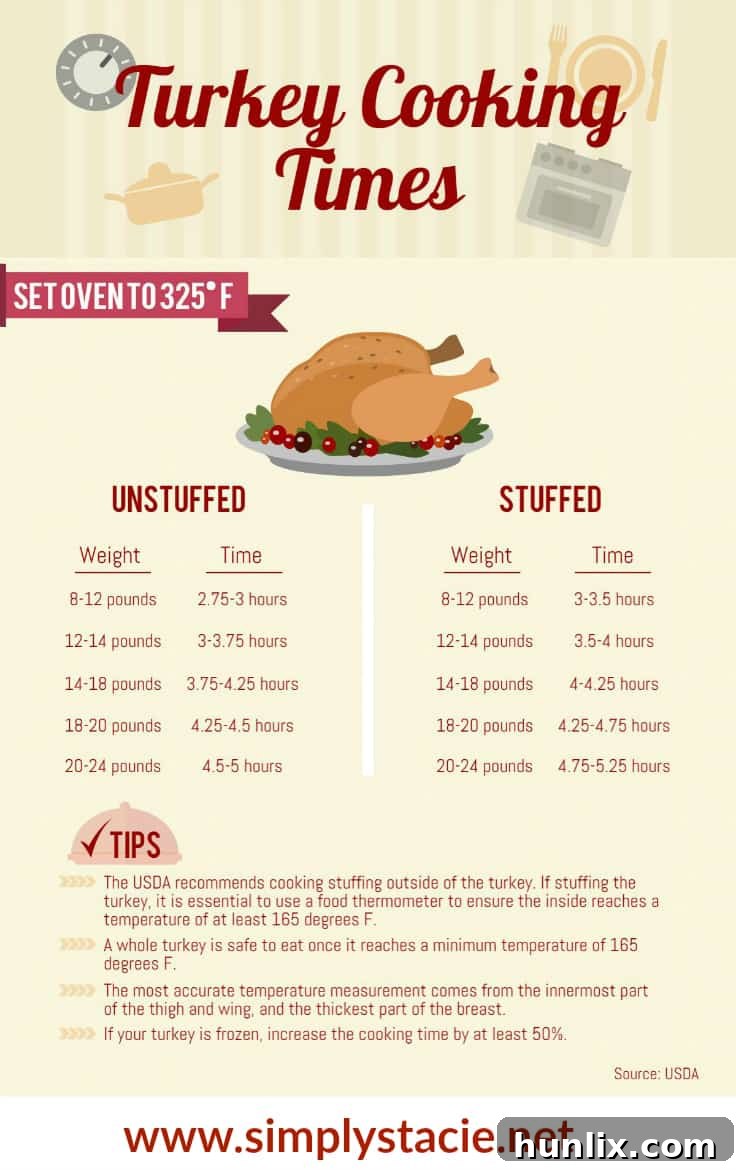
Many traditional recipes call for stuffing the turkey cavity, which adds flavor to the stuffing and can enhance the bird’s aroma. However, stuffing the turkey significantly increases the cooking time and can make it challenging to ensure both the turkey and the stuffing reach a safe internal temperature (165°F or 74°C). If the stuffing isn’t fully cooked, it can pose a food safety risk.
For a safer and often more efficient cook, consider baking your stuffing in a separate dish. If you do choose to stuff your turkey, loosely pack the cavity and always use a meat thermometer to verify that the stuffing also reaches 165°F. Alternatively, fill the cavity with aromatic vegetables and herbs like onion halves, apple quarters, celery stalks, garlic cloves, and fresh rosemary or thyme. These aromatics will infuse the turkey with subtle flavors without hindering its cooking time or raising safety concerns.
6. Cook Covered for Most of the Time, Then Uncover for Crispy Skin
Balancing moisture retention with achieving that irresistible crispy skin is key. For the majority of the cooking time, your turkey should be covered. Creating a loose “tent” with heavy-duty aluminum foil over your roasting pan helps to trap steam and moisture, preventing the turkey breast from drying out, which is often the first part of the bird to overcook.
The foil acts as a protective shield, allowing the darker meat (thighs and legs) to cook through without the breast becoming tough. Approximately 45 minutes to an hour before the turkey is expected to be done, remove the foil tent. This is the crucial step for browning and crisping up the skin to a beautiful golden-brown perfection. Keep a close eye on it during this final uncovered stage to prevent burning.
7. Baste Regularly for Enhanced Flavor and Moisture
Basting is the act of spooning or brushing the pan drippings and juices over the turkey as it roasts. This practice contributes to even browning, adds flavor to the skin, and helps keep the surface moist. While some argue that opening the oven too frequently can extend cooking time, basting every 45-60 minutes is generally recommended for optimal results, especially during the covered portion of the cook.
A good turkey baster makes this task easy, allowing you to draw up the flavorful liquids from the bottom of the pan and distribute them evenly. You can even lift the skin with a fork or tongs and pour some drippings directly onto the breast meat for extra moisture. The rich pan juices are invaluable, not just for basting, but also for forming the base of your holiday gravy.
8. Monitor Internal Temperature for Doneness and Safety
The single most important tool for roasting a turkey is a reliable meat thermometer. Visual cues alone are not enough to guarantee doneness and food safety. Your turkey is safely cooked when it reaches an internal temperature of 165°F (74°C) in the thickest part of the thigh, without touching the bone. It’s also wise to check the thickest part of the breast and the deepest part of any stuffing (if used) to ensure they also reach this temperature.
Approximate cook times are merely a guide; always rely on your meat thermometer for accuracy. Start checking the temperature about two-thirds of the way through the estimated cooking time. For instance, a 12-pound unstuffed turkey might take 3 to 3.5 hours at 325°F (160°C). Overcooking will lead to dry meat, so remove the turkey from the oven as soon as it hits the target temperature.
9. Rest Your Turkey for Ultimate Juiciness
Once your turkey reaches the safe internal temperature, resist the urge to carve it immediately! This step is as crucial as the cooking itself. Transfer the turkey from the roasting pan to a large carving board and loosely tent it with aluminum foil. Let it rest for at least 20-30 minutes, or even up to an hour for larger birds.
Resting allows the juices, which have migrated to the center of the bird during cooking, to redistribute throughout the meat. If you carve too soon, these precious juices will run out onto your cutting board, leaving you with a less flavorful and drier turkey. A proper rest ensures that every slice is tender, moist, and delicious.
10. Carve with Confidence
After a perfect roast and a sufficient rest, it’s time to carve! A sharp carving knife and a sturdy carving fork will make the process much easier. Start by removing the legs and thighs, then separate the drumsticks from the thighs. Next, slice the breast meat horizontally away from the breastbone. Arrange the carved turkey beautifully on a platter, ready to be served.
Mastering the art of how to roast a turkey is a rewarding culinary journey that culminates in a spectacular holiday meal. By following these simple yet effective tips – from ensuring proper thawing and perhaps brining for enhanced moisture, to generously buttering, basting regularly, and relying on a meat thermometer for accurate doneness – you are well on your way to preparing a turkey that is moist, flavorful, and safe for everyone to enjoy this holiday season. Forget dry, bland turkey; this year, your table will boast a succulent, golden-brown masterpiece!
Got delicious leftover turkey? Don’t let it go to waste! Get creative with these fantastic recipes:
- Thanksgiving Sliders
- Hearty Leftover Turkey Soup