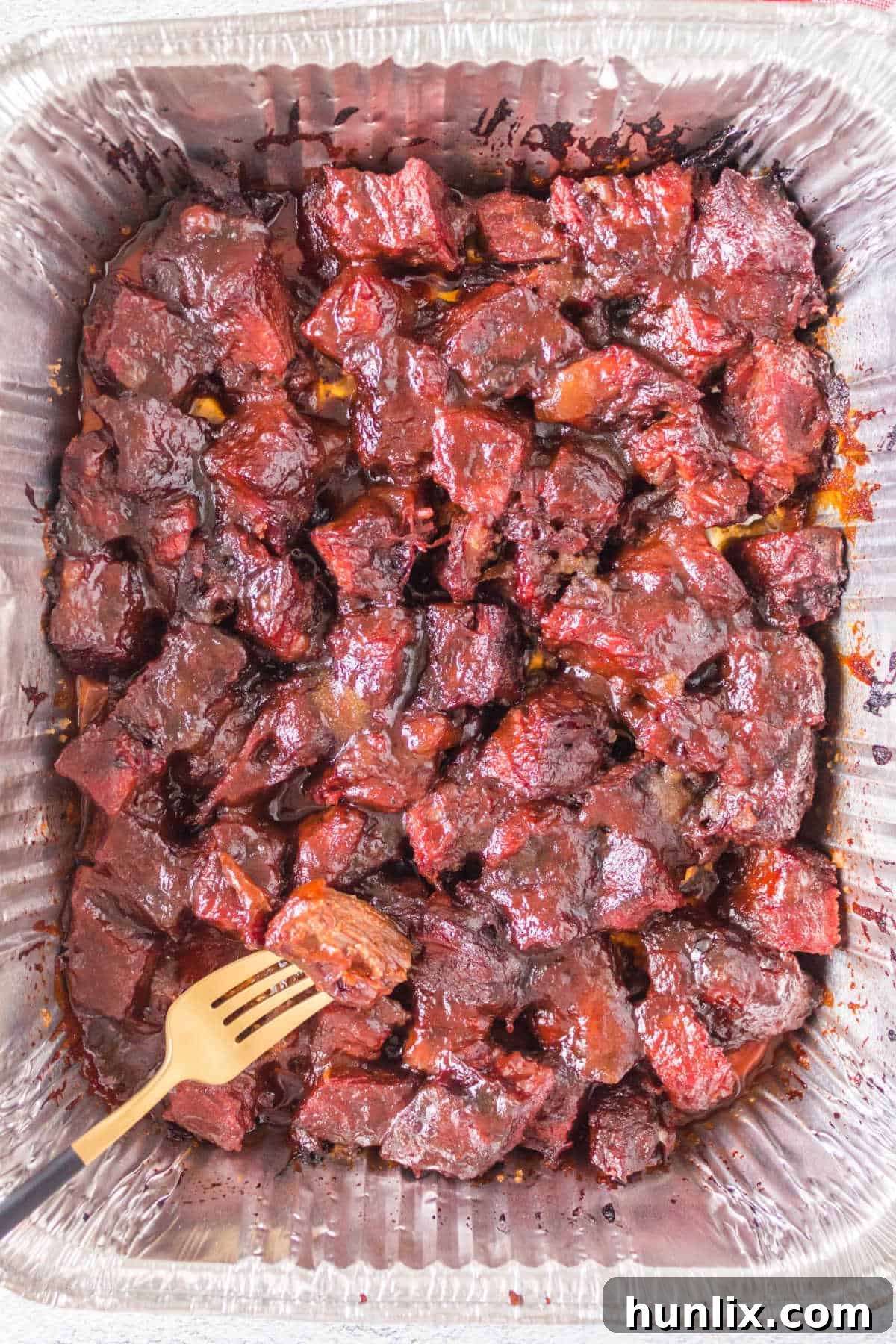
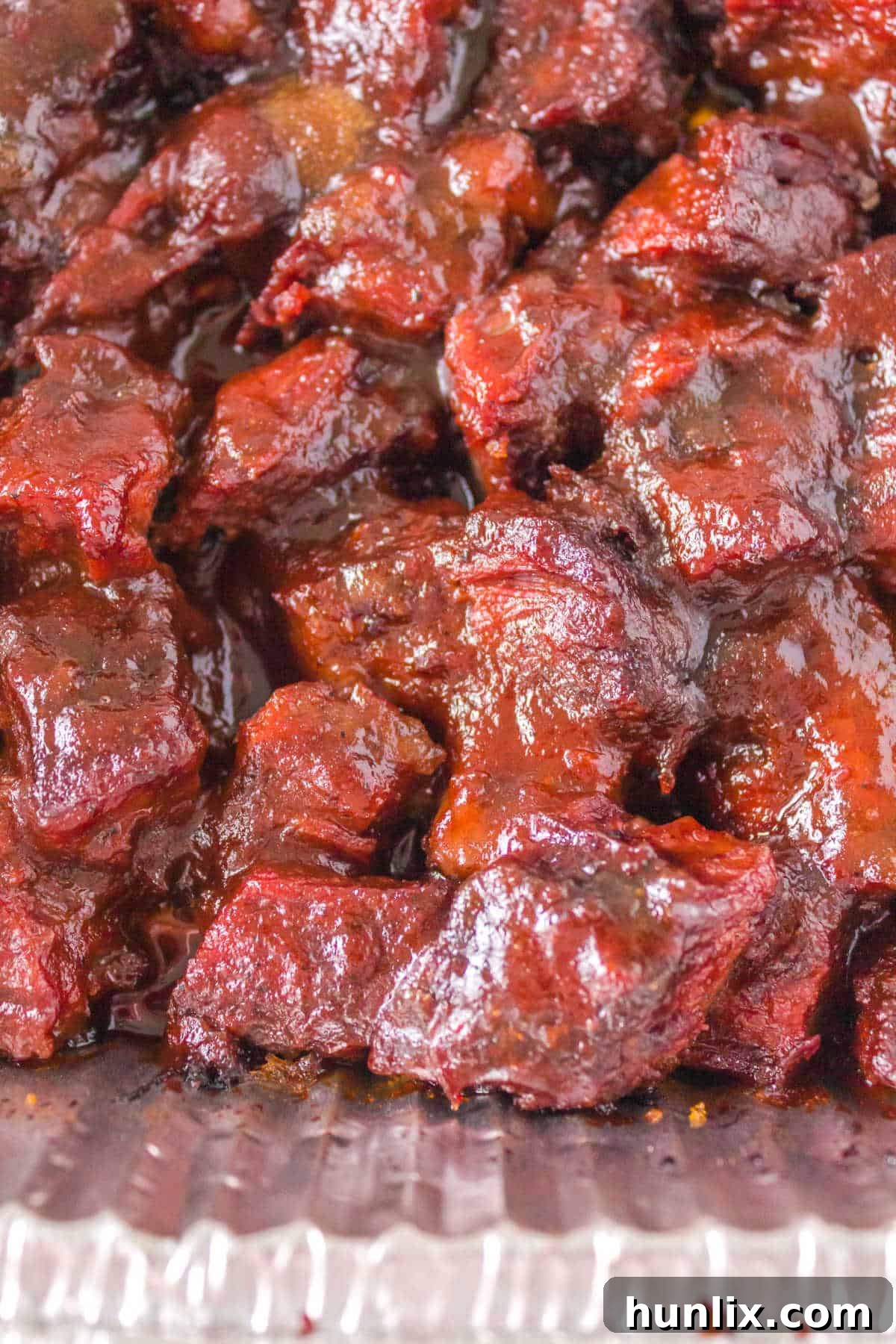
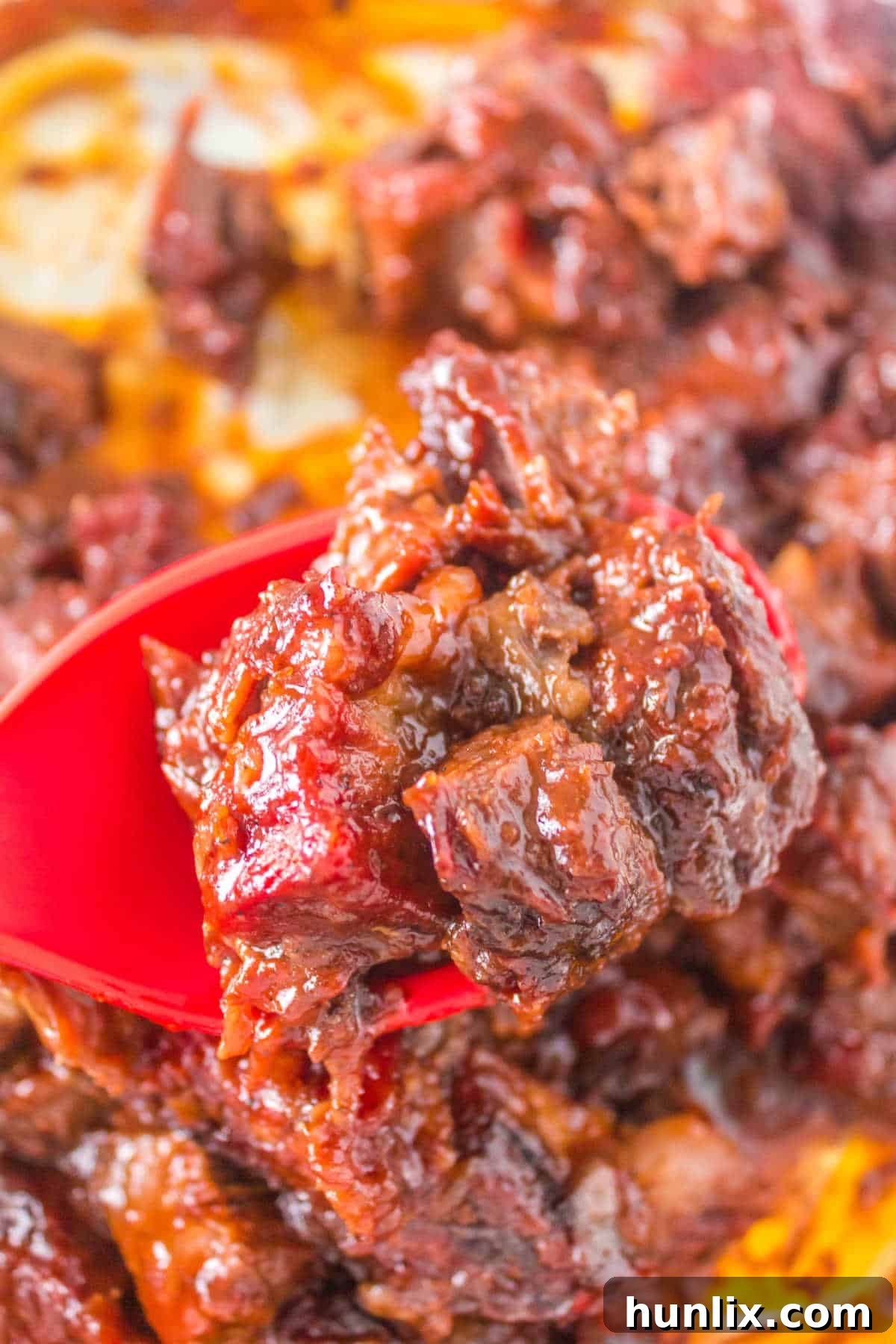
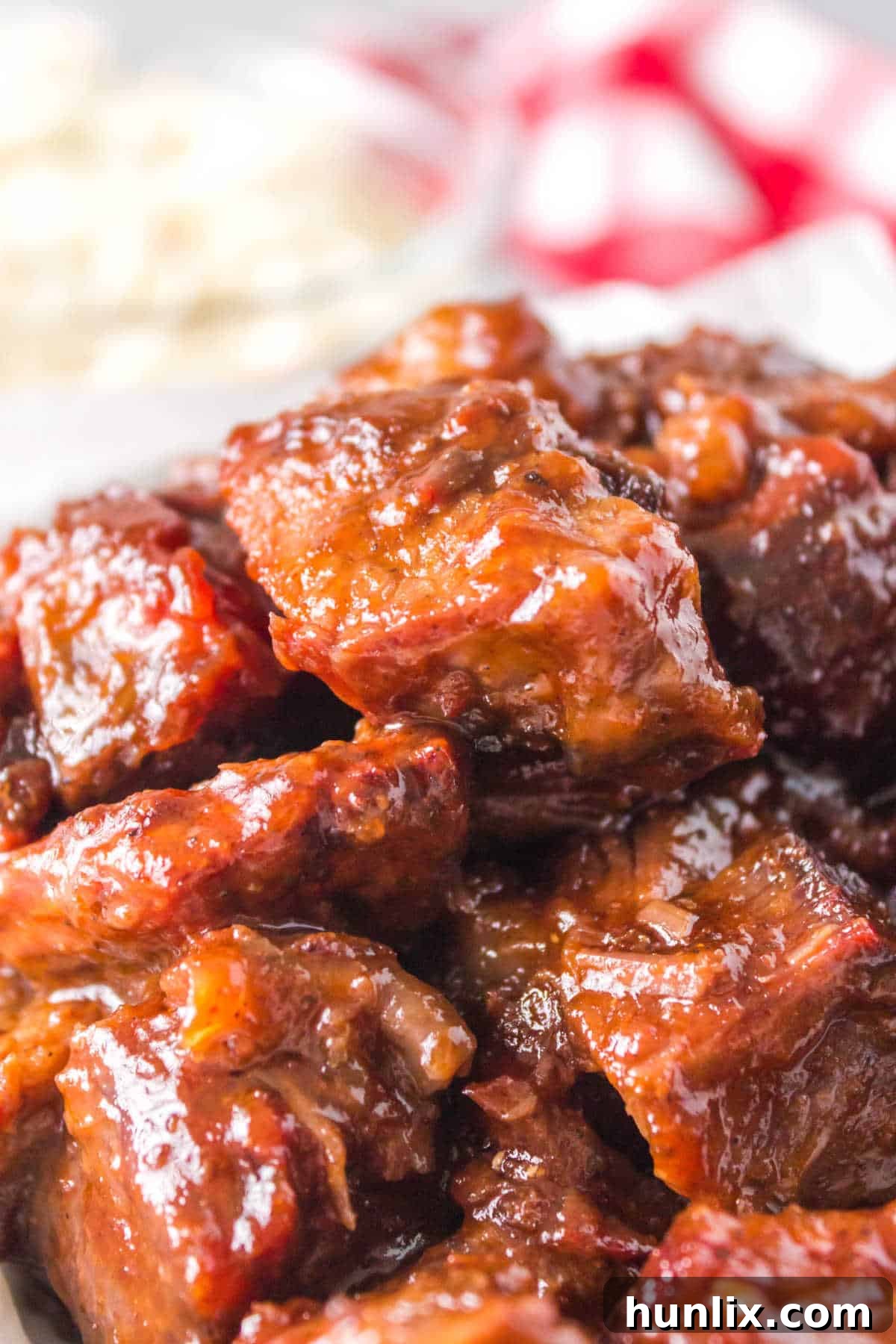
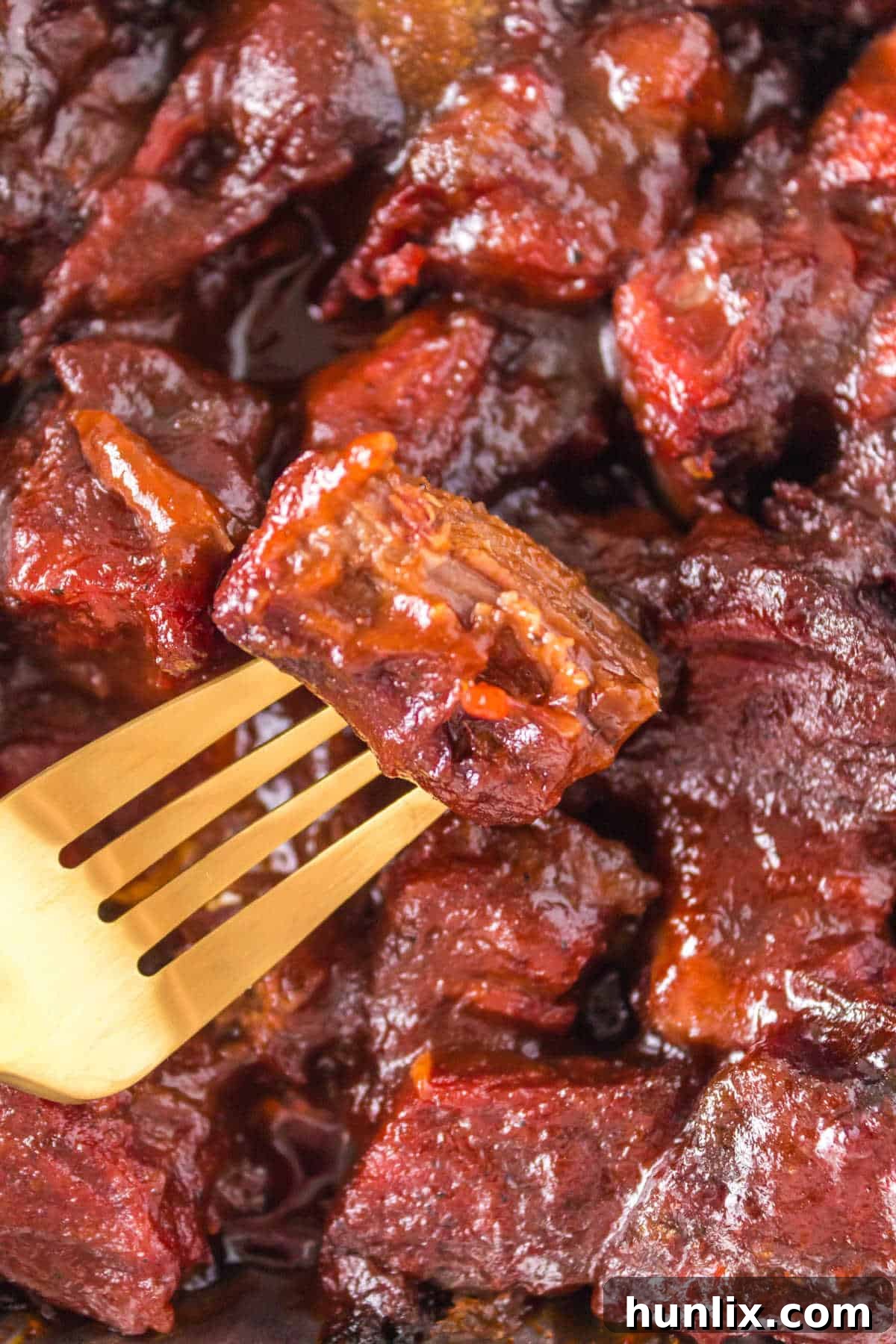
Craving that melt-in-your-mouth, smoky barbecue perfection but intimidated by a full brisket? Look no further! These Poor Man’s Burnt Ends are your ticket to barbecue bliss, offering all the rich, tender, and intensely flavored goodness of traditional burnt ends without the higher cost or the demanding commitment of a brisket. Made from readily available and budget-friendly chuck roast, this recipe delivers succulent cubes of beef, kissed with a flavorful dry rub, slow-smoked to perfection, and then gloriously coated in a sweet, sticky BBQ sauce. Prepare yourself for an unforgettable culinary experience that will have everyone reaching for more, whether served as a hearty main course, a delectable side, or a crowd-pleasing appetizer.
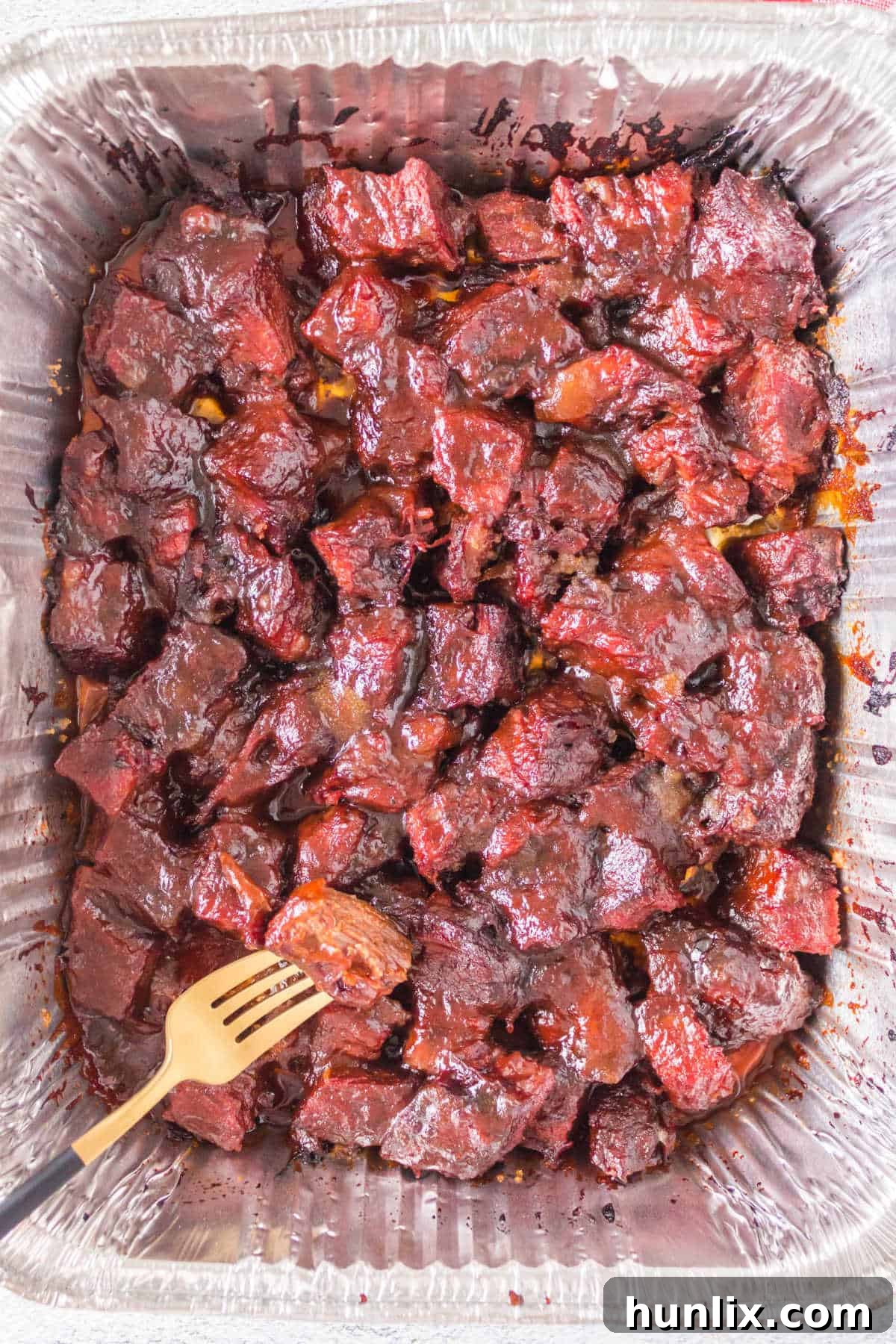
Unlocking Barbecue Gold: The Magic of Poor Man’s Burnt Ends
If you’ve ever dreamt of tasting those incredible, flavor-packed bites often referred to as “meat candy,” then you absolutely must try burnt ends. While traditionally a prized cut from the point of a beef brisket, our “Poor Man’s” version utilizes the equally flavorful and more economical chuck roast, transforming it into irresistible morsels. This recipe might take a little patience, as great barbecue always does, but every moment of anticipation is rewarded with incredibly tender, deeply smoky, and richly sauced cubes of beef that burst with flavor. Once you take that first bite of these chuck roast burnt ends, you’ll understand why they are so highly addictive and why they quickly become a staple in any barbecue enthusiast’s repertoire.
This recipe is designed to be accessible to everyone, from seasoned pitmasters to backyard grilling beginners. With clear, step-by-step instructions, you’ll confidently craft a dish that tastes like it came from a competition smokehouse. Imagine serving up a big bowl of these sticky, savory bites at your next gathering – they’re guaranteed to be the star of the show. Get ready to impress your friends and family with your newfound barbecue prowess and discover your new favorite way to enjoy beef!
Why You’ll Fall in Love with This Recipe
Beyond their incredible taste, Poor Man’s Burnt Ends offer numerous reasons to make them your next barbecue project:
- A Quintessential Summer BBQ Delight: Perfectly captures the essence of outdoor cooking and warm weather gatherings. It’s the ultimate crowd-pleaser for parties, picnics, and family dinners.
- Homemade Spice Rub Perfection: Our carefully crafted dry rub delivers a complex blend of savory, earthy, and smoky notes that form an incredible “bark” on the meat, enhancing every bite.
- Incredibly Tender and Flavorful: Slow cooking and proper technique ensure the chuck roast breaks down into fork-tender pieces that are infused with deep smoky flavor and coated in a luxurious sauce.
- Simpler Than Traditional Brisket: While requiring patience, this recipe is less demanding than managing a full brisket, making burnt ends achievable for home cooks.
- Enhanced Smoke Flavor: For those who love an intense smoky profile, the option to use wood chips or chunks during the initial smoke adds another layer of authentic barbecue flavor.
- Versatile Serving Options: Enjoy these juicy morsels as a standalone appetizer, a hearty main dish with classic sides, or even tucked into sandwiches or tacos.
- Gloriously “Wet” with Sauce: This recipe focuses on a luscious, generous coating of sweet and tangy BBQ sauce, ensuring every piece is sticky, moist, and utterly delicious.
- Always a Party Hit: These burnt ends disappear quickly at any event, proving their universal appeal and deliciousness.
The Core Ingredients for Culinary Success
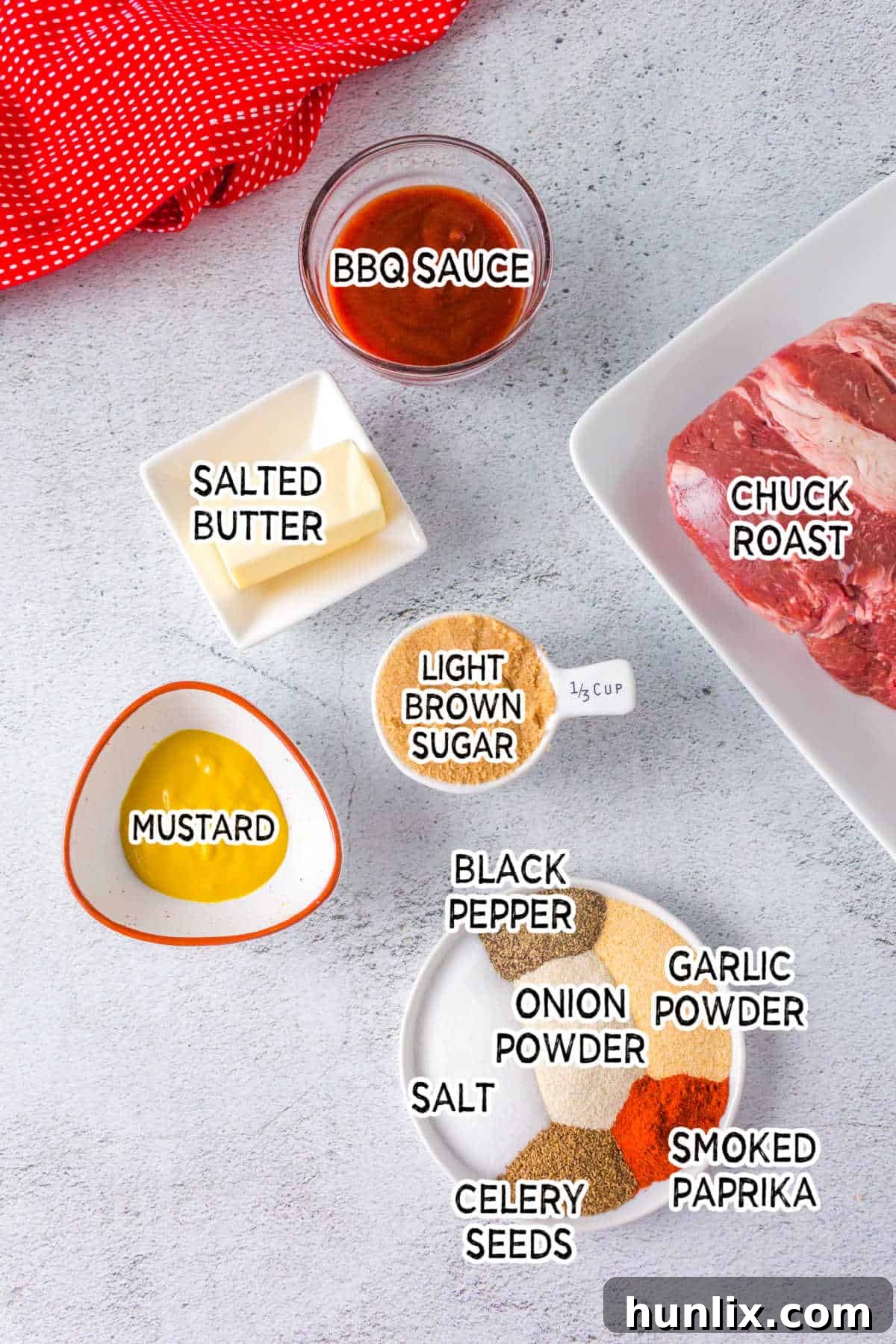
Creating spectacular Poor Man’s Burnt Ends begins with selecting the right ingredients. Each component plays a vital role in building the layers of flavor that make this dish so irresistible. While the full, detailed recipe card with exact measurements is at the bottom of this page, here’s a breakdown of what you’ll need:
Main Ingredients
- Chuck Roast: This is the star of our show. Opt for a chuck roast that is at least 3 pounds to ensure it can withstand the long cooking process without drying out. A larger roast also provides more surface area for that delicious bark. Chuck roast is known for its rich beefy flavor and excellent marbling, which contributes to its tenderness when slow-cooked.
- Yellow Mustard: A thin coating of classic yellow mustard, such as French’s, acts as an excellent binder for the dry rub. It helps the spices adhere evenly to the meat and contributes a subtle tang that complements the savory rub, without imparting a strong mustard flavor to the final product. The amount needed may vary slightly based on the size of your roast.
Homemade Dry Rub Essentials
The dry rub is crucial for developing the signature “bark” and deep flavor of burnt ends. Our simple yet effective blend includes:
- Salt: Essential for seasoning the meat and drawing out moisture, which helps create a crispy exterior.
- Black Pepper: Adds a pungent, aromatic kick that is fundamental to classic barbecue.
- Garlic Powder: Provides a savory, aromatic foundation, permeating the meat with its distinct flavor.
- Onion Powder: Complements the garlic powder, adding another layer of savory depth and sweetness.
- Celery Seeds: Offers a unique, slightly bitter, and earthy note that enhances the overall spice profile.
- Smoked Paprika: Delivers a beautiful reddish hue and a rich, smoky flavor, even before the meat hits the grill. This ingredient is key for that authentic barbecue taste.
The Irresistible BBQ Sauce
Once the meat is tender, the final bath in a sweet and sticky sauce transforms it into true burnt end glory:
- Salted Butter: Diced butter melts into the sauce during the final cooking phase, enriching it and helping to create that glossy, caramelized coating.
- BBQ Sauce: The backbone of our wet burnt ends. You can use your favorite store-bought BBQ sauce for convenience, or elevate the dish even further with a homemade BBQ sauce for a truly personalized touch. Look for a balance of sweet, tangy, and smoky flavors.
- Light Brown Sugar: Sprinkled over the sauced cubes, brown sugar caramelizes beautifully on the grill, adding a delightful sweetness and stickiness that is characteristic of perfect burnt ends.
Step-by-Step Guide: Crafting Your Own Poor Man’s Burnt Ends (The Wet Version)
Making these mouthwatering burnt ends is a journey of patience and flavor development. Follow these detailed steps to achieve barbecue perfection in your own backyard.
Preparation: The Day Before the Cook
The key to deeply flavored and tender burnt ends often starts with proper preparation and an overnight rest. This allows the rub to fully penetrate the meat and begin its magical work.
- Step One: Prepare the Chuck Roast. Begin by placing your chuck roast on a plate. Use paper towels to thoroughly pat the roast dry on all sides. Removing excess moisture allows the mustard and dry rub to adhere better and helps in the formation of a beautiful, flavorful bark during cooking.
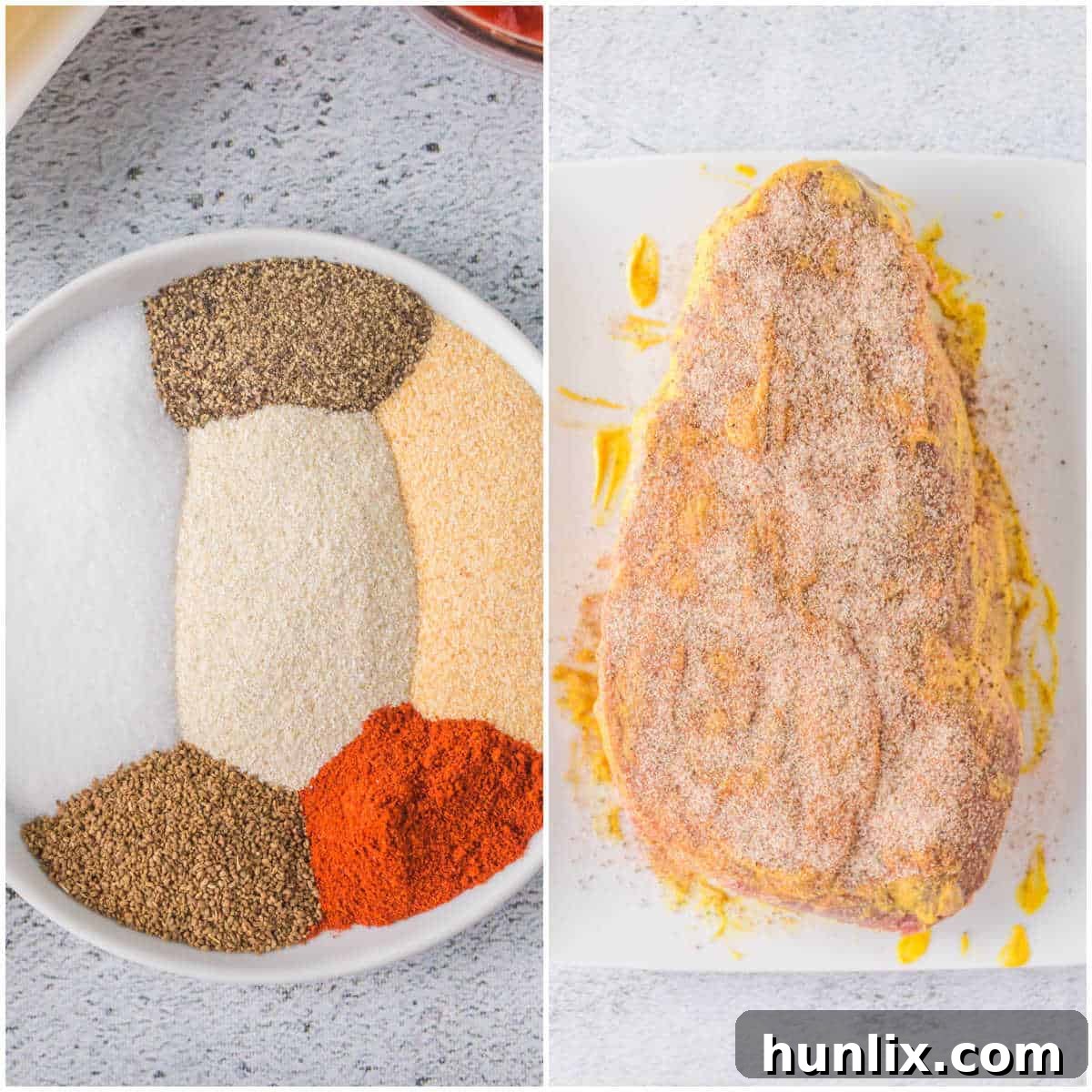
- Step Two: Apply the Mustard Binder. Generously coat the entire surface of the roast with yellow mustard. This thin layer acts as a fantastic binder, ensuring the dry rub sticks uniformly. Don’t worry, the mustard flavor will dissipate during the long cook, leaving behind only its tenderizing qualities and a perfect canvas for the rub. Adjust the amount of mustard based on the size of your roast, ensuring full coverage.
- Step Three: Mix the Dry Rub. In a small mixing bowl, combine all the dry rub ingredients: salt, black pepper, garlic powder, onion powder, celery seeds, and smoked paprika. Stir them well until they are evenly distributed.
- Step Four: Apply the Dry Rub. Liberally sprinkle the homemade dry rub over the mustard-coated chuck roast. Gently press the rub into the meat with your hands, ensuring every side is thoroughly covered. This creates the foundational layer of flavor and contributes significantly to the delicious bark.
- Step Five: Overnight Chill. Transfer the seasoned roast to an airtight container with a lid, or place it in a 9×13-inch pan and cover it tightly with plastic wrap. Refrigerate for at least 12 hours, or ideally, overnight. This crucial resting period allows the salt to work its magic, tenderizing the meat and allowing the flavors to meld deeply.
Grilling Day: Smoking and Braising for Tenderness
Today is the day! The long cook begins, transforming your seasoned chuck roast into tender, smoky perfection.
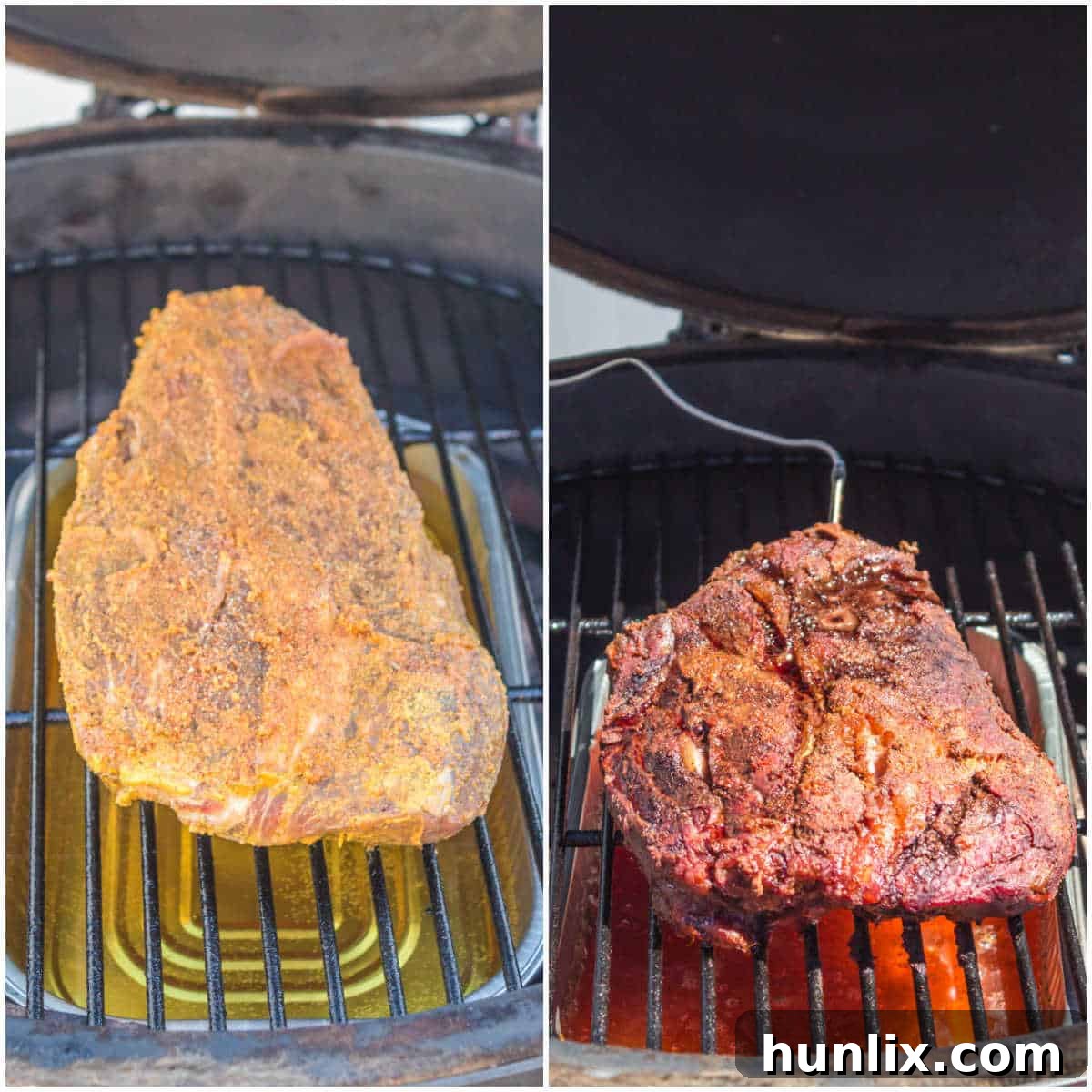
- Step One: Prepare Your BBQ for Indirect Heat. Set up your grill for indirect heat, aiming for a consistent cooking temperature. This means placing your charcoal or heat source on one side and the meat on the other, or using a heat deflector. Plan for a long cook, typically 8 hours or more. If you’re using a charcoal grill like a Big Green Egg, load it with enough charcoal to maintain temperature for at least 8 hours; other grills may require adding more fuel throughout the cook.
- Step Two: Preheat Your BBQ. Preheat your barbecue to a steady 250°F (121°C). For optimal results and easy cleanup, consider placing a catch pan filled with a little water beneath your grill grates to collect drippings and prevent flare-ups.
- Step Three: Initial Smoke. Once the grill reaches temperature, place the chuck roast on the indirect heat zone. Close the cover and let it cook undisturbed until it reaches an internal temperature of 150-160°F (65-71°C). This phase allows the meat to absorb a rich smoky flavor and develop that desirable bark. This typically takes around four hours, but always rely on an accurate meat thermometer.
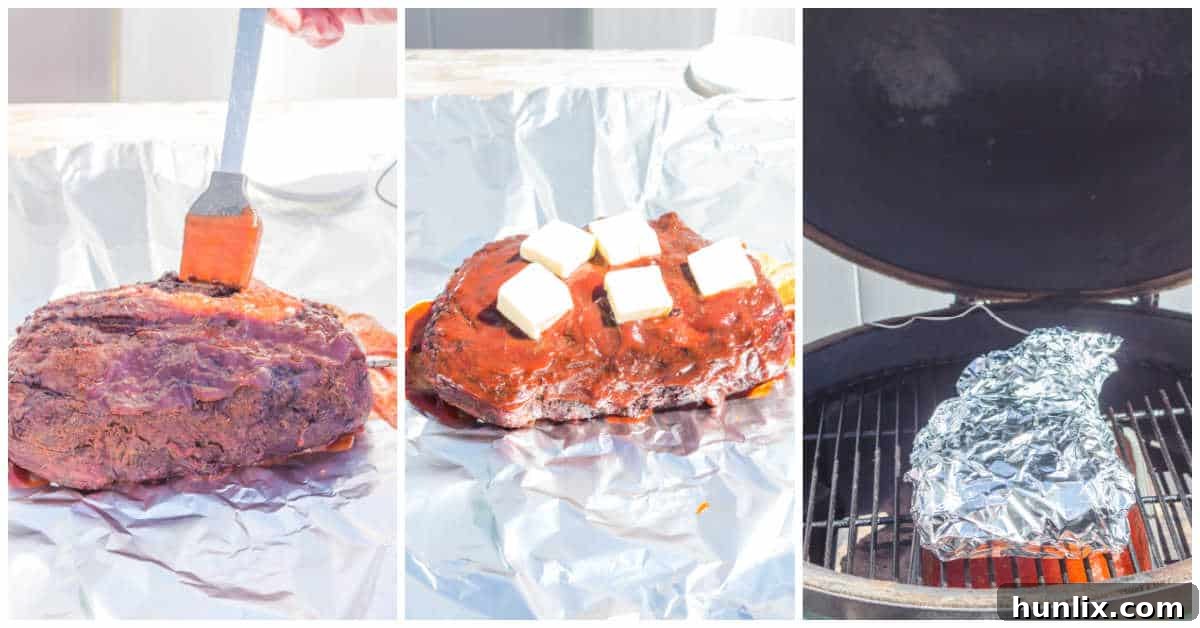
- Step Four: Prepare the Foil Wrap. Tear off two large pieces of heavy-duty aluminum foil, ensuring each is big enough to completely enclose the chuck roast. Using two layers provides extra security, preventing tears that could lead to moisture loss during the braising phase. If using a wireless temperature probe, make sure to wrap carefully around it to keep it in place.
- Step Five: The Braising Stage (The “Texas Crutch”). Once your chuck roast hits 150-160°F internal temperature, carefully transfer it onto the prepared double-layer foil. Brush about ½ cup of barbecue sauce evenly over the roast. Distribute the diced salted butter on top of the meat. Tightly wrap the chuck roast in the foil, sealing all edges. Be especially careful if you have a temperature probe inserted. This wrapping method, often called the “Texas crutch,” helps the meat power through the “stall” (where internal temperature plateaus) and renders it incredibly tender.
- Step Six: Return to Grill. Place the foil-wrapped roast back on the indirect heat zone of the grill and close the cover.
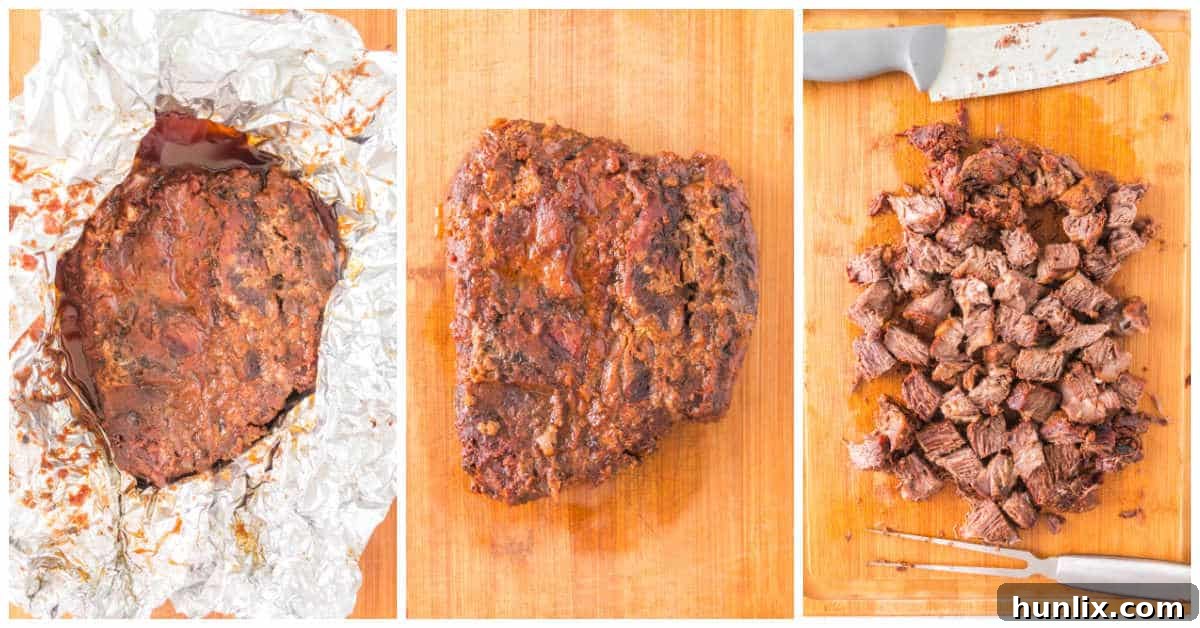
- Step Seven: Continue Cooking and Rest. Continue cooking until the chuck roast reaches a fork-tender internal temperature of 190-205°F (88-96°C). This final temperature range ensures the collagen has broken down, resulting in maximum tenderness. Once achieved, remove the foil-wrapped roast from the grill and place it on a cutting board. Let it rest, still wrapped, for at least 30 minutes. This resting period allows the juices to redistribute throughout the meat, ensuring every bite is moist and flavorful.
Finishing Touches: The Caramelized Glaze
The final step transforms your tender chuck roast into those iconic, saucy burnt ends.
- Step Eight: Increase Grill Temperature. While the meat is resting, increase your BBQ temperature to a hotter 350°F (175°C). This higher heat is essential for caramelizing the sauce and creating that perfect sticky glaze.
- Step Nine: Unwrap and Cube. Carefully unwrap the rested chuck roast. Discard any liquid accumulated in the aluminum foil – it has served its purpose in tenderizing. Using a sharp knife, cut the roast into bite-sized cubes. We recommend ¾-inch slices, then cubing from there, but adjust to your preference. The meat will be incredibly tender, so handle it gently.
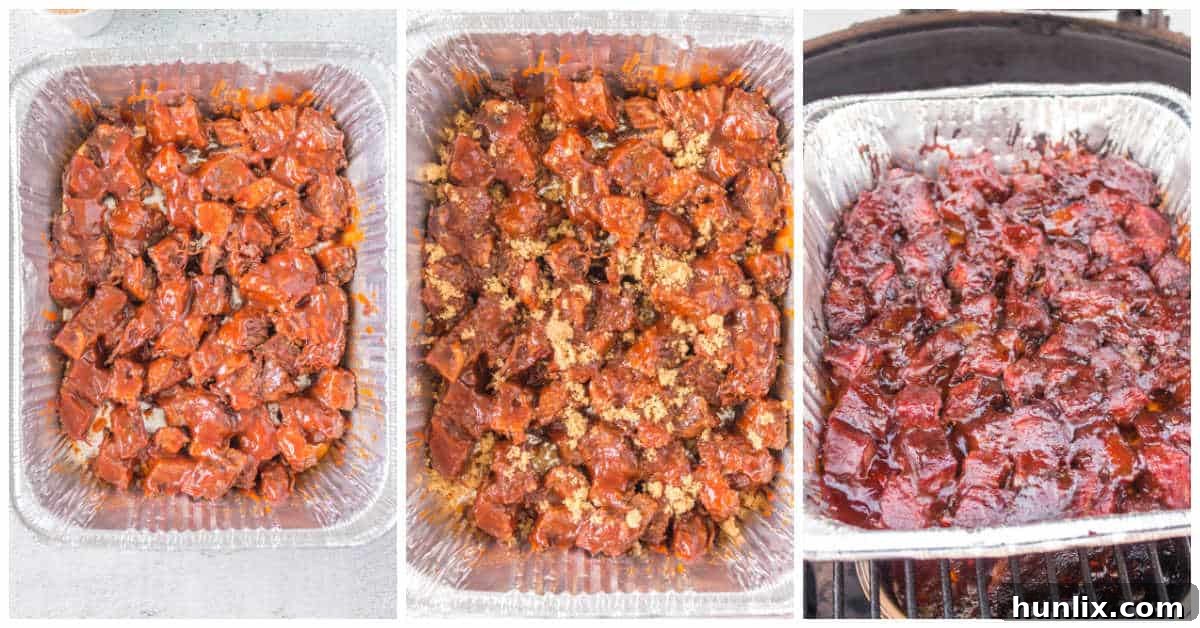
- Step Ten: Sauce and Sugar. Place the cubed meat into a clean aluminum pan. Pour the remaining BBQ sauce over the cubes and generously sprinkle with light brown sugar.
- Step Eleven: Gently Mix. Carefully mix the meat, sauce, and brown sugar, ensuring all the tender pieces are thoroughly coated. Remember, the meat is very delicate at this stage.
- Step Twelve: Return to Grill for Glaze. Once your BBQ has reached 350°F, place the aluminum pan with the sauced burnt ends onto the grill.
- Step Thirteen: Caramelize. Close the grill cover and cook for 30 to 40 minutes, or until the barbecue sauce has thickened and caramelized, creating a beautiful sticky glaze on the burnt ends. Stir occasionally to ensure even coating and prevent burning.
Serving Suggestions: What to Pair with Poor Man’s Burnt Ends
These flavorful burnt ends are a meal in themselves, but they also shine alongside classic barbecue sides. Here are some fantastic pairings to complete your feast:
- Macaroni Dill Salad: The tangy, creamy freshness of a dill macaroni salad provides a wonderful contrast to the rich, smoky meat.
- Dutch Potato Salad: A warm, vinegar-based potato salad offers a different flavor profile that pairs beautifully with barbecue.
- Herb Potato Salad: Fresh herbs brighten up a classic potato salad, adding an aromatic touch.
- Ranch Potato Salad: Creamy and savory, ranch potato salad is a family-friendly favorite that complements the bold flavors of the burnt ends.
- Creamy Coleslaw: The crisp texture and sweet-tangy dressing of coleslaw cut through the richness of the meat.
- Cornbread or Dinner Rolls: Perfect for soaking up all that delicious leftover sauce.
- Baked Beans: A barbecue staple, rich and sweet baked beans are a natural companion.
- Grilled Corn on the Cob: Sweet, smoky, and simple, grilled corn is ideal for summer.
Customizing Your Burnt Ends: Variations and Substitutions
One of the joys of cooking is the ability to adapt recipes to your taste and what you have on hand. Here are some ideas to customize your Poor Man’s Burnt Ends:
- Spice Rub Your Way: While our homemade spice rub is fantastic, feel free to experiment with your own favorite blend. You can also purchase a high-quality pre-made barbecue rub for convenience.
- Homemade BBQ Sauce is Key: For the ultimate flavor, consider making your own BBQ sauce. This allows you to control the sweetness, heat, and tang, creating a truly unique flavor profile.
- Bring the Heat: If you prefer a spicier kick, incorporate a pinch or two of cayenne pepper or chili powder into your dry rub. You can also add a dash of hot sauce to your BBQ sauce.
- Try Beef Brisket (The Traditional Route): If you’re ready for the ultimate barbecue challenge and don’t mind the extra expense, you can use the point end of a beef brisket instead of chuck roast. While it won’t be “Poor Man’s Burnt Ends,” it will yield a traditional and equally delicious burnt ends experience.
- Mustard Alternatives: Dijon mustard can be used instead of yellow mustard for coating the meat. It offers a slightly more sophisticated, spicier tang that some prefer.
- Butter or No Butter: While butter adds richness and aids in caramelization, you can omit it if you’re looking to reduce fat or prefer a slightly less rich finish. The sauce and brown sugar will still create a wonderful glaze.
Storage and Freezing Tips
These burnt ends are so good, you might not have many leftovers! But if you do, here’s how to store them to enjoy later:
- Refrigeration: Store any leftover Poor Man’s Burnt Ends in an airtight container in the refrigerator for 3 to 5 days. Reheat gently in the oven or on the stovetop over low heat, adding a splash of water or extra BBQ sauce if they seem dry.
- Creative Leftover Ideas: Leftover burnt ends are incredibly versatile. Try them chopped up and added to a fresh salad for a smoky protein boost, tossed with pasta and a creamy cheese sauce, served as a quick appetizer, or simply piled onto a slice of white bread for a classic comfort food snack.
Can I Freeze Burnt Ends?
Absolutely! Burnt ends freeze exceptionally well. Once they have cooled completely after cooking, transfer them to a freezer-safe airtight container or heavy-duty freezer bags. They can be stored in the freezer for up to three months. To reheat, thaw them in the refrigerator overnight, then warm them in the oven or on the grill until heated through, adding more BBQ sauce if desired.
Frequently Asked Questions About Burnt Ends
What Exactly Are Burnt Ends?
Burnt ends are highly prized, crispy, fatty, and tender cubes of smoked meat, often referred to as “meat candy” due to their rich flavor and sticky texture. Traditionally, they come from the “point” section of a beef brisket, which has a higher fat content and takes longer to render, resulting in those perfectly “burnt” (caramelized and crispy) edges. Our “Poor Man’s Burnt Ends” are made from chuck roast, offering a more affordable and accessible way to achieve a similar mouthwatering experience. Chuck roast, while different in texture from brisket point, becomes incredibly tender and flavorful when smoked and braised using this method, making it a fantastic alternative.
Where Does Chuck Roast Come From?
Chuck roast is a cut of beef that comes from the shoulder area of the cow, specifically above the ribs. It’s known for being a tougher cut of meat compared to more premium steaks, but this toughness is due to a good amount of connective tissue and marbling. When slow-cooked, like in this burnt ends recipe, that connective tissue breaks down into gelatin, resulting in a supremely tender and incredibly flavorful piece of beef. Its robust beefy flavor and relatively lower cost make it an ideal candidate for slow-cooking methods and a perfect choice for our “Poor Man’s” version of burnt ends.
Can I Use Wood Chips for Smoking?
Absolutely, you can and should use wood chips or wood chunks if you want to infuse your burnt ends with a deeper, more authentic smoky flavor. Many barbecue enthusiasts, myself included, recommend soaking wood chips in water for at least an hour, or even overnight, before adding them to your grill. This helps them smolder rather than burn too quickly, producing a longer, more consistent smoke. Popular wood choices for beef include hickory, oak, mesquite, or a blend. Adding wood chips during the initial smoking phase will impart a beautiful aromatic smoke that truly elevates the flavor profile of your chuck roast burnt ends.
Do I Need a Smoker to Make Burnt Ends?
While a dedicated smoker will give you the most consistent smoky flavor, you don’t necessarily need one. This recipe is designed to be made on a charcoal or gas grill set up for indirect heat. For gas grills, you can use a smoker box filled with wood chips to generate smoke. For charcoal grills, simply add soaked wood chunks directly to your charcoal. The key is to maintain a low, consistent temperature and manage your smoke production.
How Do I Get a Good “Bark” on My Burnt Ends?
Developing a good “bark” (the dark, flavorful crust on the outside of smoked meat) is crucial for burnt ends. Here’s how to achieve it:
- Pat Dry: Always start with a very dry piece of meat. Moisture hinders bark formation.
- Generous Rub: Apply a thick, even layer of your dry rub. The spices, especially salt and pepper, are essential components of the bark.
- Low and Slow Initial Smoke: The first phase of cooking at 250°F on indirect heat is where the bark primarily forms. Avoid opening the grill too frequently, as this releases heat and smoke, slowing down the process.
- No Wrapping Too Early: Resist the urge to wrap the meat in foil until it has developed a solid bark and reached the target internal temperature of 150-160°F. Wrapping too early will steam the meat and prevent bark development.
More BBQ Delights to Explore
If you loved making these Poor Man’s Burnt Ends, you’ll surely enjoy these other fantastic barbecue recipes that are perfect for your next outdoor cooking adventure:
- Burger Hobo Packets: An easy and convenient way to grill a complete meal in foil packets.
- Stuffed Burgers: Elevate your burger game by filling patties with your favorite cheese and toppings.
- Maple Dijon Grilled Chicken: Sweet and tangy grilled chicken that’s simple yet packed with flavor.
- Honey Sriracha Chicken: A delicious blend of sweet and spicy that’s perfect for the grill.
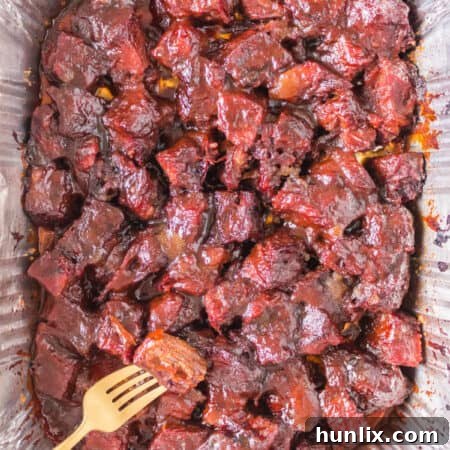
Poor Man’s Burnt Ends
Tender, smoked chuck roast is grilled to perfection with a flavorful rub and sweet BBQ sauce. Enjoy these mouthwatering Burnt Ends as a main course, side or appetizer.
Prep Time: 10 minutes
Cook Time: 30 minutes
Resting Time: 12 hours (for marinating/overnight chill)
Total Time: 12 hours 40 minutes
Servings: 6
Ingredients
Main Ingredients
- 3 lb chuck roast
- 3 tbsp yellow mustard
Dry Rub
- 1 tbsp salt
- ½ tbsp black pepper
- 1 tbsp garlic powder
- 1 tbsp onion powder
- 1 tsp celery seeds
- 1 tsp smoked paprika
Sauce
- 4 tbsp salted butter, diced
- 1 cup BBQ sauce, divided
- ⅓ cup light brown sugar
Instructions
Day Before the Cook
- Place your chuck roast on a plate and pat dry with a paper towel.
- Coat the roast with mustard. Set aside.
- In a small mixing bowl, mix together the ingredients for the dry rub: salt, pepper, garlic powder, onion powder, celery seeds and smoked paprika.
- Sprinkle the dry rub on the chuck roast and slightly press into the roast. Make sure to cover all sides.
- Place roast in an airtight container with a lid or a 9×13 inch pan covered with plastic wrap. Store in the fridge for 12 hours or overnight.
Morning of the Cook
- Prepare your BBQ for indirect heat. Plan for 8 hours+ cook.
- Bring your BBQ to 250°F (121°C).
- Once at temperature, place the chuck roast on the grill. Close the cover and let it cook until it has reached an internal temperature of 150 to 160°F (65-71°C). This typically takes about 4 hours.
- Cut 2 pieces of aluminum foil that are big enough to wrap the chuck roast.
- Once the chuck roast is at 150 to 160°F internal temperature, place the chuck on top of the foil paper. Brush on ½ cup barbecue sauce. Add the diced butter on top. Wrap the chuck tightly.
- Place back on the grill and close the cover.
- Continue cooking until you have reached an internal temperature of 190 to 205°F (88-96°C). Remove chuck from the grill and place on a cutting board. Let it rest for 30 minutes.
- While the meat is resting, increase your BBQ temperature to 350°F (175°C).
- Unwrap the chuck carefully. Dispose of the liquid in the aluminum foil. Cut into bite sized pieces (approx. ¾-inch cubes).
- Place in an aluminum pan and pour remaining BBQ sauce on and sprinkle with brown sugar.
- Carefully mix to coat all the pieces. The meat will be very tender.
- Once the BBQ has reached 350°F, place the foil pan on the grill.
- Cook, with the cover closed, for 30 to 40 minutes or until the sauce has thickened and caramelized.
Notes
- The amount of mustard needed may vary depending on the size of your roast.
- For an intense smoke flavor, soak wood chips or chunks in water overnight and add them to your grill during the initial cook.
- Grill cooking times vary. If using a charcoal grill, ensure enough fuel for an 8-hour cook; some grills may require additional fuel.
- Consider placing a catch pan with water under the grill grates to collect drippings and prevent flare-ups.
Nutrition Estimates (per serving)
- Calories: 620 kcal
- Carbohydrates: 34g
- Protein: 45g
- Fat: 34g
- Saturated Fat: 16g
- Polyunsaturated Fat: 3g
- Monounsaturated Fat: 15g
- Trans Fat: 2g
- Cholesterol: 177mg
- Sodium: 1986mg
- Potassium: 940mg
- Fiber: 1g
- Sugar: 28g
- Vitamin A: 542 IU
- Vitamin C: 1mg
- Calcium: 87mg
- Iron: 6mg
The information shown is an estimate provided by an online nutrition calculator. It should not be considered a substitute for a professional nutritionist’s advice.
We hope you enjoy this fantastic recipe for Poor Man’s Burnt Ends. Don’t forget to share your culinary creations on social media!
Join Moms Best Recipes to find more delicious family recipes.