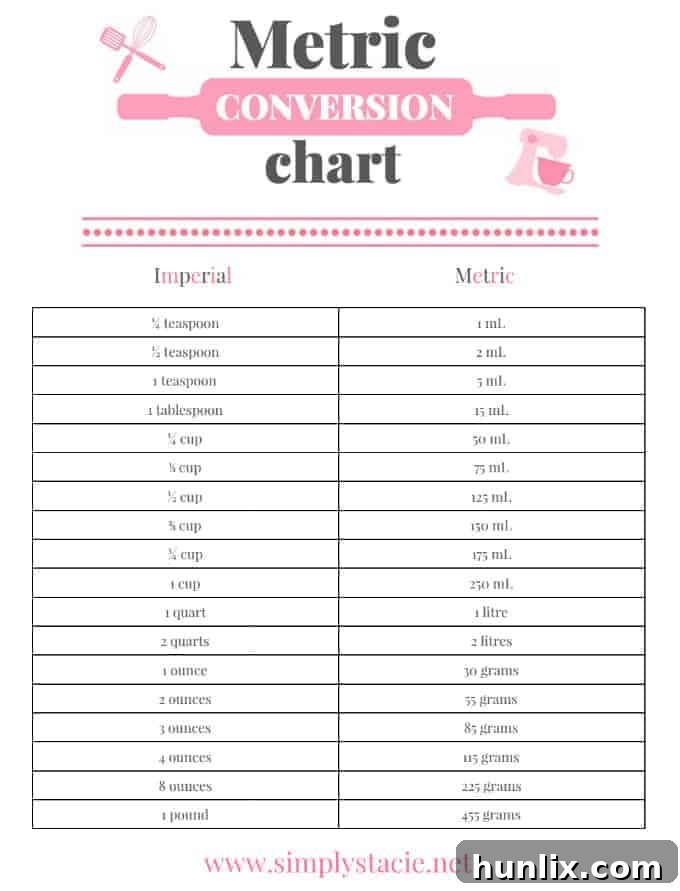
In today’s interconnected world, culinary adventures often transcend borders. Whether you’re exploring a tantalizing recipe from a British chef, a traditional Italian dish, or a classic American dessert, you’re bound to encounter a common hurdle: differing measurement systems. The good news is, a simple, indispensable tool can transform this challenge into a seamless part of your cooking process. That tool is a comprehensive metric conversion chart.
For home cooks everywhere, especially those navigating recipes from diverse international sources, understanding and accurately converting measurements is paramount. While some dishes forgive minor variations, baking, often referred to as a science, demands precision. An incorrect conversion of flour, sugar, or liquid can dramatically alter the texture, flavor, and overall success of your culinary creation. This is where a reliable conversion chart becomes your kitchen’s best friend, ensuring every dish turns out exactly as intended, regardless of its origin.
Bridging the Measurement Divide: Metric vs. Imperial Systems
The world predominantly operates on one of two major measurement systems: the metric system and the imperial system. Each has its own historical roots and practical applications, leading to interesting variations in kitchens globally.
The Metric System: A Universal Language
The metric system, rooted in units like grams for weight, milliliters and liters for volume, and Celsius for temperature, is celebrated for its logical, base-10 structure. This makes conversions within the system incredibly straightforward (e.g., 1000 grams in a kilogram, 1000 milliliters in a liter). Adopted by the vast majority of countries worldwide, including Canada, the European Union, Australia, and countless others, the metric system simplifies international trade, scientific research, and, importantly, recipe sharing. When a recipe calls for 250g of flour or 500ml of milk, you’re engaging with a system designed for clarity and ease.
The Imperial System: A Historic Legacy
In contrast, the imperial system, with units such as ounces and pounds for weight, cups, pints, and quarts for volume, and Fahrenheit for temperature, stems from historical British units. Today, it is primarily used by a select few nations: the United States, Liberia, and Myanmar. While deeply ingrained in the culinary traditions of these regions, the imperial system’s non-base-10 conversions (e.g., 16 ounces in a pound, 2 cups in a pint, 8 fluid ounces in a cup) can sometimes pose a challenge, particularly when scaling recipes or interacting with metric-based content.
Many home cooks, especially those in Canada or who frequently explore American food blogs, find themselves working with both systems. Recipes from popular American culinary sites often list ingredients in imperial units like cups, tablespoons, and ounces, while local grocery stores and product packaging might exclusively use metric measurements. This dual usage highlights the absolute necessity of a quick, reliable conversion tool within arm’s reach.
Your Essential Kitchen Companion: The Metric Conversion Chart Printable
Imagine effortlessly converting teaspoons to milliliters, grams to ounces, or Fahrenheit to Celsius without breaking your cooking rhythm. That’s the power of a well-designed metric conversion chart. Our printable chart is specifically crafted to be your go-to resource, making these transformations simple and precise.
This isn’t just another piece of paper; it’s a strategic kitchen asset. Designed for clarity and immediate reference, it compiles all the most common cooking and baking conversions you’ll ever need. From dry ingredients like flour and sugar to liquids, and even oven temperatures, everything is laid out in an easy-to-read format. No more frantic online searches with flour-dusted fingers or guessing measurements that could compromise your dish.
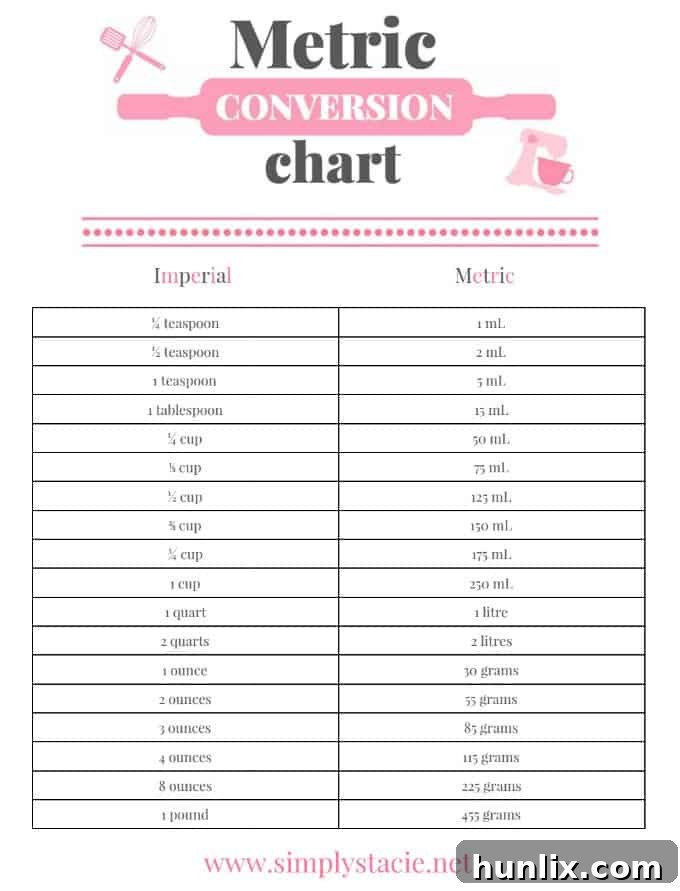
Benefits of Having a Physical Conversion Chart Handy
While digital tools like Google are fantastic for specific, one-off conversions, a physical printable chart offers several distinct advantages in the bustling environment of a kitchen:
- Instant Accessibility: Taped inside a cupboard, laminated and magnetized to your fridge, or tucked into a kitchen binder, your chart is always visible and ready. No need to unlock a phone, open an app, or type in a search query.
- Reduced Screen Time: Keep your devices away from messy ingredients and focus solely on your cooking. This reduces distractions and keeps your workflow smooth.
- Reliability: Unlike an internet search that might pull up varying results, your curated chart provides consistent, vetted conversions every time.
- Enhanced Learning: Regularly seeing the conversions helps reinforce your understanding of different measurement systems, making you a more intuitive and confident cook over time.
- No Internet Needed: Perfect for areas with spotty Wi-Fi or when you simply prefer to disconnect and immerse yourself in the culinary process.
Mastering Your Kitchen with This Chart: Practical Usage
Utilizing this conversion chart is incredibly straightforward. Here’s how you can make the most of it:
Volume Conversions: Liquids and Dry Goods
Often, recipes require converting cups to milliliters (ml) or fluid ounces (fl oz) to liters. Our chart provides precise equivalents for common volumes, crucial for everything from baking a delicate cake to mixing a perfect marinade. You’ll find conversions for teaspoons, tablespoons, cups, pints, quarts, and gallons into their metric counterparts, ensuring your liquids are always spot on.
Weight Conversions: For Baking Precision
Baking is particularly sensitive to weight measurements. Converting between ounces (oz) and grams (g), or pounds (lb) and kilograms (kg), can make or break a recipe. Our chart clearly outlines these crucial weight conversions, allowing you to accurately measure flour, sugar, butter, and other solid ingredients, leading to consistent and delicious results every time. Remember, measuring by weight is often more accurate than by volume, especially for dry ingredients.
Temperature Conversions: Oven and Beyond
Oven temperatures vary widely between imperial (Fahrenheit °F) and metric (Celsius °C) recipes. Our chart includes a comprehensive section for temperature conversions, ensuring your oven is always at the right heat for optimal baking and roasting. No more burnt edges or undercooked centers due to miscalculated temperatures.
Beyond the Chart: Embracing Culinary Precision
While the printable chart is an invaluable tool, integrating other practices can further elevate your kitchen accuracy:
- Invest in a Digital Kitchen Scale: For baking, a digital scale that can switch between grams and ounces is a game-changer. It provides the most accurate measurements for dry ingredients, far surpassing volumetric cups.
- Keep Both Imperial and Metric Measuring Sets: If you frequently cook from recipes using both systems, having separate sets of measuring cups and spoons for each can save time and prevent confusion.
- Understand Oven Variability: Even with accurate temperature conversions, ovens can vary. An oven thermometer can help you verify your oven’s actual temperature against its dial setting.
- Practice Makes Perfect: The more you use your conversion chart and apply these tips, the more intuitive measurement conversions will become, making you a more confident and versatile cook.
Ready to Simplify Your Kitchen?
Don’t let measurement hurdles hold you back from exploring the vast and delicious world of international cuisine. Our metric conversion chart is designed to empower you, saving time, reducing errors, and ensuring every meal is a success. Keep it handy, print multiple copies, and transform your kitchen into a hub of culinary confidence.
Grab your copy of this essential Metric Conversion Chart and keep it in your kitchen or household binder for effortless reference. It’s an indispensable tool for any home cook looking to expand their repertoire and tackle any recipe with ease.
What system do you primarily use in your kitchen: Metric, Imperial, or do you find yourself using a bit of both, like many of us? Share your experiences and tips below!