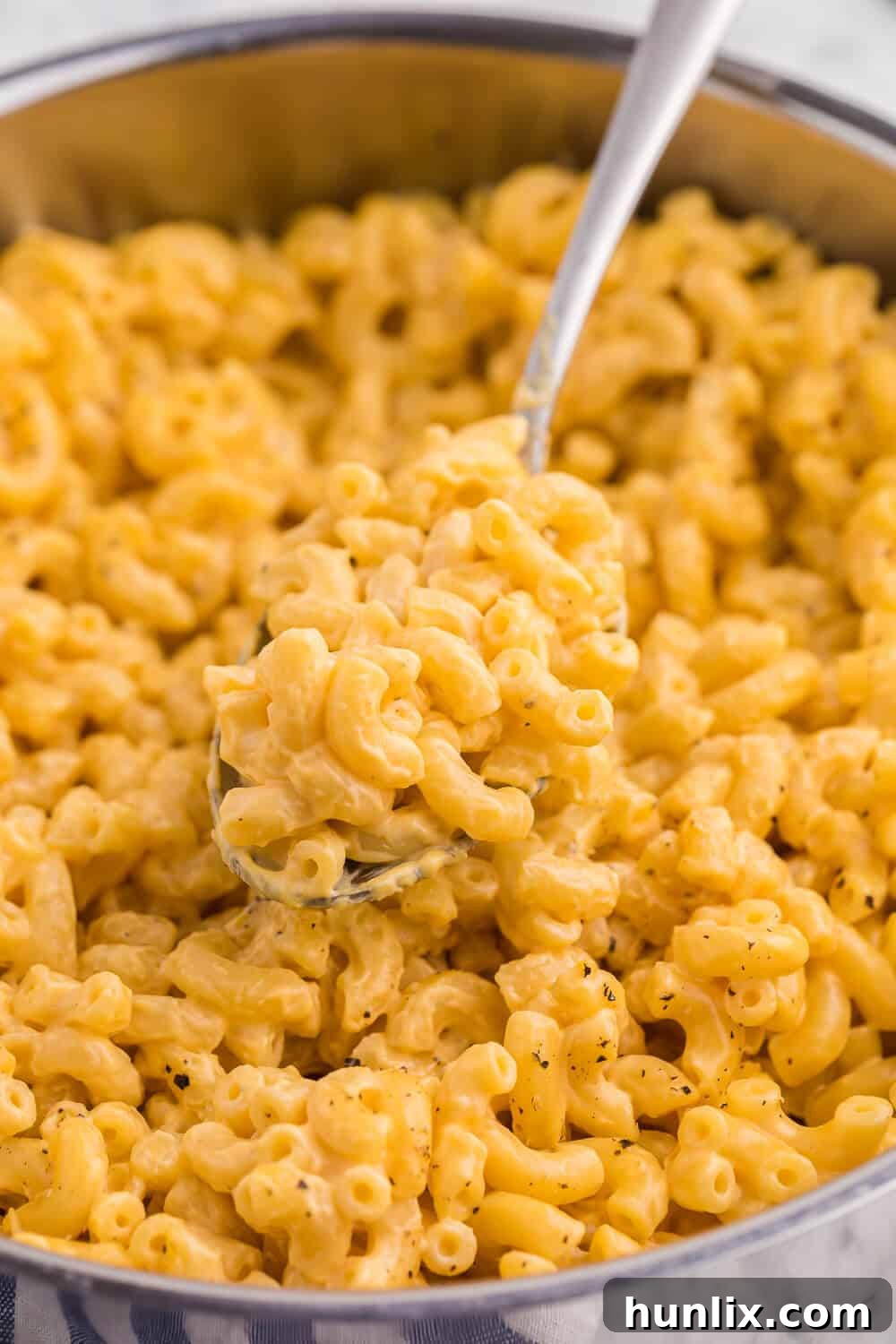
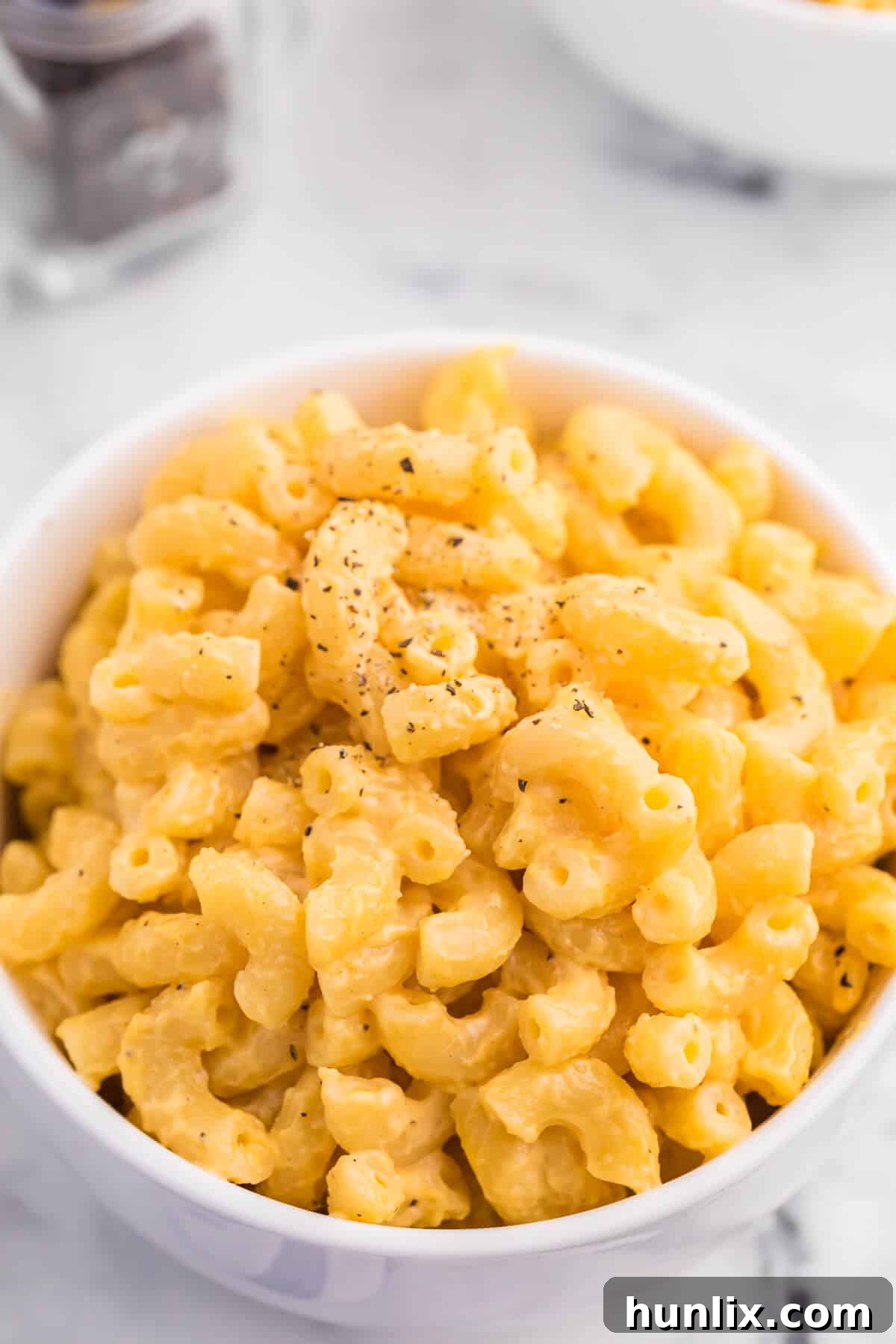
Craving the ultimate comfort food that’s both indulgent and incredibly simple to prepare? Look no further than this exquisite Stovetop Mac and Cheese recipe! This beloved classic, a staple in kitchens across the globe, offers a rich, velvety texture and deep cheesy flavor that comes together effortlessly in just a few steps. Whether you’re whipping up a quick meal for yourself or feeding a hungry crowd, this homemade mac and cheese promises a delightful experience that will please even the most discerning palates.
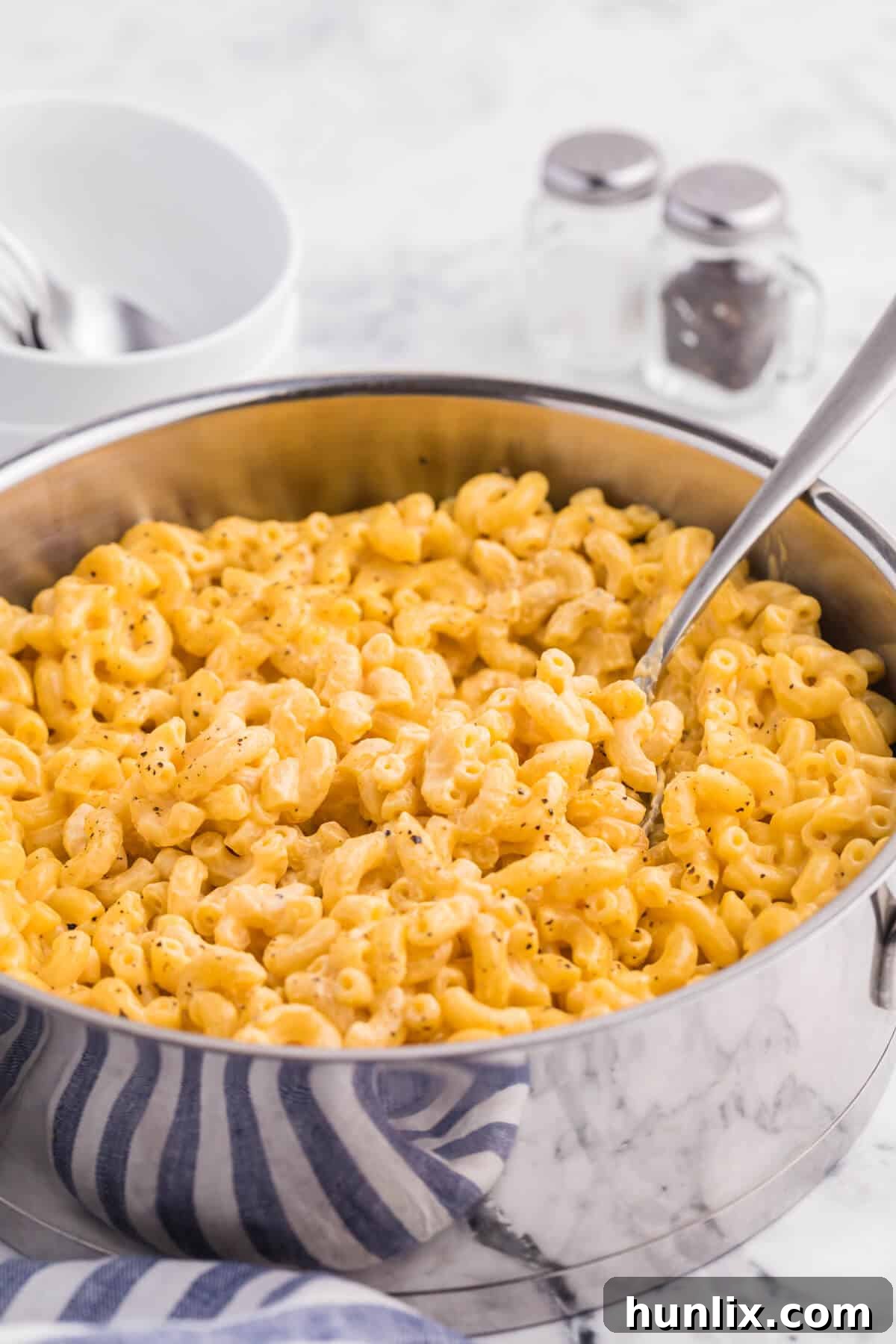
Forget the processed, bland taste of boxed macaroni and cheese. Our homemade recipe elevates this dish to an art form, creating a luxurious and smooth sauce bursting with the authentic flavors of quality cheddar cheese, a hint of tangy sour cream, and perfectly balanced seasoning. This is truly the best macaroni and cheese you’ll ever make on your stovetop!
What makes creamy stovetop mac and cheese my personal favorite is its remarkable simplicity combined with unparalleled perfection. The tender pasta noodles are enveloped in a luscious, savory cheese sauce, delivering all the comforting warmth and satisfaction you expect from a classic Southern-style macaroni and cheese. It’s a dish that evokes nostalgia and creates new, delicious memories.
Unlike its baked counterpart, which often requires over an hour of cooking, this classic stovetop recipe ensures you can have a piping hot, incredibly yummy macaroni and cheese ready to enjoy in less than 30 minutes. This makes it an ideal choice for busy weeknights, impromptu gatherings, or whenever a craving for cheesy goodness strikes.
One of the most appealing aspects of stovetop mac and cheese is its incredible versatility. The foundational recipe serves as a perfect canvas for your culinary creativity. You can experiment with various pasta shapes beyond traditional elbow macaroni; consider shells, penne, or even rotini to capture every drop of that creamy sauce. The cheese possibilities are equally endless: while sharp cheddar remains a classic and popular choice, don’t hesitate to blend in other varieties like smoky Gouda, nutty Parmesan, creamy Fontina, or even a bold blue cheese for a uniquely sophisticated flavor profile. For added texture and a burst of flavor, mix in extras like crispy bacon bits, a kick of diced jalapeños, or a crunchy breadcrumb topping. The world of mac and cheese customization awaits!
Why You’ll Absolutely Love Stovetop Mac and Cheese
Beyond its undeniable deliciousness, stovetop mac and cheese offers a host of practical advantages that make it a favorite for home cooks everywhere:
- Unbelievably Quick and Easy Preparation: In today’s fast-paced world, time is a precious commodity. Unlike baked macaroni and cheese, which demands significant oven time, our stovetop version can be prepared and served in under 30 minutes. This speed makes it an invaluable recipe for hectic weeknights or when you need a satisfying meal without a long wait.
- Infinitely Customizable to Your Taste: This recipe is a culinary playground! Its inherent versatility allows you to tailor it perfectly to your family’s preferences. Experiment with different cheese blends, from a sharp cheddar base to a mix with Monterey Jack or Gruyere. Incorporate your favorite spices, herbs, or exciting mix-ins like crumbled bacon, roasted broccoli florets, or a dash of hot sauce. You have the power to create a mac and cheese that’s uniquely yours every single time.
- Luxuriously Creamy and Incredibly Delicious: The hallmark of a truly great mac and cheese is its sauce, and this stovetop method delivers an unparalleled creamy, cheesy coating for every single noodle. Made from scratch, this sauce boasts a richness and depth of flavor far superior to any boxed alternative you might remember from childhood. Prepare for a truly decadent experience!
- Budget-Friendly and Feeds a Crowd: Mac and cheese is an inherently economical meal, making it perfect for feeding a large family or group without breaking the bank. By preparing it on the stovetop, you can further maximize savings, often utilizing staple ingredients you already have in your pantry and fridge. It’s comfort food that’s kind to your wallet.
- A Guaranteed Kid-Friendly Favorite: Few dishes universally appeal to children quite like mac and cheese. This stovetop recipe is no exception; its familiar flavors and creamy texture make it an instant hit with picky eaters. You can even involve your kids in the cooking process, letting them help stir the sauce or sprinkle on their favorite toppings, making mealtime a fun and engaging activity.
Essential Ingredients for Your Stovetop Mac and Cheese
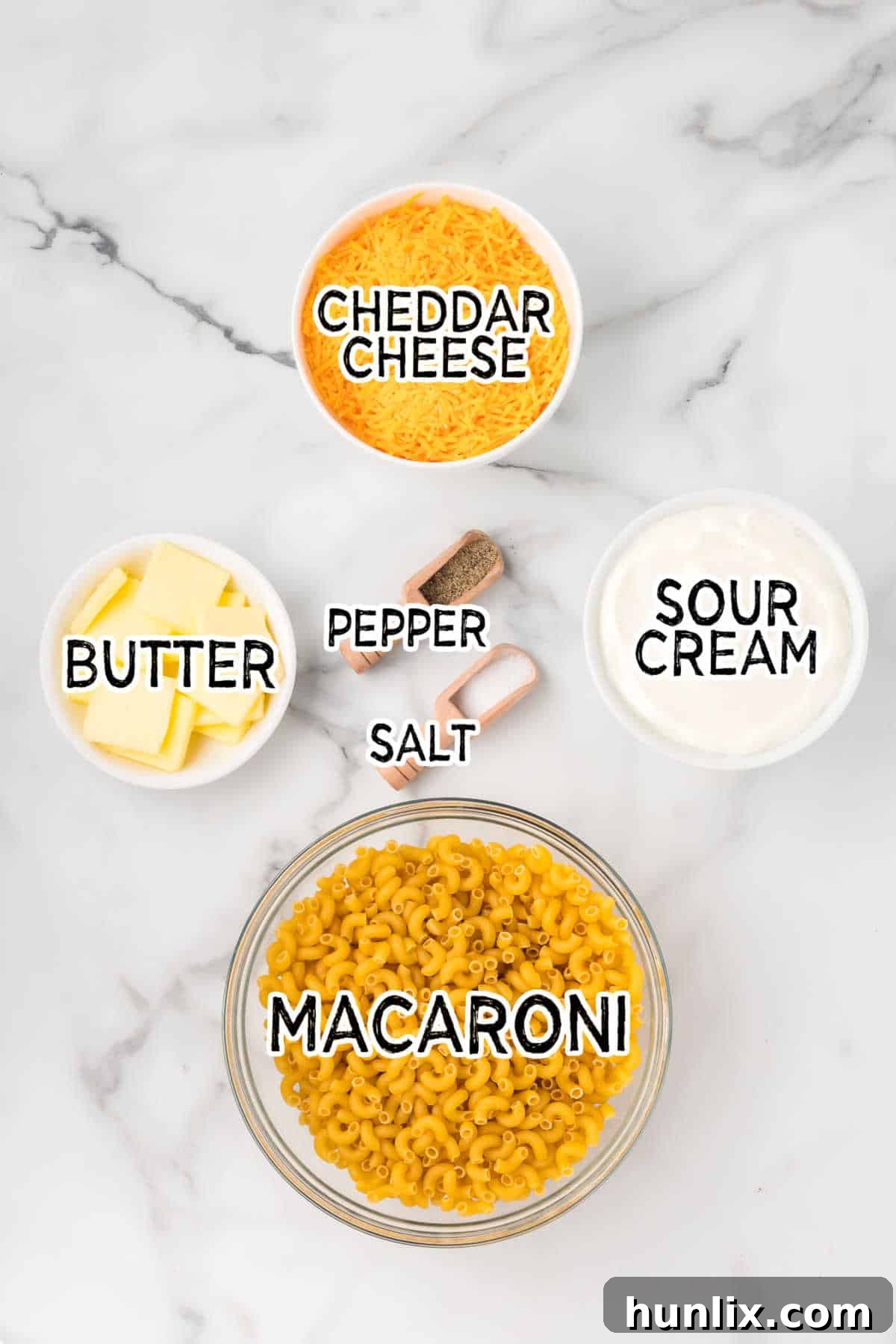
Crafting the perfect stovetop mac and cheese begins with a selection of quality ingredients. Here’s what you’ll need for a truly unforgettable dish:
- Macaroni (or your preferred short pasta): While classic elbow macaroni is traditional, feel free to use any short pasta shape that effectively captures the rich, creamy cheese sauce. Options like shells, penne, or rotini work wonderfully.
- Butter (salted or unsalted): Butter is fundamental to achieving that rich, smooth base. It adds a luxurious flavor and helps create the silky texture that defines great mac and cheese.
- Cheddar Cheese (shredded): The star of the show! For the best flavor and melt, we highly recommend grating your own cheddar cheese from a block. Pre-shredded varieties often contain anti-caking agents that can make the sauce grainy. Sharp cheddar is our top choice for its robust, tangy flavor.
- Sour Cream: This is our secret ingredient for an unparalleled level of rich creaminess and a subtle tang that elevates the overall flavor profile, making the sauce incredibly smooth and irresistible.
- Salt and Black Pepper: Simple yet essential seasonings. Use sea salt and freshly ground black pepper to taste, enhancing all the other flavors without overpowering them.
How to Make the Best Stovetop Mac and Cheese: A Simple Guide
Follow these easy steps to create a creamy, cheesy masterpiece right on your stovetop:
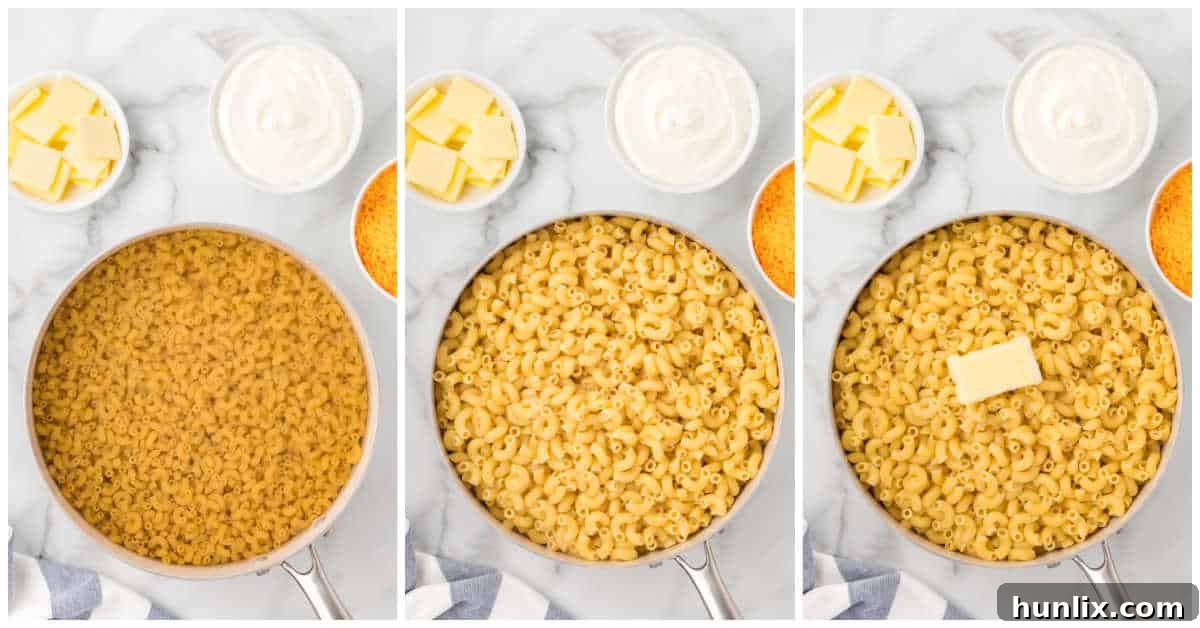
- Step One: Cook the Pasta. In a large saucepan or Dutch oven, bring a generous amount of salted water to a rolling boil. Add your macaroni (or chosen pasta shape) and cook according to package directions until it is al dente – cooked through but still slightly firm to the bite.
- Step Two: Drain and Return. Once the pasta is cooked, drain it thoroughly using a colander. Immediately transfer the hot, drained pasta back into the same pot.
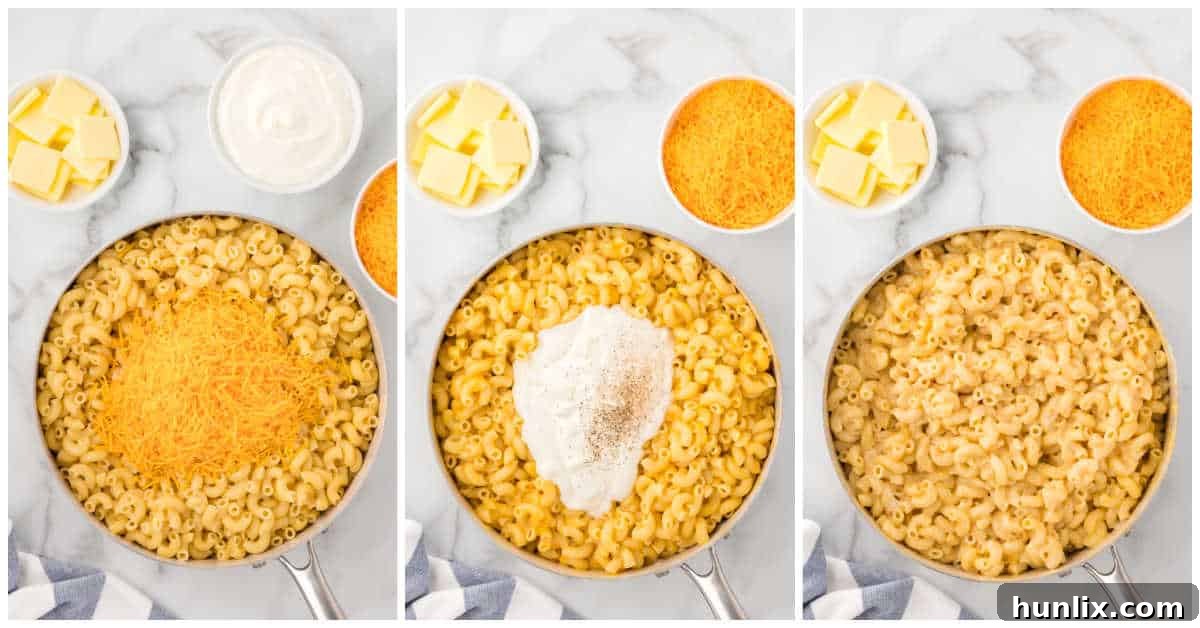
- Step Three: Melt the Butter. Place the pot with the pasta back on the stovetop over low heat. Add the butter and stir gently until it is completely melted and coats the pasta evenly. Ensure there are no large unmelted pieces.
- Step Four: Incorporate the Cheese. Gradually add the shredded cheddar cheese to the pasta, stirring constantly over low heat. Continue to stir until all the cheese has melted into a smooth, creamy sauce that beautifully coats every noodle. Patience is key here to avoid clumping.
- Step Five: Add Sour Cream and Seasonings. Remove the pot from the heat. Stir in the sour cream, salt, and black pepper. Continue to gently stir until the sour cream is fully incorporated, creating an even richer and creamier sauce.
- Step Six: Serve and Enjoy!. Your perfect stovetop mac and cheese is now ready! Serve immediately while warm and gooey. Enjoy every comforting bite!
Recommended Equipment for Stovetop Mac and Cheese
Having the right tools can make your cooking experience even smoother:
- Measuring cups and spoons: Essential for precise ingredient measurements.
- 5-quart stockpot or Dutch oven: A sturdy pot is ideal for cooking pasta and mixing the sauce.
- Box grater: If you’re grating your own cheese (highly recommended!), a strong box grater is a must-have for efficiency and safety.
- Whisk or wooden spoon: For stirring the sauce and ensuring everything is perfectly combined.
What to Serve with Your Stovetop Mac and Cheese
Easy stovetop mac and cheese is a versatile side dish or main course that pairs wonderfully with a variety of other recipes. Here are some fantastic ideas to complement its rich, creamy goodness:
- Fresh Green Salad: A simple, crisp green salad with a light vinaigrette offers a refreshing contrast to the richness of mac and cheese. Consider mixed greens, spinach, or arugula with cherry tomatoes, cucumber, and thinly sliced red onion for added crunch and flavor.
- Roasted Vegetables: Roasting vegetables like broccoli, cauliflower, Brussels sprouts, or asparagus brings out their natural sweetness and a slight char, providing a healthy and flavorful balance to your meal. Toss them with olive oil, salt, pepper, and herbs before roasting until tender-crisp.
- Grilled or Baked Chicken/Pork: For a complete meal, pair your mac and cheese with a lean protein. Grilled chicken breasts, baked pork chops, or even a simple pan-seared steak offer satisfying protein and robust flavors that complement the cheesy pasta beautifully.
- Classic Garlic Bread: A timeless pairing! Crispy, buttery garlic bread is perfect for soaking up any extra sauce and adds a delightful savory crunch. Easily made by spreading a mixture of butter, minced garlic, and parsley on sliced baguette and toasting until golden.
- Light Fruit Salad: For a burst of freshness, a vibrant fruit salad can be a surprisingly good counterpoint. The sweetness and acidity of fruits like strawberries, blueberries, kiwi, or mango provide a palate cleanser after the creamy mac and cheese.
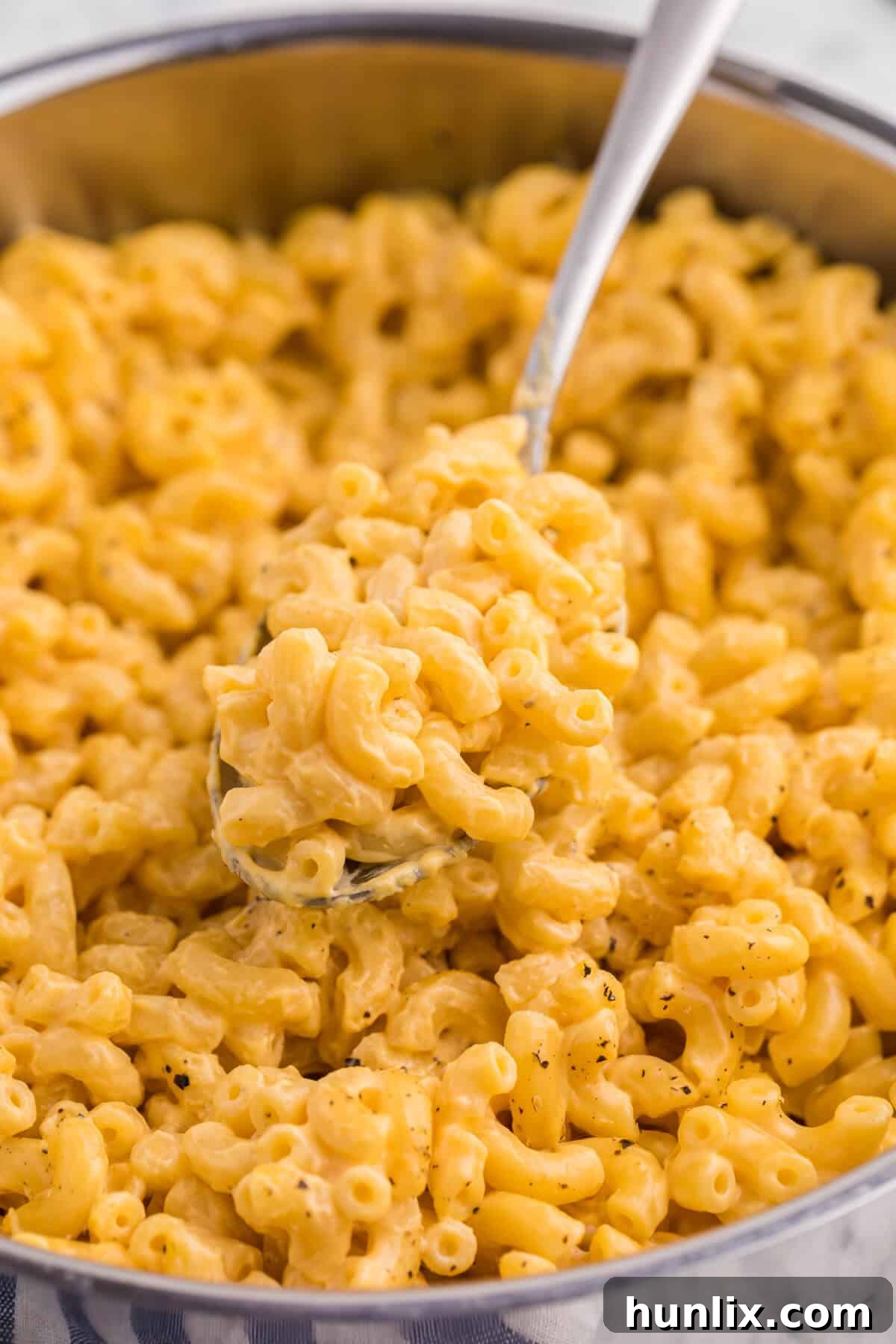
Stovetop Mac and Cheese: Variations and Smart Substitutions
One of the true joys of this recipe is how easily it adapts to different tastes and dietary needs. Here are some ideas to customize your next batch:
Creamy Base Alternatives
- Instead of sour cream, you can achieve a similar rich creaminess by using heavy cream, whole milk (for a slightly lighter sauce), cream cheese (for an even tangier, thicker result), or evaporated milk (a classic Southern touch for extra smoothness).
Unleash Your Inner Cheesemonger
- Don’t limit yourself to just cheddar! Experiment with a variety of cheeses to create unique flavor profiles. Consider Monterey Jack for a milder, stretchier melt, Spicy Pepper Jack for a zesty kick, Gouda for a smoky or nutty depth, Pimento cheese for a Southern twist, rich Gruyere for a sophisticated flavor, Colby Jack for a balanced blend, or even white cheddar for a sharp yet elegant sauce. A combination of two or three cheeses often yields the most complex and satisfying results.
Exciting Mix-Ins and Toppings
- For a classic addition, stir in some crispy chopped cooked bacon for an irresistible bacon macaroni and cheese.
- Add finely diced jalapeños or a pinch of red pepper flakes for a touch of heat.
- Top with toasted breadcrumbs for a delightful crunch.
- Incorporate cooked vegetables like peas, corn, or roasted bell peppers for added nutrition and color.
- A drizzle of your favorite hot sauce can add a fantastic zing.
Vegan Options for Plant-Based Indulgence
Transform this comfort classic into a plant-based delight with these clever substitutions:
- Swap traditional butter for a high-quality vegan butter or margarine.
- Replace cow’s milk with unsweetened almond milk, soy milk, oat milk, or cashew milk to maintain a creamy texture.
- Achieve that cheesy flavor without dairy by using a generous amount of nutritional yeast.
- For an incredibly rich and creamy sauce base, blend soaked cashews or smooth silken tofu into your non-dairy milk before combining with the pasta.
- Look for plant-based shredded cheese alternatives specifically designed for melting, if desired.
Gluten-Free Choices for Everyone to Enjoy
If you’re following a gluten-free diet, you can still savor delicious stovetop mac and cheese with these modifications:
- The primary substitution is using gluten-free pasta. Excellent options are available made from rice, corn, quinoa, or a blend of gluten-free grains. Be sure to cook according to package directions, as cooking times can vary.
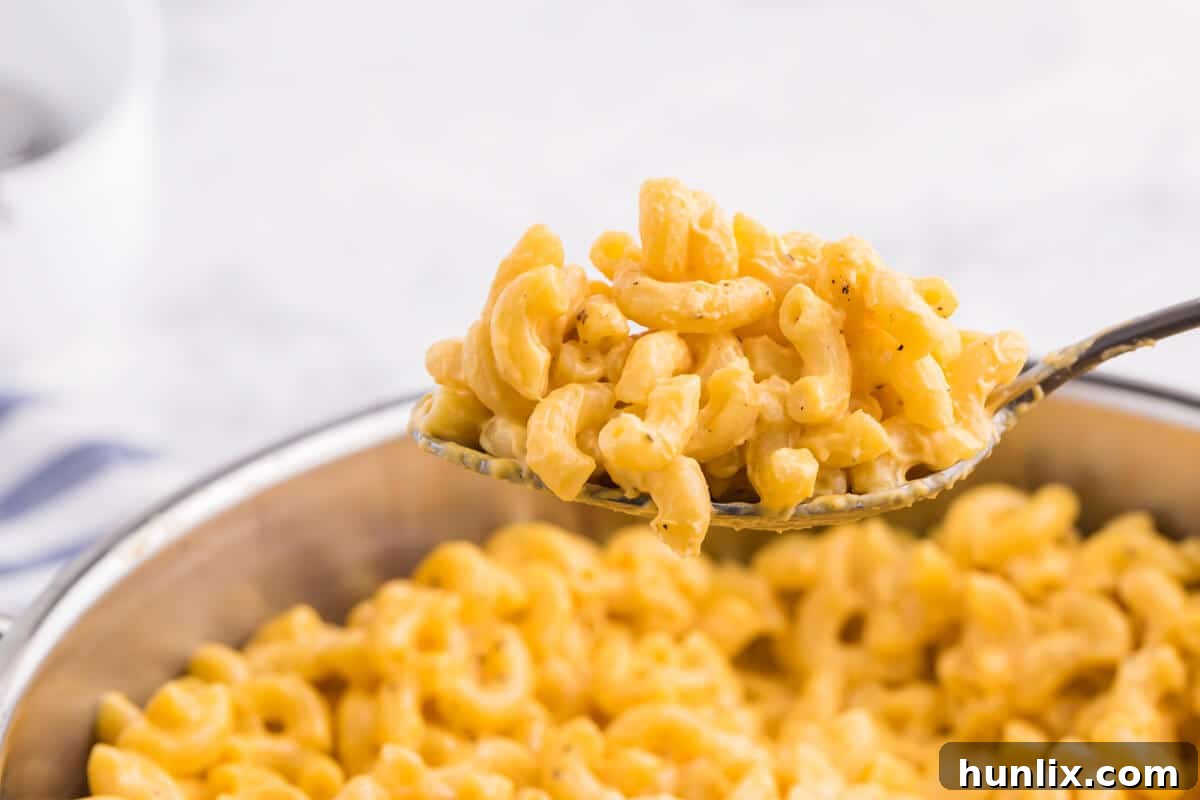
Storage and Reheating Your Mac and Cheese
Got leftovers? Here’s how to store and reheat your stovetop mac and cheese to keep it tasting great.
Storage Instructions
To keep any leftover mac and cheese fresh, transfer it to an airtight container and store it in the refrigerator for up to 5 days. It’s crucial to allow the mac and cheese to cool completely to room temperature before placing it in the fridge. This prevents condensation from forming inside the container, which can lead to a soggy texture.
How to Reheat Leftover Stovetop Mac and Cheese
Reheating mac and cheese can be tricky, as the sauce can sometimes lose its creaminess. Follow these tips to bring your leftovers back to perfection:
Reheat on the Stovetop (Recommended for Creaminess)
This method is ideal for restoring the creamy texture of your mac and cheese:
- Place the leftover mac and cheese in a saucepan or skillet over medium-low heat.
- Add a splash of milk, cream, or even chicken broth (about 1-2 tablespoons per cup of mac and cheese). This liquid will help rehydrate the sauce and prevent it from drying out.
- Stir frequently, gently breaking up any clumps, until the mac and cheese is thoroughly heated through and the sauce is smooth and creamy again. Add more liquid if needed to reach your desired consistency.
Reheat in the Microwave (Quickest Option)
For convenience, the microwave works well, though you may need to adjust the texture:
- Transfer your leftover mac and cheese to a microwave-safe dish.
- Add a small splash of milk or cream (about 1 tablespoon per serving) and cover the dish with a microwave-safe lid or plastic wrap, leaving a small vent.
- Microwave on medium power for 1-2 minutes, then stir. Continue heating in 30-60 second intervals, stirring well after each, until heated through. Be careful not to overheat, as this can make the cheese separate.
Reheat in the Oven (For a Crispy Top)
If you prefer a slightly crispy, golden-brown crust, the oven is an excellent choice:
- Preheat your oven to 350°F (175°C).
- Transfer the mac and cheese to an oven-safe dish. You can add a little milk or cream to the bottom of the dish if it seems dry.
- Cover the dish tightly with aluminum foil and bake for 15-20 minutes, or until warmed through.
- For a crispy topping, remove the foil for the last 5-10 minutes of baking.
While reheated mac and cheese is perfectly safe and still delicious, be aware that the texture might change slightly. The cheese sauce may become a bit thicker or less uniform, but proper storage and reheating techniques can minimize these changes.
Can I Freeze Stovetop Mac and Cheese?
Yes, you can absolutely freeze your stovetop mac and cheese! It’s a fantastic way to prepare meals ahead of time or save leftovers for a busy day. When properly frozen, it can last for up to three months.
How to Freeze Stovetop Mac and Cheese
- Cool Completely: Ensure your mac and cheese has cooled down to room temperature before freezing. Freezing warm food can lead to ice crystals and affect texture.
- Portion Appropriately: Divide the mac and cheese into freezer-friendly containers or heavy-duty freezer bags. Leave a little space at the top of containers for expansion.
- Label and Date: Clearly label each container or bag with the date and contents. This helps you keep track of its freshness.
- Freeze: Place the containers or bags in the freezer.
How to Reheat Frozen Stovetop Mac and Cheese
When you’re ready to enjoy your frozen mac and cheese, proper reheating is key to maintaining its creamy texture:
- Thaw First (Recommended): For best results, thaw the mac and cheese in the refrigerator overnight.
- Stovetop (Best Method): Transfer the thawed mac and cheese to a pot over low heat. Add a splash of milk or cream and stir frequently until heated through and creamy.
- Oven: Place thawed mac and cheese in an oven-safe dish, add a little milk, cover with foil, and bake at 350°F (175°C) for 20-25 minutes, or until hot. Remove foil for the last few minutes for a crisper top.
- Microwave: Place thawed mac and cheese in a microwave-safe dish with a splash of milk, cover, and microwave in 1-2 minute intervals, stirring between, until heated through.
Tips for Freezing Stovetop Mac and Cheese
- Always use airtight, freezer-safe containers or bags to prevent freezer burn.
- Aim to consume frozen mac and cheese within three months for optimal quality.
- Freezing in individual portions makes thawing and reheating much more convenient.
- Never refreeze mac and cheese once it has been thawed to maintain food safety and quality.
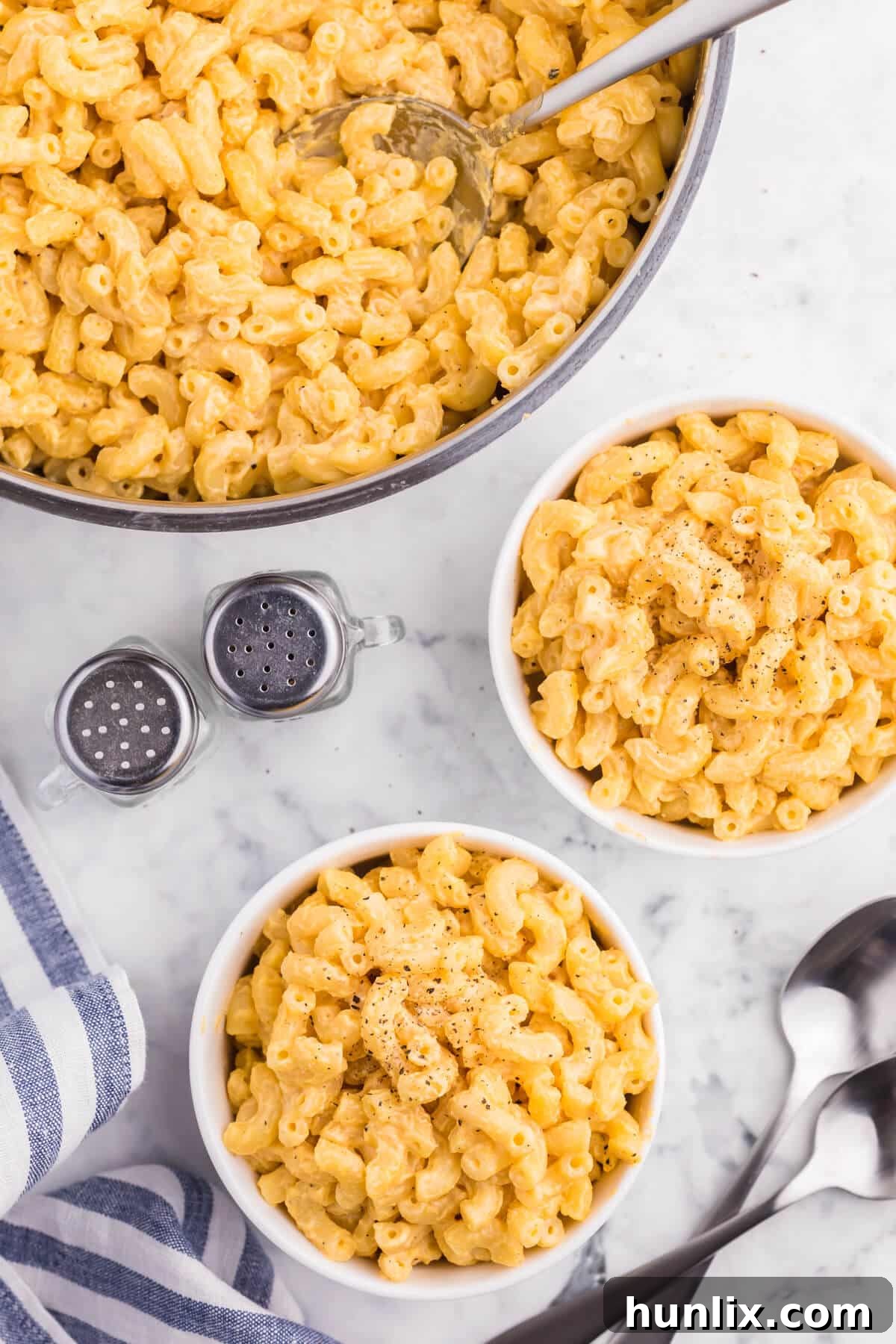
Recipe Tips and Tricks for Mac and Cheese Perfection
Elevate your stovetop mac and cheese from good to truly exceptional with these expert tips:
- Prioritize High-Quality Cheese: The flavor of your mac and cheese hinges on the quality of your cheese. Opt for a sharp cheddar for a bold taste, or create a blend with other rich cheeses like Gouda, Gruyere, or Fontina for added depth and complexity.
- Always Grate Your Own Cheese: This is a game-changer! Pre-shredded cheeses often contain cellulose or other anti-caking agents that can prevent smooth melting and result in a grainy sauce. Freshly grated cheese melts beautifully, creating an incomparably creamy texture.
- Cook Pasta Al Dente: Avoid mushy mac and cheese by cooking your pasta just until it’s al dente – meaning it still has a slight bite to it. The pasta will continue to absorb liquid from the sauce, so undercooking it slightly ensures a perfect final texture.
- Stir Continuously and Gently: When adding cheese and melting the sauce, consistent stirring over low heat is crucial. This prevents the cheese from clumping and sticking to the bottom of the pan, ensuring a silky-smooth sauce. A whisk can be particularly effective during the sauce-making stage.
- Season to Taste: Don’t be shy with your seasonings, but also taste as you go. Start with the recommended salt and pepper, then consider additions like a pinch of paprika, garlic powder, or a dash of dry mustard powder to enhance the cheese flavor. Adjust until it’s perfect for your palate.
- Serve Immediately for Best Results: Mac and cheese is at its absolute best when served fresh, hot, and gooey directly from the pot. If you do have leftovers, remember to add a splash of milk or cream when reheating to help restore its creamy consistency.
Common Mistakes and Simple Solutions for Perfect Mac and Cheese
Even seasoned cooks can encounter challenges with mac and cheese. Here are solutions to common pitfalls, ensuring your dish is flawless every time.
Dealing with Cheese Clumping
Cheese clumping is a frequent frustration. This often occurs when cheese is added all at once, or when the heat is too high. Here’s how to prevent it:
- Shredding is Key: As mentioned, shred your own cheese. Its consistent texture will melt much more evenly.
- Add Gradually: Introduce the shredded cheese to the pasta in small batches, stirring continuously after each addition. This allows the cheese to melt slowly and integrate smoothly.
- Maintain Low Heat: Keep the heat on low to medium-low when melting the cheese. High heat can cause the cheese to seize and become oily or clumpy.
Avoiding Overcooked Pasta
Mushy pasta can ruin the entire dish. Here’s how to ensure your noodles are perfectly al dente:
- Follow Package Directions, but Watch Closely: Cook your chosen pasta according to the instructions on the package, but begin checking for doneness a minute or two before the recommended time. You want it firm to the bite.
- Drain Promptly: As soon as the pasta reaches al dente, drain it immediately. Leaving it in hot water will cause it to continue cooking and become soft.
- No Rinsing (Usually): Generally, don’t rinse pasta for mac and cheese, as the starch helps the sauce cling better. However, if you’re worried about carryover cooking, a quick cool water rinse can halt the process, but be aware it might slightly reduce sauce adhesion.
The Rich History of Macaroni and Cheese
Macaroni and cheese, a quintessential comfort food, boasts a fascinating history that spans centuries and continents. Its origins can be traced back to medieval Europe, where pasta and cheese casseroles were popular among the affluent classes.
In the 14th century, the esteemed Italian cookbook “Liber de Coquina” featured a recipe for a dish remarkably similar to modern-day mac and cheese. This early version combined Parmesan cheese with pasta, though it was baked in an oven rather than prepared on a stovetop.
Across the English Channel, a similar cheesy pasta dish known as “makerouns” was documented in the 14th-century medieval English cookbook, “The Forme of Cury.” This particular recipe called for fresh cheese, rich cream, and a blend of spices, also concluding with an oven bake.
The macaroni and cheese we recognize today gained significant popularity in the United States during the late 1800s. A pivotal moment occurred in 1861 when William Lawrence, a dairy farmer from New England, developed the first commercially available cheddar cheese that could be easily grated. This innovation made preparing mac and cheese at home much more accessible, quickly establishing the dish as a beloved staple in American households.
Its popularity surged even further during World War II, largely due to its affordability and ease of preparation. The U.S. government even included a recipe for mac and cheese in the “Victory Binding of the American Woman’s Cookbook,” cementing its place as an economical and nourishing meal.
Today, mac and cheese is cherished worldwide and comes in countless variations. While some prefer the bubbly, browned crust of baked mac and cheese, others, like us, champion the speed and creamy perfection of the stovetop method. Additions range from savory bacon and crunchy breadcrumbs to exotic spices, while purists enjoy it plain and simple. Regardless of your preference, macaroni and cheese undeniably remains a delicious and enduring dish that continues to offer unparalleled comfort through the ages.
What Cheese is Best in Mac and Cheese?
The type of cheese you choose can dramatically influence the flavor and texture of your mac and cheese. While cheddar is the classic choice, experimenting with other varieties can open up a world of delicious possibilities. Here’s a guide to some of the best cheeses for mac and cheese:
Cheddar Cheese
Cheddar remains the undisputed champion for mac and cheese. Its signature sharp and tangy flavor beautifully complements the dish’s creaminess. Cheddar also boasts excellent melting properties, ensuring a gooey, stringy, and incredibly cheesy experience. Varieties like sharp or extra-sharp cheddar deliver a more pronounced flavor punch.
Gouda
For a milder, sweeter, and slightly nutty flavor, Gouda is an exceptional choice. It melts into an incredibly smooth and velvety sauce, lending a luxurious and indulgent quality to your mac and cheese. Smoked Gouda can add an extra layer of depth and savory complexity.
Fontina
Fontina is a semi-soft Italian cheese with a subtly nutty and buttery flavor. It’s renowned for its fantastic melting capabilities, creating a wonderfully rich and creamy texture. Fontina is also a superb blending cheese, working harmoniously with cheddar or Gruyere to achieve a more nuanced taste.
Gruyere
If you’re aiming for a sophisticated, nutty, and slightly sweet flavor profile, Gruyere is your cheese. This hard Swiss cheese melts beautifully and brings a distinct savoriness that helps cut through the richness of the dish. It’s a fantastic option for an elevated mac and cheese experience.
Parmesan
While often used as a finishing touch, Parmesan cheese can also be incorporated into the sauce for a sharp, salty, and umami-rich flavor. Its robust taste adds complexity. As a topping, freshly grated Parmesan creates a delightful crispy and savory layer that enhances every bite.
Ultimately, the “best” cheese is a matter of personal preference. Feel free to experiment with different combinations to discover your signature mac and cheese blend!
What Spices Pair Well with Mac and Cheese?
While delicious on its own, mac and cheese can be taken to new culinary heights with the addition of well-chosen spices. These aromatics can enhance the cheese flavor, add warmth, or introduce a subtle kick. Here are some spices that perfectly complement mac and cheese:
- Paprika: A versatile spice that adds a beautiful reddish-orange hue and a smoky or sweet flavor profile. Smoked paprika offers a deeper, more robust smoky taste, while sweet paprika provides a milder, earthy sweetness. Both enhance the savory notes of the cheese.
- Garlic Powder: An indispensable flavor enhancer, garlic powder adds a savory depth and a subtle pungent warmth. It blends seamlessly into the cheese sauce without the raw bite of fresh garlic. Use sparingly, as a little goes a long way.
- Mustard Powder: A secret weapon for many mac and cheese enthusiasts, mustard powder doesn’t make the dish taste like mustard. Instead, it subtly amplifies the cheesy flavor, adding a tangy undertone that cuts through the richness and brightens the overall profile.
- Nutmeg: A pinch of freshly grated nutmeg (or a dash of ground nutmeg) introduces a warm, subtly sweet, and aromatic note. It’s a classic pairing with dairy-based sauces and adds a layer of complexity that is both comforting and sophisticated. Use very sparingly to avoid overpowering the dish.
- Cayenne Pepper: For those who enjoy a bit of heat, a dash of cayenne pepper delivers a spicy kick and a subtle smokiness. It pairs particularly well if you’re using smoked paprika or other smoky cheeses, adding a lively contrast to the creamy texture. Adjust to your preferred spice level.
- Thyme: Dried or fresh thyme adds a delicate, earthy, and slightly floral aroma that complements rich cheese sauces beautifully. It can balance the richness without being overwhelming. Use it sparingly to let the other flavors shine.
Frequently Asked Questions About Stovetop Mac and Cheese
Can I Use Pre-shredded Cheese?
While the convenience of pre-shredded cheese is tempting, it’s generally not recommended for the best stovetop mac and cheese. These cheeses often contain anti-caking agents like cellulose or potato starch, which can prevent them from melting smoothly. This can result in a grainy or lumpy sauce, and sometimes even a slightly waxy texture. For the creamiest, most luxurious sauce, grating your own cheese from a block is always the superior choice.
However, if time is truly a constraint, you can use pre-shredded cheese with a few precautions: choose a high-quality brand with minimal additives. To encourage smoother melting, you can toss the pre-shredded cheese with a teaspoon of cornstarch or flour before adding it to your sauce. This can help prevent clumping and aid in emulsification, though it still won’t quite match the silkiness of freshly grated cheese.
How Many Servings Does This Recipe Make?
This recipe is designed to yield approximately 5 generous servings, making it perfect for a family dinner or for having some delicious leftovers.
What Kind of Pasta is Best?
Traditional elbow macaroni is a classic for a reason – its small, curved shape perfectly holds onto creamy sauce. However, other short, tubular, or ridged pasta shapes like shells, ditalini, penne, or cavatappi also work exceptionally well, providing plenty of nooks and crannies for the cheese sauce to cling to.
Can I Make This Ahead of Time?
Stovetop mac and cheese is best served immediately after preparation for optimal creaminess and texture. While you can make components (like cooking the pasta al dente) slightly ahead, assembling the sauce and serving fresh is highly recommended. For true make-ahead solutions, consider freezing leftovers as described in our storage section.
Explore More Mac and Cheese Recipes
- Mac and Cheese Cups
- Pumpkin Macaroni and Cheese
- Salsa Macaroni and Cheese
- Baked Macaroni and Cheese
- Crockpot Velveeta Mac and Cheese
- Dill Pickle Mac and Cheese
Delicious Side Dishes to Complete Your Meal
Enhance your dining experience with these easy and flavorful side dishes that pair beautifully with mac and cheese:
- Loaded Mashed Potatoes
- Creamy Carrots
- Smothered Potatoes
- Cheesy Brussels Sprouts
- Sweet Potato Casserole
- 5 Soup Pasta
For another comforting classic, try Grandma’s Goulash.
We hope you’ve enjoyed this comprehensive guide to making the ultimate stovetop mac and cheese. It’s a dish that embodies comfort, versatility, and pure deliciousness. Give this recipe a try, and you’ll soon find yourself reaching for your pot instead of the box every time you crave this cheesy classic!