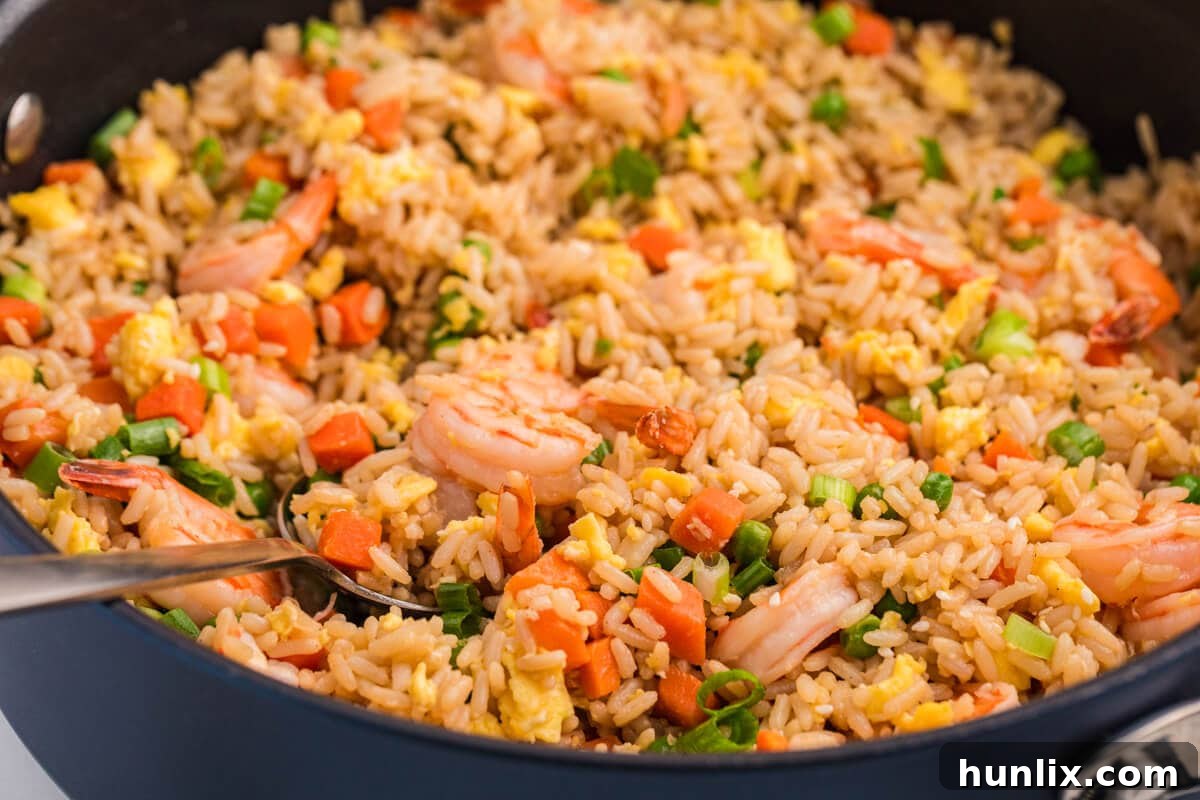
Delicious Homemade Shrimp Fried Rice: Your Ultimate Takeout Alternative
There’s something truly special about Shrimp Fried Rice that makes it feel like culinary magic. Imagine taking humble leftovers – a bowl of cold rice, a medley of frozen vegetables, and perhaps some plump shrimp waiting in your freezer – and transforming them into a piping hot, incredibly savory meal that rivals your favorite local takeout spot. This dish isn’t just fast and immensely satisfying; it’s a true weeknight hero, effortlessly rescuing dinner plans when time is short and hunger is high. It’s the perfect blend of simplicity and rich flavor, proving that restaurant-quality meals are easily achievable right in your own kitchen.
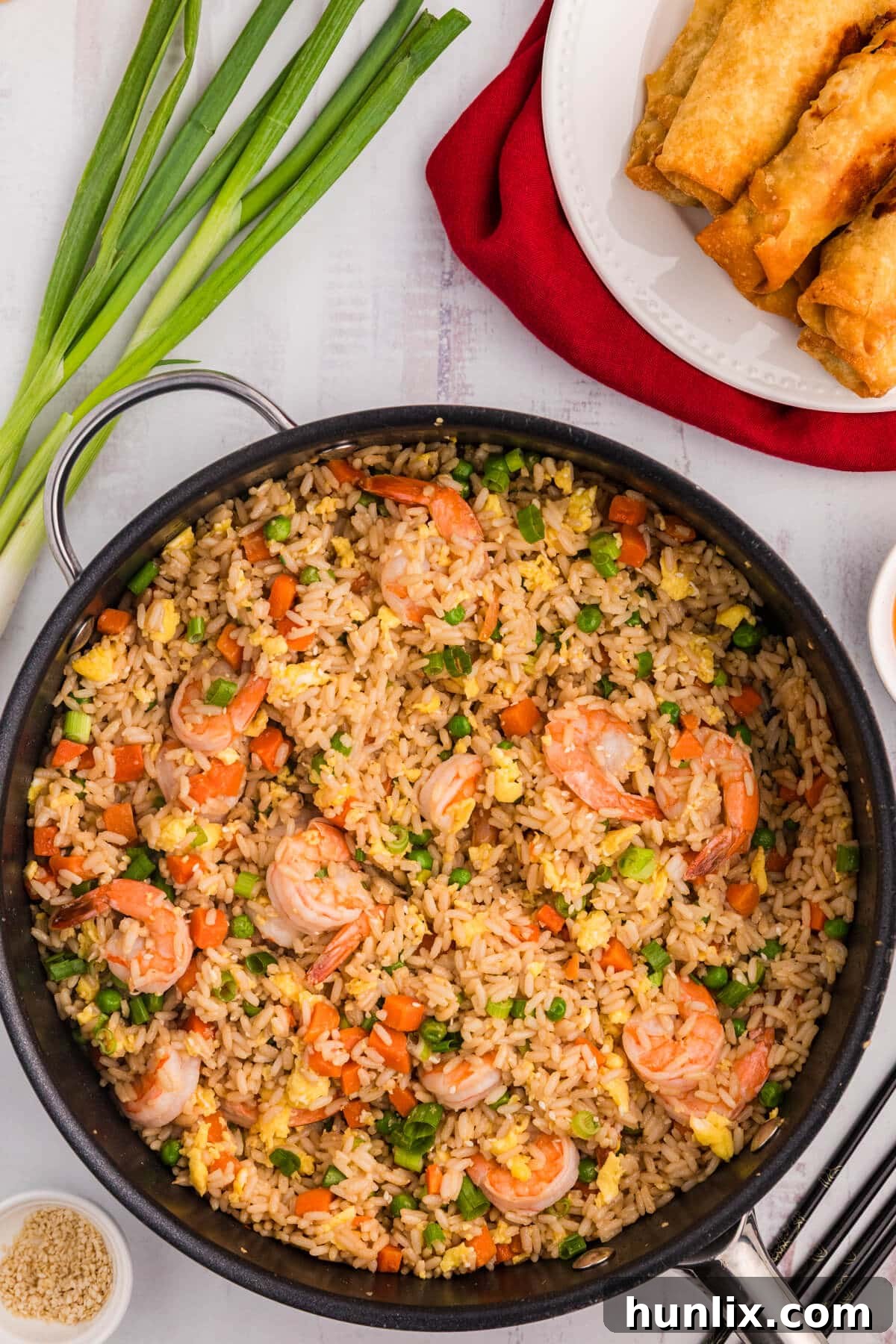
One of the most appealing aspects of this Shrimp Fried Rice recipe is its incredible versatility. Don’t have shrimp on hand? Leftover chicken, pork, or even tofu can step in beautifully. Craving a healthier option? Brown rice or cauliflower rice can be substituted without compromising flavor. Have an abundance of fresh vegetables you need to use before they spoil? Toss them right in! Once you master the fundamental technique, this recipe becomes a dynamic canvas for whatever ingredients you have on hand, making it an excellent choice for a creative and resourceful meal. This adaptability not only makes dinner planning easier but also encourages culinary creativity, allowing you to personalize the dish to your taste and pantry contents.
For many, fried rice holds a nostalgic charm, often recalling childhood memories. Growing up, it was a staple “clean out the fridge” meal my mom would whip up at the end of a busy week. Any bits and bobs of leftovers—rice, various vegetables, the last few pieces of chicken or pork—would all find their way into a large skillet. With a simple blend of soy sauce and garlic, these disparate ingredients would somehow meld into a consistently delicious and comforting dinner. This recipe captures that same essence of home-cooked goodness, transforming everyday ingredients into an extraordinary dish that feels both familiar and exciting.
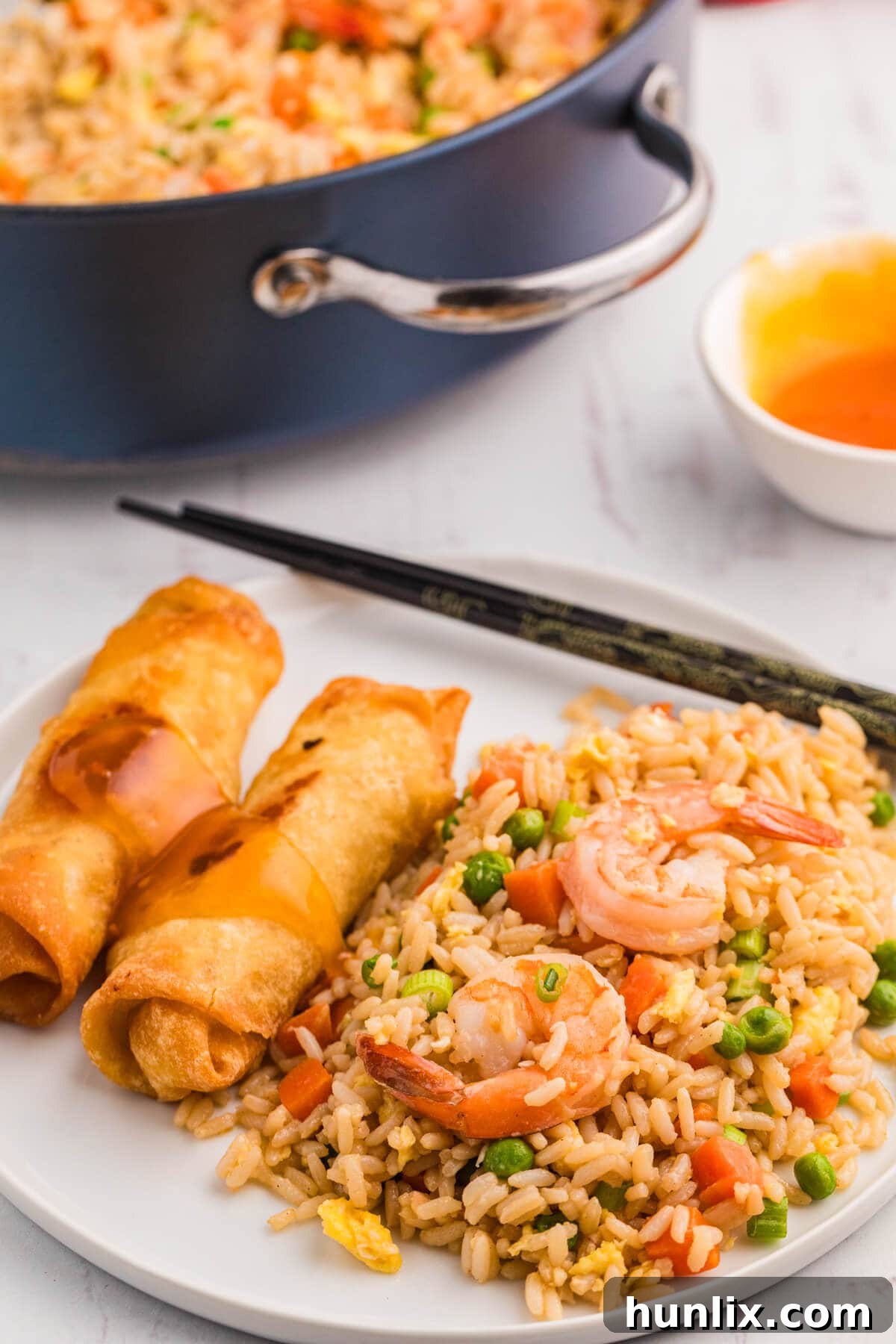
Our rendition of Shrimp Fried Rice keeps things straightforward yet bursts with authentic flavor. It features the aromatic punch of fresh garlic, the nutty warmth of sesame oil, the essential savory depth of soy sauce, and just the right touch of peppery spice. A crucial secret to achieving that coveted, non-mushy, perfectly separated fried rice texture is using chilled, day-old rice. This simple preparation step makes all the difference, ensuring each grain is distinct and lightly crisp, a hallmark of excellent fried rice. If you’re new to making fried rice at home, prepare to be amazed. It’s far easier than you might anticipate and delivers a taste experience that truly surpasses typical takeout, offering a freshness and quality that only homemade can provide.
Why You’ll Love This Easy Shrimp Fried Rice Recipe
Discover the compelling reasons why this homemade Shrimp Fried Rice will become a cherished staple in your kitchen:
- Better Than Takeout: Experience a fresh, hot, and incredibly flavorful meal that’s superior to anything you’d get from a restaurant, all without the wait for delivery. The precise control over ingredients means no greasy aftertaste, just pure, satisfying flavor.
- Quick and Easy: From start to finish, this dish is ready in approximately 30 minutes. It utilizes simple, accessible ingredients that are likely already in your pantry or freezer, making it ideal for busy weeknights when time is a precious commodity.
- Great Use for Leftovers: An ingenious way to repurpose leftover cooked rice and any frozen vegetables you have on hand. It minimizes food waste and maximizes flavor, turning simple components into a cohesive, delicious meal with minimal effort.
- Highly Customizable: This recipe is incredibly flexible. Easily swap the shrimp for diced chicken, succulent pork, tender beef, or even plant-based tofu to suit your preferences or what you have available. It can also be made entirely vegetarian by simply omitting the protein and adding more vegetables.
- Family-Friendly: With its mild yet savory profile, this fried rice recipe is designed to appeal to a wide range of palates. Even the most discerning eaters in your family are likely to enjoy its comforting and familiar flavors, making dinner time a breeze.
- Meal Prep Winner: This dish tastes just as wonderful the next day, making it an ideal candidate for packed lunches or quick reheated dinners. Prepare a larger batch and enjoy delicious, homemade meals throughout the week without sacrificing freshness or flavor.
Essential Ingredients for Perfect Shrimp Fried Rice
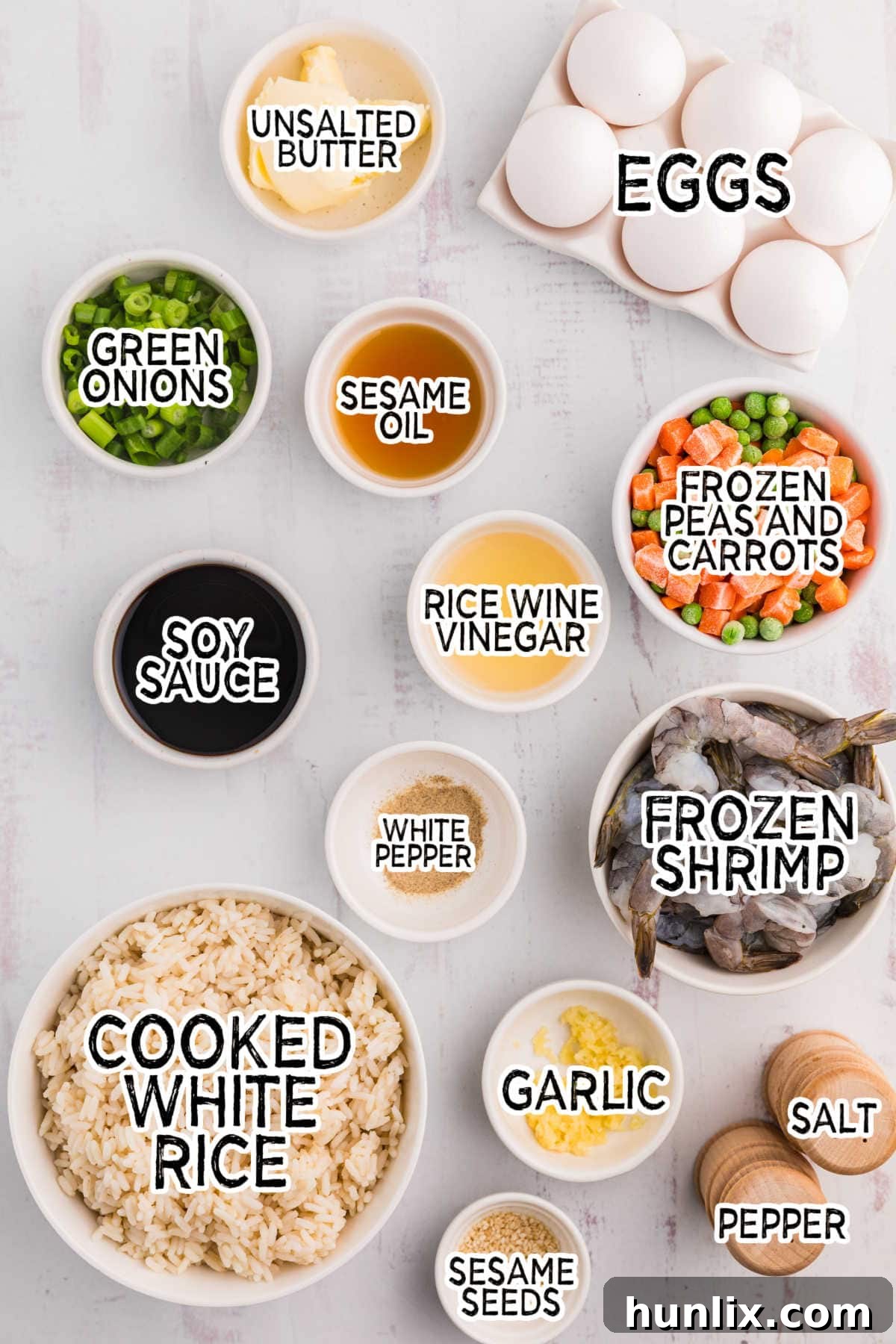
Crafting exceptional Shrimp Fried Rice begins with a selection of fresh, high-quality ingredients. Here’s a detailed look at what you’ll need and why each component is vital for achieving the perfect balance of taste and texture:
- Unsalted Butter (Divided): This is used strategically for scrambling the eggs and sautéing the vegetables. Using unsalted butter is crucial as it allows you precise control over the overall saltiness of your dish, preventing it from becoming overly seasoned when combined with soy sauce.
- Sesame Oil (or Vegetable Oil): Sesame oil is fundamental for imparting that authentic, rich, and nutty aroma that is characteristic of traditional fried rice. If you opt for a neutral vegetable oil for the main cooking, remember to add a generous drizzle of sesame oil at the very end for an aromatic boost.
- Large Eggs (Beaten): Scrambled separately before being incorporated into the rice, the eggs add soft, fluffy pockets of texture and a boost of protein. They create visual interest and add to the dish’s satisfying mouthfeel.
- Garlic (Minced): Freshly minced garlic is a non-negotiable cornerstone of flavor. It provides an essential savory depth and an aromatic foundation that truly elevates the entire dish, creating a robust and inviting base for all the other ingredients.
- Frozen Shrimp (Thawed, Peeled, Deveined): For convenience and consistent quality, medium-sized frozen shrimp are recommended. Ensure they are completely thawed, peeled, and deveined prior to cooking. Removing the tails is optional but often preferred for easier eating.
- Frozen Peas and Carrots: This classic blend offers both vibrant color and a subtle sweetness that complements the savory notes of the fried rice. The benefit of using frozen varieties is immense—no chopping is required, simply toss them in frozen and allow them to heat through and tenderize in the skillet.
- Cooked White Rice (Chilled Overnight): The most crucial component for perfect fried rice! Cold, day-old white rice is paramount because its drier, firmer grains will fry up beautifully without clumping or becoming mushy. This ensures that desirable light, fluffy, and slightly chewy texture. Long-grain white rice, such as jasmine or basmati, works best here.
- Soy Sauce: As the cornerstone of savory Asian cuisine, soy sauce delivers essential saltiness and a deep umami flavor that ties all the ingredients together. For those monitoring their sodium intake, low-sodium soy sauce is an excellent and widely available alternative.
- Rice Wine Vinegar: A small splash of rice wine vinegar introduces a subtle tang and brightness. This acidity helps to cut through the richness of the other ingredients, adding a layer of complexity and preventing the dish from tasting flat.
- White or Black Pepper: White pepper offers a milder, more delicate, and slightly earthy warmth, which is often preferred in Asian cooking for its subtle heat. Black pepper can be used for a bolder, more pronounced kick if you prefer.
- Green Onions (Chopped): Stirred in at the very end of cooking, fresh green onions provide a burst of fresh, pungent flavor, a pleasant crisp texture, and a vibrant pop of color, enhancing both the taste and the visual appeal of the finished dish.
- Sesame Seeds (Optional Garnish): As an optional but highly recommended finishing touch, a sprinkle of sesame seeds adds a delicate nutty flavor and appealing texture. Toasting them briefly beforehand in a dry pan can intensify their aroma and enhance their visual appeal.
- Salt and Pepper (to Taste): These are for final seasoning adjustments. Always taste your fried rice at the very end of the cooking process before adding any extra salt or pepper, especially if you’ve used regular soy sauce, to prevent over-salting.
Step-by-Step Guide: How to Make Shrimp Fried Rice at Home
Follow these straightforward steps to create a delectable Shrimp Fried Rice that tastes truly homemade, capturing that perfect balance of flavor and texture:
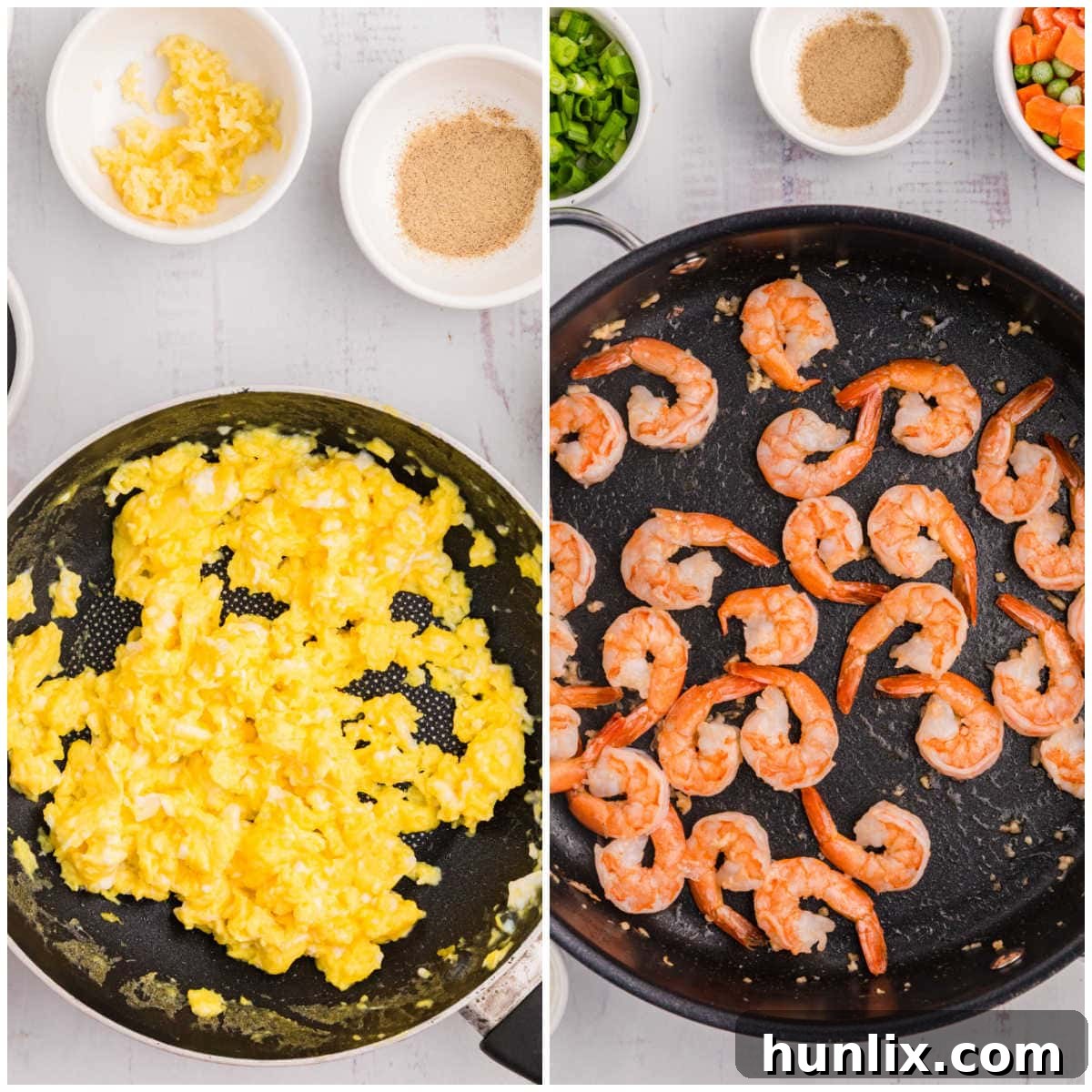
- Step One: Prepare the Eggs. Begin by heating one tablespoon of unsalted butter in a small skillet over medium heat. Once the butter is melted and slightly shimmering, pour in the beaten eggs. Gently scramble them, stirring occasionally, until they are just set, light, and fluffy, which usually takes about 3 minutes. Immediately transfer the cooked scrambled eggs to a plate and set them aside. Cooking the eggs separately ensures they maintain their tender texture and don’t get overcooked or lost in the rice.
- Step Two: Cook the Shrimp. Heat the sesame oil (or vegetable oil) in a large skillet or a wok over medium heat. Once hot, add the minced garlic and sauté for a brief 30 seconds, just until it becomes wonderfully fragrant and golden, but not browned. Next, add the thawed, peeled, and deveined shrimp to the pan. Cook the shrimp for approximately 4 minutes, flipping them once, until they turn pink and opaque throughout. It’s crucial not to overcook them, as they can become rubbery. Remove the cooked shrimp from the skillet and set them aside with the eggs.
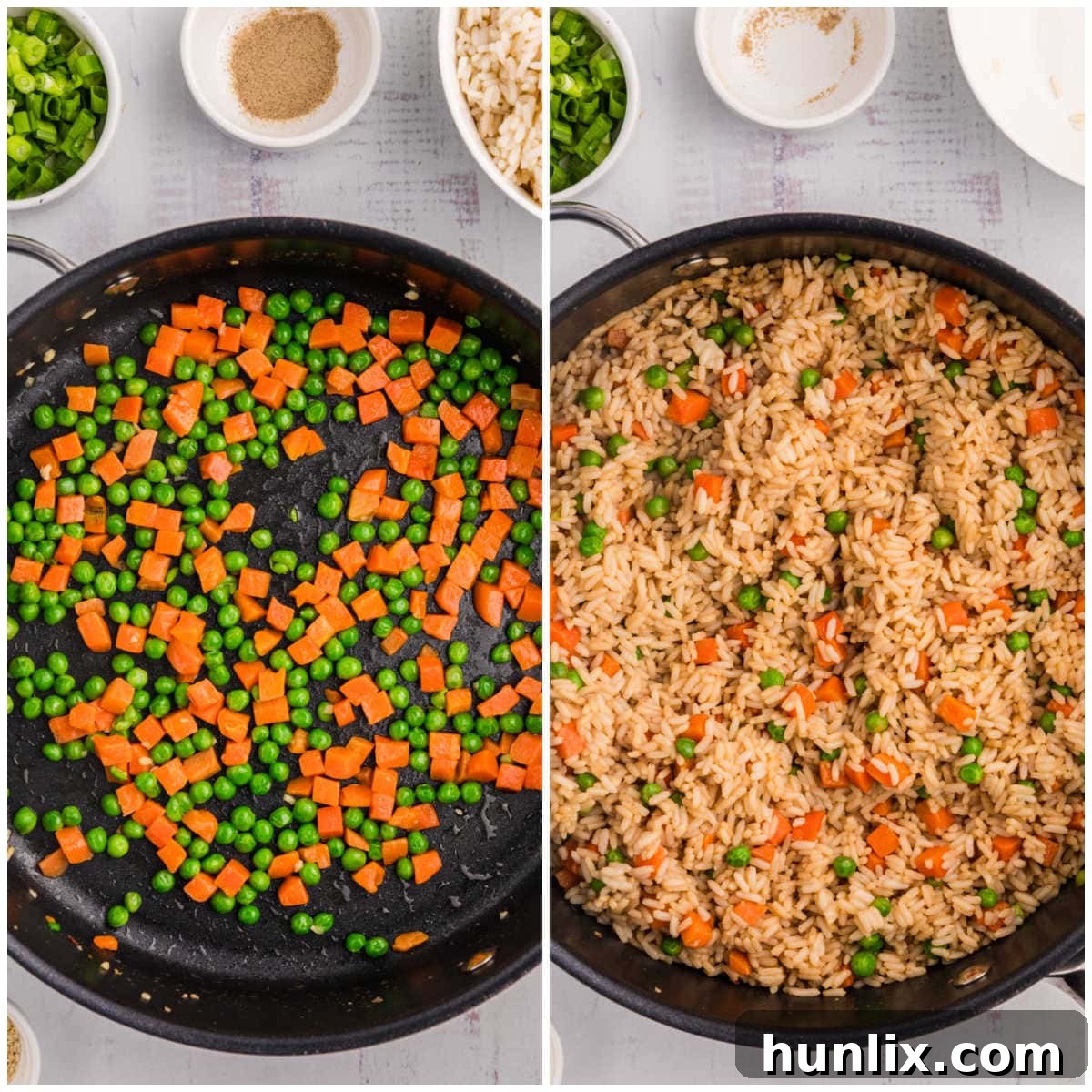
- Step Three: Sauté the Vegetables. Melt the remaining tablespoon of unsalted butter in the same large skillet (or wok) over medium heat. Add the frozen peas and carrots to the pan. Cook these vegetables, stirring frequently, for 6 to 8 minutes, until they are thoroughly heated through and have become tender-crisp. This step ensures the vegetables are perfectly cooked before the rice is added.
- Step Four: Incorporate the Rice and Seasonings. Add the cold, cooked rice to the skillet with the sautéed vegetables. Pour in the soy sauce, rice wine vinegar, and white pepper. Using a sturdy spatula or a wooden spoon, carefully break up any clumps of rice, ensuring it’s evenly distributed and mixed with the vegetables and seasonings. Increase the heat to medium-high and stir-fry the entire mixture for about 4 minutes, allowing the rice to heat thoroughly and absorb all the delicious flavors.
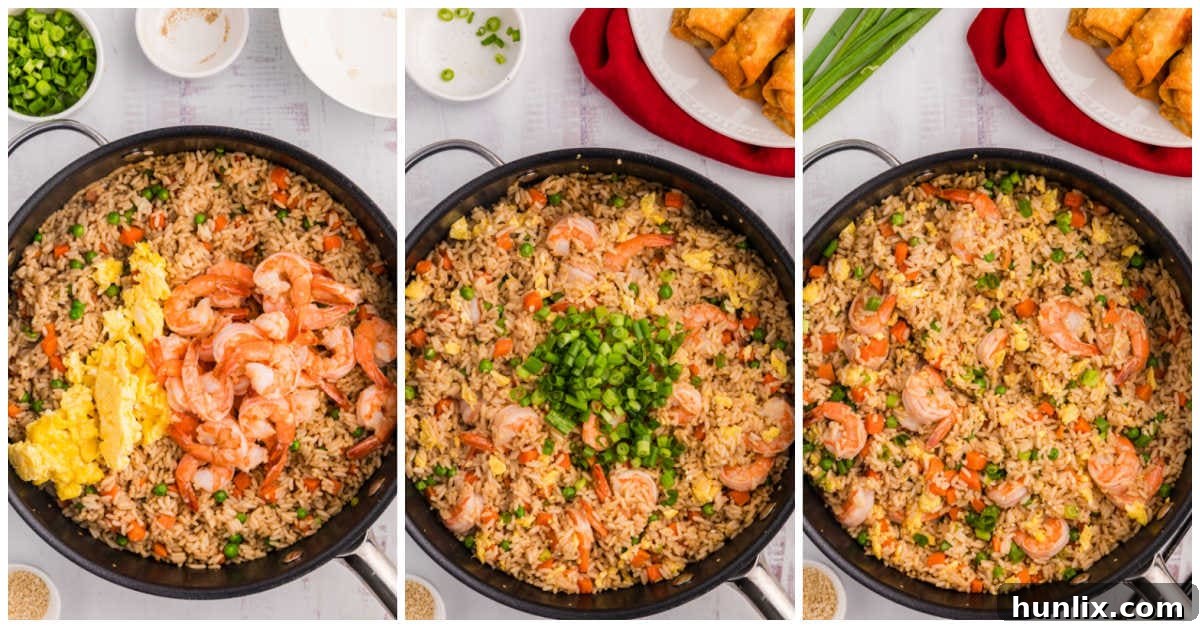
- Step Five: Combine and Heat. Return the previously cooked shrimp and scrambled eggs to the skillet with the fried rice mixture. Gently toss all the ingredients together, ensuring everything is well combined and evenly distributed. Continue to cook for another 2 to 3 minutes, or until the shrimp and eggs are thoroughly heated through and integrated into the rice.
- Step Six: Garnish and Serve. Remove the skillet from the heat. Stir in the freshly chopped green onions, which will add a vibrant burst of fresh flavor and a pleasant mild crunch. Taste the fried rice and adjust the seasoning with additional salt and pepper as needed to suit your preference. If desired, sprinkle with sesame seeds for an extra touch of nutty flavor and appealing texture. Serve your delicious homemade Shrimp Fried Rice immediately while hot, and enjoy every flavorful bite!
Explore Recommended Kitchen Products!
Enhance your cooking experience with our curated selection of kitchen essentials! From durable cookware to innovative gadgets, discover all my favorite products that help make everyday recipes a breeze to create and enjoy. Investing in the right tools can truly transform your time in the kitchen.
What to Serve With Your Shrimp Fried Rice
While Shrimp Fried Rice is undoubtedly a complete and satisfying meal on its own, pairing it with complementary dishes can elevate your dining experience and create a more diverse spread. Here are some delightful ideas to serve alongside your homemade fried rice, offering a range of flavors and textures:
- Crispy Egg Rolls or Spring Rolls: The classic choice! Their golden, crunchy exterior offers a fantastic textural contrast to the soft rice, making for a truly authentic Asian-inspired meal. Serve with sweet and sour sauce for dipping.
- Light Asian Slaw: A refreshing and crisp slaw featuring ingredients like cabbage, carrots, and a tangy dressing (often with rice vinegar and sesame oil) cuts through the richness of the fried rice, providing a wonderful balance of flavors and textures.
- Comforting Miso Soup: A light and subtly savory miso soup, made with dashi, miso paste, tofu, and seaweed, makes for an excellent starter or a soothing side dish, warming you from the inside out.
- Steamed Dumplings or Potstickers: Whether you opt for convenient store-bought varieties or prefer to make them from scratch, tender steamed dumplings or pan-fried potstickers are always a crowd-pleaser and pair beautifully with fried rice.
- Refreshing Cucumber Salad: Cool, crisp, and incredibly simple to prepare, a quick cucumber salad with a light vinaigrette offers a refreshing counterpoint to the savory notes of the fried rice, cleansing the palate between bites.
- Lightly Salted Edamame: Steamed and lightly seasoned with sea salt, edamame pods are not only a healthy and delicious snack but also a fantastic, protein-rich side dish that’s fun to eat and adds a touch of green to your plate.
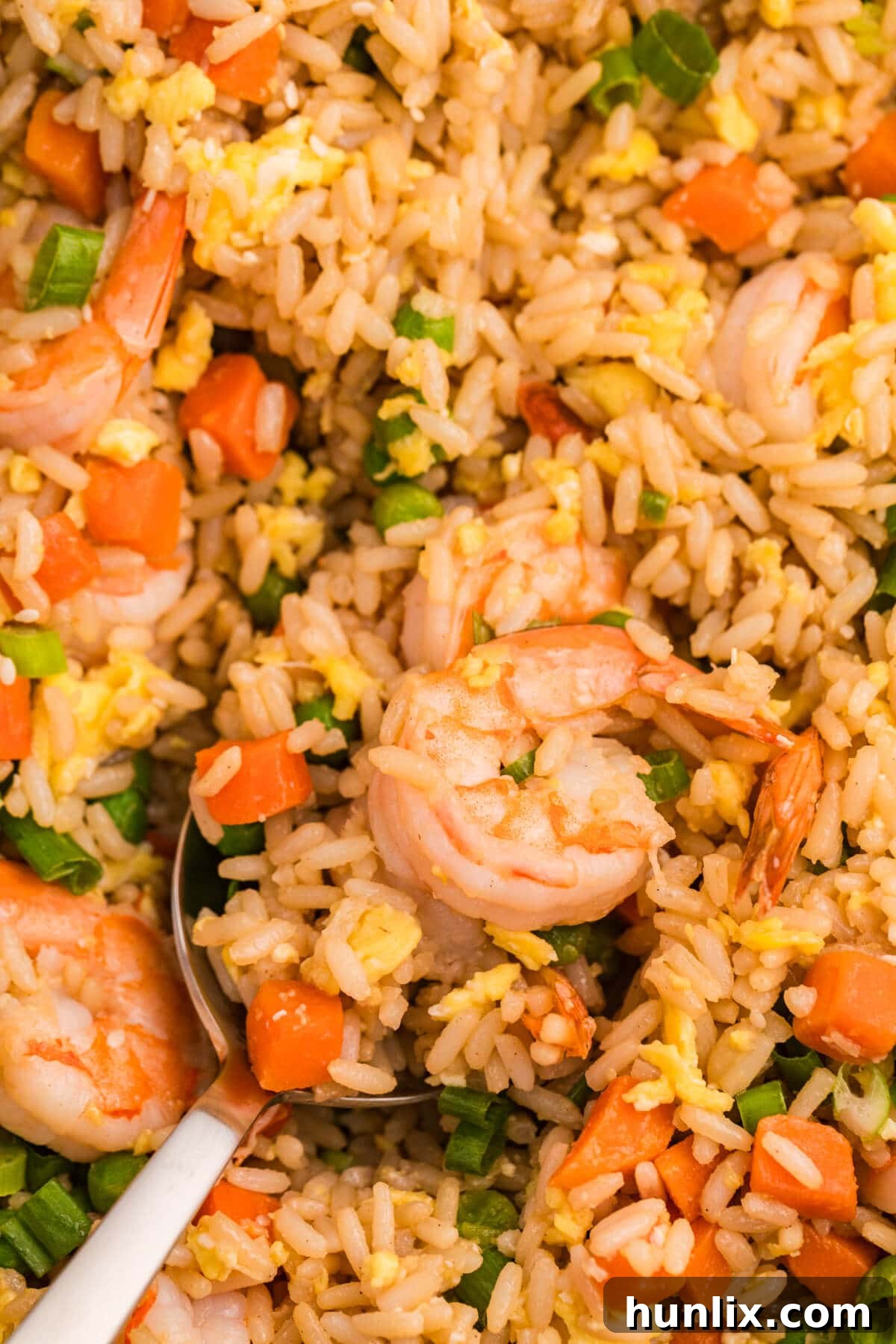
Customizing Your Dish: Variations and Substitutions
This Shrimp Fried Rice recipe is a fantastic starting point, but don’t hesitate to make it your own! Its adaptable nature allows for countless delicious variations based on your preferences, dietary needs, or simply what ingredients you happen to have available:
- Explore Different Proteins: Easily swap the shrimp for other delectable proteins. Diced chicken (especially leftover rotisserie chicken for speed), succulent thinly sliced pork, tender beef strips, or even plant-based options like firm tofu or tempeh all work wonderfully. Each protein will lend a unique flavor and texture profile to the dish.
- Embrace a Vegetarian Version: Simply omit the shrimp entirely for a delightful vegetarian fried rice. To make it more substantial, enhance it with an abundance of extra vegetables such as crisp green beans, vibrant bell peppers, earthy sliced mushrooms, tender broccoli florets, or even scrambled eggs as the sole protein.
- Experiment with Rice Types: While long-grain white rice is traditional and highly recommended for its ideal texture, feel free to experiment. Brown rice offers added fiber and a nuttier flavor, jasmine rice provides a lovely fragrant aroma, or even cauliflower rice can be used for a delicious low-carb alternative. Just be mindful that cooking times and moisture content may vary.
- Ignite the Spice: For those who crave a bit of heat, easily introduce a spicy kick. Add a dash of sriracha, a sprinkle of red pepper flakes, or a swirl of chili garlic sauce into the mix during the final stages of cooking. You can also sauté freshly chopped bird’s eye chilies with the garlic for a more intense heat.
- Add a Tropical Twist with Pineapple: For a delightful sweet and savory contrast, a handful of sweet pineapple chunks can be added along with the vegetables or rice. This creates a refreshing, Hawaiian-style fried rice experience that is surprisingly delicious.
- Mix Up Your Veggies: Not a fan of peas and carrots? No problem! The beauty of fried rice lies in its flexibility. Incorporate corn, vibrant shelled edamame, sliced water chestnuts for crunch, thinly sliced bamboo shoots, or whatever other frozen or fresh vegetables you prefer or have on hand. Even leftover roasted vegetables can be chopped and added.
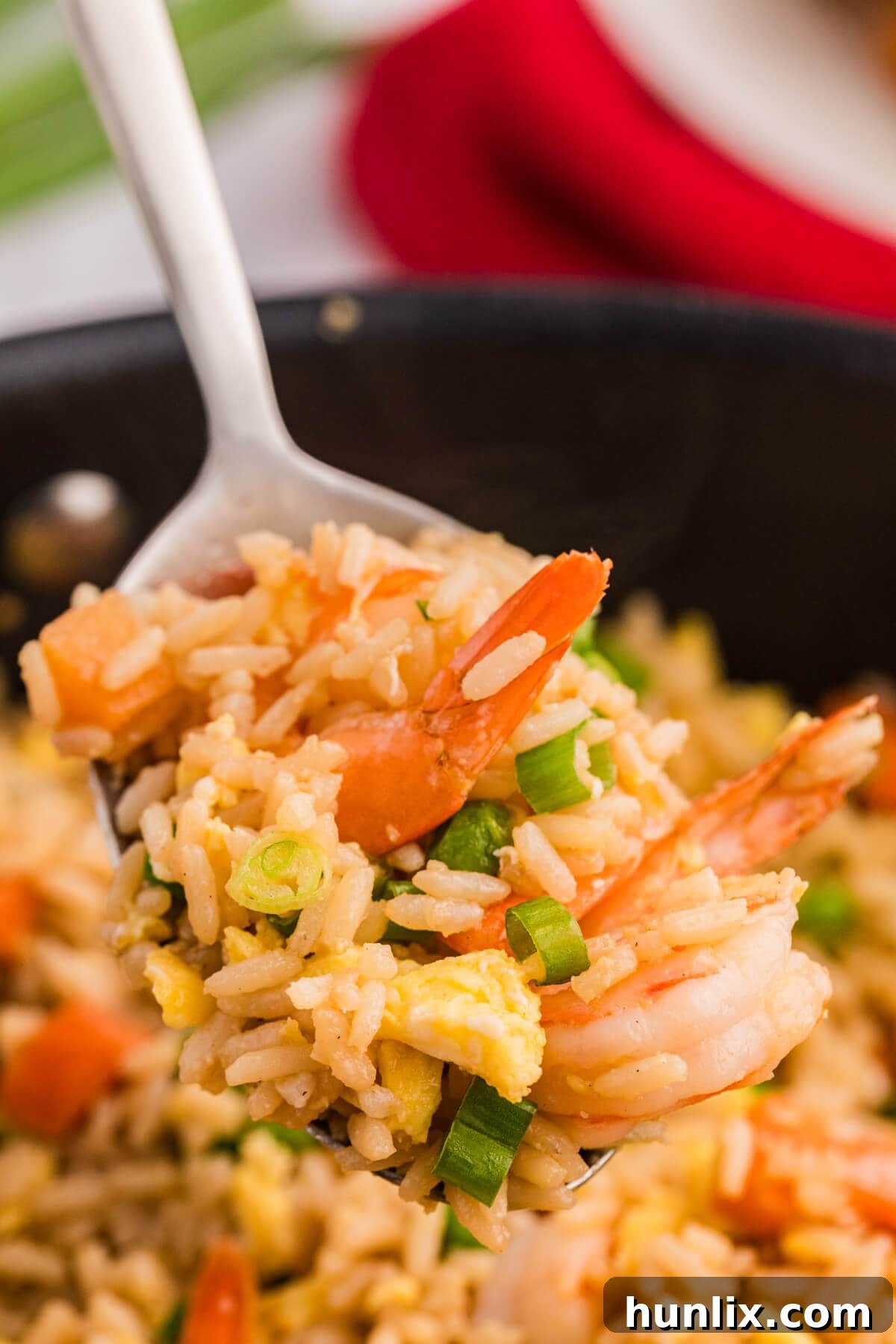
Storage and Reheating Instructions for Shrimp Fried Rice
One of the many benefits of this Shrimp Fried Rice recipe is how well it stores, making it an excellent choice for meal prepping and convenient next-day lunches. Proper storage ensures both safety and deliciousness. Here’s how to properly store and reheat your leftovers:
- Refrigeration: Allow the fried rice to cool completely to room temperature (within two hours of cooking) before storing. Promptly transfer it to an airtight container and place it in the refrigerator. Properly stored, it will maintain its quality and freshness for up to 3 days. This makes it perfect for quick, healthy lunch options throughout the work week.
- Reheating: To restore that freshly cooked texture and prevent dryness, warm the fried rice in a skillet over medium heat. Add a small splash of water or a little extra oil to help rehydrate the rice and prevent it from sticking. Stir occasionally until thoroughly heated through. Alternatively, you can reheat it in the microwave in short bursts (30-60 seconds at a time), stirring well in between each interval to ensure even heating and prevent hot spots.
- Freezing: While it is technically possible to freeze fried rice, be aware that the texture of both the shrimp and the rice may change slightly upon thawing and reheating, potentially becoming a bit softer or chewier. If you choose to freeze, ensure the fried rice is completely cooled, then portion it into freezer-safe bags or airtight containers. It can be stored in the freezer for up to 2 months. For best results, thaw it overnight in the refrigerator before reheating.
Expert Tip for Freezing: If you specifically plan to freeze your Shrimp Fried Rice, consider slightly undercooking the shrimp during the initial preparation (by about a minute). This helps prevent them from becoming rubbery or tough when reheated after thawing, preserving their tender and succulent texture.
Top Tips and Tricks for Perfect Fried Rice Every Time
Achieving restaurant-quality fried rice at home is simpler than you might think, especially when you follow these insider tips and tricks. These techniques will ensure your fried rice is flavorful, perfectly textured, and a true delight to eat:
- Always Use Cold, Day-Old Rice: This is arguably the most critical tip and the golden rule of fried rice. Chilled, day-old rice is drier and firmer than freshly cooked rice, which allows it to fry beautifully without clumping together or turning mushy in the pan. Its individual grains become distinct and slightly crispy, the hallmark of truly great fried rice.
- Don’t Overcrowd Your Pan: For optimal stir-frying results, it’s essential to ensure your skillet or wok isn’t overloaded. If your pan is too small for the quantity of ingredients, cook the fried rice in batches. Overcrowding lowers the pan’s temperature, causing ingredients to steam instead of fry, which leads to a soggy, less desirable texture.
- Prep All Ingredients in Advance (Mise en Place): Fried rice cooks very quickly, and the process moves fast once you start. Have all your ingredients—chopped, measured, and ready to go in separate bowls—before you even turn on the heat. This “mise en place” approach ensures a smooth, efficient cooking process and prevents anything from burning while you’re scrambling for the next item.
- Cook Eggs Separately for Best Texture: Scrambling the eggs in a separate step at the beginning and then adding them back in at the end is crucial. This technique preserves their soft, fluffy texture and prevents them from getting lost, overcooked, or breaking down completely within the rice mixture.
- Cook Shrimp Just Until Pink and Opaque: Shrimp cooks remarkably fast. Overcooked shrimp can quickly become tough, rubbery, and unappetizing. Watch them closely and remove them from the pan as soon as they turn pink and opaque, typically just 2-4 minutes depending on size. They will continue to cook slightly when added back to the hot rice.
- Taste and Adjust Seasoning at the End: Different brands of soy sauce and even butter can vary significantly in saltiness. Always taste your fried rice at the very end of the cooking process, before serving, to determine if it needs any additional salt, pepper, or a touch more soy sauce to fine-tune the flavors to your exact preference.
- Add a Squeeze of Fresh Lime for Brightness: For an unexpected yet delightful finish, a small squeeze of fresh lime juice over the top of the fried rice just before serving can add a wonderful bright, zesty note. This acidity elevates and balances all the savory flavors, adding a fresh dimension to the dish.
The Secret Weapon: Why Cold Rice Makes All the Difference
If there’s one golden rule that separates good fried rice from truly great fried rice, it’s this: always, always use cold, day-old rice. Understanding the science behind this simple tip is key to unlocking the best possible texture and flavor in your homemade dish, mimicking the quality of professional Asian eateries.
Freshly cooked rice is naturally soft, moist, and laden with steam. While perfect for immediate consumption in other dishes, this inherent moisture is detrimental when attempting to stir-fry. When warm, moist rice hits a hot pan, it tends to clump together, stick to the bottom, and, worst of all, turn into a mushy, unappetizing mess rather than distinct, fluffy grains. The excess moisture turns rapidly into steam, effectively steaming the rice in the pan instead of frying it, which prevents the development of those desirable slightly crisp textures.
Chilling cooked rice overnight in the refrigerator works wonders by allowing the grains to dry out significantly. As the rice cools, its starches crystallize and firm up, and surface moisture evaporates. This results in individual grains that are firm, separate, and much less sticky. This drier, firmer texture is ideal for stir-frying because each grain can then be properly coated in oil and sauce, allowing it to develop those coveted slightly crispy edges and maintain its integrity without becoming a sticky, gooey clump. It’s this transformation that gives fried rice its characteristic light, fluffy, and slightly chewy texture that we all love and expect from a perfect plate of fried rice.
What if you don’t have leftover rice? Don’t despair! You can still achieve decent results in a pinch, though the overnight chill is truly superior. Simply cook your rice as usual, then immediately spread it out in a thin, even layer on a baking sheet. Place the baking sheet into the refrigerator for 20-30 minutes, or even the freezer for 10-15 minutes, to rapidly cool it down and encourage some surface moisture to evaporate. While this method may not produce rice quite as dry as overnight-chilled rice, it will significantly improve its stir-frying performance compared to using hot, freshly cooked rice directly from the pot.
More Delicious Rice Recipes to Explore
If you loved this Shrimp Fried Rice, here are more fantastic rice-based recipes to add to your culinary repertoire, perfect for any meal occasion:
- Sardine Fried Rice
- Oven Baked Chicken Fried Rice
- Crockpot Chicken and Rice
- Curried Lentil Rice
- Skillet BBQ Beef and Rice
Shrimp Fried Rice: The Full Recipe
This easy Shrimp Fried Rice recipe delivers tender shrimp, vibrant veggies, and savory seasoning in a quick meal that’s truly better than takeout! It’s a versatile dish perfect for any day of the week.
Recipe Details
- Created by: Stacie Vaughan
- Yields: 6 servings
- Prep time: 10 minutes
- Cook time: 20 minutes
- Total time: 30 minutes
Ingredients
- 2 tbsp unsalted butter, divided
- 1 tbsp sesame oil or vegetable oil
- 3 large eggs, beaten
- 2 cloves garlic, minced
- 30 frozen shrimp, thawed, peeled, and deveined
- 1 ½ cups frozen peas and carrots
- 5 cups cooked white rice, chilled overnight for best results
- 3 tbsp soy sauce
- 1 tbsp rice wine vinegar
- ½ tsp white pepper or black pepper
- 3 green onions, chopped
- 1 tsp sesame seeds, for garnish (optional)
- Salt and pepper, to taste
Instructions
- Add one tablespoon of butter to a small skillet over medium heat. Pour the beaten eggs and gently scramble until set, about 3 minutes. Set aside.
- In a large skillet or wok, heat sesame oil over medium heat. Add the garlic and cook for 30 seconds, until fragrant. Add the shrimp and cook until pink and opaque, about 4 minutes. Remove the shrimp from the skillet and set aside.
- Melt the remaining tablespoon of butter in the same skillet over medium heat. Add the frozen peas and carrots. Cook, stirring often for 6 to 8 minutes, until heated through and tender.
- Add the rice, soy sauce, rice vinegar, and white pepper to the skillet. Use a spatula to break up any clumps of rice. Increase the heat to medium-high and stir-fry for 4 minutes.
- Add the cooked shrimp and scrambled eggs to the skillet. Toss everything together and cook until heated, about 2 to 3 minutes.
- Remove from the heat and stir in the green onions—season with salt and pepper to taste. Sprinkle with sesame seeds, if using. Serve hot.
Nutrition Information (Approximate Per Serving)
The following information is an estimate provided by an online nutrition calculator and should not be considered a substitute for professional nutritionist’s advice.
- Calories: 329 kcal
- Carbohydrates: 43g
- Protein: 19g
- Fat: 9g
- Saturated Fat: 4g
- Polyunsaturated Fat: 2g
- Monounsaturated Fat: 3g
- Trans Fat: 0.2g
- Cholesterol: 172mg
- Sodium: 624mg
- Potassium: 319mg
- Fiber: 2g
- Sugar: 0.5g
- Vitamin A: 3619 IU
- Vitamin C: 5mg
- Calcium: 80mg
- Iron: 2mg
Categorization
- Course: Main Dish / Side Dish
- Cuisine: Asian
- Keywords: fried rice, rice, shrimp, easy weeknight meal, homemade takeout, Asian dinner
Follow me on Instagram @simplystacieblog, Facebook at Simply Stacie, TikTok @simplystacierecipes or Pinterest at @simplystacie and let me know how you liked this recipe and my other recipes. Your feedback and shares are always appreciated!
Want Even More Recipes?
Join Moms Best Recipes to find more delicious family recipes and become part of a thriving cooking community!