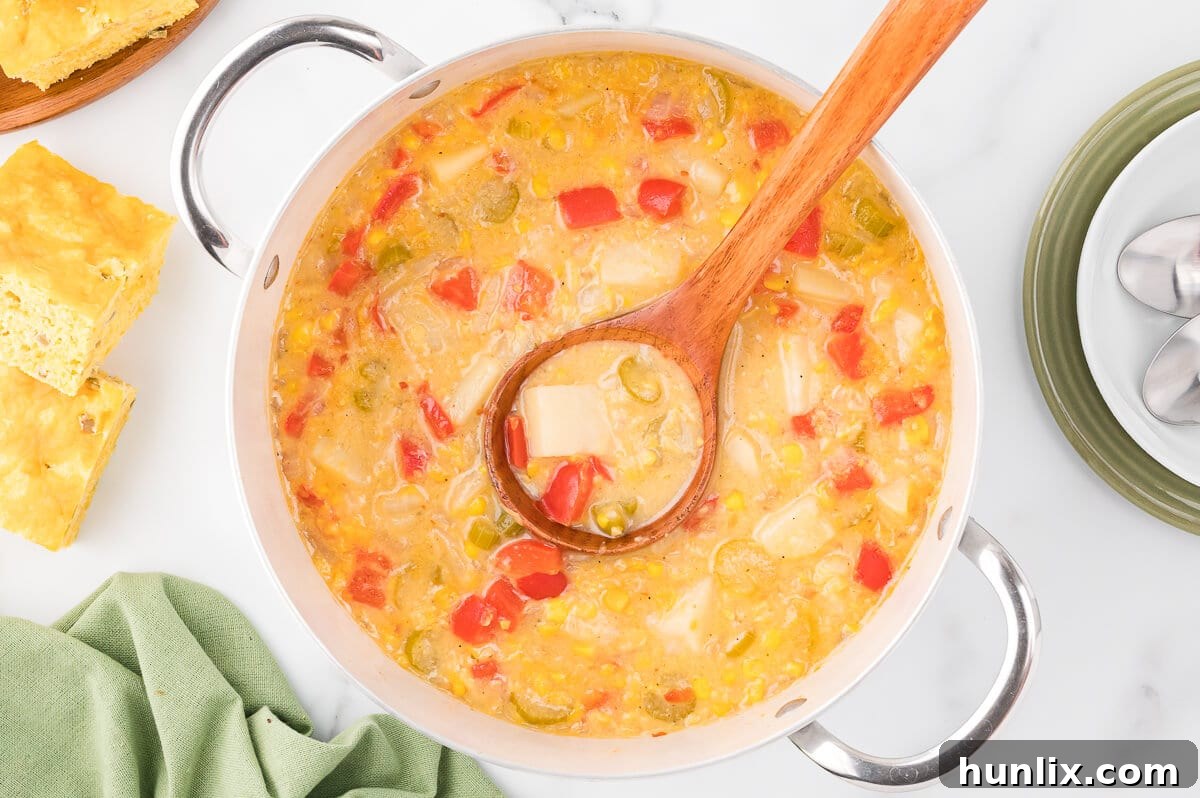
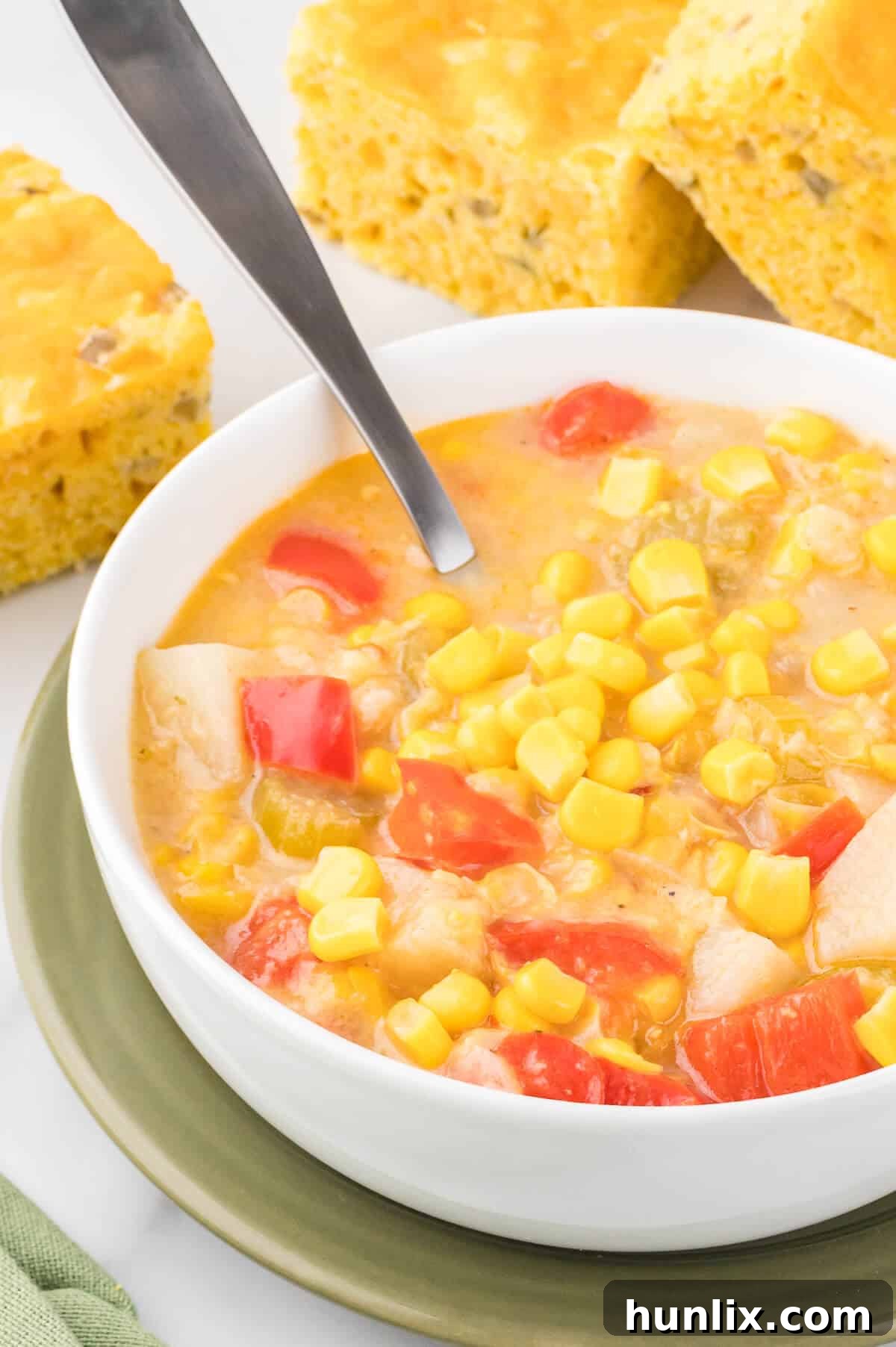
Corn Chowder stands as the quintessential summer soup, a delightful culinary experience that masterfully blends the inherent sweetness of fresh corn with the comforting heartiness of tender potatoes and the vibrant zest of red bell pepper. This creamy, slightly spicy broth, enriched with both creamed and whole corn kernels, delivers a symphony of flavors and textures in every spoonful. While traditionally savored during warmer months, its comforting embrace makes it a beloved dish for any season, offering warmth and satisfaction whenever the craving strikes. It’s truly one of the best summer soup recipes, but its versatility ensures it can be enjoyed all year long.
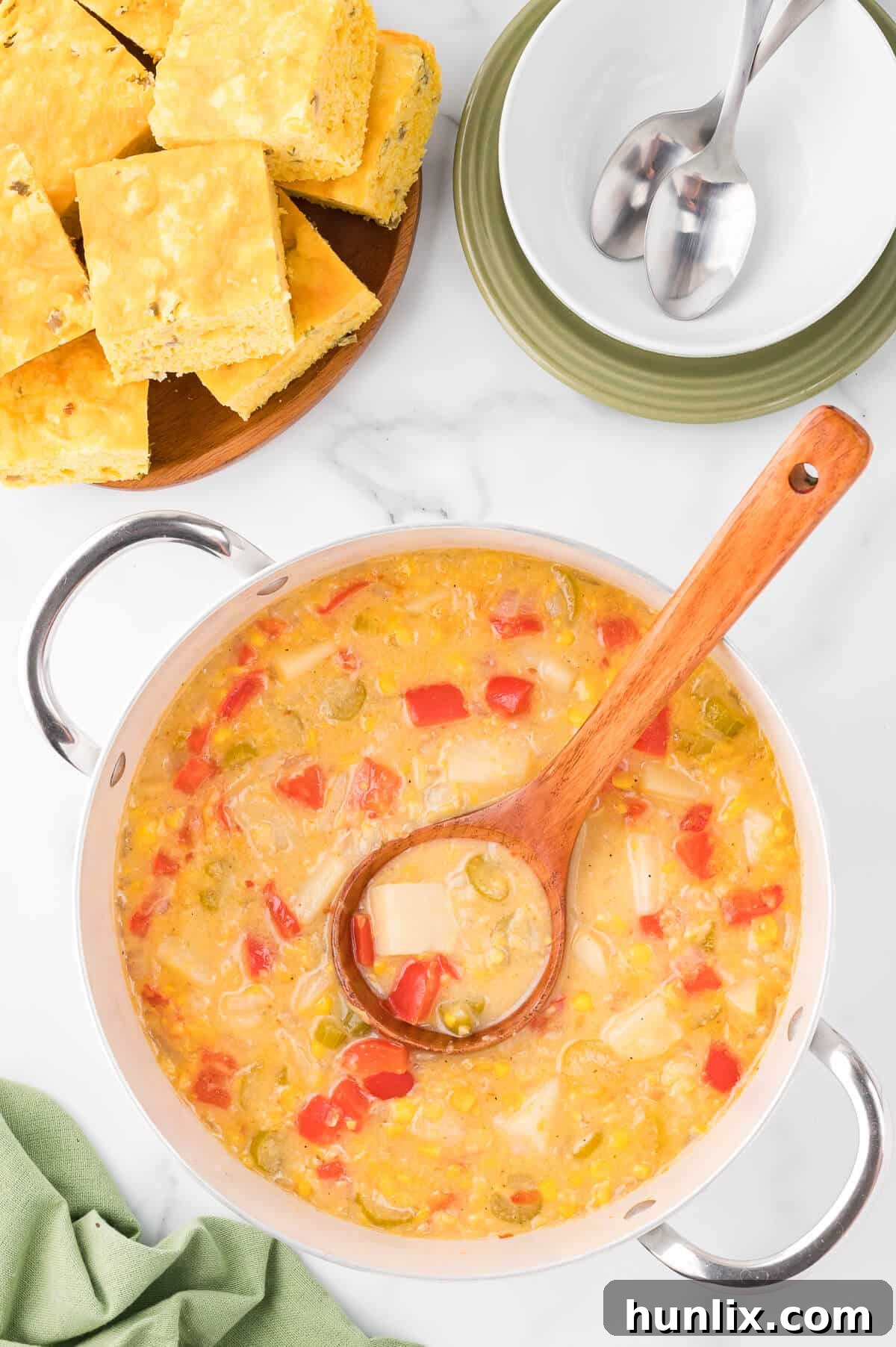
This classic soup is more than just a meal; it’s a celebration of simple, wholesome ingredients transformed into a crowd-pleasing dish that promises to delight your palate. Crafted from a rich combination of golden corn and hearty potatoes, our easy corn chowder recipe embodies the essence of comfort food. Even for those who aren’t typically big corn enthusiasts, the harmonious blend of flavors in a steaming bowl of homemade Corn Chowder often proves to be an irresistible exception. Its versatility shines through, allowing you to prepare this delicious chowder year-round, thanks to the convenience of using readily available canned creamed corn and frozen corn kernels, eliminating any concern about sourcing fresh produce out of season. This makes it an ideal weeknight dinner or a cozy weekend treat, always within reach.
My own journey to loving corn chowder began unexpectedly during a visit to a historical site in scenic New Brunswick. We stopped for lunch at a charming little café, and the soup of the day was corn chowder. Hesitant to commit to a large meal, I decided to give it a try. To my surprise and utter delight, it was absolutely delicious! I was captivated by the natural sweetness of the corn, beautifully complemented by the savory depth of the other vegetables, all enveloped in a rich, creamy broth. The meal was further elevated by a side of warm, flaky cornbread, which I happily devoured by dipping it into the soup, creating a truly unforgettable culinary experience. This simple encounter transformed my perception of corn, making corn chowder a staple in my kitchen ever since.
Whether you’re aiming to impress your entire family with a wholesome, flavorful dinner or simply wish to treat yourself to a comforting, soul-satisfying meal, this easy-to-follow corn chowder recipe is undoubtedly the perfect choice. It’s a testament to how humble ingredients can create extraordinary taste, bringing warmth and joy to any table with minimal effort. This homemade chowder is a go-to for its straightforward preparation and incredibly rewarding results.
Why You’ll Adore This Easy Corn Chowder Recipe
Discover the compelling reasons why this homemade corn chowder will quickly become a cherished favorite in your recipe collection:
- Perfect Balance of Sweet and Savory Flavors: This corn chowder offers an exquisite blend of tastes that is simply irresistible. The natural, sun-kissed sweetness of the corn takes center stage, beautifully balanced by the earthy richness of tender potatoes, the subtle warmth of red bell pepper, and the depth of a creamy, savory base. Each spoonful delivers a delightful harmony that will tantalize your taste buds, making it a unique and satisfying culinary experience. The interplay of these fresh ingredients creates a complex flavor profile that appeals to all ages, ensuring it’s a crowd-pleaser every time.
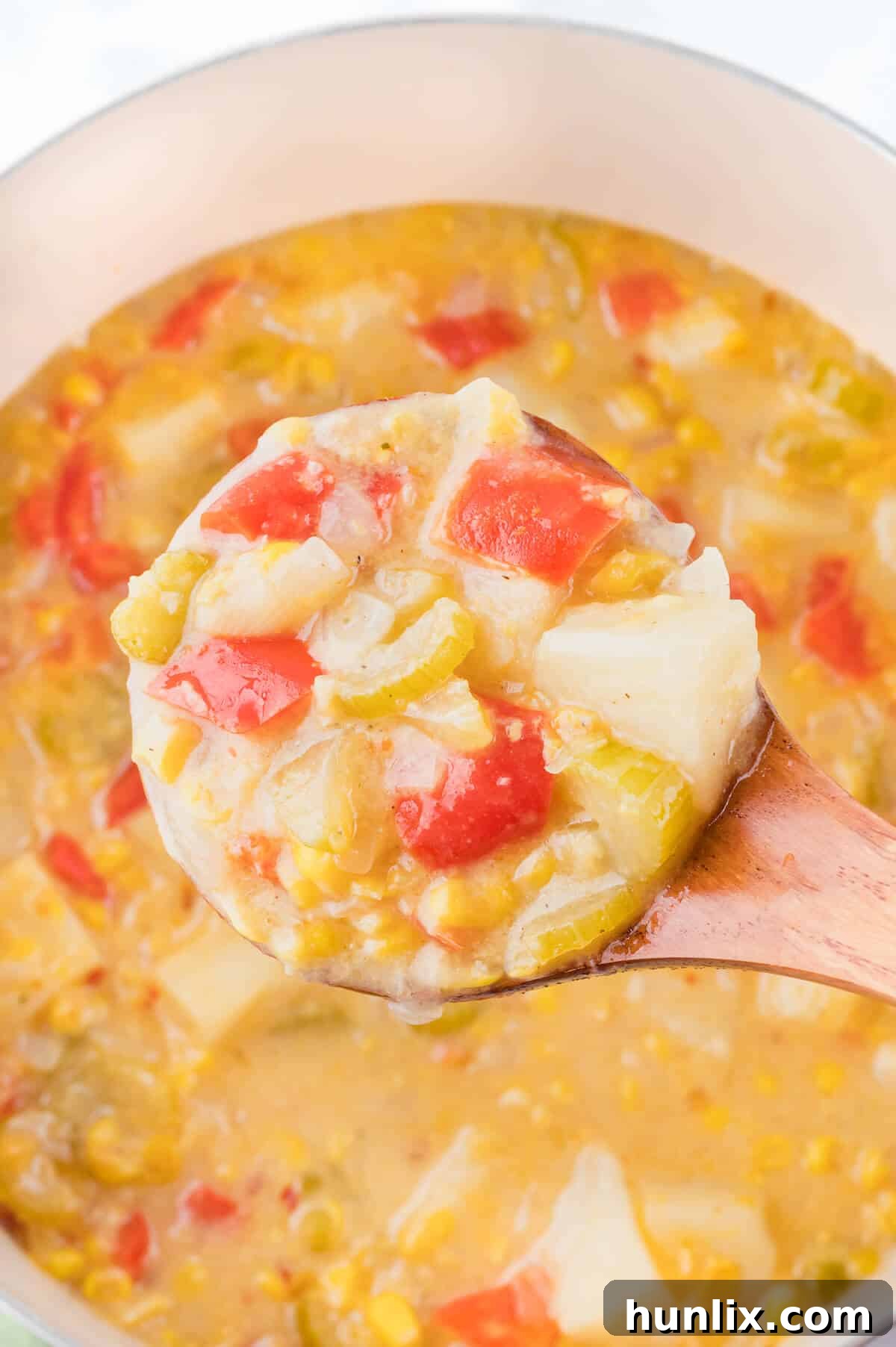
- Luxuriously Comforting and Satisfying Texture: Prepare to be embraced by the incredibly comforting texture of this hearty soup. The rich, velvety broth, generously studded with tender chunks of vegetables and whole corn kernels, creates a satisfying mouthfeel that is both smooth and pleasantly chunky. This chowder is the epitome of comfort food, providing a soothing warmth that makes it an ideal meal for chilly evenings or any time you crave a hug in a bowl. The combination of creamed corn and whole kernels offers a dynamic texture that keeps every bite interesting.
- Effortless to Prepare and Incredibly Adaptable: You don’t need to be an experienced chef to whip up a magnificent pot of this delicious corn chowder. Our straightforward instructions are designed for ease, ensuring a stress-free cooking process that yields impressive results every time. With simple steps and readily available ingredients, even novice cooks can achieve a restaurant-quality meal. Furthermore, this recipe is wonderfully versatile; feel free to customize it by incorporating additional vegetables like carrots or peas, or by adding your favorite proteins such as crispy bacon bits, succulent shredded chicken breast, or even savory ham, to perfectly suit your dietary needs and flavor preferences, making it a truly adaptable dish for any occasion.
Essential Ingredients for Your Creamy Corn Chowder
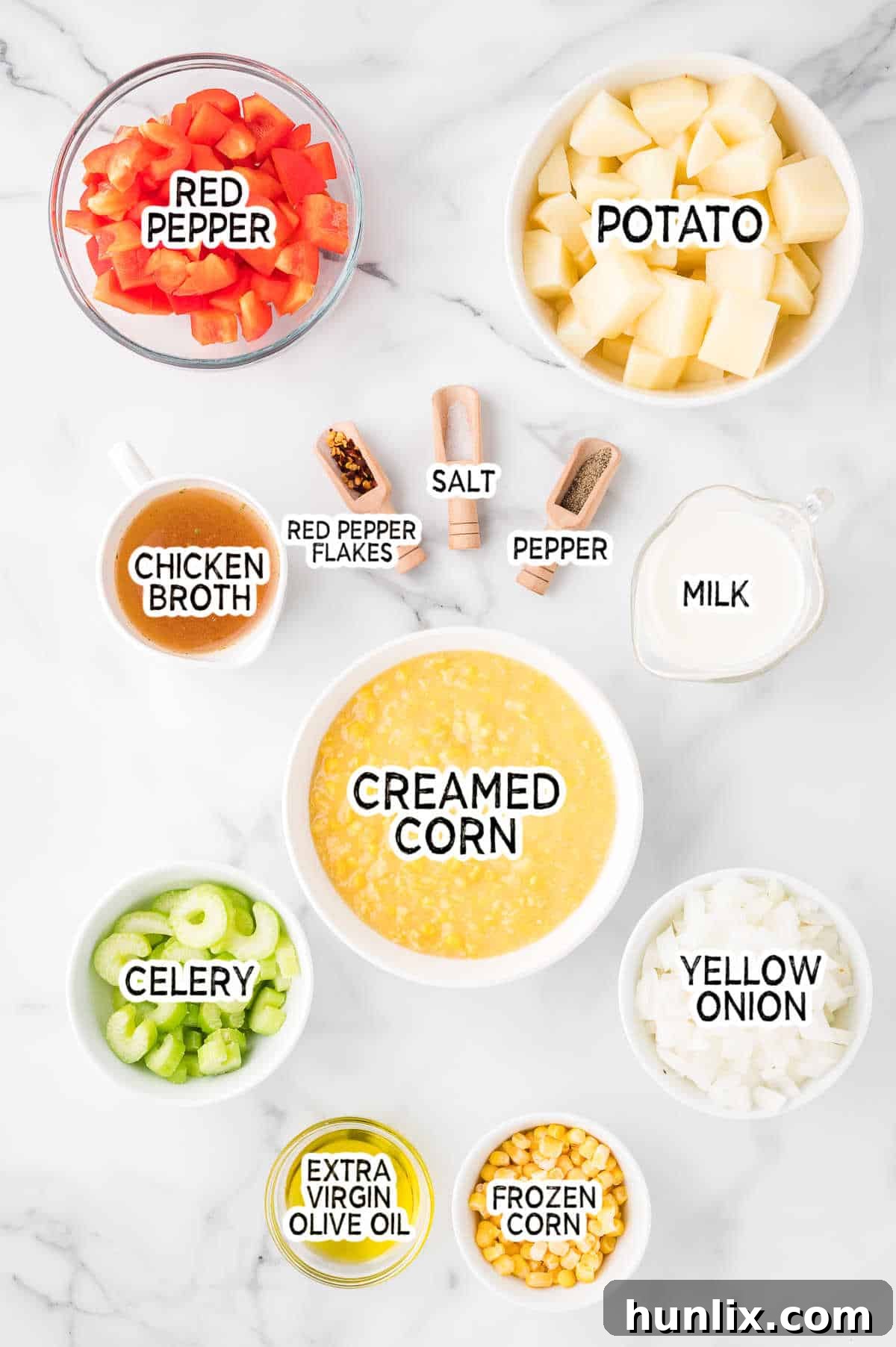
Crafting the perfect corn chowder begins with a selection of fresh, high-quality ingredients. Here’s what you’ll need to create this comforting classic. Each component plays a vital role in building the robust flavor and luxurious texture of this homemade soup. The complete printable recipe card with precise measurements and detailed instructions can be found at the very bottom of this post.
- Extra Virgin Olive Oil: A foundational ingredient, olive oil is used for sautéing the vegetables. It imparts a delicate, fruity flavor that forms the aromatic base of your chowder while ensuring the vegetables soften beautifully without sticking, building the initial layer of flavor for your creamy corn soup.
- Yellow Onion: Finely chopped yellow onion provides a crucial aromatic component, adding a sweet, slightly pungent depth to the chowder’s base. It softens during cooking, releasing its essential oils and contributing significantly to the overall savory flavor profile.
- Potato: Diced potatoes are indispensable for this chowder, offering both a satisfying texture and natural thickening power. As they cook, potatoes release starch, helping to create the rich, creamy consistency that defines a good chowder while providing hearty bites that make the soup incredibly filling.
- Celery Stalk: Chopped celery adds a delightful, subtle crunch and a mild, earthy flavor that complements the other vegetables. It contributes to the classic mirepoix base, enhancing the soup’s aromatic complexity and freshness.
- Red Bell Pepper: Vibrant red bell pepper introduces a burst of color and a lovely sweet note, enriching the chowder’s visual appeal and deepening its overall flavor. Its mild, fruity undertones pair wonderfully with the sweetness of the corn, adding a touch of brightness.
- Red Pepper Flakes: Just a pinch of red pepper flakes is enough to infuse the chowder with a subtle, yet enjoyable, spicy kick. This touch of heat elevates the flavors without overwhelming them, adding an exciting dimension to the dish and a gentle warmth.
- Chicken Broth: This savory liquid forms the fundamental base of your chowder, contributing a rich, umami background flavor. Choose a good quality broth, or vegetable broth for a vegetarian option, to ensure a flavorful foundation that supports all the other ingredients.
- Milk: Milk is vital for achieving the signature creamy texture of corn chowder. It helps to blend all the ingredients together seamlessly, creating a smooth and luscious consistency that coats the palate beautifully. Whole milk or even half-and-half can be used for extra richness, depending on your preference for a truly decadent chowder.
- Creamed Corn: The star ingredient that truly defines this dish, creamed corn is essential for its unmistakable, concentrated sweet corn flavor and thick, velvety texture. It adds a wonderful depth of corn goodness to every spoonful, ensuring that the corn flavor is prominent and rich.
- Frozen Corn Kernels: Adding extra frozen corn kernels provides a contrasting texture and a burst of fresh-tasting corn flavor. These kernels retain their shape and a slight bite, adding another layer of satisfaction to the chowder and complementing the creamed corn perfectly.
- Salt: A fundamental seasoning, salt is crucial for enhancing and balancing the flavors of all the other ingredients. It brightens the sweet and savory notes, bringing everything into perfect harmony and elevating the overall taste. Adjust to taste for optimal flavor.
- Black Pepper: Freshly ground black pepper adds a pleasant warmth and a subtle, pungent depth, rounding out the delicious taste of the chowder. It contributes to the overall complexity and aroma of the finished dish, providing a classic seasoning touch.
Simple Steps to Crafting Delicious Homemade Corn Chowder
Follow these easy steps to create a rich and satisfying corn chowder that your family will love. This process ensures maximum flavor development and a perfectly creamy texture:
- Step One: Sauté the Aromatics and Vegetables. Begin by selecting a large, heavy-bottomed pot or Dutch oven, placing it over medium heat. Add a generous swirl of extra virgin olive oil. Once shimmering, introduce your finely chopped yellow onion, uniformly diced potato, thinly sliced celery, vibrant red bell pepper, and a subtle pinch of red pepper flakes. Stir the mixture frequently to ensure even cooking and prevent sticking. Allow these vegetables to gently cook for approximately 5 minutes, or until they begin to soften and release their fragrant flavors, building the aromatic foundation of your chowder. This initial sautéing step is crucial for developing deep, rich flavors.
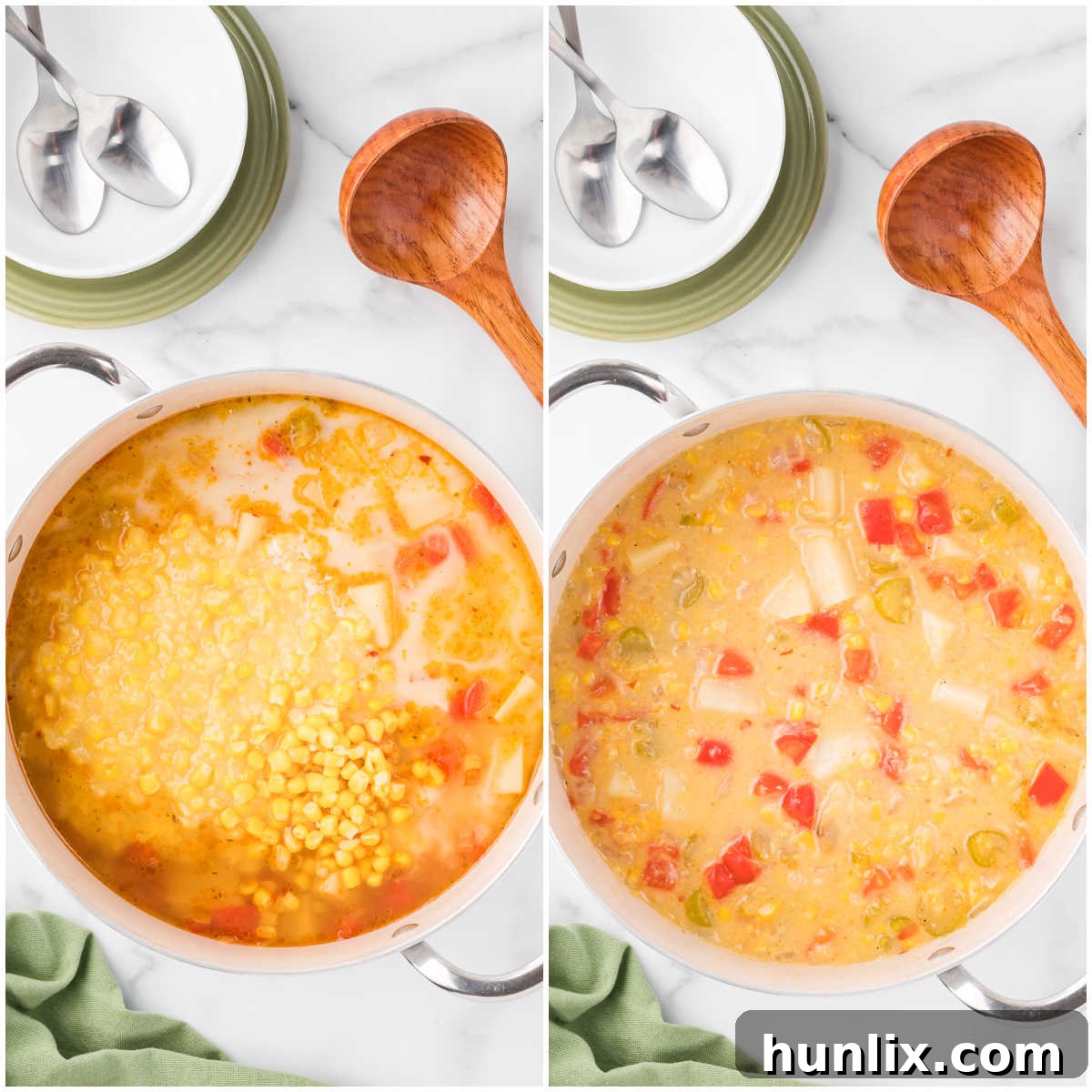
- Step Two: Simmer with Broth for Flavor Infusion. Carefully pour in the chicken broth, ensuring it fully covers the sautéed vegetables. Increase the heat to bring the mixture to a rolling boil. Once boiling vigorously, reduce the heat significantly to medium-low, cover the pot with a lid, and let it gently simmer for a full 10 minutes. This crucial simmering period allows the potatoes to become wonderfully tender and ensures all the foundational flavors meld together beautifully, creating a rich and cohesive taste profile that is essential for a truly comforting corn chowder.
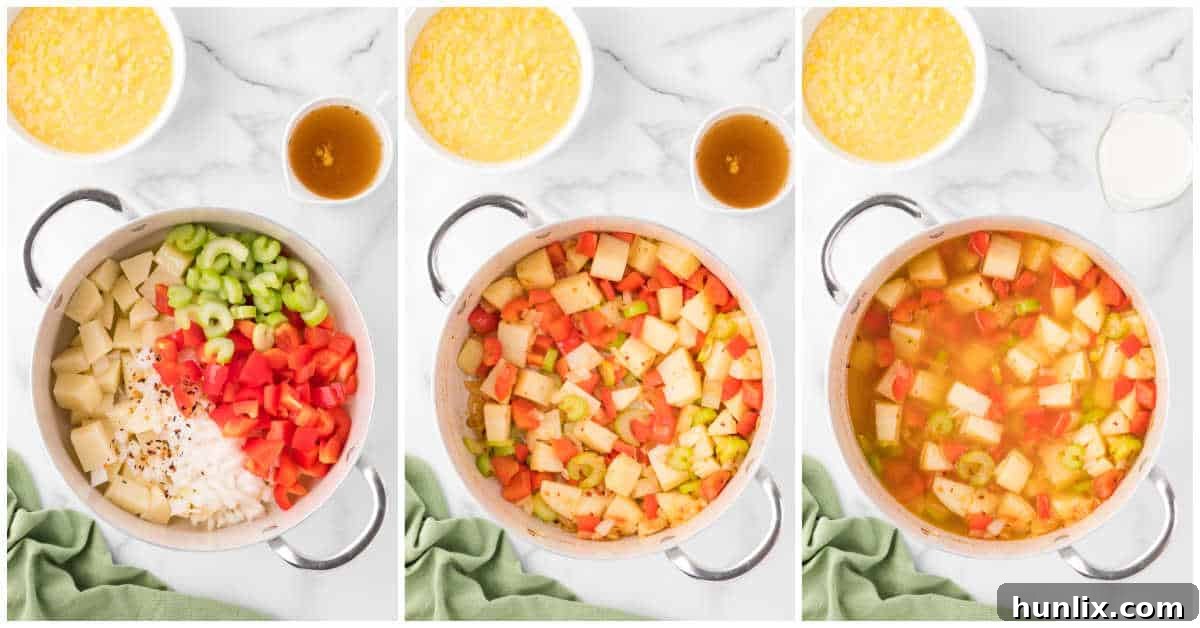
- Step Three: Incorporate Creaminess and Final Seasoning. Now, it’s time to add the creamy elements and the star of the show. Pour in the milk, the rich creamed corn, and the crisp frozen corn kernels. Stir everything together until well combined. Season the chowder generously with salt and freshly ground black pepper, adjusting the quantities to suit your personal taste preferences. Continue to heat the chowder over medium-low heat for an additional 5 to 10 minutes, stirring occasionally, until it is thoroughly heated through and all the wonderful flavors have harmonized into a truly comforting and delicious dish. This final simmering allows the milk to warm through and the corn to fully integrate, completing your perfect homemade corn chowder. Serve hot and enjoy!
Essential Kitchen Equipment for Corn Chowder
To prepare this delightful corn chowder with ease, you’ll need a few basic kitchen tools. Investing in quality equipment can make your cooking experience more enjoyable and efficient, especially when preparing comforting soups like this.
- Large Dutch oven: This is an ideal pot for preparing soups and stews due to its excellent heat retention and even heat distribution, ensuring your chowder simmers perfectly.
- Sharp knife: A high-quality, sharp knife is essential for safely and efficiently chopping onions, potatoes, celery, and bell peppers into uniform pieces, crucial for even cooking.
- Cutting board: A sturdy and stable cutting board is necessary for all your chopping and dicing tasks, protecting your countertops and providing a safe surface for food preparation.
- Soup ladle: A good soup ladle is perfect for serving generous portions of your delicious, creamy corn chowder into individual bowls, ensuring a neat and easy serve.
Delightful Serving Suggestions for Your Corn Chowder
Corn chowder is a complete meal in itself, but pairing it with the right accompaniments can elevate your dining experience and add an extra layer of flavor and texture. Here are some popular and delicious serving suggestions to complete your meal:
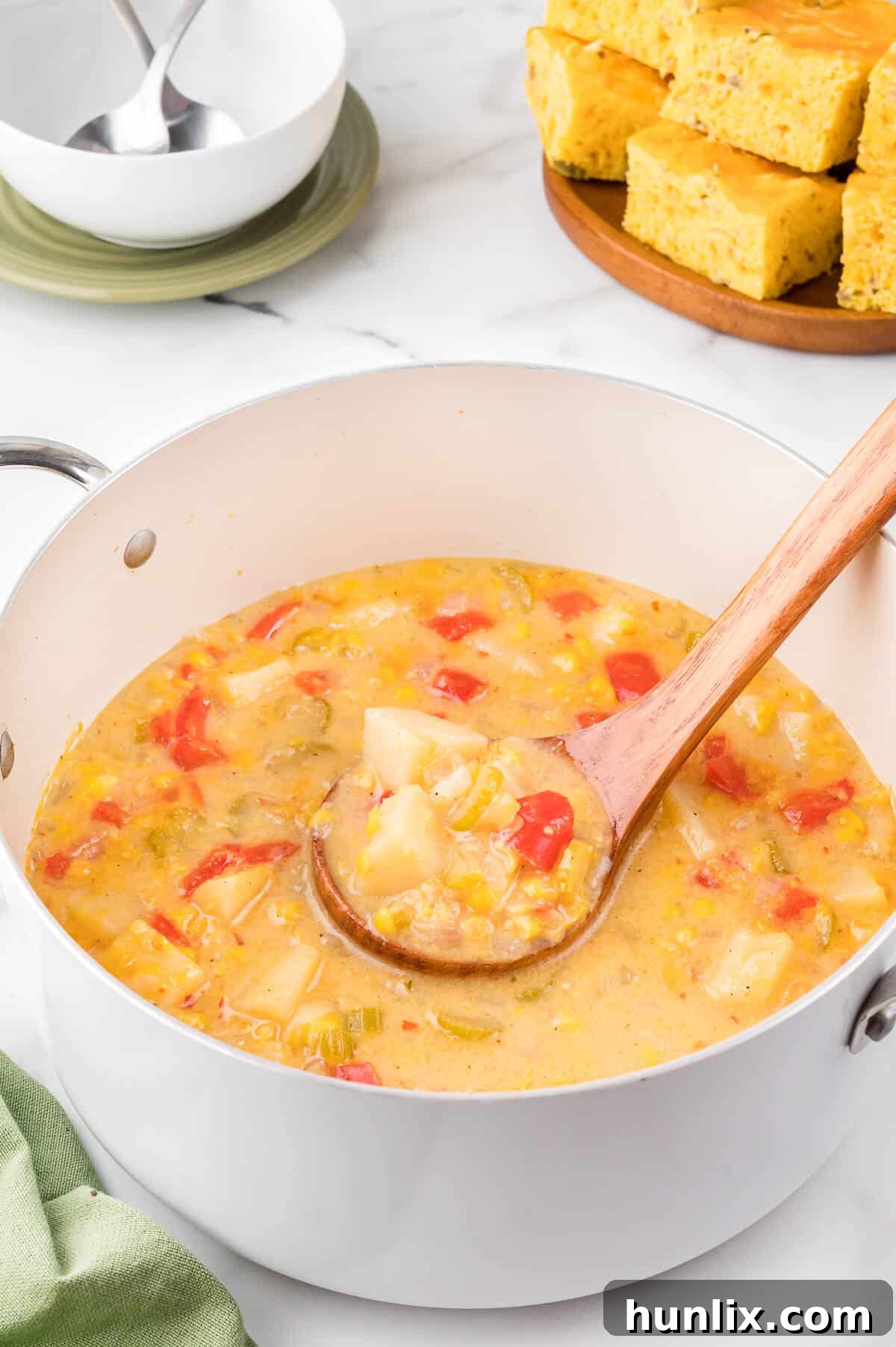
One of the most popular and satisfying options is to serve your corn chowder with a side of freshly baked bread. The perfect crusty bread, such as a rustic sourdough, a fragrant focaccia, or even pillowy soft brioche rolls, is ideal for dipping and soaking up every last bit of the chowder’s creamy goodness. The contrast between the warm, soft interior of the bread and the rich, savory soup is simply divine, enhancing the overall comfort factor of your meal. Consider garlic bread or a simple French baguette for an equally delicious choice.
For a truly indulgent and savory pairing, consider serving your corn chowder alongside a classic grilled cheese sandwich. The crispy, buttered bread and gooey, melted cheese of a grilled cheese sandwich offer a fantastic textural and flavor contrast to the smooth, sweet, and creamy chowder. The salty, savory cheese perfectly complements the corn’s sweetness. For an added twist and to explore new dimensions of flavor, try experimenting with different types of cheese, such as sharp cheddar or smoky gouda, or various bread combinations, like hearty rye or artisan multigrain, to craft that perfect grilled cheese companion that will make your meal unforgettable.
If you’re seeking a more substantial accompaniment to your comforting corn chowder, adding a side of smoked sausage is an excellent choice. The robust, salty, and often garlicky flavors found in varieties like kielbasa, spicy Andouille, or rich Cajun-smoked sausages provide a wonderful and pleasant contrast to the chowder’s inherent sweetness and creaminess. The smoky notes of the sausage will add a deep, savory complexity that complements the corn beautifully, making for a truly hearty and satisfying meal. Simply slice and sauté the sausage until browned before serving alongside your chowder.
Don’t forget the garnishes! A sprinkle of fresh chives or parsley, a dollop of sour cream, a dash of hot sauce, or a few crispy bacon bits can add an extra layer of flavor and visual appeal to each bowl, personalizing it to perfection.
Creative Variations and Smart Substitutions for Corn Chowder
One of the many wonderful aspects of this corn chowder recipe is its incredible adaptability. You can easily modify it to suit different tastes, dietary needs, or what you have on hand in your pantry. Don’t be afraid to experiment and make this recipe truly your own. Here are some popular variations and simple substitutions to inspire your culinary creativity:
Adding Protein to Your Chowder for Extra Heartiness
To transform your corn chowder into an even heartier, more substantial meal, consider incorporating a protein. Diced, crispy bacon or savory pancetta can be fried until golden and then crumbled over individual servings for a salty, smoky crunch that enhances the chowder’s depth. Cooked chicken, either shredded leftover rotisserie chicken or diced cooked chicken breast, can be stirred in during the final heating stage, making it a great way to use up leftovers. For a delightful seafood twist, consider adding cooked shrimp or flaked cod or salmon during the last few minutes of cooking for an ocean-inspired flavor. Vegetarian protein options like white beans (cannellini or navy beans), black beans, or chickpeas can also be added for extra substance and fiber, creating a more robust vegetarian corn chowder.
Dietary Adjustments and Ingredient Swaps for All Lifestyles
If you’re looking to adjust the ingredients for specific dietary restrictions or preferences, several simple substitutions can be made without compromising on flavor or the comforting essence of the chowder:
- Vegetarian or Vegan Chowder: Easily make this delicious dish vegetarian by swapping out the chicken broth for a high-quality vegetable broth. This ensures a rich, savory base without any meat products. For a completely vegan version, combine vegetable broth with dairy-free milk and cream alternatives.
- Dairy-Free Alternatives: To cater to vegan guests or those with lactose intolerance, dairy-free milk and cream alternatives work wonderfully. Full-fat coconut milk will lend a subtle tropical richness and a creamy texture, while cashew cream (made by blending soaked cashews with water) offers a neutral, thick, and creamy consistency that mimics traditional dairy. Almond milk or oat milk can also be used, though they may result in a slightly thinner consistency, so you might need to adjust the thickening methods.
Modifying the Chowder’s Texture to Your Liking
When it comes to the base of your corn chowder, you have the flexibility to modify its texture to suit your preference. If you desire a smoother, more homogeneous, and extra creamy chowder, you can carefully puree about half of the cooked corn kernels or a portion of the entire chowder (after the vegetables are tender) in a blender before stirring it back into the pot. This technique creates a thicker, more homogeneous base while still retaining some whole pieces for textural contrast. For those who appreciate a more rustic, chunky feel, simply leave all the ingredients as they are, enjoying the distinct bites of vegetables and corn.
Fresh Corn vs. Frozen or Canned: Making the Most of What You Have
While this recipe conveniently uses canned creamed corn and frozen kernels, you can absolutely use fresh sweet corn when it’s in season for an even more vibrant flavor. For fresh corn, you’ll typically need about 4-5 ears. Shuck the corn and carefully cut the kernels directly off the cob using a sharp knife. Add these fresh kernels to the chowder as you would the frozen corn. For an even more intense corn flavor, you can scrape the cobs after cutting the kernels to extract the “corn milk” and add it to your soup. When fresh corn isn’t available, high-quality frozen corn is an excellent substitute, as it’s often picked and flash-frozen at its peak ripeness, preserving its sweetness and texture.
Creative Corn Substitutes for Flavor Experimentation
Even if you don’t have any corn on hand, or if you simply wish to try a different flavor profile, you can still create a delicious, hearty chowder using other compatible vegetables:
- Broccoli: Finely chopped florets of broccoli offer a slightly sweet, mild flavor and a delightful tender-crisp texture. Chop them into small pieces and add them with the initial sautéed vegetables for a green and healthful twist.
- Green Peas: Another excellent vegetable with a sweet, mild flavor, green peas can seamlessly integrate into a chowder, adding a burst of bright color and nutrition. Add them towards the end of the cooking process to maintain their vibrant green color and tender bite.
- Sweet Potato or Butternut Squash: For a different kind of natural sweetness and a velvety texture, consider dicing and adding sweet potato or butternut squash. These will also contribute to the chowder’s thickness and provide a beautiful orange hue, adding a comforting fall-like twist to the classic chowder.
Effortless Slow Cooker Corn Chowder
Preparing corn chowder in a slow cooker offers unparalleled convenience, allowing you to enjoy this comforting classic with minimal hands-on effort. It’s an ideal method for busy days, as it develops deep, robust flavors while you go about your day, filling your home with a wonderful aroma.
To use the slow cooker method, simply combine all the ingredients—except for the milk and olive oil—directly into your slow cooker pot. Give everything a good stir to ensure it’s well combined and evenly distributed. Cover the slow cooker with its lid and set it to cook on the LOW setting for approximately 6 hours. This slow, gentle cooking process allows all the vegetables, especially the potatoes, to become incredibly tender and ensures all the flavors meld beautifully, creating a rich and aromatic base that is deeply satisfying. In the last half hour of cooking, stir in the milk. This ensures the milk doesn’t curdle from prolonged high heat and maintains its creamy consistency, enriching the chowder to perfection. Once cooked, give it a final stir, season to taste, and your delectable slow cooker corn chowder is ready to be served, warm and inviting.
Exciting Add-Ins to Enhance Your Corn Chowder
When making corn chowder, you have an abundance of fantastic options for additional ingredients to further elevate the flavor, texture, and nutritional value of your dish. Don’t hesitate to get creative with these suggestions to personalize your homemade chowder:
- Hearty Proteins: To make this chowder even more filling and satisfying, easily incorporate various proteins. Crispy, diced bacon or savory pancetta is a classic choice, adding a smoky, salty depth and a pleasant textural contrast. Cooked turkey, whether diced or shredded from leftovers, is an excellent addition, particularly after holidays. Shredded chicken, perhaps from a rotisserie chicken for ultimate convenience, blends beautifully into the creamy base. For a touch of seafood, consider adding cooked shrimp or flaked white fish like cod or haddock during the last few minutes of cooking for a delightful ocean-inspired flavor.
- Additional Vegetables: Boost the nutrient content and expand the flavor profile by including other complementary vegetables. Finely diced carrots add a touch of sweetness and vibrant orange color. Green peas, tender green beans, or even fresh spinach or kale (stirred in at the very end until just wilted) are wonderful additions that enhance both flavor and health. Consider sautéing sliced mushrooms with the initial aromatics for an earthy, umami note.
- Aromatic Herbs and Spices: Personalize the taste of your corn chowder by experimenting with a variety of fresh or dried herbs and spices. Fresh herbs like thyme, chives, fresh parsley, or a sprig of rosemary can be added during the simmering process or as a fresh garnish, providing bright, aromatic notes. Dried herbs and spices such as onion powder, garlic powder, a bay leaf (removed before serving), a pinch of cumin, a dash of mild curry powder, or smoky paprika can be stirred in to create unique flavor dimensions and warmth.
- Spicy, Cheesy Twist: For a bolder, more indulgent version, load up your chowder with flavor. Begin by adding crispy, crumbled bacon into the pot. Stir in a generous amount of shredded cheddar cheese until it melts into a luscious, gooey consistency, adding richness and tang. Finish with a dash or two of your favorite hot sauce or a pinch of cayenne pepper for an extra kick, and garnish generously with chopped green onions for freshness and a mild onion bite. This variation transforms it into a hearty, loaded corn chowder.
- Southwestern-Style Corn Chowder: Infuse your chowder with the vibrant, smoky flavors of the Southwest. Incorporate fire-roasted red peppers (canned or homemade) for a deep, sweet smokiness, or add finely diced poblano pepper for a mild, earthy heat. A tablespoon of smoked paprika will further enhance the smoky profile and color. For an authentic touch, add a can of drained black beans or roasted corn. Finish with a generous handful of fresh cilantro, chopped, just before serving, for a bright, herbaceous lift. A squeeze of fresh lime juice can also add a delightful tangy finish.
Storing and Reheating Your Homemade Corn Chowder
Proper storage is key to enjoying your delicious corn chowder for days to come, ensuring it remains fresh, flavorful, and safe to eat. Here’s how to handle your leftovers with care:
Cooling Down Safely
First and foremost, allow your corn chowder to cool down completely to room temperature before storing. It is crucial not to place hot soup directly into the refrigerator, as this can significantly raise the internal temperature of your fridge, potentially encouraging bacterial growth in other foods and compromising their safety. Speed up the cooling process by transferring the chowder to a shallow container or dividing it into smaller portions to maximize surface area and allow heat to escape more quickly. You can also place the pot in an ice bath in your sink for faster cooling, stirring occasionally.
Choosing the Right Storage Container
Next, select appropriate containers for storage. Airtight containers are paramount for preserving the freshness of your corn chowder and preventing it from absorbing any lingering odors from your refrigerator. Glass or BPA-free plastic containers with tight-fitting lids are excellent choices that will effectively keep your soup fresh and free from freezer burn if freezing.
Refrigeration for Short-Term Storage
Once your corn chowder has cooled to room temperature and you’ve transferred it into a suitable container, ensure the lid is securely in place. This critical step helps to prevent any accidental spillages and ensures the chowder doesn’t pick up unwanted aromas from other foods in the fridge. Place the container in the refrigerator, ideally maintaining a temperature of around 40°F (4°C). Under these optimal conditions, your homemade corn chowder should remain fresh and delicious for up to 5 days, making it perfect for meal prepping or quick weeknight dinners.
Freezing for Longer Storage
If you wish to extend the life of your corn chowder for longer periods, freezing is an excellent option. Transfer the completely cooled soup into freezer-safe containers or heavy-duty freezer bags. Remember to leave a small amount of headspace (about an inch) at the top of the container or bag to allow for expansion as the chowder freezes, which prevents containers from cracking. Clearly label and date the containers before placing them in the freezer so you know exactly what it is and when it was stored. Properly frozen corn chowder can maintain its optimal flavor and texture for up to 2-3 months. For the best culinary experience, aim to consume it sooner rather than later, as flavors can subtly diminish over extended freezing periods.
Reheating Instructions for Maximum Enjoyment
When it’s time to enjoy your corn chowder again, whether from the refrigerator or thawed from the freezer, the best method for reheating is on the stovetop. Transfer the desired portion into a saucepan and heat it over medium-low heat. Stir occasionally to ensure even heating and prevent sticking to the bottom of the pan. The goal is to warm it through gently until it reaches your desired temperature. If the chowder seems too thick after refrigeration or freezing, you can add a splash of milk or broth to thin it out to your preferred consistency. Be mindful not to boil the chowder rapidly, as vigorous boiling can adversely affect its creamy texture, potentially causing it to separate or become grainy. Serve your perfectly reheated corn chowder and once again savor the comforting and delightful flavors of this wonderful dish.
A Brief History of Corn Chowder
Corn chowder, a beloved comfort food, boasts a fascinating history deeply rooted in American culinary traditions, evolving from humble origins to a cherished staple. Its journey reflects the rich cultural exchange and adaptation of ingredients over centuries.
Origins of a Classic Comfort Food
The earliest known instances of corn chowder can be traced back to the late 1800s in the United States. While the exact moment of its creation remains elusive, it is widely believed that Native Americans played a pivotal role in its genesis. They introduced early European colonizers to corn, a staple crop of the Americas, and the foundational concept of utilizing it in hearty, simmering soups and stews. This indigenous knowledge formed the bedrock for what would eventually become corn chowder, demonstrating the profound influence of Native American agriculture and cuisine. One of the first formally documented recipes for corn chowder appeared in 1884, published in the renowned Boston Cook Book, authored by Mary Lincoln of the prestigious Boston Cooking School. This early recipe likely drew strong inspiration from the rich culinary traditions of indigenous peoples, particularly the Iroquois, who had a long-standing practice of using parched green corn in their nourishing soups, highlighting a deep connection to the land and its bounties. The term “chowder” itself is thought to derive from the French word “chaudière,” a large pot, emphasizing the rustic, communal nature of these early dishes.
The Enduring Cultural Impact of Corn Chowder
Over the centuries, corn chowder has cemented its place as a popular and enduring comfort dish within American cuisine. It holds a particularly special status in New England, a region where local, fresh corn is abundant during harvest season, making the dish even more flavorful and celebrated at community gatherings and family tables. The evolution of corn chowder reflects the diverse culinary influences and regional food cultures that have shaped the United States. Various tweaks and additions to the original simple recipe, such as incorporating fresh corn stock for a deeper corn flavor, adding different types of proteins like clams or bacon (leading to variations like New England Clam Chowder with corn), or experimenting with various vegetables and seasonings, showcase this rich tapestry of culinary innovation. From humble family kitchens to bustling fine dining establishments, corn chowder continues to be a versatile and cherished dish, adapting to modern palates while retaining its comforting, historical essence as a symbol of American culinary heritage.
Corn Chowder vs. Corn Soup: Understanding the Key Distinctions
When you’re craving a warm and comforting bowl, it’s easy to confuse corn chowder with corn soup, as both prominently feature corn. However, despite their shared star ingredient, there are several key differences that set these two delightful dishes apart, primarily concerning their texture, ingredient profile, and cooking techniques. Understanding these distinctions will help you choose the perfect dish for your palate.
Texture: Rich and Hearty vs. Light and Delicate
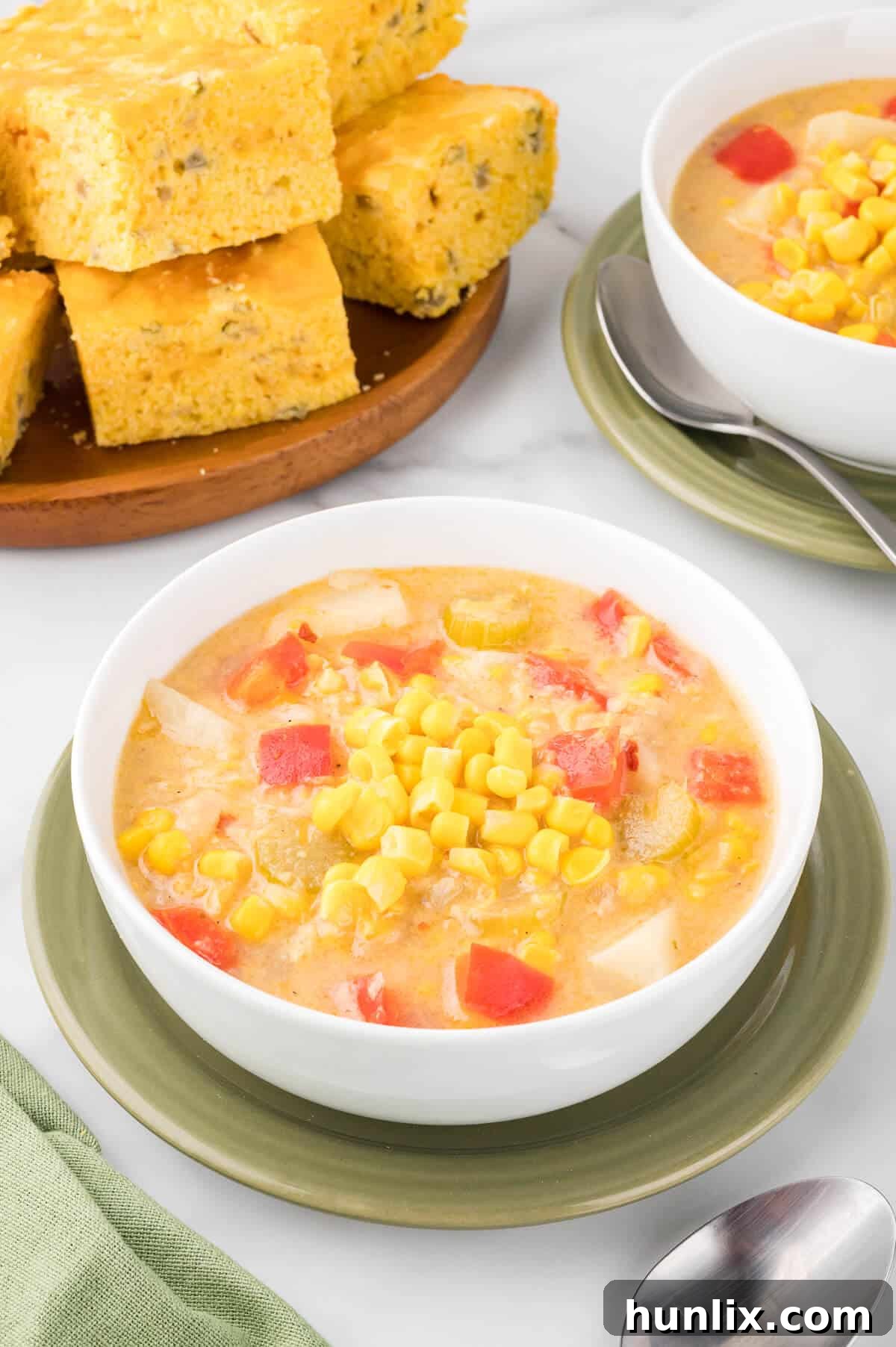
The most immediately noticeable difference lies in their texture. Corn chowder is characterized by its thick, substantial, and wonderfully creamy consistency. It typically contains a generous medley of chunky ingredients, including distinct corn kernels, hearty diced potatoes, and other robust vegetables, giving it a hearty, almost stew-like feel. Its richness is designed to be deeply satisfying and filling, often thick enough to eat with a fork. In contrast, corn soup tends to be much thinner and boasts a more delicate texture. It is often pureed until smooth, offering a silky consistency that glides across the palate, or it may include smaller, more finely chopped pieces of corn and other vegetables, making it a lighter and more refined experience, often served as an appetizer.
Ingredients: Creamy Bases vs. Varied Liquids
Another significant distinction between these two dishes is the base they employ. While both corn chowder and corn soup can share common ingredients like corn, onion, and celery, corn chowder almost invariably relies on a substantial base of milk or heavy cream. This dairy foundation is what imparts its signature richness, a luxurious mouthfeel, and a deeply satisfying flavor profile, contributing significantly to its thickness. Conversely, corn soup offers greater flexibility in its base. It can be made with a variety of liquids, such as light chicken broth, clear vegetable stock, or even just water, and does not necessarily include cream or milk. This allows for a wider range of flavors and lighter preparations, focusing more on the pure essence of the corn.
Cooking Techniques: Simmering for Depth vs. Blending for Smoothness
The cooking techniques employed also contribute to their distinct characteristics. Chowders are traditionally simmered for an extended period, allowing all the robust flavors to thoroughly meld together and the vegetables to soften and break down, which naturally thickens the soup. This slow cooking process is crucial for developing the depth and heartiness that define a chowder, resulting in a cohesive, full-bodied dish. Corn soups, particularly those aiming for a smooth consistency, frequently require blending or straining after cooking to achieve their desired delicate texture. This focus on purity of texture often means less emphasis on long simmering times for chunky ingredients, leading to a quicker preparation for a lighter result.
In summary, if you’re seeking a hearty, rich, and creamy dish that serves as a fulfilling meal, corn chowder is your ideal choice. It’s comfort food at its best. However, if your preference leans towards a lighter, more delicate, and often smoother soup, perhaps as a starter, then corn soup would be more appropriate. Both are wonderfully delicious and comforting in their own right, but their differences in texture, primary ingredients, and preparation methods distinctively set them apart, offering unique culinary experiences for various occasions.
Expert Tips: How to Achieve a Thicker Corn Chowder
If you find your corn chowder isn’t as thick and luscious as you’d like, there are several effective methods you can employ to achieve the perfect consistency without compromising on flavor. A thick, creamy chowder is incredibly satisfying, and these techniques will help you achieve that ideal richness:
- Using a Roux (Flour and Butter): One classic and reliable way to thicken soups and chowders is by incorporating a roux. To make a simple roux, melt about four tablespoons of butter in a separate small pan over medium heat. Once the butter is melted and slightly bubbling, whisk in approximately 1/4 cup of all-purpose flour. Continue to cook and whisk for a couple of minutes until the mixture forms a bubbly, slightly golden paste. Slowly add this hot roux to your simmering chowder, stirring constantly to prevent any lumps from forming. The flour will absorb liquid and thicken the chowder as it cooks for a few more minutes, adding a subtle nutty flavor.
- Employing a Cornstarch Slurry: Another reliable and gluten-free friendly thickener is cornstarch. In a small bowl, whisk together 1 to 2 tablespoons of cornstarch with an equal amount of cold water (or broth) until you have a smooth, lump-free slurry. Gradually add this cornstarch mixture to the bubbling chowder, stirring continuously. The chowder will begin to thicken almost immediately. Be careful not to add too much at once; start with a small amount and you can always add more if needed until you reach your desired thickness.
- Leveraging More Potatoes: Potatoes are natural thickeners due to their starch content. Simply adding more diced potatoes to your corn chowder can significantly help in achieving a thicker consistency without needing extra flour or cornstarch. As the chowder cooks and the potatoes break down slightly, they release their starches into the liquid. Ensure you simmer the chowder long enough for these additional potatoes to become fully cooked and tender, allowing their starches to properly integrate and thicken the soup, adding to its hearty nature.
- Enhancing with Cream: Incorporating additional heavy cream or a richer milk (like half-and-half) is a delicious and effective method for making your corn chowder thicker and more decadent. Add a cup or more of heavy cream to your simmering chowder and allow it to gently heat through for a few minutes, stirring occasionally. The higher fat content of the cream will naturally contribute to a richer, creamier, and thicker texture, resulting in an even more luxurious and satisfying dish. This method also boosts the overall flavor and richness.
- Blending a Portion of the Chowder: To achieve a thicker consistency without introducing extra ingredients, you can easily blend a portion of the chowder itself to create a natural puree. Use an immersion blender directly in the pot, carefully blending a small section of the soup until smooth. Alternatively, carefully transfer a small amount of the cooked chowder (making sure to avoid blending any large, intact vegetable chunks if you want to retain some texture) to a regular blender. Puree until smooth, then stir this creamy mixture back into the rest of the pot. This method concentrates the flavors and creates a wonderful, natural thickness, giving your chowder a more velvety body.
Frequently Asked Questions About Corn Chowder
Can I Use Fresh Corn in My Corn Chowder?
Yes, absolutely! Using fresh corn in your corn chowder is a fantastic way to take advantage of corn’s natural sweetness and juicy texture, especially when it’s in season during the summer months. Many chefs and home cooks agree that fresh corn provides the best, most vibrant flavor for chowder, bringing an unparalleled sweetness. To use fresh corn, simply shuck the ears and carefully cut the kernels off the cobs using a sharp knife. You can even scrape the cobs after removing the kernels to extract any remaining “corn milk,” which adds even more concentrated corn flavor and natural starch to your soup, enhancing its richness. If fresh corn isn’t available or in season, don’t worry at all. You can still make a wonderfully delicious and satisfying chowder using convenient frozen corn kernels, which are often picked and flash-frozen at their peak ripeness, preserving their sweetness and texture, or good quality canned corn for year-round enjoyment.
What Kind of Potatoes Are Best for Corn Chowder?
When crafting a delicious corn chowder, the type of potato you select can significantly impact both the texture and flavor of your finished soup. The ideal potato will hold its shape reasonably well during the cooking process while also absorbing the rich flavors of the chowder and contributing to its body, whether you prefer chunky or creamy.
Russet potatoes are often a top choice for chowders due to their high starch content. As they cook, russets tend to break down slightly, releasing starch that helps to naturally thicken your soup and contribute to a wonderfully creamy, almost floury texture. Their mild flavor ensures that the sweetness of the corn remains the star ingredient, allowing it to shine through beautifully without competition.
Alternatively, if you prefer a chowder with a firmer, more discernible potato texture, consider using Yukon Gold potatoes. These versatile potatoes possess a good balance of waxy and starchy properties, which enables them to maintain their shape well throughout the cooking process without becoming mushy. Their naturally buttery flavor also adds an extra layer of richness to the dish, making your corn chowder even more satisfying and luxurious, with a beautiful golden hue.
If your preference is for a more waxy potato, varieties such as red potatoes or new potatoes can also work effectively in a corn chowder. Their lower starch content means they will hold their shape exceptionally well when cooked, providing distinct chunks of potato that add textural interest. Additionally, their thin skins are tender enough to be left on, which not only saves prep time but also offers an appealing additional textural element and a rustic, wholesome look to your chowder.
More Delightful Corn Recipes to Explore
If you’ve enjoyed this comforting corn chowder, you’ll love these other fantastic recipes that highlight the versatility and deliciousness of corn:
- Zesty Corn Salsa
- Refreshing Corn Salad
- Creamy Cheesy Corn Casserole
- Crispy Air Fryer Corn Ribs
- Homestyle Southern Corn Cake
Craving even more comforting soup recipes to warm your soul? Be sure to explore these other fantastic options from our kitchen:
Try this Hearty Cheeseburger Chowder, Velvety Hash Brown Potato Soup, Classic Manhattan Clam Chowder, Wholesome Hamburger Soup, Rich Seafood Chowder, Flavorful Salmon Chowder, Comforting Cheesy Chicken Chowder, Smooth Cream of Carrot Soup, Quick Busy Day Soup, or our Classic Minestrone Soup. There’s a perfect soup for every taste and occasion!
Follow us on Instagram @simplystacieblog, Facebook at Simply Stacie, TikTok @simplystacierecipes or Pinterest at @simplystacie and let us know how you enjoyed this and our other delicious recipes! We love hearing from you!
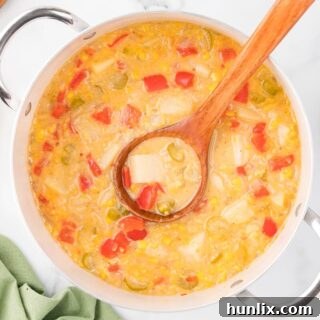
Corn Chowder
Created by Stacie Vaughan
The best summer soup recipe ever! Sweet corn with tender potatoes and red bell pepper in a luscious, slightly spicy broth with creamed corn, too! A perfect comfort food for any season.
Servings: 4 |
Prep Time: 15 minutes |
Cook Time: 30 minutes |
Total Time: 45 minutes
Ingredients
- 1 tsp extra virgin olive oil
- 1 yellow onion, chopped
- 1 potato, peeled and diced
- 1 celery stalk, chopped
- 1 red pepper, chopped
- Pinch red pepper flakes
- 1 cup chicken broth
- ½ cup milk
- 1 can creamed corn (14.74oz/398ml can)
- ¼ cup frozen corn kernels
- ¼ tsp salt
- ¼ tsp pepper
Instructions
- In a large pot, heat olive oil over medium heat. Add onion, potato, celery, red pepper, and red pepper flakes. Cook, stirring often, for 5 minutes, until vegetables begin to soften and release their aromas.
- Pour in chicken broth. Bring the mixture to a boil, then reduce heat to medium-low. Simmer, covered, for 10 minutes, allowing the potatoes to become tender and flavors to meld.
- Add in milk, creamed corn, frozen corn, salt, and pepper. Heat for an additional 5 to 10 minutes, stirring occasionally, until everything is hot and the flavors have fully come together. Serve immediately.
Equipment
- Dutch oven
- Cutting board
- Measuring cups
Nutrition
The information shown is an estimate provided by an online nutrition calculator. It should not be considered a substitute for a professional nutritionist’s advice.
Serving: 1 cup | Calories: 153kcal | Carbohydrates: 30.7g | Protein: 4.7g | Fat: 2.7g | Saturated Fat: 0.7g | Polyunsaturated Fat: 1.7g | Cholesterol: 4.7mg | Sodium: 449.3mg | Fiber: 4.9g | Sugar: 6.7g
Course: Soups |
Cuisine: American |
Keyword: chowder, corn chowder, corn soup
Did you make this recipe?
We’d love to see your culinary creations! Share a picture on your favorite social platform and tag us!
Share on Facebook |
Pin Recipe |
Rate this Recipe
Want Even More Recipes?
Join Moms Best Recipes to find more delicious family recipes and become part of our growing community!