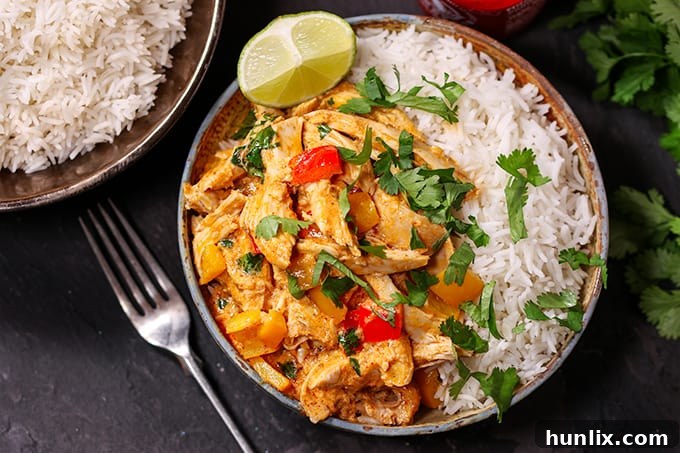
Hello, fellow food lovers! Nicky here from Kitchen Sanctuary, and I’m thrilled to share a recipe that will transform your holiday leftovers into something truly spectacular. Forget those tired turkey sandwiches and predictable casseroles; it’s time to infuse some vibrant flavor into your post-feast meals!
This Turkey Thai Curry is the ultimate solution for utilizing that delicious leftover turkey. It’s a remarkably quick and easy weeknight dinner, coming together in just about 20 minutes, yet delivering a depth of flavor that tastes like it’s been simmering all day. Perfect for busy evenings when you need a satisfying and wholesome meal on the table in a hurry.
Imagine rich, aromatic Thai curry paste, vibrant red and green bell peppers, fragrant lemongrass, and tender pieces of your leftover turkey, all swimming in a creamy, coconut-infused sauce. This combination creates an unforgettable Thai curry experience that’s both comforting and exciting. Serve it alongside a bed of fluffy rice, and you’ll have a simple, yet exquisitely flavorful turkey curry dish that will make everyone forget they’re eating leftovers.
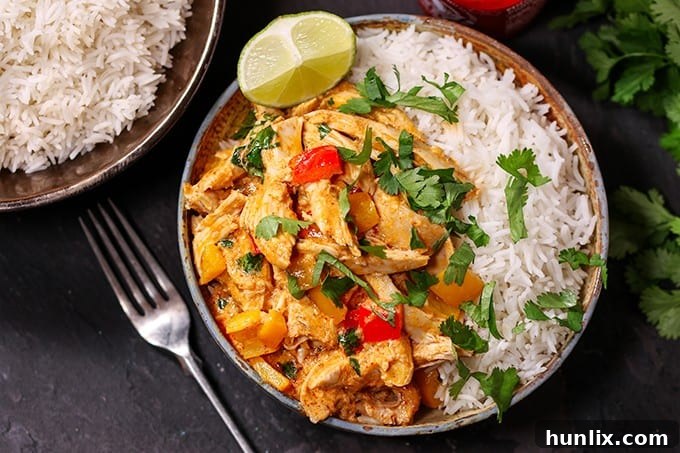
Effortless & Exquisite: Quick and Easy Turkey Thai Curry
One of the beauties of this Turkey Thai Curry recipe is its simplicity, largely thanks to the accessibility of quality store-bought curry pastes. While making your own curry paste from scratch offers a wonderful culinary adventure, the truth is that many readily available brands deliver exceptional flavor, saving you precious time in the kitchen.
For this recipe, I often reach for ‘Thai Taste’ or ‘Blue Dragon’ red Thai curry paste. These brands consistently offer a robust and authentic flavor profile. However, be aware that red Thai curry pastes typically have a noticeable kick! If you’re preparing this dish for children, or for anyone who prefers a milder flavor, don’t hesitate to opt for a mild Indian paste instead, such as Patak’s Tikka curry paste. It might sound unconventional to use an Indian paste in a Thai-style dish, but its creamy, fragrant notes blend surprisingly well and create a delicious, family-friendly curry without compromising on warmth and flavor. The goal here is a quick, satisfying meal, and using a mild paste is a fantastic way to achieve that without needing extra steps to temper the spice.
Boost Your Bowl: Adding More Vegetables to Your Turkey Thai Curry
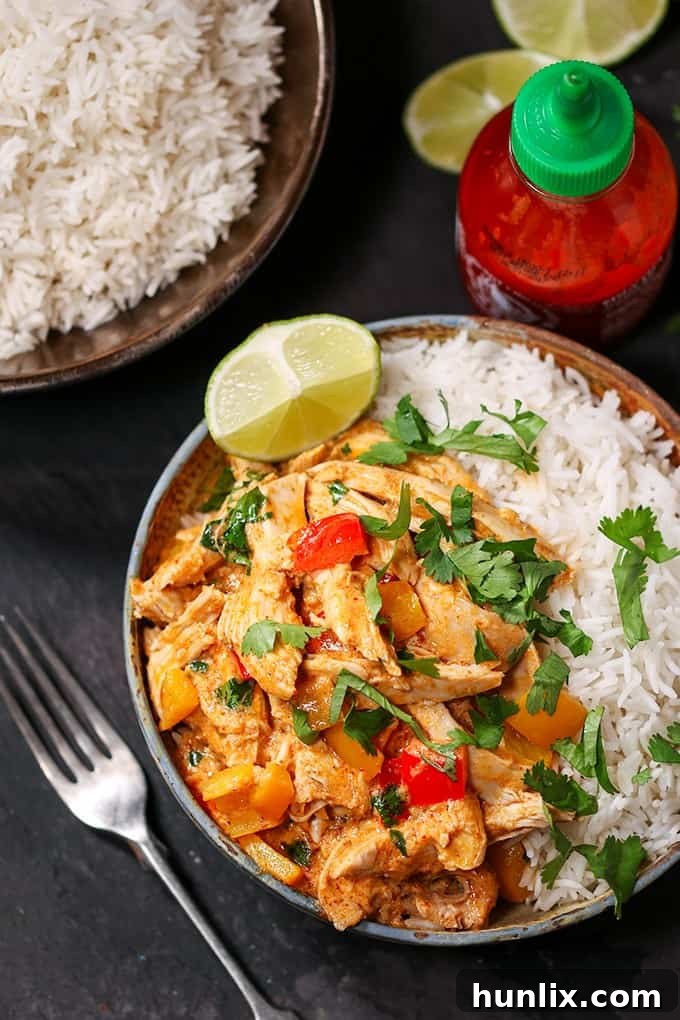
While bell peppers add a delightful crunch and sweetness to this leftover turkey curry, this recipe is incredibly versatile when it comes to vegetables. Don’t let anything go to waste! Feel free to toss in any leftover cooked or uncooked vegetables you have on hand. Broccoli florets, crisp green beans, or even sliced carrots work wonderfully, adding both nutrition and texture to your curry.
Thinking outside the box? Consider adding a couple of leftover roast potatoes! It might seem unusual for a Thai curry, but many popular Thai curries, like Massaman, feature potatoes. If your vegetables are already cooked (like those leftover roast potatoes or steamed broccoli), simply add them during the last few minutes of cooking to heat them through, ensuring they retain their texture and don’t become overcooked. This flexibility makes it a truly resourceful dish, adapting to whatever fresh produce or holiday remnants you have in your fridge.
Deciphering the Spice: Red vs. Green Thai Curry Heat Levels
When it comes to Thai curries, many people wonder about the heat difference between red and green varieties. Generally speaking, red curry paste often delivers a more pronounced, vibrant heat, while green curry can sometimes be perceived as milder due to its fresh herb content (like green chilies, kaffir lime, and basil). However, this is a generalization, and the actual spice level can vary significantly.
It’s fascinating how regional preferences influence curry preparation. In some Western interpretations, red curries are made to be much spicier, with green curries offering a more mellow profile. Conversely, traditional Thai cuisine can feature incredibly potent green curries. So, depending on where you source your paste or experience your Thai food, the intensity can change. For our Turkey Thai Curry, we use red curry paste, which typically brings a delightful warmth and spiciness that balances beautifully with the creamy coconut milk and subtle sweetness.

Is Red Thai Curry Hot? Understanding the Spice Profile
Absolutely! My Turkey Thai Curry, featuring red curry paste, definitely brings a satisfying level of heat. Red curry paste is known for its bold flavor and inherent spiciness, often derived from dried red chilies. This recipe perfectly marries that spicy kick with a hint of natural sweetness from the brown sugar and the richness of coconut milk, creating a balanced and incredibly appealing sweet-and-spicy dynamic. It’s not overwhelmingly hot for most palates, but it certainly leaves a pleasant warmth that makes each bite exciting.
Cooling It Down: How to Tame the Heat in Turkey Thai Curry
If you’re sensitive to spice or cooking for a crowd with varying heat preferences, there are simple ways to reduce the intensity of your Turkey Thai Curry without sacrificing flavor. As mentioned before, a quick swap of curry paste is the easiest method: reach for a mild Indian Tikka paste instead of red Thai curry paste. This will still give you that wonderful aromatic depth and warmth characteristic of curry, but with a significantly gentler heat.
Other tricks include adding an extra splash of full-fat coconut milk to the finished dish, which can mellow out the spice. A squeeze of fresh lime juice at the end not only brightens the flavors but also helps to cut through and balance any excessive heat. For an individual serving, a dollop of plain yogurt or sour cream swirled into the bowl can provide an immediate cooling effect. You can also start with half the recommended amount of red curry paste and add more to taste, building up the spice level gradually until it’s just right for you and your family.
Nourishing & Delicious: Is Thai Curry Healthy?
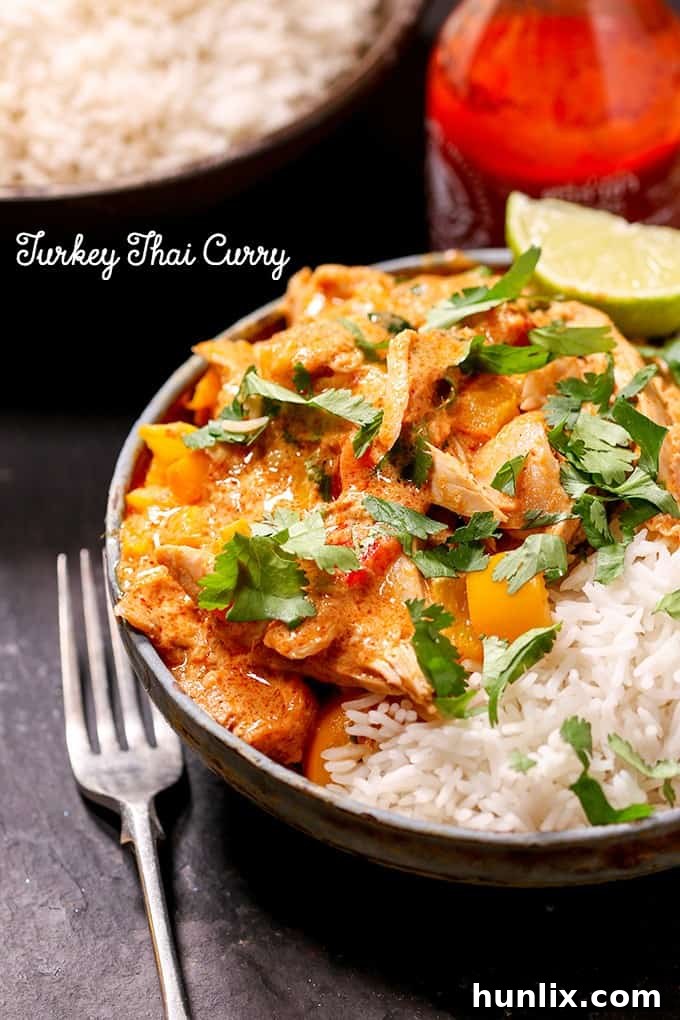
Thai curry, particularly this Turkey Thai Curry, can indeed be a very healthy meal. It boasts a strong foundation of lean protein from the turkey and a generous array of fresh vegetables, which are packed with vitamins, minerals, and fiber. Ingredients like ginger, garlic, and lemongrass also contribute beneficial antioxidants and anti-inflammatory properties.
However, it’s important to be mindful of certain components. The use of full-fat coconut milk contributes to the richness and creaminess but also adds a significant amount of saturated fat and calories. Similarly, serving the curry over traditional white rice increases the carbohydrate and calorie count. To make this dish even healthier, consider these adjustments:
- **Opt for lighter coconut milk:** While full-fat offers the best flavor and texture, a lighter version can reduce calories and fat.
- **Choose healthier rice options:** Swap white rice for cauliflower rice for a significantly lower-carb and lower-calorie option. Brown rice or quinoa are also excellent choices, providing more fiber and nutrients.
- **Load up on vegetables:** Increase the proportion of vegetables to turkey and sauce to boost nutrient intake and satiety with fewer calories.
- **Portion control:** Be mindful of serving sizes, especially when pairing with rice, to manage overall calorie and fat intake.
By making these small adjustments, your Turkey Thai Curry can be a wonderfully nutritious and satisfying addition to your meal rotation.
The Art of Quick Cooking: How to Make Turkey Thai Curry
Creating this flavorful Turkey Thai Curry is a straightforward process that yields impressive results in minimal time. Here’s a detailed guide to walk you through each step:
- **Sauté the Peppers:** Begin by grabbing a large skillet or wok. Heat one teaspoon of extra virgin olive oil over medium heat. Once shimmering, add your chopped red and yellow bell peppers. Sauté for about two minutes, stirring occasionally, until they start to soften slightly and become fragrant. You want them tender-crisp, not mushy.
- **Add Aromatics and Turkey:** Next, incorporate the minced garlic, ginger, and lemongrass paste (if using). Stir these aromatic ingredients into the peppers for about 30 seconds until their delightful fragrance fills your kitchen. Immediately add your pre-cooked, sliced leftover turkey to the skillet. Gently stir for another minute, allowing the turkey to warm through and absorb some of the flavors.
- **Infuse with Curry Paste:** Now, add the red Thai curry paste. Stir it thoroughly, ensuring the turkey and vegetables are well coated. Cook for an additional one to two minutes, allowing the curry paste to lightly toast and release its full aromatic potential. This step is crucial for deepening the flavor of your curry.
- **Simmer to Perfection:** Pour in the full-fat coconut milk and chicken stock. Stir everything together gently. Bring the mixture to a gentle bubble, but be careful not to let it come to a rolling boil, as this can sometimes cause the coconut milk to separate. Reduce the heat to low and let it simmer for about 10 minutes, allowing the flavors to meld beautifully and the sauce to thicken slightly.
- **Final Flavor Adjustments:** After simmering, stir in the brown sugar, fish sauce, and the fresh juice of one lime. Give the curry a taste test. If you desire more tang or brightness, add an additional drizzle of lime juice. Once the flavors are perfectly balanced to your liking, turn off the heat.
- **Garnish and Serve:** Sprinkle a generous amount of freshly torn cilantro over the curry. Serve immediately with your preferred accompaniment.
Elevate Your Meal: What to Serve with Turkey Thai Curry
Your delectable Turkey Thai Curry offers a world of serving possibilities, each enhancing the dining experience in its own unique way. Here are a handful of options to truly elevate your meal:
- Perfect Pairings with Rice: A classic choice, a scoop of fluffy rice makes the ideal bed for your rich curry.
- Jasmine or Basmati Rice: These fragrant white rices complement the curry’s exotic flavors beautifully.
- Brown Rice: For a healthier, fiber-rich option, brown rice adds a nutty flavor and satisfying chew.
- Cauliflower Rice: If you’re looking for a low-carb alternative, cauliflower rice is an excellent choice. You can easily make it yourself by pulsing cauliflower florets in a food processor or purchase it pre-made in the refrigerated or freezer section of most grocery stores.
- Breads for Dipping: Don’t let a single drop of that flavorful sauce go to waste!
- Naan Bread: This soft, pillowy Indian flatbread is perfect for soaking up every last bit of the curry sauce. Warm it slightly before serving for the best experience.
- Chapati Bread: An unleavened flatbread, chapati offers a lighter, chewier texture, making it another fantastic choice for scooping up the rich curry. Its subtle flavor won’t overpower the curry.
- Roti: Similar to chapati, roti provides a wonderfully versatile option for those who enjoy a flaky, savory bread with their curry.
- Refreshing Sides: To balance the warmth and richness of the curry, consider these fresh additions:
- Cucumber Salad: A simple, cooling cucumber salad with a light vinaigrette or a hint of lime and mint provides a refreshing contrast to the curry’s heat and creaminess.
- Fresh Herbs: Beyond cilantro, consider a sprinkle of fresh mint or Thai basil for an extra layer of aromatic freshness.
- Lime Wedges: Always serve extra lime wedges on the side for individual diners to squeeze over their curry, adding a burst of bright, tangy flavor.
This turkey curry truly is a simple and easy meal to prepare and serve. It rivals the taste of takeout from your favorite Thai restaurant, with the added benefit of potentially yielding delicious leftovers for another day! Its versatility extends beyond turkey; if you happen to have leftover cooked chicken on hand, it makes an equally delightful Chicken Thai Curry. Either way, this vibrant and aromatic Thai-inspired dish is guaranteed to please your taste buds and become a cherished post-holiday tradition.
Have you ever transformed your holiday turkey into a vibrant Thai curry before? We’d love to hear about your experience!

For more inspiring recipes, explore these delicious options: Slow Cooker Turkey a la King, Slow Cooker Butter Chicken, Sweet Chili Chicken Thai Pizza and Thanksgiving Sliders.

Turkey Thai Curry
Created by Stacie Vaughan
Servings: 4
Prep Time: 10 minutes
Cook Time: 14 minutes
Total Time: 24 minutes
Great way to use leftover turkey! This weeknight meal is a 20-minute dish with the flavors of an all-day simmer.
SAVE THIS RECIPE!
Enter your email and we’ll send this recipe to your inbox.
Ingredients
Main Ingredients
- 1 tsp extra virgin olive oil
- 1 red bell pepper, deseeded and chopped
- 1 yellow bell pepper, deseeded and chopped
- 2 cloves garlic, peeled and minced
- 1 tsp minced ginger
- 1 tsp lemongrass paste (optional)
- 2 cups leftover sliced turkey
- 2 tbsp red Thai curry paste (or replace with Indian tikka paste if you don’t want a hot curry)
- 1 can coconut milk (14oz can, full fat)
- ¼ cup chicken stock (water with half a stock cube is fine)
- 1 tsp brown sugar
- 1 tsp fish sauce
- juice of 1 lime
- small bunch fresh cilantro, roughly torn
To Serve
- boiled rice
- lime wedges
- extra fresh cilantro
Instructions
- Heat the oil in a large skillet. Add the chopped red and yellow peppers. Cook on medium heat for two minutes until slightly softened. Then, add the garlic, ginger, lemongrass paste, and cooked turkey. Stir gently for one minute, then add the curry paste. Stir to coat the turkey and vegetables and allow to heat through for one minute.
- Pour in the coconut milk and chicken stock, bringing the mixture to a gentle bubble (avoid a rolling boil). Let it simmer gently for 10 minutes. Stir in the brown sugar, fish sauce, and lime juice. Taste and add more lime juice if required. Turn off the heat and sprinkle over the chopped cilantro. Serve immediately with boiled rice, lime wedges, and extra cilantro.
Equipment
- Wooden spoon
- Measuring cups
- Non-stick skillet
Nutrition
The information shown is an estimate provided by an online nutrition calculator. It should not be considered a substitute for a professional nutritionist’s advice.
Did you make this recipe?
I’d love to see it! Make sure to share it on your favorite social platform.
Pin Recipe
Rate this Recipe
Want Even More Recipes?
Join Moms Best Recipes to find more delicious family recipes.