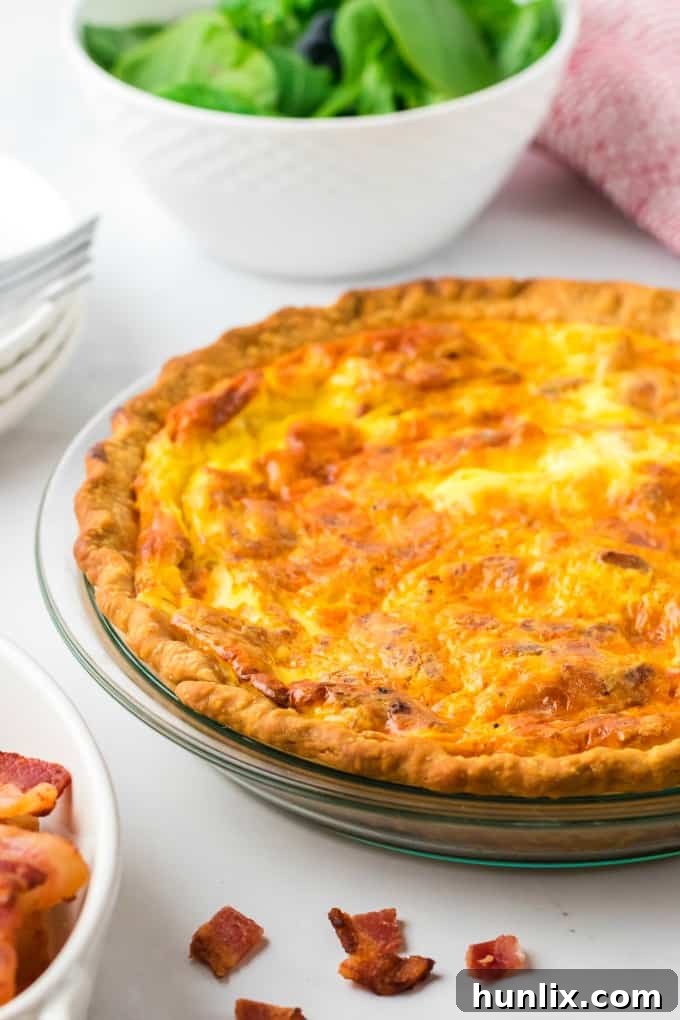
The Ultimate Quiche Lorraine: A Timeless Classic Made Easy
Delight your senses with this incredibly flavorful and easy-to-make Quiche Lorraine. This savory French tart, boasting a rich custard filling studded with crispy bacon and creamy Swiss cheese, is destined to become a beloved staple in your culinary repertoire. Whether you’re hosting a sophisticated brunch, preparing a comforting breakfast, or looking for a convenient make-ahead dinner, this quiche delivers exquisite taste with minimal effort. Its elegant appearance belies its simple preparation, making it a perfect dish to impress without the stress.

There’s something truly special about traditional recipes – they often carry a sense of nostalgia, reminding us of cherished moments and flavors passed down through generations. For me, Quiche Lorraine evokes fond memories of cooking alongside my grandmothers, creating dishes that felt elaborate but were surprisingly straightforward. This recipe captures that timeless charm perfectly. Its versatility shines through, making it an ideal choice for a special breakfast, a relaxed brunch, or even a delightful, hands-off breakfast-for-dinner option that pleases the whole family.
For those seeking a lighter alternative or simply wishing to skip the crust, consider trying a crustless version. My Bacon, Spinach, and Mushroom Crustless Quiche offers all the delicious flavors of a traditional quiche without the need for a pie crust, proving that you don’t always need a pastry shell to enjoy a fantastic quiche!
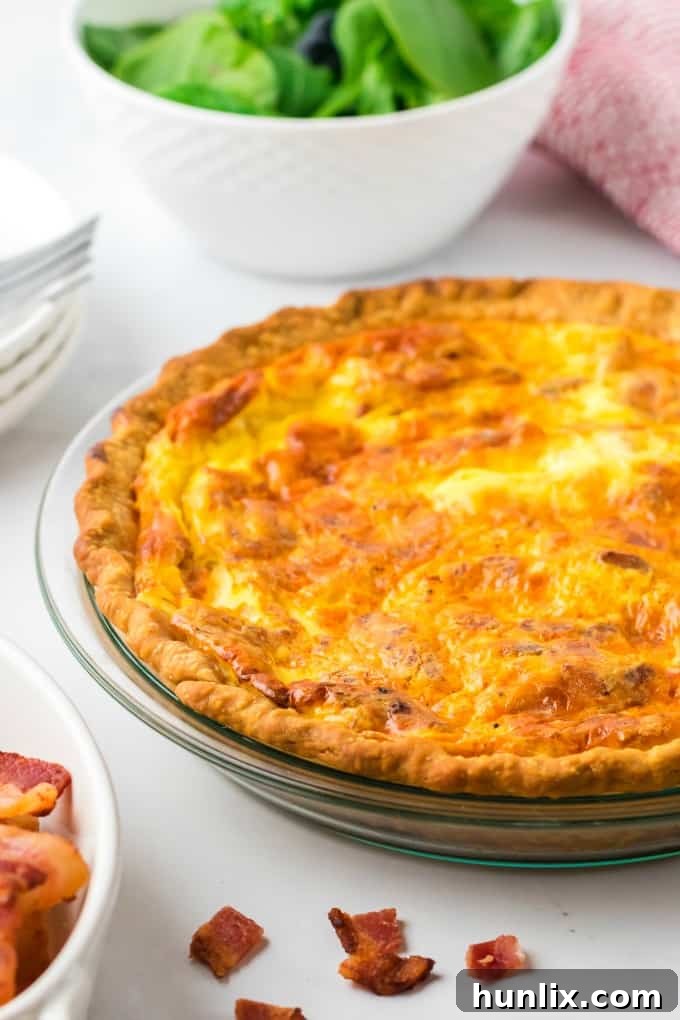
Essential Ingredients for Your Perfect Quiche Lorraine
Crafting the perfect Quiche Lorraine begins with selecting quality ingredients. Each component plays a vital role in achieving that signature rich, savory flavor and creamy texture.
- Pie crust: A good quality pie crust is the foundation. While a homemade crust offers an unparalleled flakiness, a refrigerated store-bought crust, like Pillsbury’s, provides excellent convenience without sacrificing much on taste or texture.
- Bacon: The star of Quiche Lorraine. Opt for a good cut of bacon, cooked until crisp and then chopped. Its salty, smoky notes are essential to the dish’s character.
- Half and half: This dairy base provides the luscious, creamy texture of the custard. Its balanced fat content ensures a rich, yet not overly heavy, result.
- Eggs: Fresh, large eggs are crucial for forming the custard. They bind the ingredients together and give the quiche its structure.
- Salt & Pepper: Basic seasonings that enhance all the other flavors. Adjust to your taste, remembering that bacon also contributes saltiness.
- Ground nutmeg: A classic spice in French cuisine, especially in custards and creamy dishes. Nutmeg adds a subtle warmth and aromatic depth that truly elevates the quiche.
- Paprika: This vibrant spice offers a mild sweetness and a hint of color, complementing the savory ingredients beautifully.
- Swiss cheese: Known for its nutty, slightly sweet flavor and excellent melting properties, Swiss cheese is the traditional choice for Quiche Lorraine, adding a wonderful creamy richness.
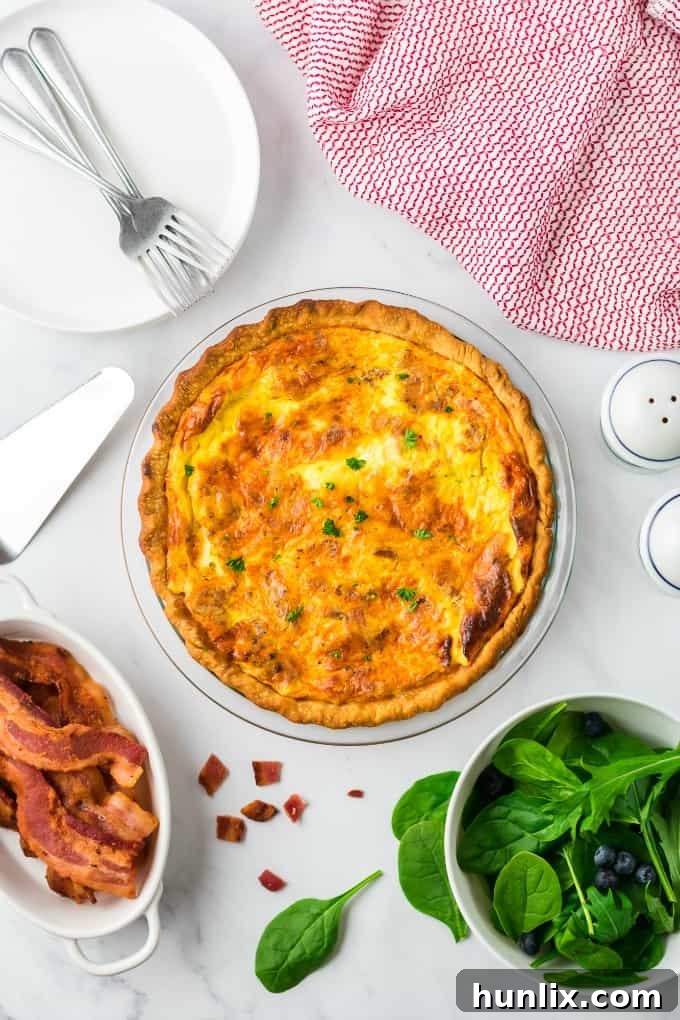
Recommended Kitchen Tools for Baking Quiche
Having the right tools can make all the difference in your baking experience. These are a few items that will help you achieve quiche perfection:
- Fluted pie pan: A fluted pie pan not only ensures even baking but also adds a professional and visually appealing edge to your quiche, transforming it from a simple dish to an elegant centerpiece.
- Spatula: A versatile spatula is indispensable in any kitchen. It’s perfect for easily flipping bacon, stirring ingredients, and serving delicate slices of quiche without damaging them.
- Measuring cups and spoons: Accurate measurements are key to successful baking. A reliable set of measuring cups and spoons ensures your ingredients are perfectly portioned for consistent results every time.
- Large mixing bowl: Essential for comfortably whisking together the egg and cream mixture without spills.
- Whisk: To thoroughly combine your eggs, cream, and spices, ensuring a smooth, uniform custard.
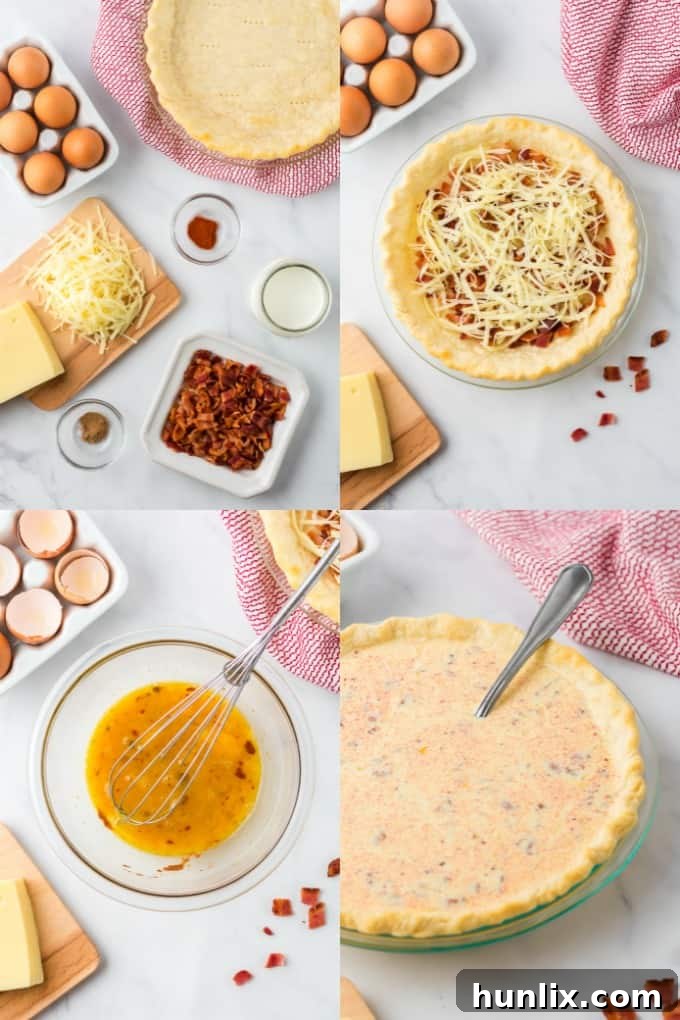
How to Master Quiche Lorraine in Simple Steps
Making Quiche Lorraine is a straightforward process that yields incredibly rewarding results. Follow these steps for a perfect, golden-brown quiche with a rich, creamy filling.
- Prepare the Pie Crust: Begin by par-baking your pie crust. This crucial step, often called blind baking, helps prevent a soggy bottom. Bake the crust for a few minutes less than the package suggests – for example, if the package recommends 10 minutes, bake for 8 minutes. Before baking, remember to gently prick the sides and bottom of the crust with a fork. This allows steam to escape, preventing the crust from puffing up. Once par-baked, remove it from the oven and let it cool slightly.
- Adjust Oven Temperature: After par-baking your crust, reset your oven temperature to 425 degrees F (220 degrees C). This initial higher heat helps the quiche set quickly and develop a beautiful golden crust.
- Layer the Fillings: Evenly scatter your cooked and chopped bacon and shredded Swiss cheese into the bottom of the par-baked pie crust. Ensure they are distributed well so every slice gets a delightful mix of flavors.
- Craft the Custard: In a large mixing bowl, whisk together the eggs, half and half, salt, pepper, ground nutmeg, and paprika until thoroughly combined and slightly frothy. Whisking well ensures a smooth, consistent custard. Carefully pour this flavorful egg mixture over the bacon and cheese in the pie crust. Gently stir the bacon and cheese into the egg mixture once poured. This prevents the heavier ingredients from sinking and clumping at the bottom, ensuring they are suspended throughout the custard.
- Bake to Perfection: Place the quiche in the preheated oven and bake at 425 degrees F (220 degrees C) for 15 minutes. This initial high heat creates a beautiful puff and sets the edges. Then, reduce the oven temperature to 375 degrees F (190 degrees C) and continue baking for another 50 minutes. Keep an eye on the crust; if the edges start to brown too much before the center is set, loosely cover them with strips of aluminum foil. This usually happens around the halfway mark of the second baking phase.
- Check for Doneness: Your quiche is ready when the center is fully set and firm, with no jiggle when gently shaken. The top should be golden brown. If it’s still slightly wobbly, continue baking, covering the entire crust with foil if needed to prevent further browning, until it reaches the desired firmness.
Once baked, let the quiche cool on a wire rack for at least 10-15 minutes before slicing and serving. This allows the custard to fully set, resulting in clean, beautiful slices.
The Rich History Behind Quiche Lorraine
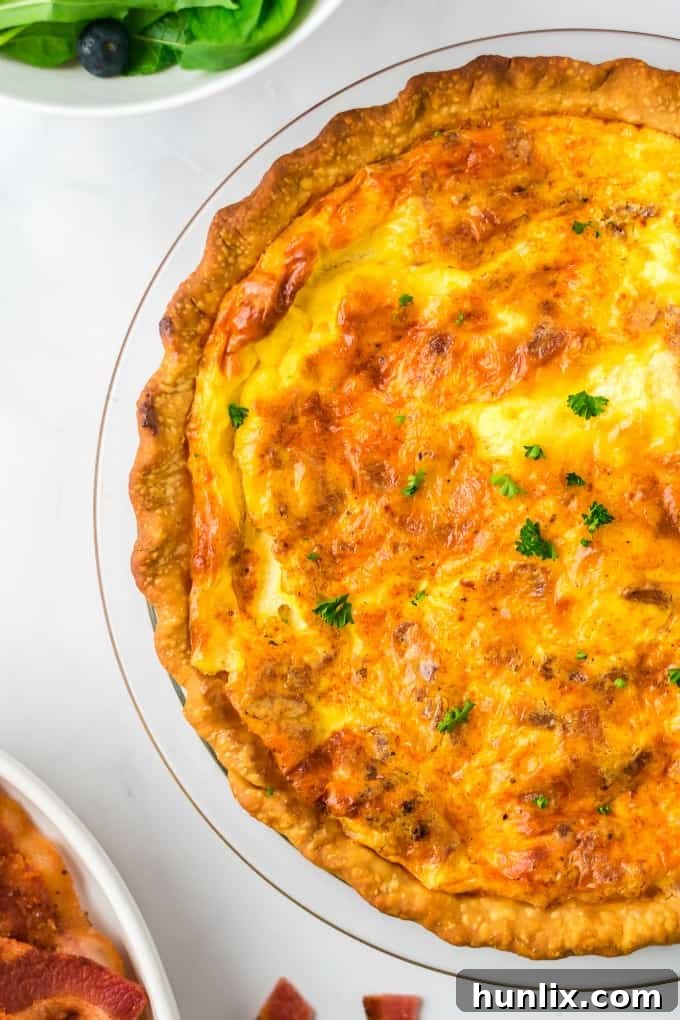
While quiche recipes are incredibly diverse, Quiche Lorraine stands out as arguably the most famous and beloved variation of this delicious egg-and-custard pie. Its origins are deeply rooted in French culinary history, specifically in the Lorraine region of northeastern France.
The term “quiche” itself is believed to derive from “Kuchen,” the German word for cake, reflecting the historical cultural exchange in the region. The original “Lorraine Kuchen” was an open-faced pie with a filling of eggs and cream or milk, often served as a simple peasant dish. The addition of bacon (or lardons, cured pork belly) eventually became the defining characteristic that transformed it into what we know today as Quiche Lorraine.
Though the first documented use of “Quiche Lorraine” in English appeared around 1925, the dish itself dates back to at least the early 1800s in France, with similar savory pies being present in European cuisine for centuries prior. What specifically distinguishes it as “Quiche Lorraine” is the inclusion of bacon. All quiches fundamentally consist of an egg and cream (or milk) mixture, but the specific additions of meats, cheeses, vegetables, and spices define their unique identities. This iconic combination of smoky bacon and creamy Swiss cheese nestled in a tender crust cemented Quiche Lorraine’s place as a global culinary favorite.
Tips for Making Quiche Lorraine Ahead of Time
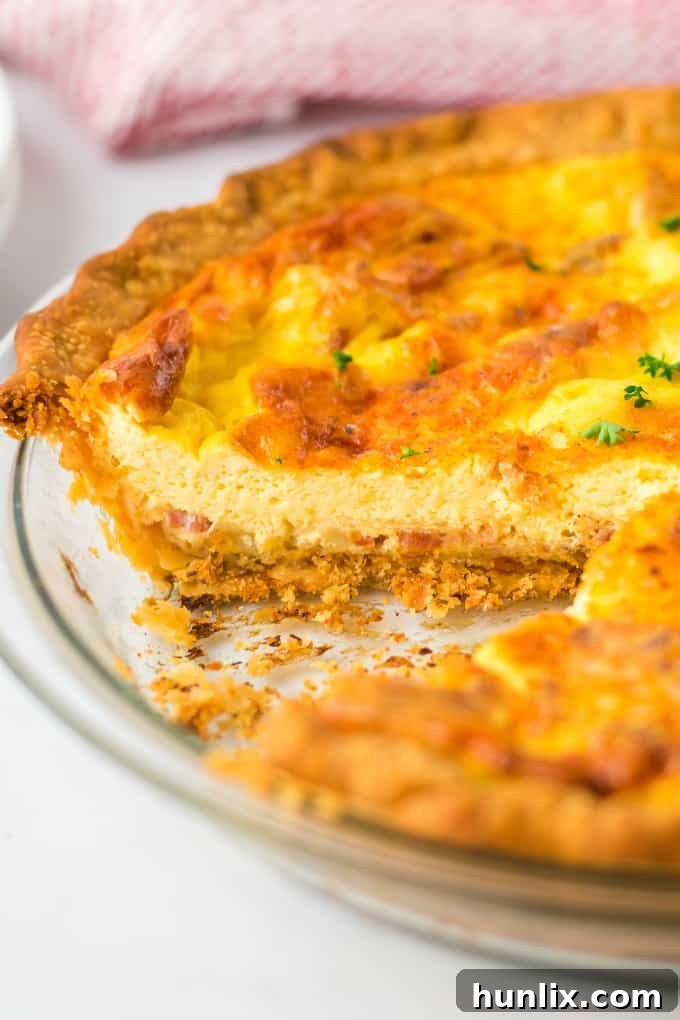
Quiche Lorraine is an excellent dish for meal prepping, offering several options to prepare it in advance, making your mornings or busy evenings much smoother.
- Fully Baked and Frozen: If you’re planning far in advance, you can bake the quiche completely, allow it to cool to room temperature, wrap it tightly in plastic wrap and then aluminum foil, and freeze it. This method is ideal for long-term storage, allowing you to have a delicious homemade meal ready whenever you need it. When reheating from frozen, thaw it in the refrigerator overnight or bake directly from frozen (see reheating instructions below).
- Fully Baked and Refrigerated: For shorter-term planning, you can bake the quiche and store it in the refrigerator for up to 2 days. To reheat, let it sit on the counter for about 15-20 minutes to come closer to room temperature, ensuring more even reheating. Cover the crust edges with foil to prevent over-browning and warm it in a 350-degree F (175 degrees C) oven for approximately 15-20 minutes, or until heated through. Never leave a quiche out at room temperature for more than 2 hours to avoid bacterial growth.
- Uncooked and Refrigerated: For ultimate freshness on the day of serving, you can assemble the entire quiche – par-baked crust, fillings, and custard – the night before. Cover it tightly with plastic wrap and refrigerate for no more than 24 hours. Before baking, let it sit on the counter for about 30 minutes to an hour to take the chill off. This helps prevent the crust from becoming too hard and allows for more even baking. Then, proceed with the baking instructions as usual.
Creative Ingredient Substitutions and Additions
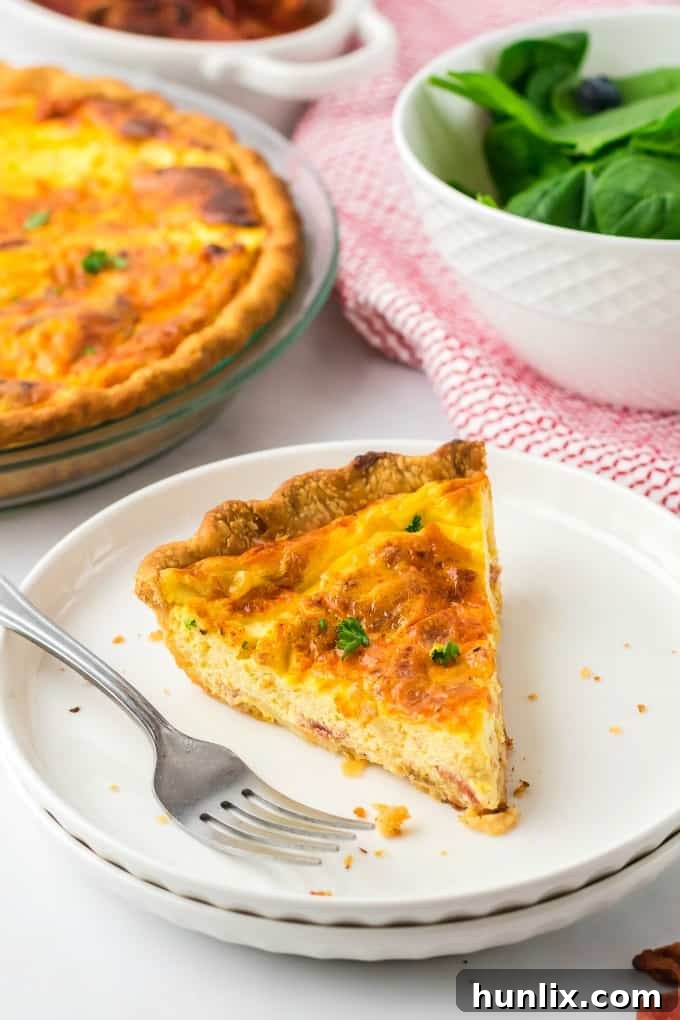
One of the best aspects of quiche is its adaptability. While Quiche Lorraine is a classic, you can easily customize it to suit your preferences or what you have on hand.
- Cheese Varieties: Swiss cheese is traditional, but feel free to experiment. Cheddar, Gruyère, mozzarella, Colby Jack, or a blend of these can all provide a delicious, melty richness. For a sharper, drier quiche, consider adding some grated Parmesan. For a gourmet touch, try a smoked Gouda.
- Protein Alternatives: If bacon isn’t your preference, or you want to add variety, consider cooked ham, sausage, or even smoked salmon for a different flavor profile. Make sure any meat is cooked and drained of excess fat before adding it to the quiche.
- Vegetable Power-Ups: Adding vegetables transforms your quiche into a more substantial and nutritious meal. Some popular and delicious additions include:
- Mushrooms (sautéed)
- Spinach (wilted and squeezed dry)
- Asparagus (blanched and chopped)
- Caramelized onions or sautéed bell peppers
- Cooked and diced potatoes
- Zucchini or squash (shredded and squeezed dry)
- Cherry tomatoes (halved)
- Green onions or chives (for a fresh, mild onion flavor)
The possibilities are truly endless. If you enjoy a particular ingredient, chances are it will work wonderfully in a quiche!
- Dairy Adjustments: While half and half provides an ideal richness, you can adjust the fat content. For a richer quiche, use heavy cream. For a slightly lighter version, whole milk can be used, though the texture will be less creamy.
How to Freeze Quiche for Future Enjoyment
Freezing quiche is a fantastic way to prepare meals in advance for those busy nights when cooking feels like a chore. Whether you’ve made a large batch or simply have leftovers, quiche freezes beautifully.
To freeze a fully baked quiche:
- Allow the quiche to cool completely to room temperature. This is critical to prevent ice crystals from forming, which can affect texture.
- Wrap the cooled quiche tightly in at least two layers of plastic wrap.
- Follow with a layer of aluminum foil to protect against freezer burn.
- Place the wrapped quiche in a freezer-safe bag or container.
- It can be stored in the freezer for up to 2-3 months.
You can freeze the entire quiche or individual slices for portion control. Label with the date for best quality.
Reheating Quiche: Bringing it Back to Life
The oven is generally the best method for reheating quiche, whether it’s a single slice or an entire pie, as it helps maintain its texture and prevent sogginess. However, the microwave and toaster oven are also viable options for smaller portions if time is of the essence. The key is to ensure the internal temperature reaches 165 degrees F (74 degrees C) for food safety.
- From the Refrigerator (Whole Quiche or Slices):
- Preheat your oven to 350 degrees F (175 degrees C).
- For a whole quiche, cover the entire pie loosely with aluminum foil to retain moisture and prevent the crust from over-browning. For slices, you can place them directly on a baking sheet.
- Bake for approximately 15-20 minutes, or until thoroughly heated through.
- From Frozen (Whole Quiche or Slices):
- Preheat your oven to 350 degrees F (175 degrees C).
- Place the frozen quiche (covered loosely with foil) directly into the oven. Avoid using a higher temperature to speed up thawing, as this can lead to uneven cooking and a burnt crust.
- Bake for about 30-45 minutes for slices, or 45-60 minutes for a whole quiche, or until the center is thawed and heated through.
- Remove the foil for the last 5-10 minutes if you want a crisper crust.
- Microwave (Slices Only):
- Place a single slice on a microwave-safe plate.
- Heat for 1-2 minutes, checking at 30-second intervals until warmed through. Be mindful that the crust might not be as crisp, and the texture can sometimes be slightly altered.
- Toaster Oven (Slices Only):
- Place a slice in the toaster oven at 350 degrees F (175 degrees C) for 10-15 minutes, or until heated and the crust is crisp. This is a great option for a single serving.
Always ensure the quiche is fully heated through before serving. If you’re reheating while preparing other dishes, you can adjust your oven temperature lower to keep it warm without overcooking.
Other Amazing Recipes to Try…
If you love this Quiche Lorraine, you might also enjoy exploring these other delicious and easy recipes:
- Hamburger Quiche
- Bacon, Spinach, and Mushroom Crustless Quiche
- Hash Brown Quiche
- Slow Cooker Spinach and Feta Quiche
- Bacon and Potato Quiche
- Spinach Mushroom Quiche
Do you have any incredible traditional recipes that have been passed down through your family? I’m always eager to discover new culinary treasures! Share your favorites with me on Instagram @simplystacieblog, on Facebook at Simply Stacie, and on Pinterest @SimplyStacie. I’d love to hear how you enjoyed this Quiche Lorraine and my other recipes!

Quiche Lorraine
Created by: Stacie Vaughan
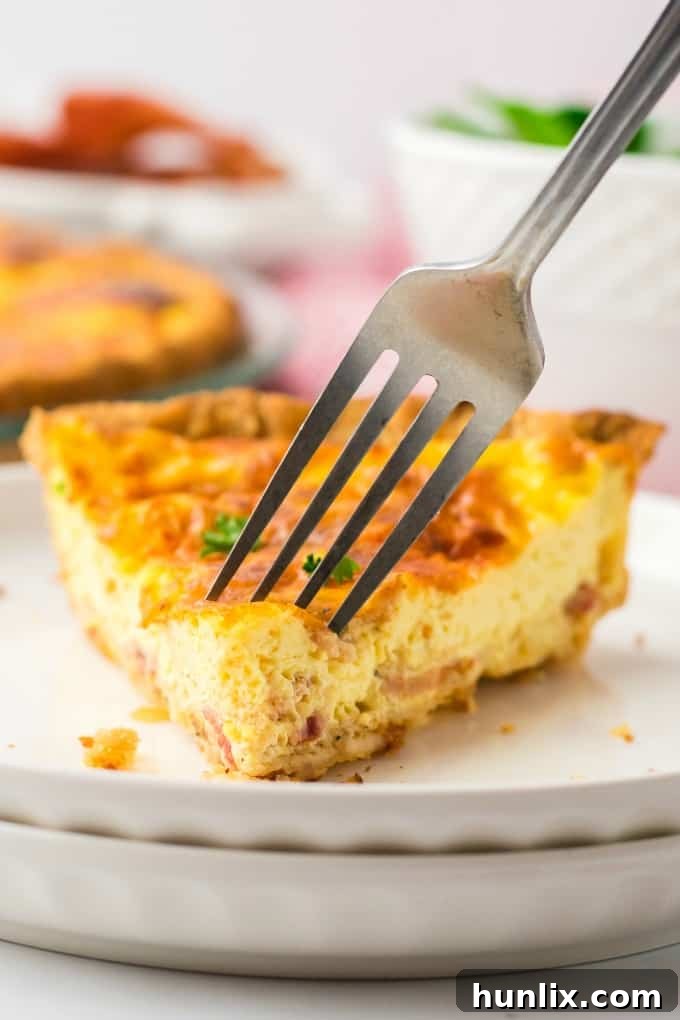
Easy and quick to prepare, this breakfast or brunch recipe will quickly become a weekly staple. It’s full of flavor that comes from just the right combination of bacon, cheese, half and half and eggs. Plus a little nutmeg and paprika to take it to the next level.
Servings: 6
Prep Time: 10 minutes
Cook Time: 1 hour
Total Time: 1 hour 10 minutes
Ingredients
- 1 pie crust (recommended: Pillsbury Refrigerated Pie Crust)
- ½ lb bacon (cooked and chopped)
- 2 cups half and half
- 4 large eggs
- ½ tsp salt
- ½ tsp pepper
- ¼ tsp ground nutmeg
- ¼ tsp paprika
- 1 cup Swiss cheese (shredded)
Instructions
- Bake your pie crust for a couple minutes less than suggested on the package (e.g., 8 minutes if 10 is recommended). Don’t forget to prick the sides and bottom of your crust with a fork before baking to prevent puffing.
- Preheat the oven to 425℉ (220℃).
- Add the chopped bacon and shredded cheese evenly into the par-baked crust.
- In a large bowl, whisk together the eggs, spices (salt, pepper, nutmeg, paprika), and half and half until well combined. Pour this mixture into the crust over the bacon and cheese. Gently stir the bacon and cheese into the egg mixture to ensure even distribution and prevent clumping at the bottom.
- Bake in the oven for 15 minutes at 425℉ (220℃). Then, reduce the heat to 375℉ (190℃) and bake for another 45 – 50 minutes. If the crust edges start to brown too much, cover them with strips of aluminum foil. Your quiche is cooked when it’s golden brown and fully set in the center (no jiggle).
Notes
- Cover your pie crust with tin foil: If your quiche crust is browning too quickly, add a few strips of tin foil around the edges and fold them over to cover the crust. This is often necessary about 30 minutes into the main baking process.
- Stir your filling: After pouring the egg mixture into the crust, gently stir the bacon and cheese at the bottom. This ensures they are well mixed with the filling and prevents them from settling into a dense clump at the bottom of the quiche.
Equipment
- Whisk
- Pie server
- 9-inch pie pan
Nutrition
The following nutritional information is an estimate based on commonly used ingredients and may vary. It should not be considered a substitute for a professional nutritionist’s advice.
- Serving: 1 slice (approx. 1/6th of pie)
- Calories: 534kcal
- Carbohydrates: 20g
- Protein: 27g
- Fat: 38g
- Saturated Fat: 17g
- Polyunsaturated Fat: 19g
- Trans Fat: 1g
- Cholesterol: 208mg
- Sodium: 1084mg
- Fiber: 1g
- Sugar: 5g
Course: Breakfast, Brunch
Cuisine: American (with French influence)
Keyword: Quiche Lorraine, Easy Quiche, Savory Pie