In the intricate dance of modern life, managing personal finances can often feel like a juggling act. With bills arriving from various sources, at different times, and with distinct due dates, it’s remarkably easy for important payments to slip through the cracks. A haphazard bill organizing system – or worse, no system at all – can lead to significant financial repercussions, a lesson I learned the hard way.
Years ago, before I truly took charge of my financial landscape, my approach to bill payments was alarmingly simple: I relied entirely on my memory. I genuinely believed I could keep track of every due date and exact amount in my head. A formal budget was a foreign concept, and the idea of a dedicated bill payment organizer seemed utterly unnecessary. My “system” involved little more than tossing bills into a designated basket, hoping my mental calendar would do the rest. Predictably, this chaotic method was a recipe for disaster.
My wake-up call arrived in the form of a stern credit card statement. It indicated two missed payments and warned of an imminent interest rate hike if I didn’t settle the outstanding balance immediately. The shock was profound, bordering on panic. It was a stark realization: I needed to get organized, or my financial well-being and credit score would undoubtedly suffer. This pivotal moment sparked a complete overhaul of my money management habits. Today, many years later, I’ve transformed my financial life. I never miss a payment, our household finances are meticulously organized, and my husband, John, affectionately calls me “the bill-paying machine,” entrusting me with all our financial duties.
The Hidden Costs of Disorganized Bills: Why You Can’t Afford Chaos
The consequences of a disorganized bill payment system extend far beyond the occasional late fee. While a small late charge might seem minor, these incidents can accumulate rapidly, inflicting significant damage on your financial health and peace of mind. Consider these hidden costs:
- Escalating Late Fees: Most companies impose penalties for overdue payments. These fees can range from a few dollars to substantial percentages of your balance, quickly eroding your budget.
- Increased Interest Rates: Missing payments, especially on credit cards or loans, often triggers penalty interest rates. This means future balances will accrue interest at a much higher rate, making it harder to pay off debt.
- Damaged Credit Score: Payment history is the most critical factor in your credit score. Even a single missed payment can negatively impact your score, making it difficult to secure loans, mortgages, or even rent an apartment in the future.
- Stress and Anxiety: The constant worry about upcoming bills, the fear of missing a payment, and the scramble to find forgotten statements can take a serious toll on your mental health. Financial stress is a pervasive problem, but it’s largely preventable.
- Lost Opportunities: A poor credit score can prevent you from accessing better financial products, such as lower interest rates on car loans or credit cards, effectively costing you more in the long run.
Why a Robust Bill Organization System is Non-Negotiable for Financial Freedom
Establishing a reliable bill organization system isn’t just about avoiding penalties; it’s about reclaiming control over your finances, fostering peace of mind, and paving the way for a more secure financial future. When you have a clear overview of your income and expenditures, you gain:
- Financial Clarity: You know exactly where your money is going, allowing you to identify areas for savings or adjust your budget proactively.
- Peace of Mind: The anxiety of forgotten bills dissipates, replaced by confidence and a sense of calm.
- Improved Credit Health: Consistent, on-time payments are the bedrock of an excellent credit score, opening doors to better financial opportunities.
- Empowerment: Taking charge of your bills empowers you to make informed financial decisions, rather than feeling overwhelmed by them.
Introducing Your Essential Bill Payment Organizers: The Path to Order
One of the foundational steps I took to bring order to my finances was centralizing all my bill information. This simple yet powerful act of writing everything down in one accessible place completely transformed my approach. To help you achieve similar clarity and ensure you never miss an important payment again, I’ve created a set of free, printable bill organizing tools. Having a structured system in place will not only save your sanity but also safeguard your credit rating, which will undoubtedly thank you for the diligent effort. While some might think they can keep it all in their head, the risk of forgetting a crucial detail is simply too high. Let these printables be your external memory and guide.
The Monthly Bill Payment Organizer: Your Calendar for Financial Obligations
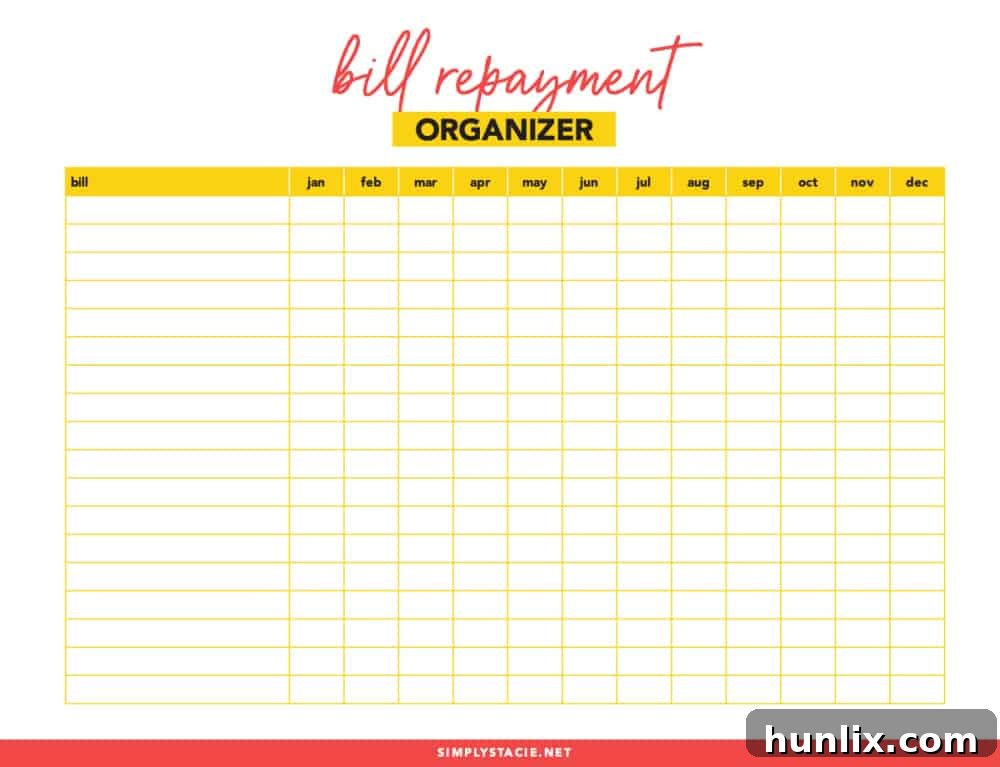
The first invaluable tool in this set is the Monthly Bill Payment Organizer. This printable allows you to systematically list out all your recurring monthly bills for the entire year. By recording each bill’s name, its typical due date, and the expected amount, you gain an immediate, comprehensive overview of your financial obligations. At a single glance, you can easily identify all upcoming payments, helping you allocate funds and plan accordingly.
Once a bill is paid, a simple “X” in the corresponding column serves as a clear indicator that the task is complete. This organizer is particularly effective for those predictable, regular bills that arrive like clockwork each month – think power, phone, internet, cable, heating, rent/mortgage, and car payments. Knowing these obligations are consistently on your radar is crucial.
Beyond tracking, this organizer acts as an early warning system. If, for any reason, a bill doesn’t arrive in your physical mailbox or email inbox, you’ll immediately notice its absence. Remember, companies still expect their payments, and “I never received the bill” is rarely an accepted excuse. Staying proactive with this organizer ensures you’re always aware of what’s due, allowing you to proactively reach out to service providers if a statement goes missing. This vigilance not only prevents late fees but also significantly contributes to maintaining an impeccable payment history, which is fundamental for a healthy credit score.
Unlocking Clarity with the Household Bill Organizer
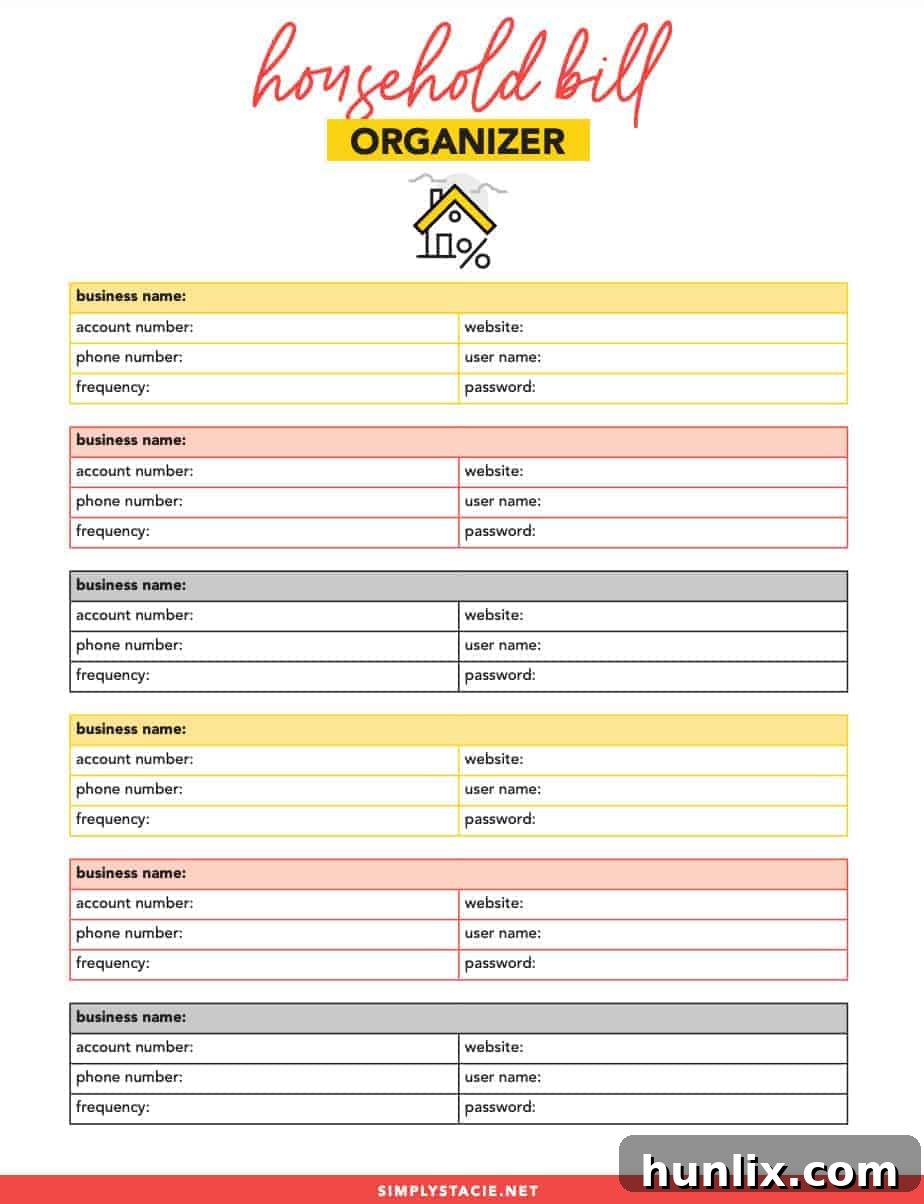
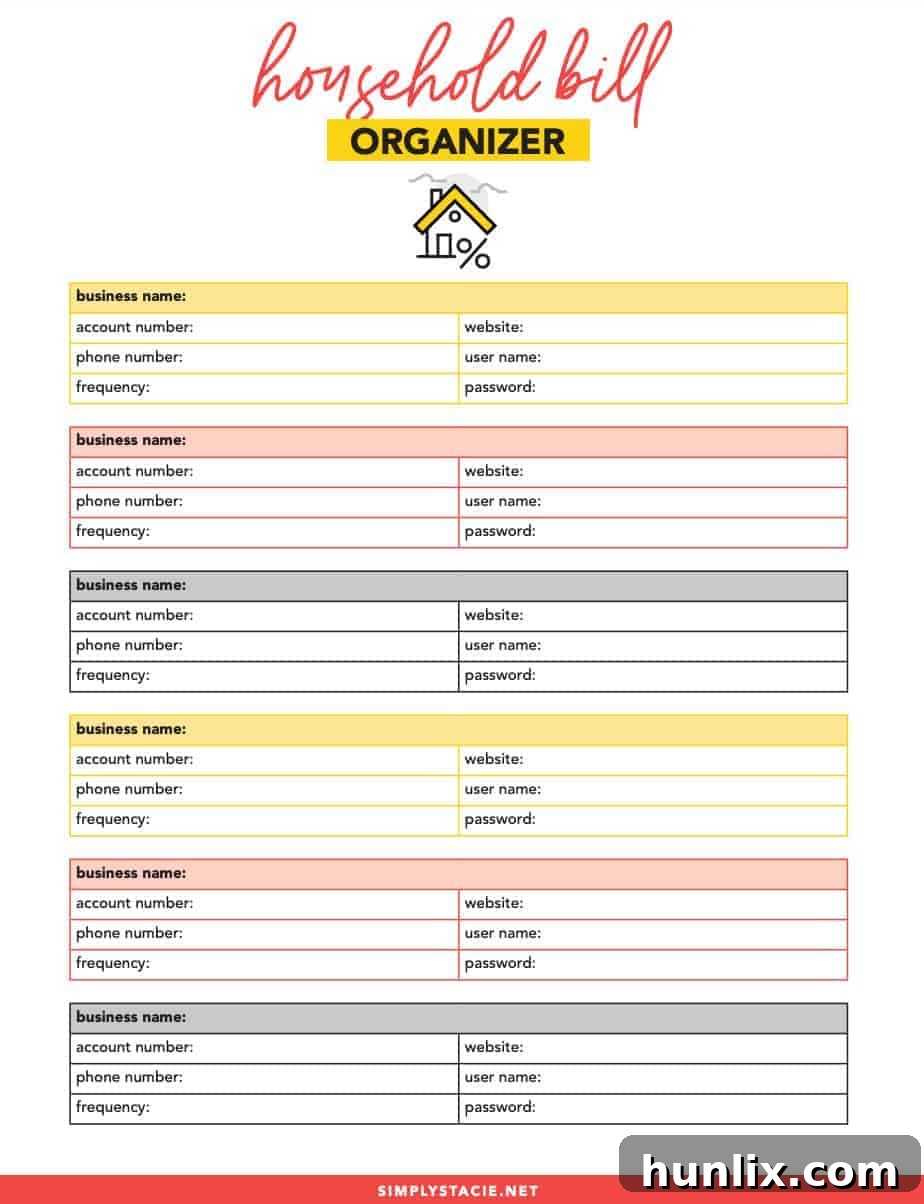
While the monthly payment tracker is excellent for day-to-day bill management, the Household Bill Organizer takes your financial clarity to the next level. I personally find immense value in having all critical information about my various accounts consolidated in one central, accessible location. This printable provides a summary of all your household bills, capturing essential details such as account numbers, customer service phone numbers, website login details (where appropriate), and even specific billing cycles or contact persons. Imagine needing to call your internet provider about an unexpected charge; instead of frantically searching through old statements or logging into multiple portals, all the necessary information is at your fingertips.
More Than Just a List: Practical Applications of Your Household Organizer
This comprehensive Household Bill Organizer has proven its worth countless times in my own experience. It’s more than just a list; it’s a vital reference guide for various situations. For example, during unexpected events like a power outage, the last thing you want to do is hunt for an old electricity bill to find the utility company’s emergency number. With this organizer, you can simply glance at the printable and immediately locate the correct contact information, saving valuable time and reducing stress in urgent situations.
Beyond emergencies, consider its utility when:
- You need to dispute a charge or inquire about a billing discrepancy.
- You’re setting up new online payment accounts and require account numbers.
- You’re moving to a new residence and need to transfer or cancel services.
- You want to review your service plans or explore better deals with providers.
- A family member needs to access vital account information in your absence.
While it’s wise to retain old bills for record-keeping purposes, there’s no need for them to clutter your kitchen counters or overflow your filing cabinets. This organizer serves as your primary reference, ensuring that critical data is always readily available without the need to dig through stacks of paper. It streamlines information access, making financial management effortless and organized.
Beyond Printables: Holistic Strategies for Financial Order
While these printables provide an excellent foundation for organizing your bills, a truly robust financial system often integrates several complementary strategies. Consider adopting some of these additional tips to elevate your financial organization:
- Embrace Digital Tools (Wisely): Alongside physical printables, digital budgeting apps, online banking portals, and calendar reminders can significantly enhance your system. Many banks offer bill pay services that allow you to schedule payments in advance. Just be sure to always cross-reference with your printables to avoid double payments or missed deadlines.
- Create and Stick to a Budget: The original me, with no budget, was setting myself up for failure. A budget is your financial roadmap. It helps you understand your income versus your expenses, ensuring you have enough funds for your bills and savings goals. Integrate your bill payment organizer directly into your budgeting process.
- Automate Payments (With Caution): For highly predictable bills like rent, mortgage, or fixed loan payments, setting up automatic payments can be incredibly convenient. However, exercise caution. Always ensure you have sufficient funds in your account to cover these payments, and regularly review your bank statements to confirm the payments have gone through correctly and for the correct amounts. Unexpected charges or fluctuations in variable bills (like utilities) make automation less suitable for those.
- Regular Financial Reviews: Dedicate a specific time each week or month (e.g., Sunday mornings or the first of the month) to review your upcoming bills, check your bank accounts, and update your organizers. This consistent routine reinforces good habits and catches potential issues early.
- Digital File Management: Consider scanning important bills and storing them in a secure, cloud-based folder system. This creates a digital backup and reduces paper clutter. Label files clearly (e.g., “Utility Bills – 2024,” “Credit Card Statements – Jan 2024”) for easy retrieval.
- Shred Unnecessary Documents: Once bills have been paid and recorded (and you no longer need the physical copy for tax or other purposes), shred them to protect your personal information.
By combining the tangible benefits of these printable organizers with smart digital strategies and consistent financial habits, you can build a comprehensive system that minimizes stress, maximizes savings, and sets you on a clear path toward financial stability.
Take Control Today: Download Your Free Organizers!
Taking the first step towards organized finances is often the hardest, but with these free, user-friendly printables, it becomes significantly easier. You don’t have to navigate the complexities of bill management alone. These tools are designed to simplify your life, ensure timely payments, and help you regain peace of mind. I am constantly working on new resources and printables to support your journey towards a more organized life, so make sure to keep an eye out for future updates. In the meantime, don’t miss out on taking immediate control of your bills.
How do you keep your bills organized? Share your best tips in the comments below!