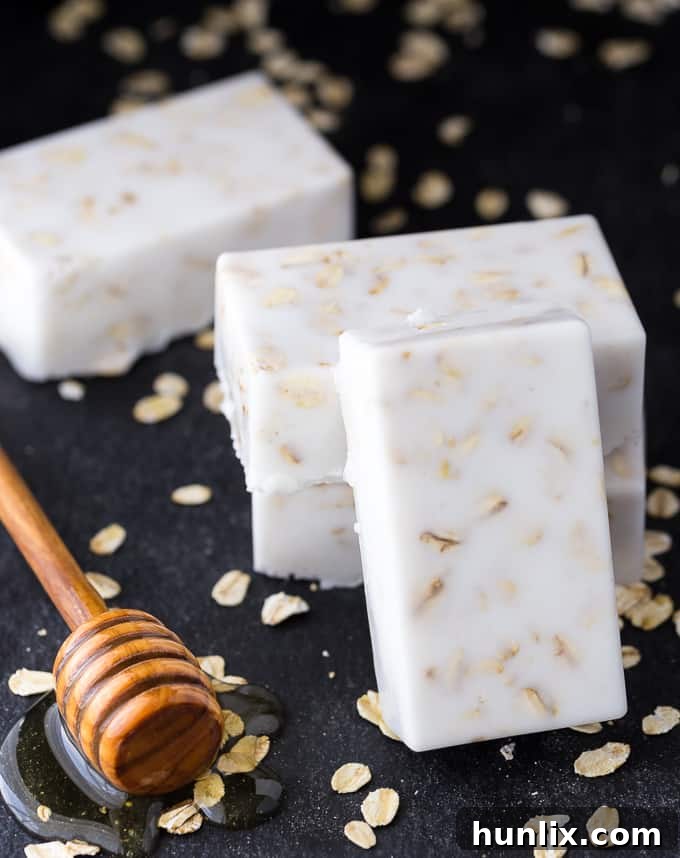
DIY Honey Oatmeal Goat’s Milk Soap: The Ultimate Guide for Soothed, Glowing Skin
Unlock the secret to beautifully soft, bright, and calm skin with our incredibly easy DIY Honey Oatmeal Goat’s Milk Soap recipe. Crafted with nature’s finest ingredients, this homemade soap is a luxurious treat that nourishes and revitalizes even the most sensitive skin. Forget harsh chemicals and expensive store-bought alternatives; embrace the simplicity and effectiveness of natural skincare right from your own home.
We’ve combined the moisturizing power of honey, the soothing properties of oatmeal, and the creamy goodness of a goat’s milk melt and pour soap base to create a bar that doesn’t just cleanse, but truly cares for your skin. This comprehensive guide will walk you through every step, ensuring you can confidently create your own batch of this skin-loving marvel that leaves your skin feeling amazing after every wash.
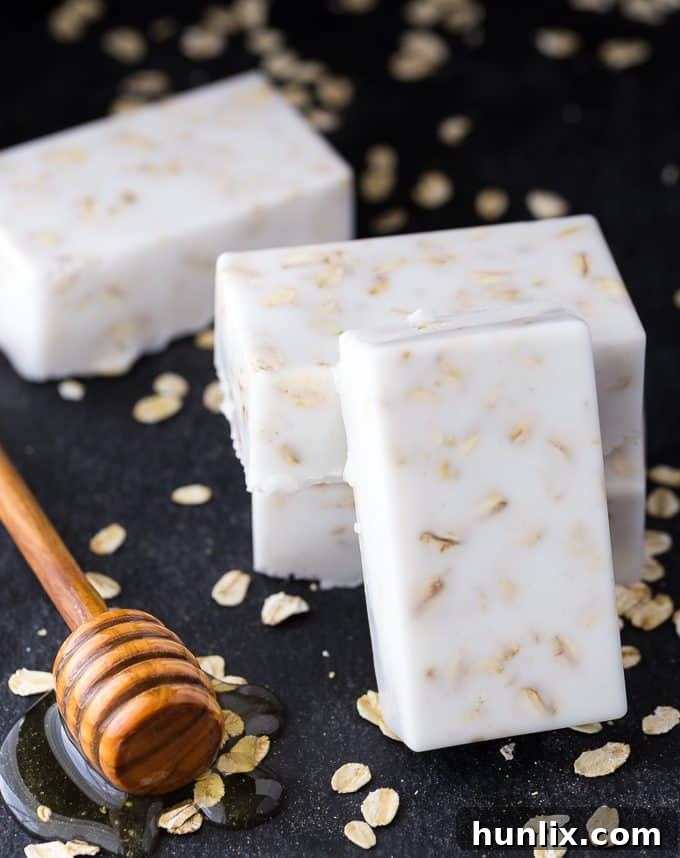
The Power of Natural Ingredients for Your Skin
The beauty of crafting your own skincare products lies in the ability to choose pure, beneficial ingredients. For this particular soap, we’ve harnessed the incredible properties of three natural superstars: honey, oatmeal, and goat’s milk. Each contributes uniquely to the soap’s ability to soothe, hydrate, and brighten your complexion, making it an ideal solution for those with dry or sensitive skin.
Honey: The Golden Elixir for Skin
Honey isn’t just a delicious sweetener; it’s a centuries-old skin savior! Its remarkable humectant properties mean it naturally draws moisture from the air and locks it into your skin, promoting a supple, dewy “glow” that feels incredibly soft to the touch. This natural moisturizer helps maintain skin elasticity and can even diminish the appearance of fine lines over time. Beyond hydration, honey boasts impressive antibacterial and anti-inflammatory qualities, making it excellent for calming irritated skin and potentially aiding in the fight against acne-causing bacteria. Rich in antioxidants, it also helps protect your skin from environmental damage, contributing to a youthful and healthy complexion. The best part? It’s often readily available in your pantry, making it a convenient and natural choice for homemade skincare.
Oatmeal: The Gentle Soother for Sensitive Skin
For centuries, oatmeal has been revered for its remarkable benefits for sensitive and irritated skin. I vividly recall my mother preparing soothing oatmeal baths for my sister when she suffered from eczema, a testament to its long-standing reputation as a natural remedy. Oatmeal contains compounds called avenanthramides, which are powerful anti-inflammatory and anti-itch agents. This makes it incredibly effective for alleviating discomfort associated with eczema, psoriasis, sunburn, and general skin irritation. Furthermore, finely ground oats act as a mild, natural exfoliant, gently buffing away dead skin cells without harshness, revealing smoother, softer skin beneath. Its natural saponins also provide a gentle cleansing action, making it a perfect addition for a truly calming and restorative soap, especially for those prone to dryness.
Goat’s Milk: The Nourishing Soap Base
The foundation of our luxurious soap is a high-quality goat’s milk melt and pour soap base. Goat’s milk itself is a powerhouse of skin-loving nutrients, including an abundance of vitamins such as A, D, B1, B6, B12, C, and E, all of which contribute to healthy skin cell function and regeneration. It’s also rich in lactic acid, a natural alpha-hydroxy acid (AHA) that provides gentle exfoliation. This helps to remove dead skin cells and promote a brighter, more even skin tone. Unlike harsher exfoliants, lactic acid is renowned for its mildness, making it suitable for even the most sensitive skin types. The unique fatty acid profile of goat’s milk creates a wonderfully creamy, moisturizing lather that leaves your skin feeling deeply nourished, rather than stripped and dry. It’s truly an ideal base for a soothing and enriching soap that cares for your skin with every use.
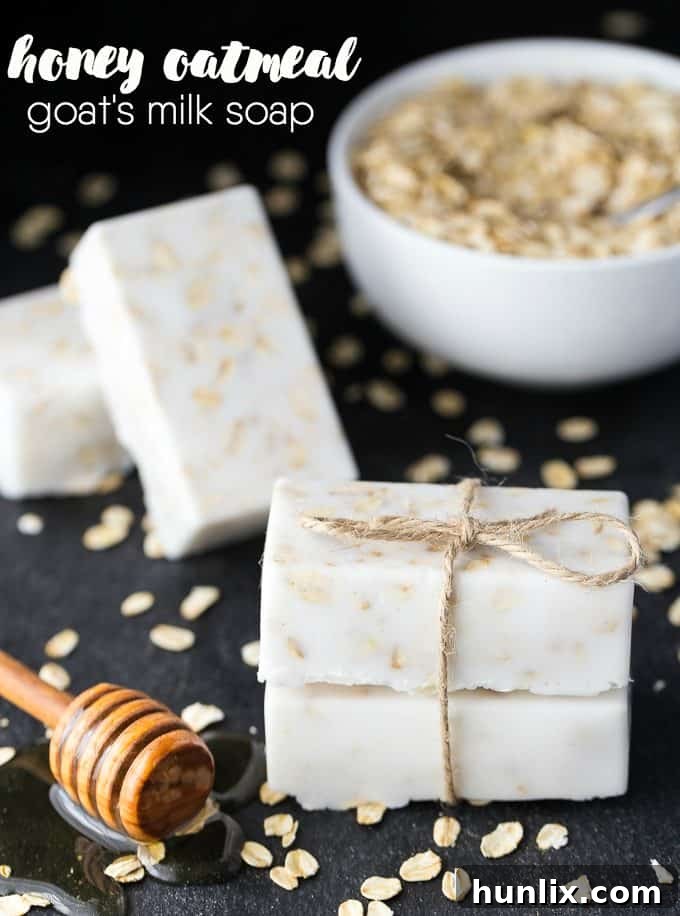
Why Choose DIY Soap Making? Unveiling the Benefits
Venturing into the world of DIY soap making, especially with the melt and pour method, opens up a realm of creative possibilities and practical benefits. It’s an empowering way to take control of what goes onto your skin and to enjoy a rewarding crafting experience. My soap recipes are designed to be incredibly straightforward, making them perfect for beginners who might be intimidated by traditional cold-process soap making.
The beauty of melt and pour soap bases is their simplicity and safety. You avoid working with lye directly, which is a caustic chemical used in traditional soap making. This means you can focus purely on adding beneficial ingredients and creating beautiful designs without the need for specialized safety equipment or extensive chemical knowledge. Melt and pour bases are also relatively inexpensive, allowing you to experiment with different additives and scents without a significant financial commitment. The entire process is quick, often taking less than an hour of active work, plus cooling time. This makes it an ideal project for a relaxing afternoon or a fun activity with friends or family, yielding instant gratification.
Beyond the ease, homemade soap allows for complete customization. You can tailor the soap to specific skin needs, add your favorite essential oils for aromatherapy benefits, or incorporate natural colorants for aesthetic appeal. It’s also an excellent way to avoid many of the synthetic fragrances, harsh dyes, and drying detergents often found in commercial soaps, which can irritate sensitive skin and exacerbate dryness. By choosing your own pure and wholesome ingredients, you ensure a gentler, purer product that your skin will truly thank you for. Plus, a beautifully crafted bar of handmade soap makes for a thoughtful and personal gift that truly shows you care!
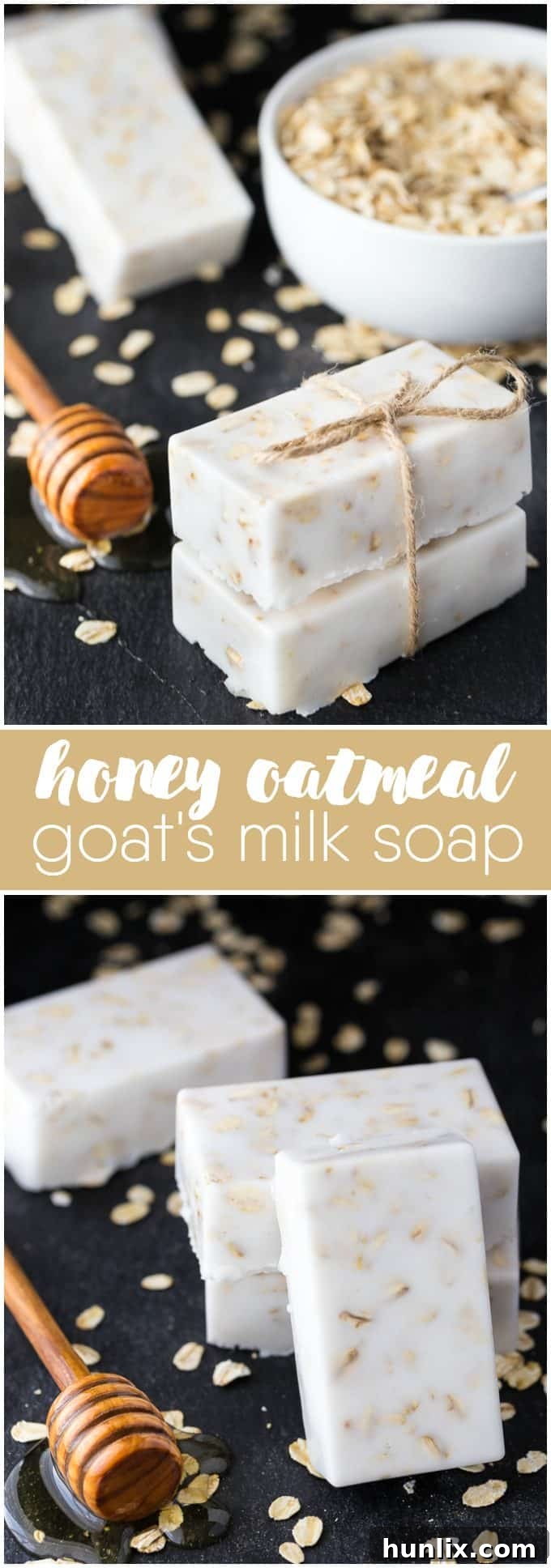
Ingredients for Your Soothing Honey Oatmeal Goat’s Milk Soap
Creating this nourishing soap requires just a few readily available items. Keep in mind that this post may contain affiliate links, which means if you make a purchase through them, I may earn a small commission at no extra cost to you. This helps support the creation of more helpful content like this!
Essential Ingredients:
- 1 lb Goat’s Milk Melt and Pour Soap Base: This forms the foundation of our soap, providing a creamy, rich lather and nourishing properties. Ensure it’s a high-quality base for best results.
- 2 tbsp Honey: Opt for raw, unfiltered honey for maximum skin benefits. Its humectant properties are unmatched.
- ¾ cup Rolled Oats: Quick oats or old-fashioned rolled oats work beautifully. You can lightly pulse them in a food processor for a finer, gentler exfoliation, or use them as is for a coarser scrub.
Optional Enhancements for Customization:
- Essential Oils (5-10 drops): For added fragrance and therapeutic benefits, consider soothing lavender for relaxation, calming chamomile for extra skin comfort, or rejuvenating frankincense for skin renewal. Always ensure essential oils are skin-safe and properly diluted.
- Vitamin E Oil (½ tsp): A powerful antioxidant that can help prolong the soap’s shelf life by preventing rancidity and provides additional skin nourishment, promoting healing.
- Colloidal Oatmeal (1 tbsp): For an even finer, more dispersed oatmeal benefit, particularly beneficial for extremely sensitive or irritated skin, as it mixes seamlessly without adding noticeable texture.
- Natural Clay (1 tsp): Such as French green clay for detoxification or pink kaolin clay for gentle cleansing, adding both color and extra skin benefits.
Honey Oatmeal Goat’s Milk Soap Recipe: Step-by-Step Instructions
This recipe is designed to be simple and enjoyable, yielding approximately 4 bars of soap, depending on the size of your chosen mold. The total time for active preparation and setting is roughly 50 minutes, making it a quick and highly rewarding project!
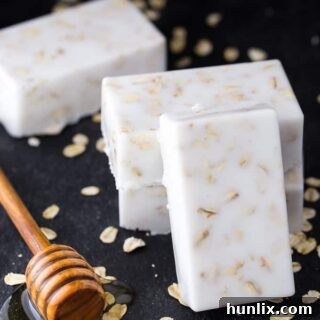
Your skin will feel absolutely amazing after washing with this simple DIY soap. The natural combination of honey and oats, combined with the creamy goat’s milk base, is the perfect trio to combat dry, sensitive skin, leaving it feeling incredibly soft, hydrated, and calm. This gentle formula is suitable for daily use on both face and body.
Honey Oatmeal Goat’s Milk Soap Recipe Details
Created by:
Stacie Vaughan
- Yields: Approximately 4 bars (depending on mold size)
- Prep Time: 10 minutes
- Melt & Mix Time: 5-10 minutes
- Setting Time: 40 minutes
- Total Time: Approximately 50 minutes
Ingredients
- 1 lb Goat’s Milk Melt and Pour Soap Base
- 2 tbsp Honey
- ¾ cup Rolled Oats (or quick oats)
- Optional: 5-10 drops of your favorite skin-safe essential oil (e.g., Lavender, Chamomile)
Instructions
-
Begin by carefully cutting your Goat’s Milk Melt and Pour Soap Base into small, uniform cubes, roughly 1-inch in size. This ensures even melting and speeds up the process. Place these cubes into a microwave-safe bowl that is large enough to comfortably hold the melted soap.
-
Microwave the soap base on high for an initial 30 seconds. After this first burst, remove the bowl and stir the soap vigorously with a spoon or spatula. Continue to microwave in short 10-second increments, stirring thoroughly after each interval, until the soap base is completely melted and forms a smooth, lump-free liquid. Be careful not to overheat it, as this can cause the soap to lose moisture, become brittle, or affect its scent if adding essential oils later. For a more controlled melt, you can also use a double boiler method on the stovetop.
-
Once the soap base is fully melted, stir in the ¾ cup of rolled oats. If you’ve opted to use any essential oils or other liquid additives (like Vitamin E oil), add them now and stir until all ingredients are well combined and evenly dispersed throughout the soap mixture. The mixture will begin to thicken slightly as the oats absorb some of the liquid.
-
Carefully pour the oat-infused soap mixture into your chosen silicone soap mold. Ensure you fill each cavity almost to the top, leaving just a tiny bit of space for the honey drizzle. Work relatively quickly, as melt and pour soap starts to set as it cools.
-
Immediately after pouring the soap into the molds, take your 2 tablespoons of honey. Drizzle a small amount of honey (about ½ teaspoon per bar) over the top surface of each soap bar in the mold. Using the end of a spoon, a toothpick, or a small stick, gently swirl the honey into the top layer of the soap. This creates a beautiful, rustic marbled effect and ensures the honey is aesthetically distributed on top of the bar.
-
Allow the soap to sit undisturbed at room temperature for approximately 40 minutes to an hour, or until it has completely hardened and cooled. To expedite the setting process, you can carefully place the mold in the refrigerator for about 20-30 minutes, ensuring it’s on a flat, stable surface.
-
Once fully set and firm to the touch, remove the bars from the silicone mold. This is usually very easy: simply turn the mold upside down and gently push on the back of each soap cavity until the bar pops out. If you encounter any difficulty, try gently pulling the edges of the silicone mold away from the soap first to release the suction.
-
Your luxurious Honey Oatmeal Goat’s Milk Soap is now ready to use! For optimal longevity and freshness, store any unused bars in an airtight container or wrap them individually in plastic wrap. This prevents them from attracting moisture from the air, which can sometimes lead to “sweating” in melt and pour soaps.
Essential Equipment Needed for Soap Making
- Silicone Soap Mold: Crucial for easy removal of your finished soap bars and for achieving beautifully shaped results.
- Microwave-safe Bowl (or Double Boiler): For safely melting the soap base without scorching.
- Spoon or Spatula: For stirring ingredients thoroughly and for the artistic swirling of honey.
- Measuring Spoons and Cups: For accurate ingredient quantities, ensuring consistent results every time.
Please note: The nutritional information sometimes provided for recipes is an estimate from online calculators and should not be considered a substitute for a professional nutritionist’s advice. While this is a soap recipe, we include this disclaimer for general awareness in the context of DIY product discussions.
Keywords: Honey Oatmeal Goat’s Milk Soap, DIY Soap Recipe, Natural Skin Care, Sensitive Skin Soap, Homemade Body Wash, Melt and Pour Craft, Skin Brightening Soap
Tips for Perfect Homemade Soap & Optimal Usage
Making your own soap is a satisfying experience, and with a few extra tips, you can ensure your bars are top-notch, long-lasting, and provide the best possible skincare benefits:
- Avoid Overheating the Base: When melting the soap base, avoid boiling it vigorously. High heat can cause the soap to lose moisture, become brittle, or develop an unpleasant texture. Gentle, consistent heat is key to a smooth, pourable consistency.
- Combat Air Bubbles: If you notice tiny air bubbles forming on the surface after pouring your soap into the mold, a quick spritz of rubbing alcohol (70% or 91%) can work wonders. Simply spray lightly over the surface immediately after pouring; the alcohol helps to burst the bubbles, leaving a smoother, more professional finish.
- “Curing” for Longevity: While melt and pour soap is technically ready once hardened, allowing it to “cure” for an additional day or two by leaving it exposed to the air in a dry environment can sometimes make it last longer. This allows any remaining surface moisture to evaporate, resulting in a firmer bar.
- Proper Storage is Key: To preserve the freshness, fragrance, and integrity of your finished soap bars, store any unused ones in an airtight container or individually wrapped in plastic wrap. Melt and pour bases can sometimes attract humidity from the air, leading to “sweating” (tiny beads of moisture on the surface) if not stored properly.
- Use a Draining Soap Dish: To maximize the life of your soap bar during use, always keep it on a well-draining soap dish between uses. This prevents it from sitting in standing water, which can cause it to dissolve prematurely and become mushy.
How to Best Use Your Honey Oatmeal Goat’s Milk Soap:
To experience the full benefits of this luxurious soap, simply wet the bar and your skin with warm water, then lather gently. Massage the creamy lather onto your skin using circular motions; the embedded oats will provide a mild, natural exfoliating action, while the honey and goat’s milk deeply moisturize and soothe. Rinse thoroughly with warm water. This soap is wonderfully gentle and effective enough for daily use on both your face and body, making it an excellent, all-natural choice for individuals with dry, sensitive, or easily irritated skin looking for a truly nourishing cleanse.
Customize Your Creation: Endless Possibilities for Your Homemade Soap
One of the most rewarding aspects of DIY soap making is the boundless opportunity to personalize your creations. While our core Honey Oatmeal Goat’s Milk Soap recipe is already fantastic and deeply nourishing, feel free to experiment with these creative ideas to make it uniquely yours:
- Different Natural Exfoliants: Expand beyond rolled oats! Instead of, or in addition to, oats, try finely ground coffee for an invigorating and cellulite-reducing scrub. Poppy seeds can add a unique visual and textural element, while dried lavender buds offer a fragrant and beautiful aesthetic. Ensure any additions are finely ground or smooth to avoid scratching the skin.
- Aromatherapy Benefits with Essential Oils: Introduce various skin-safe essential oils to create soaps with specific moods or therapeutic properties. Lemon or sweet orange essential oil can be incredibly uplifting and refreshing, while peppermint offers a cooling and stimulating sensation, perfect for morning showers. For deep relaxation, consider blends like frankincense and myrrh. Always research essential oil safety and appropriate dilutions for topical use.
- Natural Colorants for Visual Appeal: Enhance the visual appeal of your soaps with natural colorants. Spirulina powder can yield a beautiful soft green hue, turmeric powder offers a vibrant yellow (use very sparingly to avoid staining skin or surfaces), or incorporate various cosmetic clays (e.g., French green clay, pink kaolin clay) which not only add subtle color but also offer additional skin-benefiting properties like drawing out impurities or gently exfoliating.
- Additional Skin-Loving Additives: Consider incorporating other beneficial additives to boost your soap’s nourishing power. A swirl of pure aloe vera gel can provide extra soothing and hydration, while a sprinkle of finely ground almond meal can offer gentle exfoliation along with its moisturizing properties. Shea butter or cocoa butter, melted into the base, can also enhance the creamy texture and moisturizing feel.
- Layering Techniques: For a more advanced look, try layering different colored or scented soap mixtures in your mold. Allow each layer to partially set before pouring the next to create distinct stripes.
Embrace the creative freedom that DIY soap making offers. Each batch can be an opportunity to experiment and discover new favorite combinations, perfectly tailored to your personal preferences and skin needs.