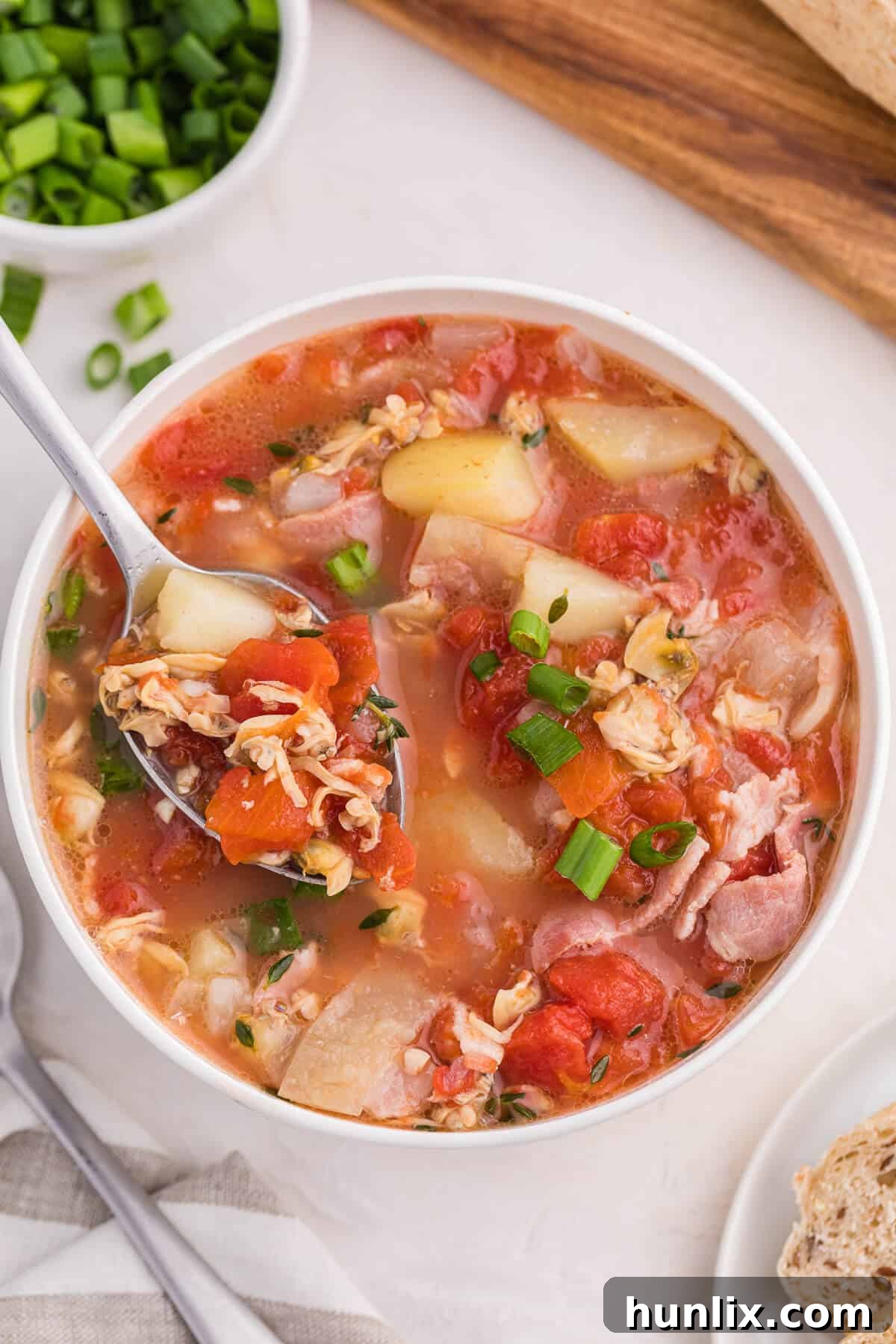
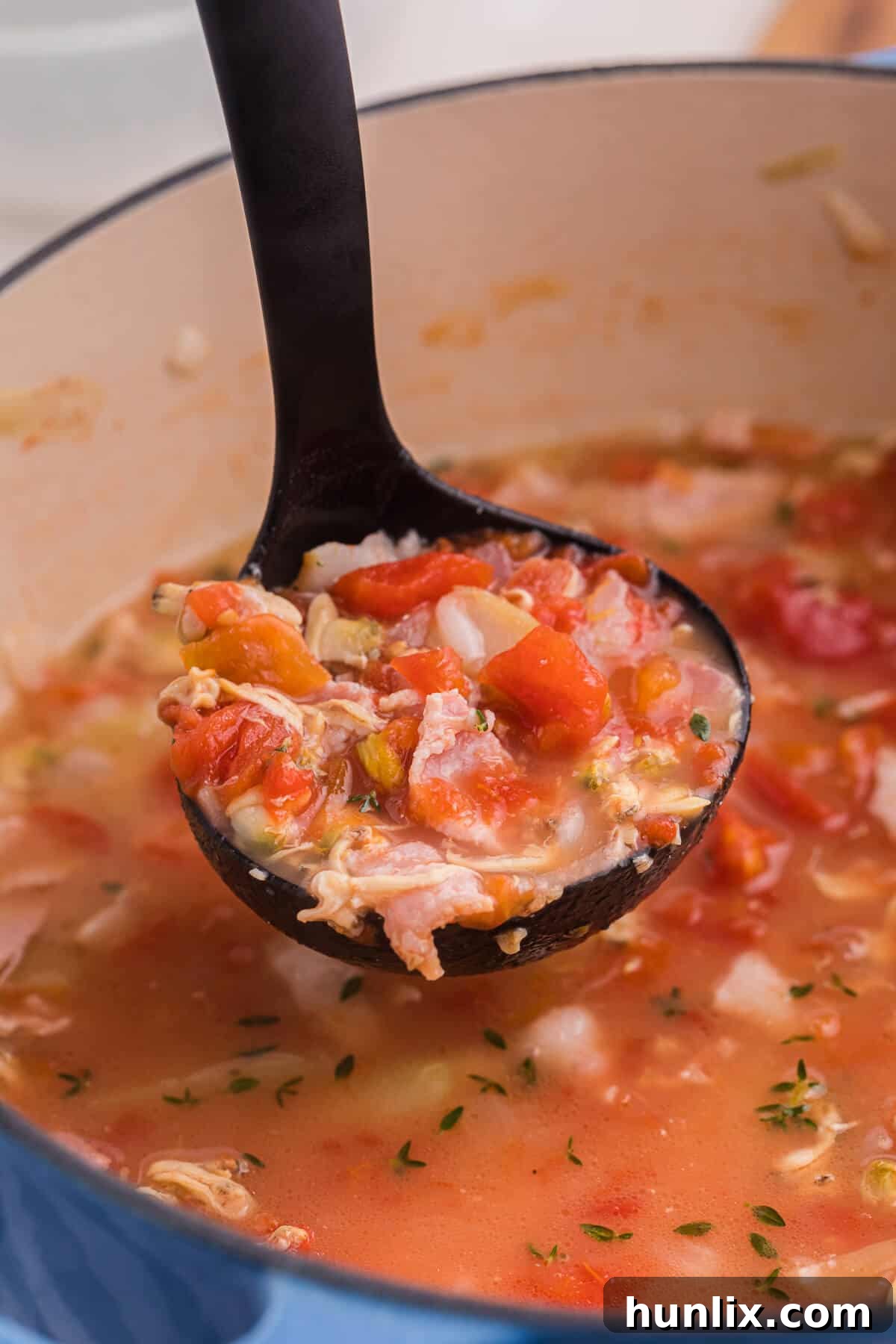
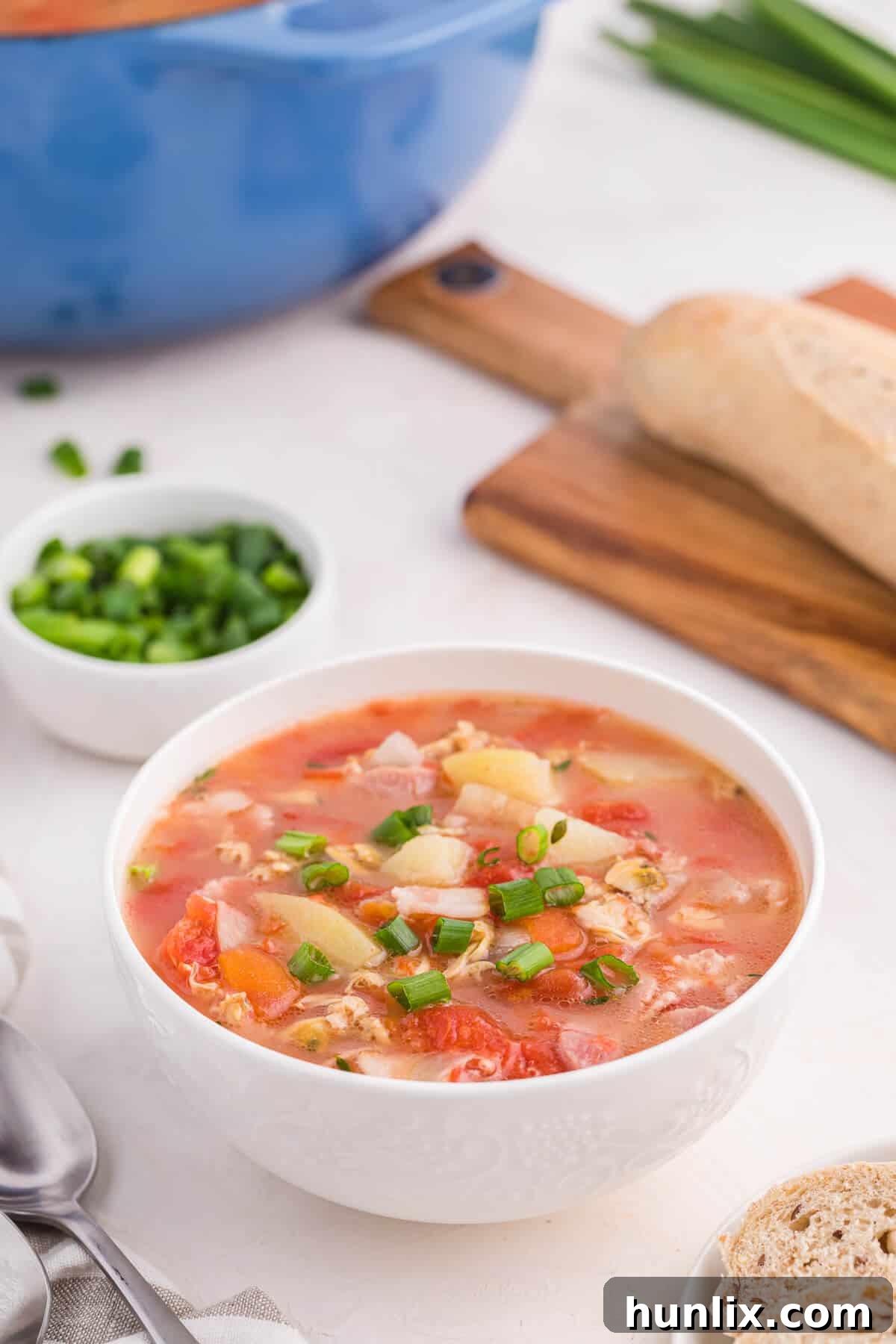
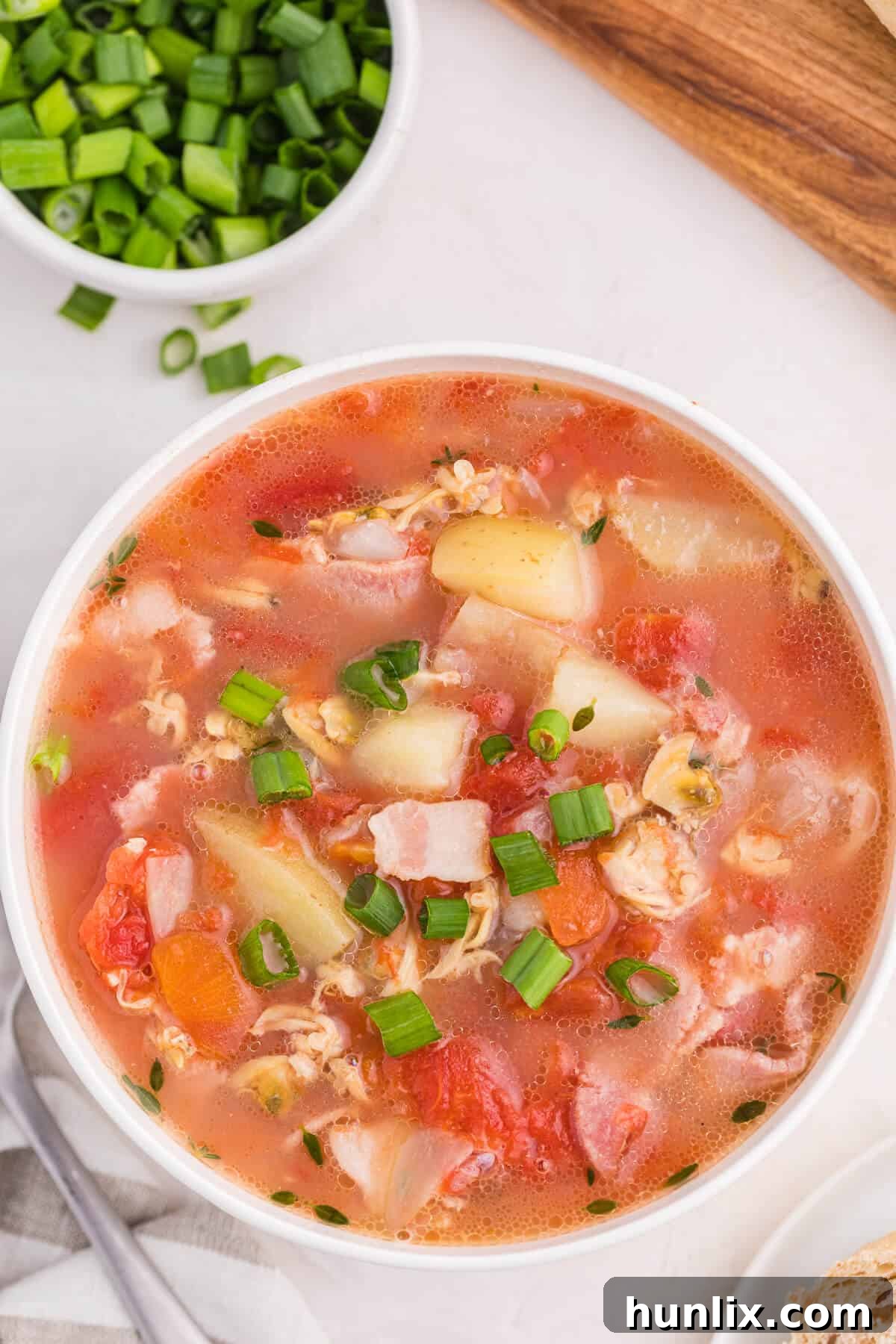
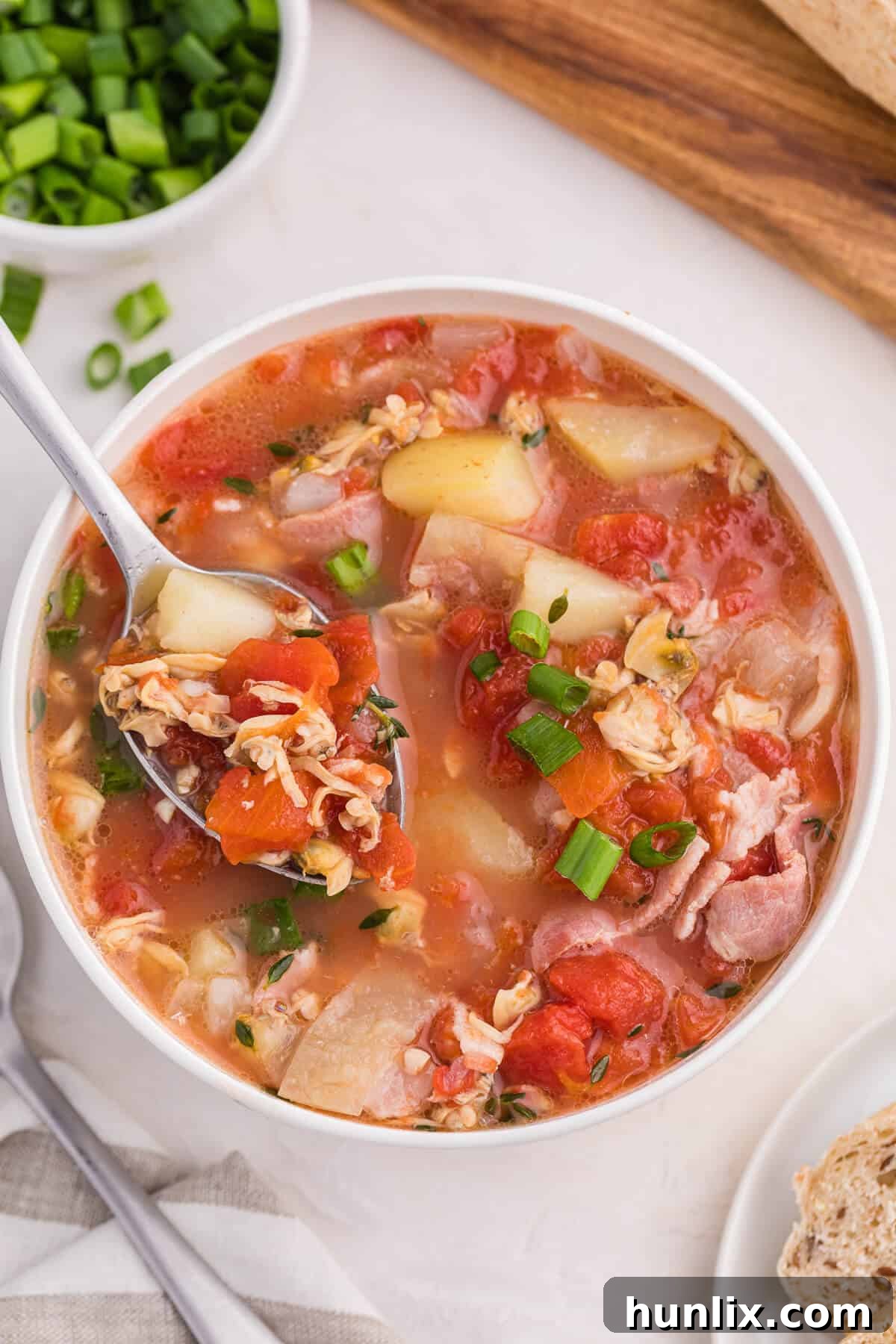
Warm up your soul with a hearty bowl of Manhattan Clam Chowder – a true American classic that promises comfort in every spoonful. This vibrant, tomato-based broth is brimming with succulent clams, tender potatoes, and savory bacon, creating a symphony of flavors that’s both invigorating and deeply satisfying. Perfect for a brisk evening or as a delightful starter, this robust red chowder offers a distinctive culinary experience, contrasting beautifully with its creamy New England cousin. Serve it alongside a crusty buttered roll or a fresh, crisp salad for an unforgettable meal.
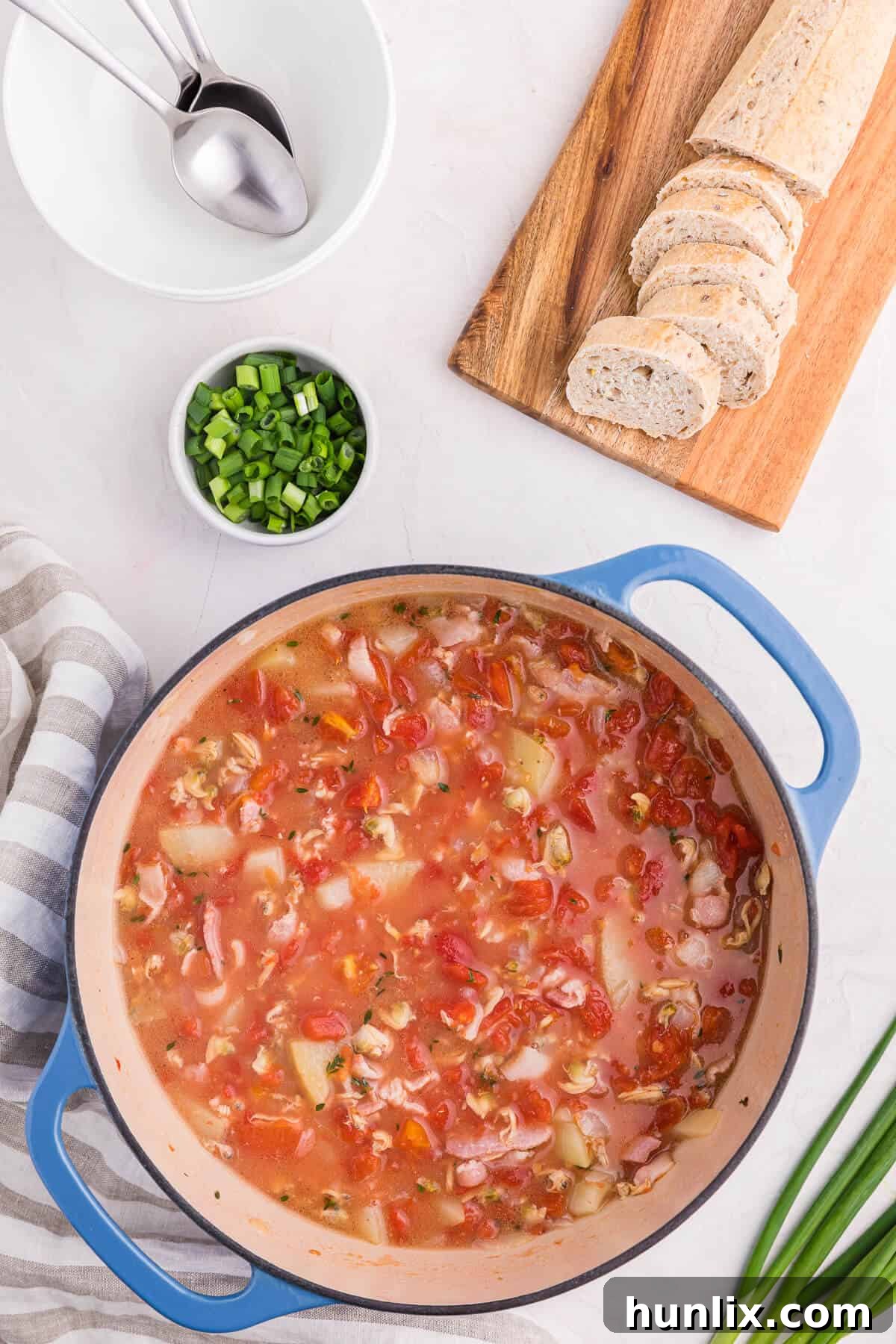
For many, clam chowder immediately brings to mind the rich, milky broth of New England. However, the Manhattan style offers a captivating alternative, championing a lighter, yet equally flavorful, tomato-infused base. This culinary distinction is what truly sets it apart, blending the briny essence of clams with the bright acidity of tomatoes and an array of garden vegetables and aromatic seasonings. It’s more than just a soup; it’s a culinary journey, a testament to regional American cooking that deserves a prime spot on your dining table, especially when you crave something truly comforting and nourishing.
Having explored the delightful depths of New England Clam Chowder, my curiosity was piqued by its tomato-based counterpart. The prospect of a “red” clam chowder was intriguing, promising a fresh perspective on a beloved dish. While the core ingredients—clams, potatoes, and savory elements—remain consistent, the pivotal shift from cream to tomatoes completely transforms the flavor profile. This adaptation introduces a wonderful tanginess that awakens the palate, providing a refreshing contrast to the richness found in other chowders. If you appreciate the bright, complex notes that tomatoes bring to a dish, then this Manhattan Clam Chowder is poised to become a new favorite in your recipe collection. I was genuinely impressed by the depth and balance of flavors; the tomatoes lend a pleasant acidity that cuts through the richness, creating a wonderfully dynamic and satisfying soup experience.
Why You’ll Adore This Manhattan Clam Chowder Recipe
- Distinctive Flavor Profile: Unlike the traditional creamy versions, Manhattan Clam Chowder boasts a vibrant, tangy tomato broth. This unique base not only enhances the natural sweetness and briny notes of the clams but also offers a lighter, more refreshing soup experience that is truly satisfying without being overly heavy. It’s a delightful departure for any soup enthusiast.
- Remarkably Versatile: This recipe provides an excellent foundation for culinary creativity. Feel free to explore different seafood additions like shrimp, firm white fish, or crab meat to tailor the chowder to your preferences. You can also experiment with various herbs, spices, and vegetables to create endless variations, ensuring every bowl is uniquely yours.
- Hearty and Nourishing: Packed with tender clams, substantial potatoes, and crispy bacon, this chowder is incredibly filling. It’s a complete meal in itself, providing a comforting warmth and sustained energy, making it an ideal choice for chilly evenings or a robust lunch.
- Simple to Prepare: Despite its sophisticated flavor, this Manhattan Clam Chowder is surprisingly straightforward to make. With clear, step-by-step instructions, even novice cooks can achieve a delicious and impressive result, bringing a taste of New York’s culinary heritage right into their home kitchen.
- Rich in History: Enjoying this chowder connects you to a rich American culinary tradition. Its evolution from humble beginnings to a classic regional dish adds an extra layer of enjoyment and appreciation to every spoonful.
Key Ingredients for a Perfect Manhattan Clam Chowder
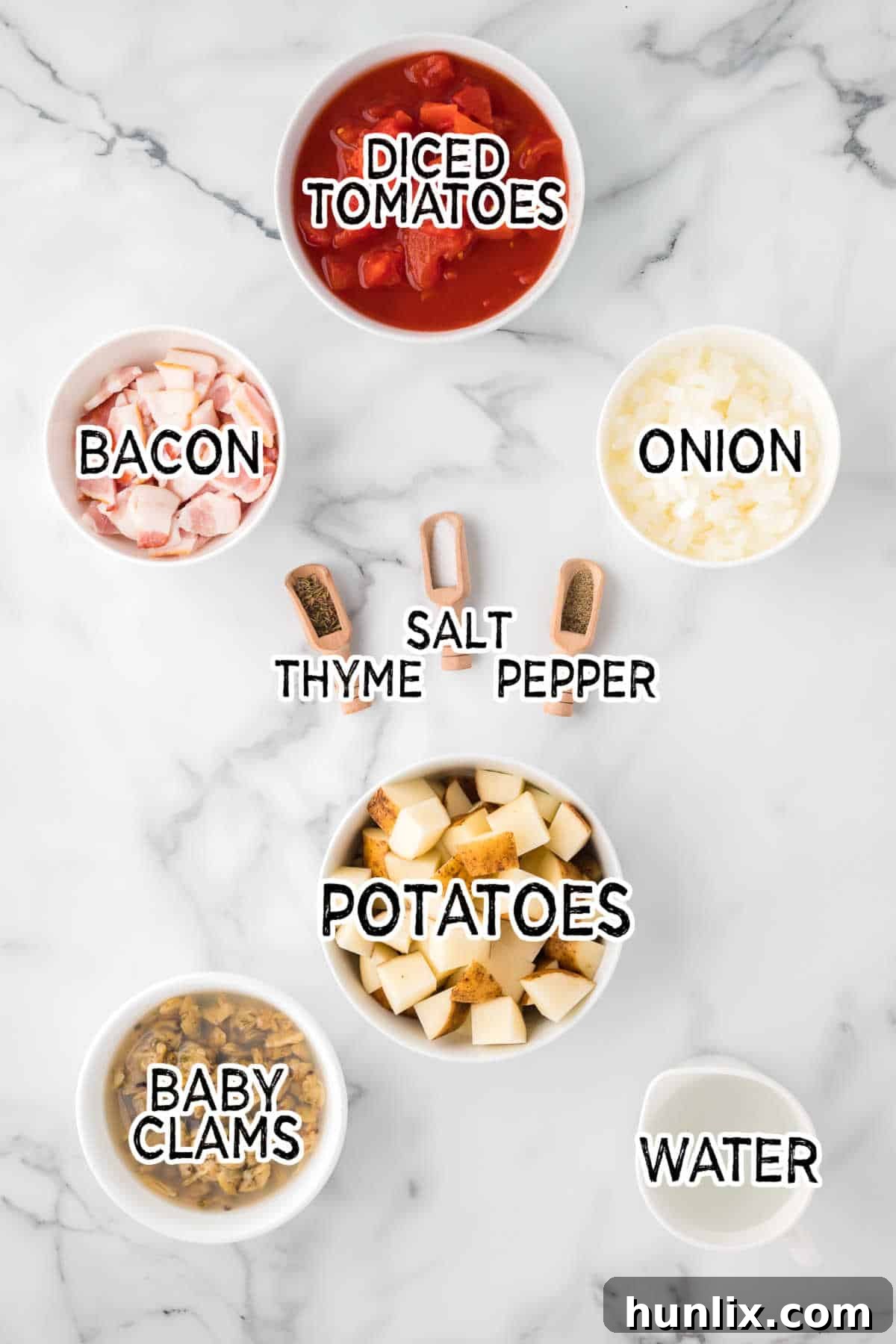
Crafting an authentic Manhattan Clam Chowder begins with selecting fresh, high-quality ingredients that harmonize to create its signature flavor. The full printable recipe card with precise measurements and detailed instructions can be found further down the page.
- Bacon: More than just a topping, crispy bacon serves as the foundational flavor for this chowder. As it cooks, it renders savory fat, which then acts as a flavorful base for sautéing the vegetables, infusing the entire dish with a rich, smoky depth. Use thick-cut bacon for the best texture and flavor contribution.
- Yellow Onion: When sautéed in the bacon fat, yellow onion releases a subtle sweetness and aromatic pungency. This crucial step softens the onion and builds a complex flavor layer, balancing the brininess of the clams and the acidity of the tomatoes, creating a well-rounded taste.
- Baby Clams (canned, undrained): The undisputed stars of the show, baby clams deliver the essential briny, slightly sweet, and distinctively chewy texture that defines clam chowder. Using canned clams, specifically with their natural juices, adds a convenient burst of oceanic flavor to the broth without the extra effort of cleaning fresh shellfish.
- White Potatoes: These starchy tubers are vital for creating a hearty and satisfying chowder. As they cook and break down slightly, they naturally thicken the broth and absorb the surrounding flavors. White potatoes offer a mild, earthy taste that complements the clams and tomatoes perfectly.
- Water: While seemingly simple, water plays a critical role in bringing all the flavors together and forming the clear, yet rich, broth. It helps to evenly distribute the tastes of the clams, vegetables, and seasonings, ensuring every spoonful is consistent.
- Fresh Thyme: This aromatic herb introduces an earthy, slightly minty, and peppery note that beautifully enhances the natural flavors of the clams and tomatoes. Fresh thyme is preferred for its brighter essence, but a small amount of dried thyme can be substituted in a pinch.
- Salt: A fundamental seasoning that amplifies all other flavors in the chowder. It’s essential for balancing the acidity of the tomatoes and the richness of the bacon, ensuring a perfectly seasoned and delicious end result. Adjust to your taste, remembering clams can contribute natural saltiness.
- Pepper: A touch of freshly ground black pepper adds a warm, subtle spice and a nuanced depth to the chowder, complementing the robust flavors without overpowering them.
- Diced Tomatoes (canned, undrained): The defining ingredient of Manhattan Clam Chowder, these tomatoes provide the iconic red hue, a bright acidity, and a robust, fruity flavor. Using diced tomatoes (and their juices) ensures a pleasant texture and distributes their vibrant taste throughout the broth, distinguishing it clearly from cream-based chowders.
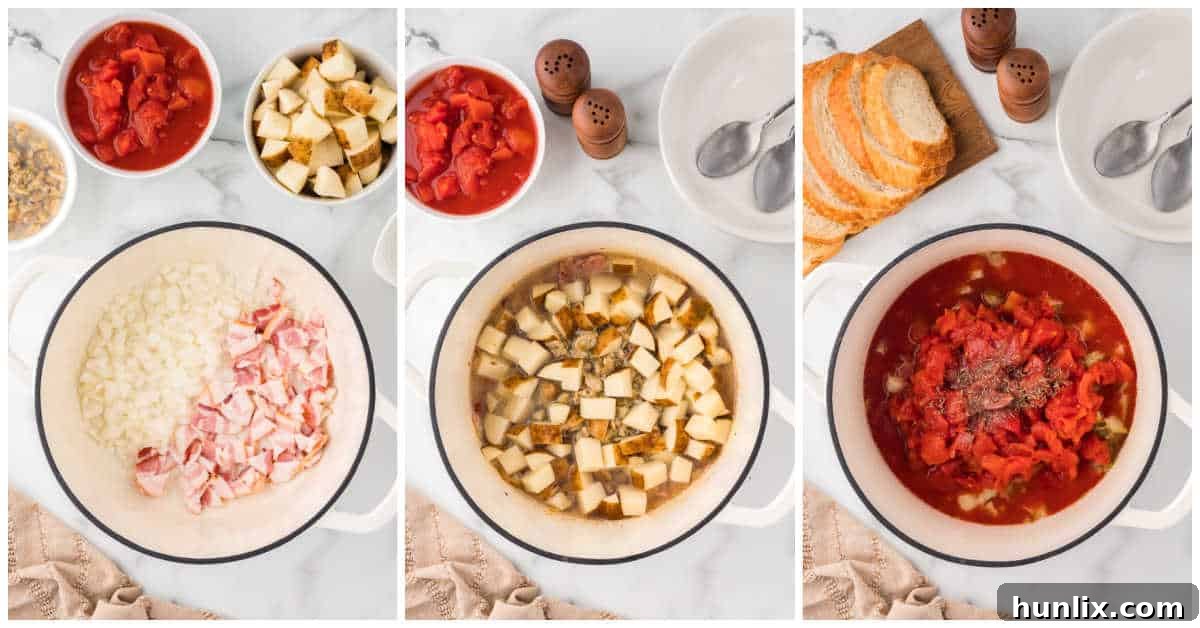
How to Prepare Manhattan Clam Chowder: A Step-by-Step Guide
Making this delightful Manhattan Clam Chowder is a straightforward process that yields incredibly satisfying results. Follow these simple steps for a perfect bowl every time.
- Step One: Build the Flavor Base
In a large, heavy-bottomed pot or Dutch oven, begin by cooking your chopped bacon over medium heat until it becomes wonderfully crisp. As the bacon renders its fat, add the chopped yellow onion to the pot. Sauté the onion in the bacon fat until it softens and turns translucent, absorbing all those delicious smoky flavors. This initial step is crucial for building a deep, rich flavor foundation for your chowder. - Step Two: Simmer the Hearty Elements
Once the bacon is crisp and onions are tender, stir in the canned baby clams (along with all their juice), the chopped white potatoes, and the water. Bring the mixture to a gentle boil. As soon as it reaches boiling, reduce the heat to a simmer, cover the pot, and let it cook for about 20 minutes. This simmering time allows the potatoes to become tender and begin to release some of their starch, which will subtly thicken the broth. Ensure the potatoes are fork-tender before proceeding. - Step Three: Finish and Serve
Finally, stir in the remaining ingredients: the fresh thyme, salt, pepper, and the undrained can of diced tomatoes. Return the chowder to a boil, stirring occasionally to ensure all ingredients are well combined and heated through. Once it reaches a boil, you’re ready to serve! Ladle the hot Manhattan Clam Chowder into bowls and enjoy its vibrant flavors. The tomatoes and thyme infuse the broth with a bright, herbaceous aroma that is truly irresistible.
Perfect Pairings: What to Serve with Manhattan Clam Chowder
Manhattan Clam Chowder, with its vibrant tomato base and hearty ingredients, pairs beautifully with a variety of sides. Here are some excellent accompaniments to complete your meal:
- A Crisp, Fresh Salad: A light green salad offers a refreshing counterpoint to the richness of the chowder. Think crisp romaine or mixed greens with crunchy vegetables like cucumbers and bell peppers, dressed simply with a bright vinaigrette. For an elevated choice, consider a classic Caesar salad or a warm spinach salad with a tangy hot bacon dressing.
- Toasty Bread or Rolls: There’s nothing quite like dipping a piece of warm, crusty bread into a flavorful bowl of chowder. A toasted baguette, a hearty sourdough, or soft buttered dinner rolls are perfect for soaking up every last drop of that delicious tomato broth. Garlic bread also makes an excellent choice, adding another layer of savory flavor.
- Grilled or Steamed Vegetables: To add more nutrients without overwhelming the main dish, opt for simply prepared vegetables. Steamed asparagus, grilled green beans, or lightly seasoned zucchini spears provide a healthy and satisfying side that complements the chowder’s flavors without competing.
- Complementary Seafood Sides: If you’re a true seafood lover, extend the theme with additional oceanic delights. A chilled shrimp cocktail offers a different texture and temperature, while a savory crab cake can turn your meal into a decadent seafood feast. Fried calamari or clam strips also make a fun, crispy addition.
- Comforting Fried Foods: For those seeking a more indulgent experience, consider crispy fried sides. While the original content suggested calamari or clam strips, even a side of well-seasoned onion rings or potato croquettes can offer a delightful textural contrast and a satisfying crunch against the smooth, brothy chowder.
Get Creative: Variations and Substitutions for Your Chowder
One of the joys of cooking is the ability to customize a recipe to suit your taste or what you have on hand. Manhattan Clam Chowder is incredibly adaptable:
- Explore Tomato Bases: While diced tomatoes are classic, you can experiment with other tomato products. For a smoother broth, try crushed tomatoes or tomato puree. A spoonful of tomato paste, added and cooked down with the onions, will deepen and concentrate the tomato flavor, resulting in a more intense and vibrant chowder. You could even use fresh, ripe, peeled, and chopped tomatoes when in season for a garden-fresh taste.
- Bacon Alternatives: If you’re looking for a leaner option, turkey bacon provides a smoky flavor with less fat. For a vegetarian version, omit the bacon entirely and start by sautéing your vegetables in olive oil. You can add a pinch of smoked paprika for a hint of smokiness. Other smoked meats like pancetta or even a diced ham hock could also add wonderful depth.
- Boost with Additional Vegetables: Enhance the nutritional value and texture by incorporating more vegetables. Diced carrots, celery, green bell peppers, or even a handful of frozen corn or peas can add color, sweetness, and extra goodness to your chowder. Add these along with the potatoes so they have ample time to cook.
- Diverse Potato Choices: Don’t feel limited to white potatoes. Yukon Gold potatoes offer a creamier texture, while red potatoes hold their shape well, adding a nice visual element. For a unique twist and a touch of sweetness, consider using sweet potatoes, which would create an interesting flavor contrast with the tangy tomatoes.
- Spice It Up: If you enjoy a bit of heat, introduce some warming spices. A pinch of red pepper flakes, a dash of cayenne pepper, or a few drops of your favorite hot sauce can add a delightful kick. For a more complex flavor, consider adding a bay leaf during simmering or a dash of celery seed.
- Flavorful Liquid Swaps: Instead of plain water, elevate the broth by using bottled clam juice or a good quality seafood broth. These options will intensify the briny, oceanic flavors. For a touch of sophistication, a splash of dry white wine (like Sauvignon Blanc or Pinot Grigio) added with the tomatoes can contribute a subtle complexity. Ensure the wine is cooked down for a few minutes before adding other liquids.
- Alternate Onion Varieties: While yellow onions are standard, a sweet onion (like Vidalia) can lend a milder, sweeter base, which might appeal if you prefer a less pungent onion flavor. Shallots could also be used for a more delicate, gourmet touch.
Storage and Reheating Instructions for Manhattan Clam Chowder
Proper storage is key to enjoying your delicious Manhattan Clam Chowder for days to come. Here’s how to keep it fresh and flavorful:
Refrigeration
Once your chowder has cooled to room temperature, transfer it to an airtight container. This not only preserves its freshness but also prevents any strong aromas from permeating other foods in your refrigerator. For easy portion control, you can divide the chowder into individual serving containers. Stored correctly, your Manhattan Clam Chowder will remain fresh and delicious in the refrigerator for up to 3 days.
Reheating
When you’re ready to enjoy another bowl, reheating is simple. For the stovetop method, gently warm the chowder over low heat, stirring occasionally until it’s heated through to your desired temperature. If using a microwave, place a single serving in a microwave-safe bowl, cover loosely, and heat in 1-minute intervals, stirring in between, until evenly warmed. Be careful not to boil the chowder aggressively during reheating, as this can affect the texture of the clams and potatoes.
Freezing for Longer Storage
Manhattan Clam Chowder freezes exceptionally well, making it a great option for meal prepping. Transfer the cooled chowder to freezer-safe containers, leaving about an inch of headspace at the top to allow for expansion during freezing. Label the containers with the date of preparation so you can easily keep track of its freshness. In the freezer, your chowder can maintain its quality for up to two months.
Thawing and Reheating Frozen Chowder
To reheat frozen chowder, the safest method is to transfer it to the refrigerator overnight to thaw gradually. Once thawed, follow the stovetop or microwave reheating instructions mentioned above. For a quicker reheat, you can gently warm the frozen chowder directly on the stovetop over very low heat, stirring frequently and breaking it up as it thaws, until it reaches a safe eating temperature.
Expert Tips and Tricks for the Best Manhattan Clam Chowder
Achieving the perfect bowl of Manhattan Clam Chowder is easy with these insider tips:
- Embrace the Bacon Flavor: Don’t be shy with the bacon! It’s not just for garnish; the rendered bacon fat is essential for building a flavorful base. It adds a crucial smoky, savory depth that truly elevates the chowder, providing a foundational richness that complements the other ingredients beautifully. Make sure to cook it until perfectly crisp before proceeding.
- Master the Tomato Balance: While the tomato-based broth is the hallmark of Manhattan Clam Chowder, it’s vital to use enough to create a bright, tangy flavor without allowing it to dominate. Too much tomato can overpower the delicate taste of the clams. Aim for a vibrant, acidic presence that highlights rather than masks the other fresh ingredients.
- Consider a Thickening Agent (Optional): If you prefer a slightly thicker consistency for your chowder, a little flour can be your secret weapon. Before incorporating it into the hot soup, whisk a tablespoon of all-purpose flour with a small amount of clam juice or cold water to create a smooth slurry. Slowly stir this mixture into your simmering chowder, allowing it to cook for a few minutes to avoid a raw flour taste and thicken evenly without lumps. Alternatively, mashing a few of the cooked potatoes against the side of the pot can also naturally thicken the broth.
- Avoid Overcooking the Clams: Clams, particularly canned ones, can become tough and rubbery if exposed to high heat for too long. To ensure they remain tender and succulent, add them along with their juice towards the latter half of the cooking process, allowing them just enough time to heat through and meld with the other flavors. If using fresh clams, add them until they just open, then remove and chop before adding back to the soup.
The Rich History and Origin of Manhattan Clam Chowder
Manhattan Clam Chowder boasts a captivating history, rooted in the diverse culinary traditions that shaped America. Its origins are a fascinating tale of regional adaptation and evolving tastes. In its nascent stages during the 1890s, this distinctive soup was known by various names, reflecting its local popularity, such as Coney Island Clam Chowder and Fulton Market Clam Chowder. These names hint at its connection to bustling port cities and fresh seafood markets.
What truly sets Manhattan Clam Chowder apart from its earlier counterparts and the more widely recognized New England version is the incorporation of tomatoes. Early documentation of clam chowder recipes reveals that milk was absent, and the consistency was typically thickened with crackers or stale bread. The revolutionary idea of a tomato-based clam chowder began to surface, with the first recorded recipe appearing before 1919. This marked a significant departure from tradition, likely influenced by the growing popularity and availability of tomatoes, perhaps even their introduction by Italian immigrants whose cuisine heavily featured the fruit. It wasn’t until 1934 that the soup officially gained its now-famous moniker, “Manhattan Clam Chowder,” solidifying its identity and cementing its place in American culinary lexicon.
The evolution of Manhattan Clam Chowder continued, with recipes becoming more refined over time. By 1933, a notable version called for a harmonious blend of fresh clams, potatoes, onions, celery, salt pork (a precursor to modern bacon), along with salt, pepper, and canned tomatoes. It’s remarkable to observe how many of these foundational ingredients remain at the very heart of a quintessential Manhattan Clam Chowder today, a testament to the enduring appeal of its well-balanced and robust flavor profile.
Can I Use Fresh Clams in My Manhattan Clam Chowder?
Absolutely, incorporating fresh clams into your Manhattan Clam Chowder can elevate the dish to a new level of richness and authentic flavor! While canned clams offer convenience and consistent results, fresh clams deliver a more pronounced, sweet, and briny taste that is truly delicious and incredibly satisfying. The extra effort involved in sourcing, cleaning, and preparing fresh clams is often well worth the enhanced culinary experience.
When selecting fresh clams, aim for the best quality available. Whole quahog clams, such as littlenecks or cherrystones, are often considered ideal for Manhattan Clam Chowder. They possess a robust, clam-forward flavor that stands up beautifully to the vibrant tomatoes, herbs, spices, and vegetables in the dish. Look for fresh clams at your local fish market, ensuring they are tightly closed, indicating freshness. Discard any clams that are open or chipped.
To prepare your fresh clams for the chowder, a thorough cleaning process is essential. Begin by scrubbing the outside of their shells under cold running water to remove any dirt or debris. Next, “purge” them of any sand by soaking them in a bowl of cold, salted water for at least 30 minutes, or even a few hours, in the refrigerator. This encourages the clams to filter out sand from within their shells. Before cooking, drain and rinse them once more.
To cook the fresh clams, you can steam them gently in a pot with a small amount of water or white wine until their shells open. Discard any clams that do not open. Once cooked, remove the clam meat from the shells, chop it to your desired size, and then add it to the chowder as directed in the recipe (typically towards the end to prevent overcooking). Crucially, don’t discard the flavorful clam juice left in the pot after steaming! This briny liquid is a treasure trove of flavor; strain it through a fine-mesh sieve or cheesecloth to remove any grit, and then add it to your chowder in place of some of the water or bottled clam juice. This simple step will infuse your final dish with an unparalleled depth of oceanic deliciousness!
Slow Cooker Instructions for Effortless Chowder
Enjoying Manhattan Clam Chowder doesn’t always require constant stovetop attention. Your slow cooker can do most of the work for you, resulting in a deeply flavored and tender chowder with minimal effort. While the initial browning of bacon and onions on the stovetop is recommended for maximum flavor, you can adapt the recipe for a truly hands-off approach:
- Prep and Combine: For the best results, start by cooking the bacon in a skillet until crisp, then sauté the onion in the rendered bacon fat. Drain off any excess fat if desired. Transfer the cooked bacon (crumbled or chopped) and tender onions to your slow cooker. Add the canned baby clams with their juice, chopped potatoes, water (or clam juice/broth for more flavor), fresh thyme, salt, pepper, and diced tomatoes (undrained). Gently stir all the ingredients to combine them evenly within the slow cooker insert.
- Slow Cook to Perfection: Secure the lid on your slow cooker. Set the appliance to a low heat setting. Allow the chowder to cook slowly for approximately 6 to 8 hours, or until the potatoes are incredibly tender and the flavors have fully melded. The longer, slower cooking time truly allows the ingredients to infuse the broth, creating a richer, more complex flavor profile. Alternatively, you can cook on high for 3-4 hours if you’re short on time, but keep an eye on the potatoes to ensure they don’t become overly mushy. Stir once or twice during cooking if you can, but it’s not strictly necessary. Serve hot and enjoy the convenience of this slow-cooked delight!
Frequently Asked Questions About Manhattan Clam Chowder
Clams offer a distinctive yet mild taste, often described as briny, slightly sweet, and with a fresh ocean essence. They possess a savory quality that isn’t overwhelmingly “fishy” like some other seafood. Their texture is pleasantly chewy. Clams can be enjoyed cooked in various dishes or even raw, providing a delightful and versatile flavor to any meal.
To enhance your Manhattan Clam Chowder experience, consider a sprinkle of crispy oyster crackers or a side of classic saltine crackers for dipping. A garnish of fresh parsley or chives can add a touch of color and herbaceous freshness. For an extra kick, a dash of hot sauce or a sprinkle of red pepper flakes can awaken your palate. Each bite, with its harmonious blend of salty, smoky bacon, tangy tomatoes, and tender clams, promises a flavor explosion that will leave you craving a second helping of this savory delight.
The primary difference lies in their bases. New England Clam Chowder features a rich, creamy, milk- or cream-based broth, often thickened with roux. Manhattan Clam Chowder, on the other hand, is characterized by its clear, bright, and tangy tomato-based broth. While both contain clams and potatoes, their flavor profiles are distinctly different, offering unique culinary experiences.
Absolutely! Manhattan Clam Chowder is an excellent make-ahead dish. In fact, many believe the flavors meld and deepen even further after a day or two in the refrigerator. Prepare it fully, cool it, and store it in an airtight container in the fridge for up to 3 days. Reheat gently on the stovetop or in the microwave when ready to serve.
Explore More Delicious Chowder Recipes
- Salmon Chowder
- Corn Chowder
- Cheeseburger Chowder
- Cheesy Chicken Chowder
- Shrimp Chowder
- Seafood Chowder
Follow me on Instagram @simplystacieblog, Facebook at Simply Stacie, TikTok @simplystacierecipes or Pinterest at @simplystacie and let me know how you liked this recipe and my other recipes.
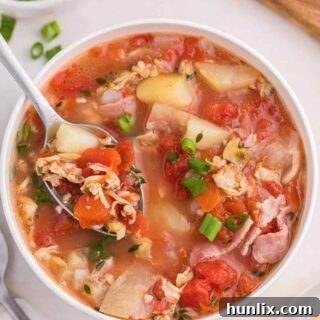
Manhattan Clam Chowder
Cook Time: 30 minutes
Total Time: 45 minutes
Pin Recipe
Share on Facebook
Ingredients
- 1 cup bacon, chopped
- 1 cup yellow onion, chopped
- 2 cans baby clams (142g cans), undrained
- 2 cups white potatoes, unpeeled and chopped
- 1 cup water
- 1 tbsp fresh thyme (or ¼ tsp dried thyme)
- ¼ tsp salt
- ⅛ tsp pepper
- 1 can diced tomatoes (28oz can), undrained
Instructions
- In a large pot, cook bacon and onion over medium heat until bacon is crisp and onion is tender.
- Stir in clams with juice, potatoes, and water and heat to boiling. Reduce heat. Cover and simmer for 20 minutes or until potatoes are tender.
- Stir in remaining ingredients. Heat to boiling, stirring occasionally. Serve hot.
Nutrition Facts (Estimated)
Serving: 1g | Calories: 220kcal | Carbohydrates: 23g | Protein: 15g | Fat: 8g | Saturated Fat: 2g | Polyunsaturated Fat: 5g | Cholesterol: 34mg | Sodium: 804mg | Fiber: 3g | Sugar: 3g
The information shown is an estimate provided by an online nutrition calculator. It should not be considered a substitute for a professional nutritionist’s advice.
Cuisine: American
Keyword: Manhattan Clam Chowder
Did you make this recipe?
I’d love to see it! Make sure to share it on your favorite social platform.
Share on Facebook
Pin Recipe
Rate this Recipe
Want Even More Recipes?
Join Moms Best Recipes to find more delicious family recipes.