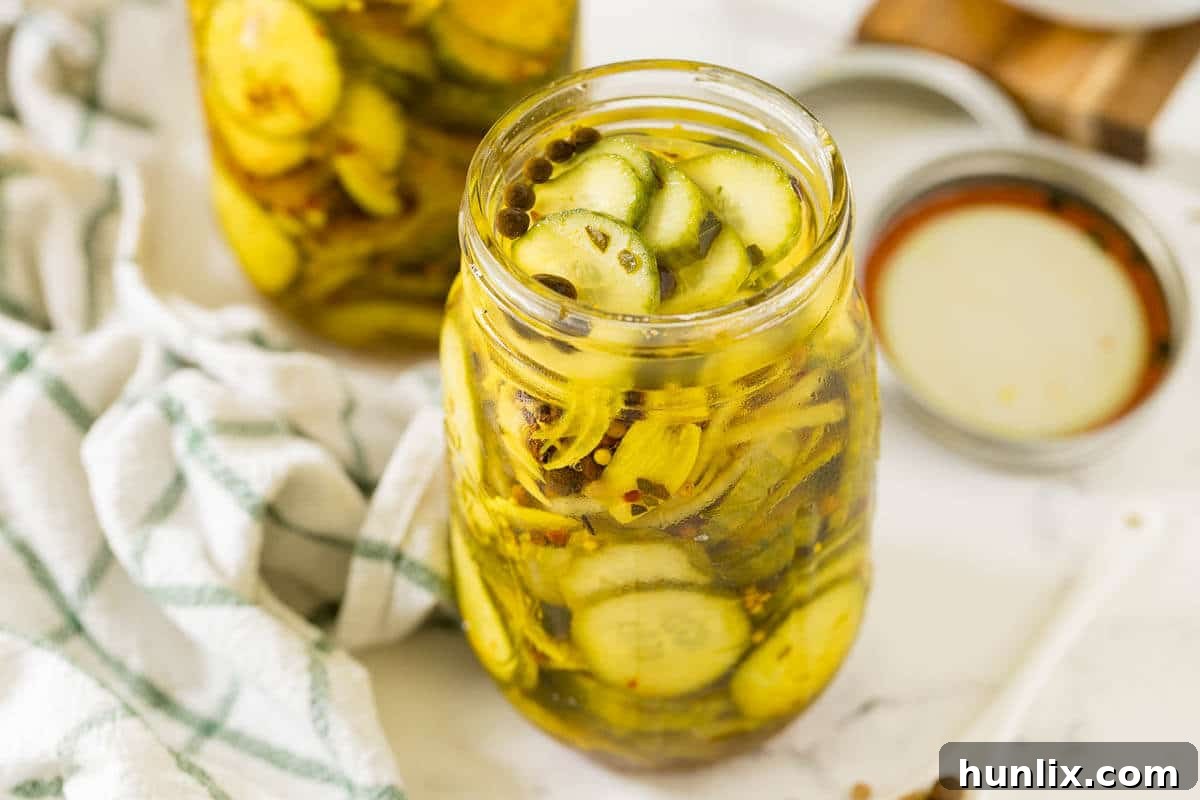
Unlock the secret to vibrant, tangy, and utterly delicious homemade pickles with this incredibly easy recipe for **Refrigerator Bread and Butter Pickles**. Forget complicated canning processes or special equipment; with just a few common ingredients and simple steps, you’ll create crisp, flavorful pickles ready to enjoy in as little as four days. This recipe offers a delightful blend of sweet and tangy notes, making it a perfect addition to sandwiches, burgers, or as a standalone snack. Experience the superior crunch and fresher taste that only homemade pickles can provide, transforming ordinary cucumbers into extraordinary culinary delights.
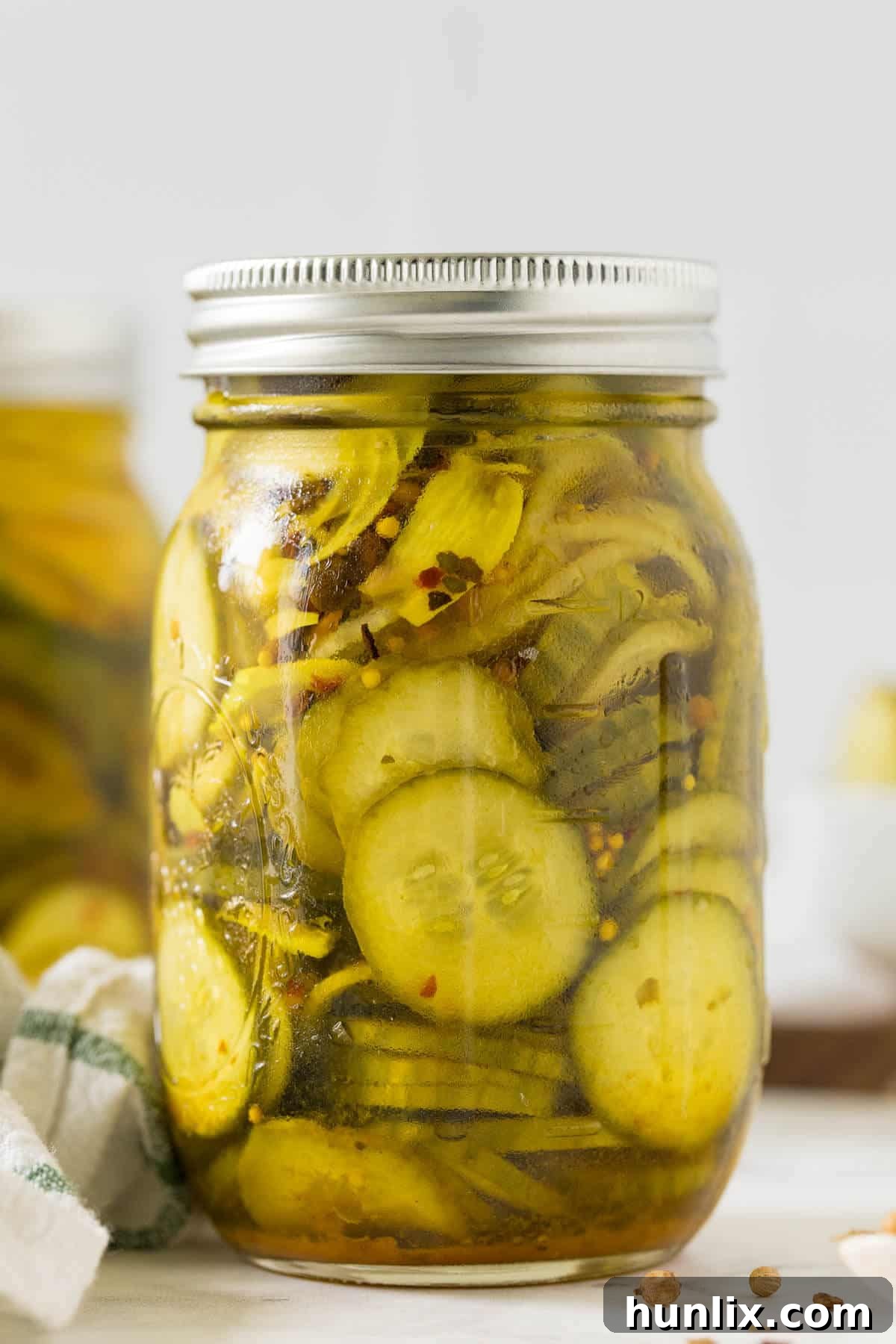
If you’ve ever dreamt of crafting your own pickles from scratch, this recipe is your ideal starting point. It demystifies the pickling process, guiding you through four straightforward steps that culminate in a batch of zesty, lip-smacking pickles bursting with flavor. The simple brine, a symphony of sweet, sour, and savory, infuses the cucumbers with an irresistible taste that far surpasses anything you’d find on store shelves. Once you experience the satisfaction and deliciousness of these refrigerator bread and butter pickles, you’ll undoubtedly find yourself making them again and again. This timeless recipe, rooted in the resourcefulness of the Great Depression era, proves that the best things in life often require just simple ingredients and a little patience. Beyond their incredible taste, these homemade pickles are surprisingly good for you, offering a fresh, low-calorie snack option.
Why You’ll Fall in Love with These Pickles
There are countless reasons why these Refrigerator Bread and Butter Pickles will become a staple in your kitchen. Their undeniable charm lies in their simplicity, superior flavor, and versatility.
- Unmatched Flavor and Texture: Prepare to be amazed! These homemade pickles consistently outshine their store-bought counterparts. The fresh cucumbers retain their natural crispiness, absorbing the vibrant flavors of the brine without becoming soggy. Each bite offers a perfect balance of sweet, tangy, and subtly spicy notes that dance on your palate, making them incredibly addictive.
- Effortless Preparation: This is pickling made easy. Many shy away from making pickles due to the perceived complexity of traditional canning methods. However, this recipe requires no intimidating hot water baths or specialized sterilization techniques. It’s so straightforward that you’ll wonder why you hadn’t ventured into homemade pickles sooner.
- No Canning Required: The beauty of refrigerator pickles is their simplicity. Unlike traditional canning, which requires precise temperature control and specific equipment for long-term shelf stability, these pickles are stored in the refrigerator. You simply prepare the brine, combine it with the cucumbers in jars, and chill. It’s a fuss-free approach that anyone can master.
- A Thoughtful and Delicious Gift: Hand-packed jars of these delightful pickles make for a charming and appreciated gift. Whether for a hostess, a neighbor, or a loved one, a batch of homemade refrigerator bread and butter pickles is a unique and personal present that speaks volumes about your care and culinary skill. They’re perfect for holidays, housewarmings, or just because.
Essential Ingredients for Perfect Pickles
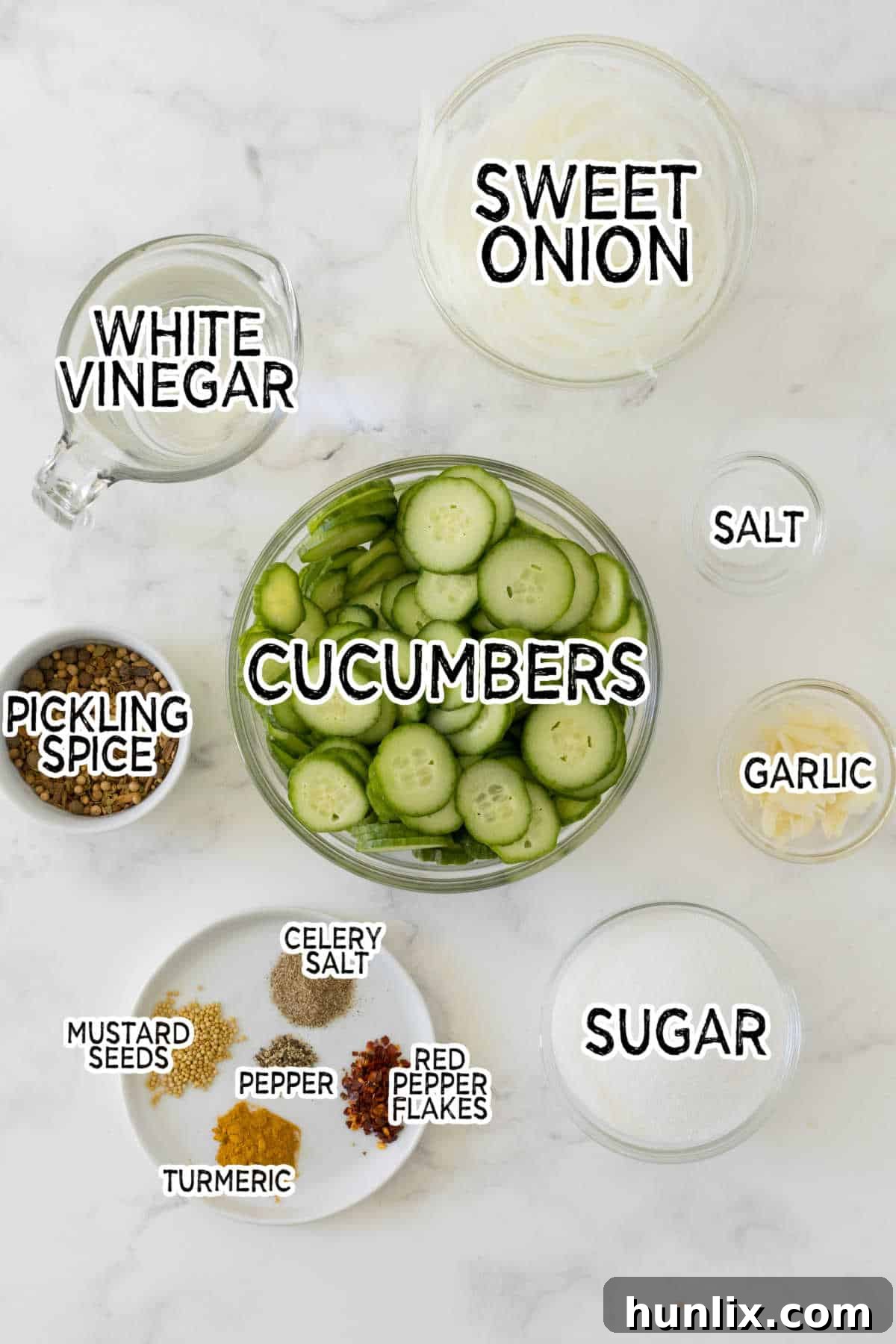
Crafting these delectable bread and butter pickles relies on a selection of straightforward ingredients, each playing a crucial role in developing their signature sweet and tangy profile. You’ll find a complete list with exact measurements in the printable recipe card below, but here’s a closer look at what makes this recipe sing:
- Cucumbers: The star of the show! For the best results, choose firm, fresh pickling cucumbers like Kirby or Persian cucumbers. English cucumbers also work beautifully. Slice them uniformly, whether into rounds, spears, or crinkle-cut chips, for consistent texture and brine absorption.
- Sweet Onion: Thinly sliced sweet onions, such as Vidalia or Walla Walla, contribute a delicate sweetness and a subtle, pungent aroma that complements the cucumbers beautifully, adding another layer of flavor and texture to your pickles.
- White Vinegar: This forms the essential acidic base of our pickling brine. White vinegar offers a clean, sharp tang that is characteristic of bread and butter pickles, creating the perfect environment for preserving the cucumbers.
- Granulated Sugar: Crucial for balancing the vinegar’s acidity, sugar is what gives bread and butter pickles their distinctive sweet edge. It mellows the tang, resulting in a harmonious flavor that is both refreshing and satisfying.
- Salt: More than just a seasoning, salt enhances all the other flavors in the brine and helps to draw out moisture from the cucumbers, contributing to their crispness. Using a high-quality kosher salt is recommended for its pure flavor and larger grain.
- Mustard Seeds: These small but mighty seeds impart a warm, earthy, and slightly pungent flavor that is quintessential to traditional bread and butter pickles. They add depth and a touch of subtle spice.
- Celery Salt: A convenient blend of salt and ground celery seed, this ingredient adds a unique, savory, and slightly bitter note that rounds out the flavor profile. If you only have celery seed, you can use that and adjust the salt content accordingly.
- Turmeric: Beyond its beautiful golden hue, turmeric contributes a mild, earthy warmth with hints of ginger and pepper. It introduces a natural sweetness that beautifully contrasts with the salty elements, enhancing the overall complexity of the pickles.
- Red Pepper Flakes: For those who appreciate a hint of heat, red pepper flakes deliver a gentle warmth that elevates the flavor without overpowering it. Adjust the quantity to suit your spice preference, adding more for a bolder kick.
- Black Pepper: A foundational spice, freshly ground black pepper rounds out the flavors, adding a familiar and comforting zing that complements the other pickling spices.
- Fresh Garlic Cloves: Peeled and thinly sliced, fresh garlic infuses the brine with its aromatic, pungent, and slightly sweet notes. Its presence is subtle but vital, adding a layer of savory complexity to every pickle slice.
Crafting Your Refrigerator Bread and Butter Pickles: A Simple Guide
Making a batch of these fresh, homemade pickles is surprisingly simple, requiring just four easy steps. Follow these instructions to transform ordinary cucumbers into a tangy, sweet, and perfectly spiced snack:
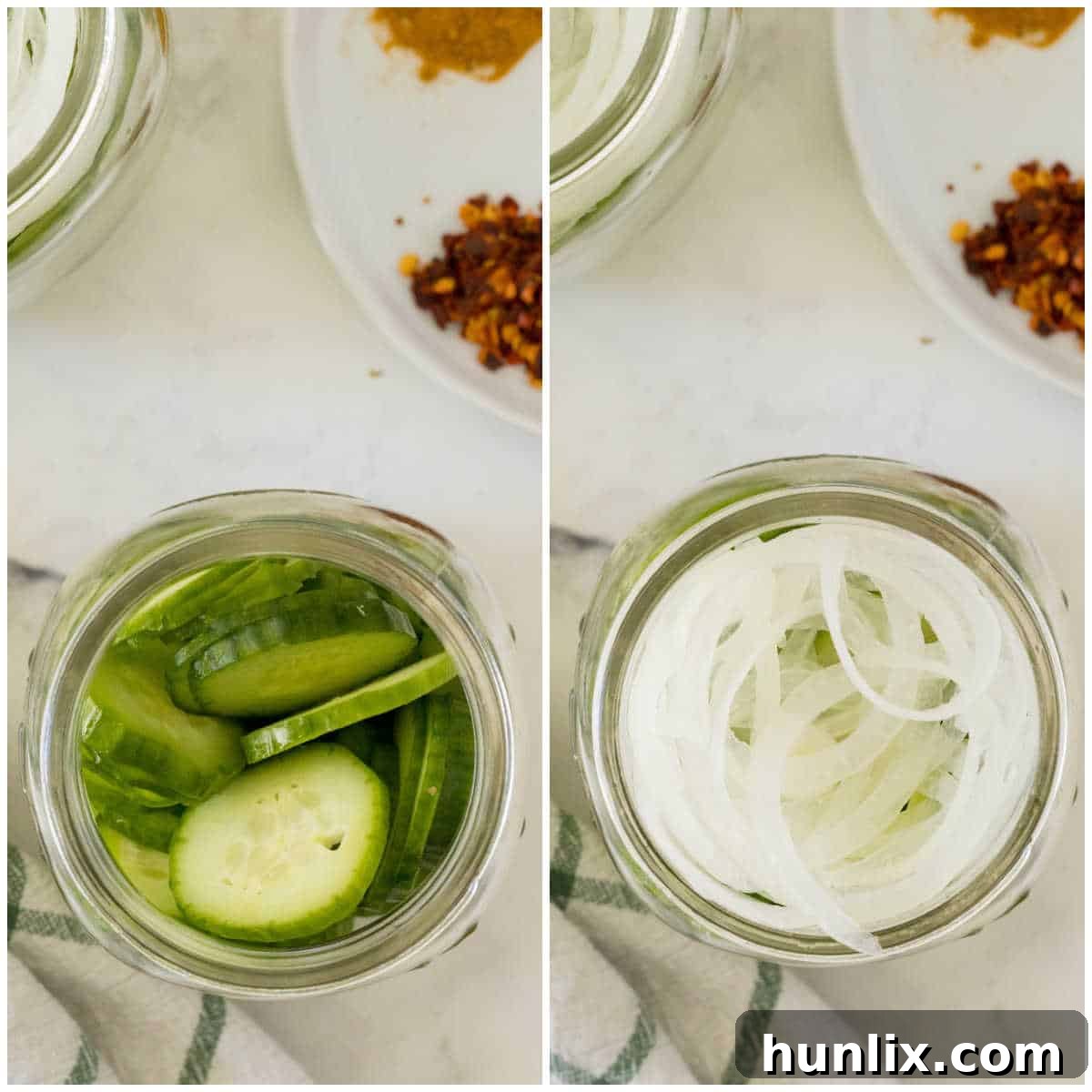
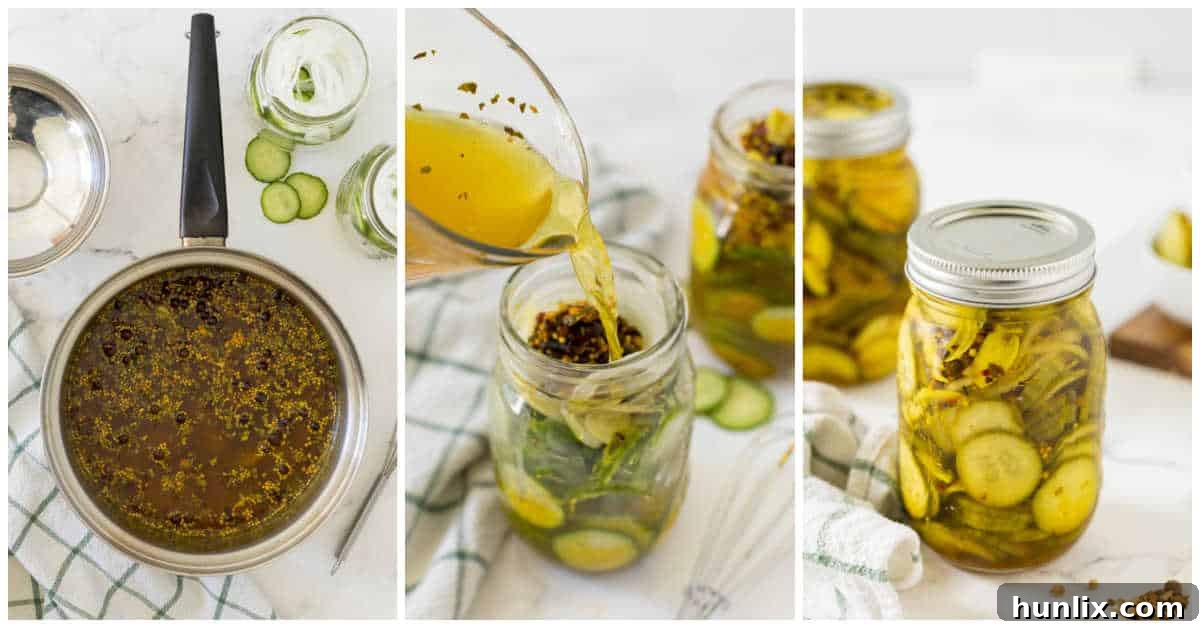
- Step One: Prepare Your Jars and Produce. Begin by washing and thinly slicing your cucumbers and sweet onion. You can use a sharp knife for uniform slices, or a crinkle cutter for an aesthetically pleasing edge. Evenly divide the sliced cucumbers into two clean mason jars. These can be pint-sized or larger, depending on how many pickles you wish to make. Once the cucumbers are in place, artfully layer the thinly sliced sweet onion on top of them in each jar. This ensures an even distribution of flavor.
- Step Two: Prepare the Flavorful Brine. In a medium-sized saucepan on your stove, combine the white vinegar, granulated sugar, salt, mustard seeds, celery salt, turmeric, red pepper flakes, black pepper, and thinly sliced fresh garlic cloves. Bring this mixture to a rolling boil over medium-high heat. Allow it to boil vigorously for exactly one minute, ensuring all the sugar dissolves and the spices fully infuse the liquid. After one minute, immediately remove the saucepan from the heat to prevent overcooking the spices.
- Step Three: Combine and Cool. Carefully pour the hot vinegar mixture evenly into each mason jar, ensuring the liquid fully covers the cucumbers and onions. Fill the jars almost to the top, leaving a small headspace. Do not put the lids on yet. Allow the jars to cool completely at room temperature. This gradual cooling process helps the pickles absorb the brine flavors and maintain their crisp texture.
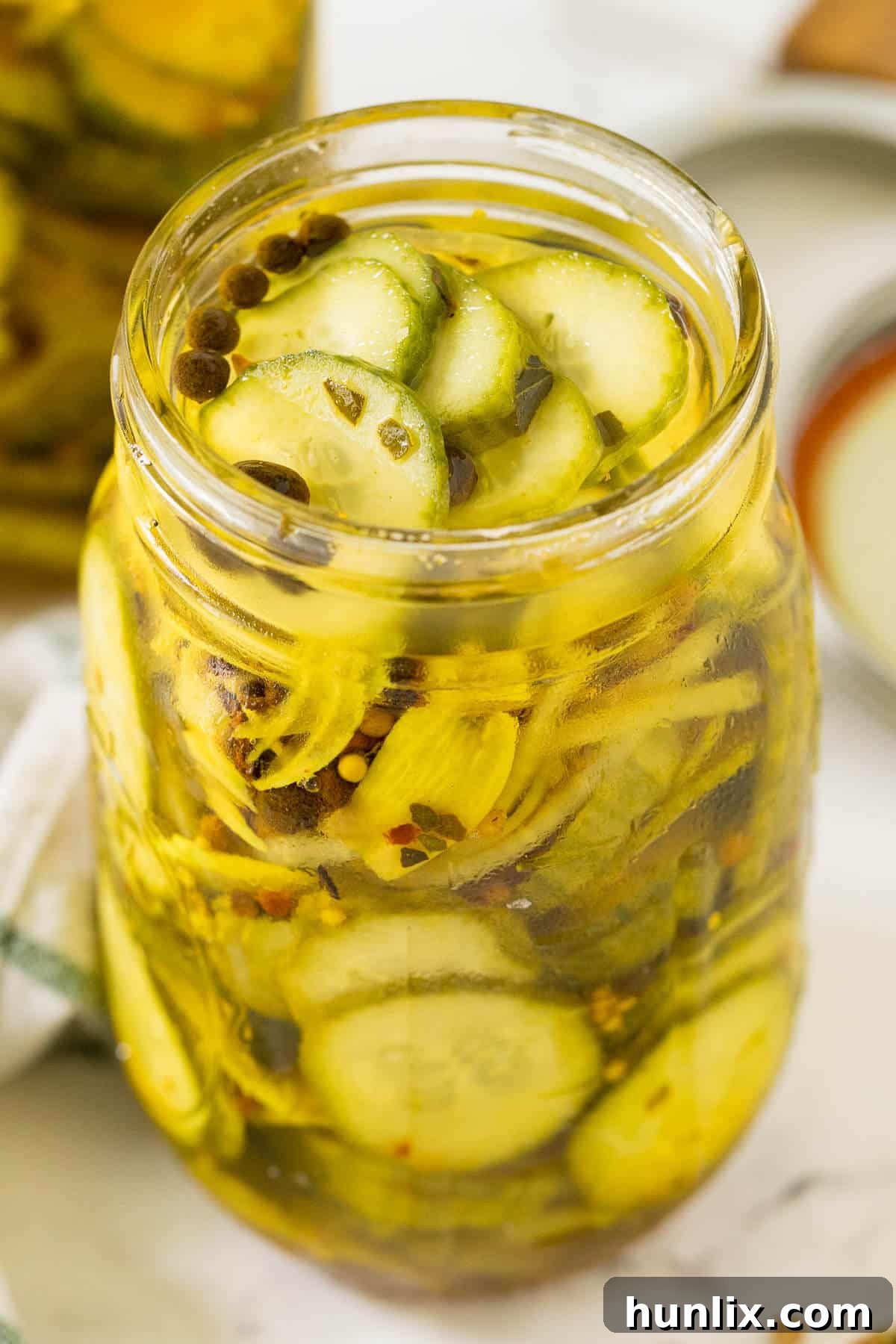
- Step Four: Refrigerate and Enjoy. Once the jars have reached room temperature, securely place the lids on them. Transfer the sealed jars to your refrigerator. For optimal flavor development, allow the pickles to chill and marinate for a minimum of four days before enjoying. This waiting period is essential as it gives the cucumbers ample time to soak up all the delicious sweet and tangy goodness of the brine. After four days, your homemade refrigerator bread and butter pickles will be ready to serve! They can be stored in the refrigerator for up to one month, maintaining their excellent taste and texture.
Essential Equipment for Pickle Perfection
While this recipe prides itself on its simplicity and minimal need for specialized tools, having a few key pieces of kitchen equipment will ensure the best results and make the process even smoother:
- Cutting Board: A sturdy cutting board is indispensable for safely and efficiently slicing your cucumbers and onions. Choose one that offers a stable surface and is easy to clean.
- Medium Saucepan: A high-quality saucepan is necessary for preparing the pickling brine. Its size should be sufficient to comfortably hold all the brine ingredients and allow for easy stirring as they come to a boil.
- Mason Jars: These iconic glass jars are perfect for storing your refrigerator pickles. Their airtight seals keep the pickles fresh and flavorful. You’ll need at least two, but having a few extra on hand is always a good idea for future batches or gifting.
Serving Suggestions: Elevate Your Meals with Homemade Pickles
These delightful bread and butter pickles are incredibly versatile, offering a burst of flavor that can enhance a variety of dishes. They’re not just a snack; they’re a condiment that adds a bright, tangy, and sweet counterpoint to richer foods. Here are some of our favorite ways to enjoy them:
- Classic Sandwiches: Transform any ordinary sandwich into an extraordinary culinary experience. Pile these pickles high on a classic turkey and Swiss, a savory roast beef, or a simple ham and cheese for an extra layer of crunch and flavor.
- Homemade Bread: There’s nothing quite like the combination of fresh, warm homemade bread and the cool, crisp tang of these pickles. A simple slice of bread with a pickle on top makes for a satisfying light lunch or snack.
- Egg Salad Sandwich: The rich, creamy texture of an egg salad sandwich finds its perfect match in the bright acidity and crispness of bread and butter pickles. They cut through the richness beautifully, making each bite more enjoyable.
- Italian Pasta Salad: Add a surprising twist to your next pasta salad by incorporating chopped bread and butter pickles. Their sweet and tangy profile will complement the savory ingredients and vinaigrette, adding an unexpected depth of flavor and texture.
- Parmesan Crisps: For a gourmet snack pairing, serve these pickles alongside crispy Parmesan crisps. The salty, umami notes of the cheese crisps are wonderfully balanced by the sweet, tart, and crunchy pickles.
- Burgers and Hot Dogs: Elevate your backyard barbecue staples. A generous helping of these pickles on a juicy burger or a classic hot dog adds that essential zesty crunch that makes all the difference.
- Cheese and Charcuterie Boards: For an elegant touch, include a small bowl of these pickles on your next cheese or charcuterie board. They provide a refreshing palate cleanser and a vibrant flavor contrast to rich cheeses and cured meats.
Get Creative: Variations and Substitutions
One of the joys of homemade pickling is the freedom to customize flavors to your preference. This bread and butter pickle recipe is a fantastic base, but don’t hesitate to experiment with these variations and substitutions to make it uniquely yours:
- Switch Up the Vinegar: For a slightly mellower, fruitier tang, substitute white vinegar with apple cider vinegar. This can add a rustic depth of flavor that some prefer.
- Explore Sweeteners: While granulated sugar provides a clean sweetness, try swapping it for brown sugar. Brown sugar will introduce a richer, more molasses-like flavor, adding complexity to the brine.
- Turn Up the Heat: If you love a spicy kick, consider adding a few slices of fresh jalapeño or serrano peppers to your jars along with the cucumbers and onions. For an even more intense heat, you can also increase the amount of red pepper flakes.
- Add More Vegetables: Expand the medley by incorporating other thinly sliced vegetables. Red bell peppers offer a beautiful color and a mild sweetness, while thinly sliced carrots or zucchini can add different textures and flavors.
- Spice Blend Adventures: Feel free to adjust the spice blend. Experiment with bay leaves, whole peppercorns, coriander seeds, or even a pinch of dried dill for subtle aromatic differences. Remember that even small changes can significantly alter the final taste.
- Onion Alternatives: If sweet onions aren’t available, or you prefer a different flavor, red onions can be a lovely substitution. They will impart a slightly sharper taste and a beautiful pink hue to your pickles.
Storage Instructions for Optimal Freshness
Proper storage is key to enjoying your homemade refrigerator bread and butter pickles for as long as possible while maintaining their crispness and vibrant flavor. Once your pickles have cooled to room temperature, they should be stored exclusively in the refrigerator.
Transfer the homemade pickles into clean mason jars or any other glass jars with an airtight and spill-proof lid. Ensure the cucumbers are fully submerged in the brine; this is crucial for both flavor and preservation. Stored correctly in the refrigerator, these delightful pickles will maintain their quality and taste for up to one month. After this period, while they may still be safe to eat, their crispness and peak flavor might begin to diminish.
Expert Tips and Tricks for Perfect Pickles Every Time
Achieving the best possible batch of refrigerator bread and butter pickles is easy when you keep a few simple tips in mind. These insights will help ensure your pickles are perfectly crisp, flavorful, and a joy to eat:
- Uniform Slicing is Key: Whether you prefer rounds, spears, or crinkle-cut chips, strive for consistency in your cucumber slices. Uniform thickness allows the pickles to absorb the brine evenly, resulting in a consistent texture and flavor throughout the jar. Use a sharp knife or a mandoline for precision.
- Choose the Freshest Cucumbers: The foundation of excellent pickles is fresh, firm cucumbers. Opt for cucumbers that are blemish-free, firm to the touch, and vibrant in color. Freshly picked cucumbers, especially from a farmer’s market or your garden, will yield the best taste and crunch. Avoid any that feel soft or look wilted.
- Quality Salt Matters: For the best flavor and texture, use a high-quality kosher salt. Unlike iodized table salt, kosher salt typically has a larger grain and lacks anti-caking agents, which can sometimes cloud the brine or impart an off-flavor.
- Dissolve Sugar Completely: When preparing the brine, it’s essential to stir the liquid continuously until the sugar dissolves completely. This ensures that the sweetness is evenly distributed throughout the brine and prevents any grainy texture in your finished pickles. A fully dissolved sugar also contributes to a clearer brine.
- Don’t Rush the Cooling Process: After pouring the hot brine into the jars, resist the urge to immediately refrigerate them. Allowing the jars to cool to room temperature with the lids off first is important. This gradual cooling helps the cucumbers acclimate to the brine and prevents them from becoming soft due due to a sudden temperature shock.
- Allow for Proper Marination: The suggested four-day refrigeration period is not just a recommendation; it’s crucial for flavor development. This time allows the cucumbers to fully absorb the complex flavors of the sweet, tangy, and spiced brine, transforming them into truly delicious pickles. Patience will be rewarded!
Frequently Asked Questions About Bread and Butter Pickles
Here are answers to some of the most common questions about these popular sweet and tangy pickles:
Why Are They Called Bread and Butter Pickles?
The intriguing name “Bread and Butter Pickles” has a charming historical anecdote that predates the Great Depression. The story originates in the early 1920s with a farming couple from Illinois, Omar and Cora Fanning. They held a trademark for their unique family recipe of sweet and sour pickles. During difficult times, Mr. Fanning would barter their incredibly popular pickles with the local grocer, exchanging them for essential provisions like bread and butter. The pickles were so highly valued that they became a form of currency for these everyday necessities, earning them the affectionate and enduring nickname.
Are Bread and Butter Pickles Sweet?
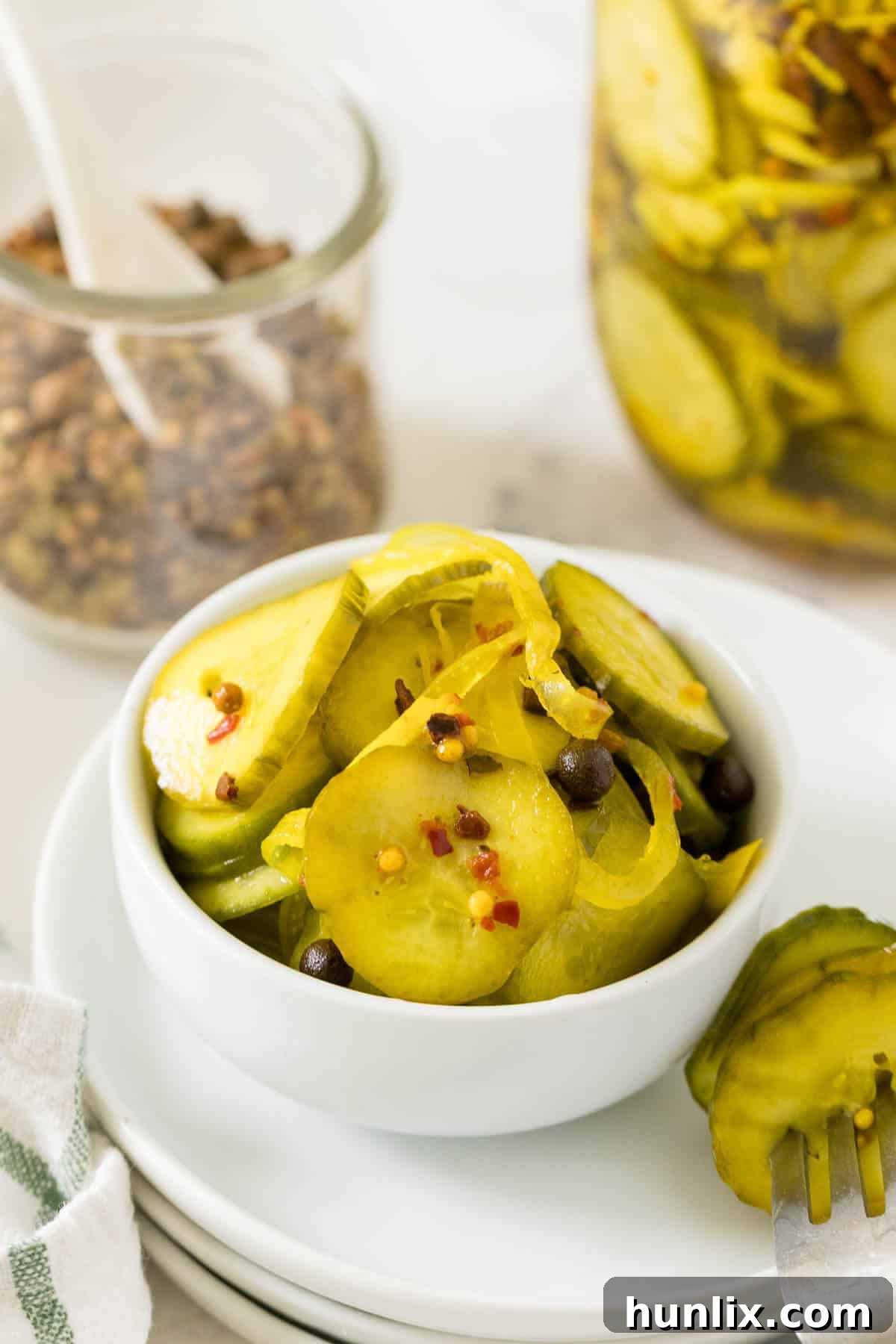
While they are indeed categorized as “sweet pickles,” bread and butter pickles are not overly saccharine. The sugar in the recipe plays a vital role in balancing the sharp acidity of the vinegar. This creates a harmonious flavor profile that is both tangy and subtly sweet, preventing the pickles from being either too sour or cloyingly sweet. The sweetness rounds out the overall taste, making them incredibly palatable and refreshing.
What is the Difference Between Quick Pickles and Regular Pickles?
The primary distinction between quick pickles (like these refrigerator bread and butter pickles) and regular pickles lies in the method of preservation and the type of acid used. Quick pickles rely on acetic acid from vinegar to rapidly pickle vegetables, allowing them to be ready in a few days and stored in the refrigerator. Regular pickles, on the other hand, are typically made through a fermentation process. This method uses a salt brine to encourage the growth of beneficial lactic acid bacteria, which naturally ferments the vegetables over weeks, resulting in a distinct tangy flavor and longer shelf life at room temperature (when properly canned).
What is the Difference Between Dill Pickles and Bread and Butter Pickles?
Dill pickles and bread and butter pickles represent two distinct flavor profiles within the pickle world. The most significant difference lies in their ingredient lists and resulting tastes. Dill pickles traditionally feature fewer ingredients, primarily cucumbers, vinegar, salt, and a generous amount of fresh or dried dill. Their flavor is predominantly savory, sour, and intensely herbaceous from the dill. Bread and butter pickles, however, boast a more complex flavor profile. They include sugar for sweetness, a wider array of spices (like mustard seeds, celery salt, turmeric, and red pepper flakes), and often onions and garlic, creating a multifaceted taste that is sweet, tangy, savory, and subtly spicy.
What Kind of Cucumber Should You Use for Pickling?
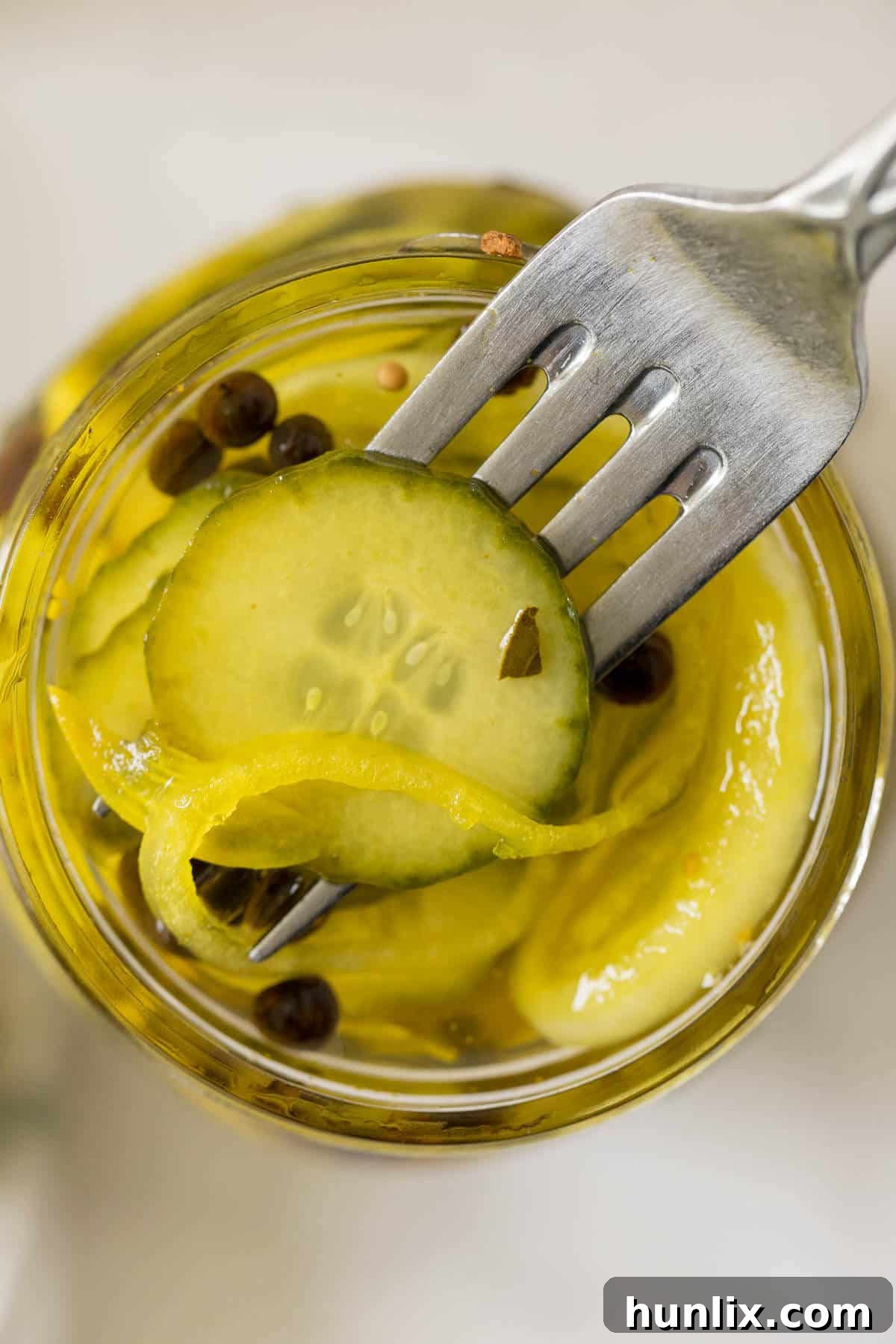
This versatile recipe works wonderfully with almost any fresh cucumber variety, making it an excellent way to utilize your garden harvest or fresh finds from the farmer’s market. For optimal texture and flavor, we recommend using firm, crisp pickling cucumbers. Varieties like Kirby cucumbers are classic choices, known for their ideal size and texture. English cucumbers, with their thin skins and minimal seeds, also yield excellent results. Avoid overly large or seedy varieties, as they can become watery or soft during the pickling process. The key is to select fresh, firm cucumbers to ensure a satisfying crunch.
What Size of Jar Should I Use?
The beauty of refrigerator pickles is their flexibility when it comes to jar size! This recipe is incredibly adaptable, meaning you can comfortably reuse old pickle jars or choose new ones. While pint-sized jars are a popular and convenient choice, canning jars of various sizes will work just as well. The most important consideration is ensuring that the liquid completely fills the jar, submerging all the cucumbers and onions. If you opt for a larger half-gallon jar, remember that you will need to proportionally increase the quantities of vinegar and all other brine ingredients to ensure everything is adequately covered and flavored.
Do You Need a Canning Pot?
Absolutely not! One of the greatest advantages of making refrigerator pickles is that you do not need any specialized canning equipment, such as a large canning pot or a pressure canner, nor do you need any prior canning skills. This recipe is designed for ease and convenience. You simply prepare the brine on your stovetop, pour it over the prepared cucumbers in jars, and then store them in your refrigerator. It’s a fuss-free method that allows anyone to make delicious, crisp pickles without the complexities associated with traditional canning for long-term shelf stability at room temperature.
How Long Do Refrigerator Pickles Last?
When properly stored in an airtight container in the refrigerator, homemade refrigerator bread and butter pickles will typically last for up to one month. Their vibrant flavor and crisp texture are usually best within the first two to three weeks. While they might still be safe to consume beyond a month, their quality, particularly their crunch, may start to diminish.
Can I Make a Larger Batch of Pickles?
Yes, you can absolutely scale this recipe up to make a larger batch! Simply multiply all the ingredient quantities proportionally. Ensure you have enough mason jars and a large enough saucepan to accommodate the increased volume of cucumbers, onions, and brine. The process steps remain the same, regardless of batch size.
Are Refrigerator Bread and Butter Pickles Healthy?
When consumed in moderation, refrigerator bread and butter pickles can be a relatively healthy addition to your diet. Cucumbers are naturally low in calories and provide hydration. While these pickles do contain sugar to achieve their signature sweet and tangy flavor, the amount per serving is moderate. They are a good source of flavor and crunch without a high caloric impact. They offer a tasty alternative to less healthy snack options, and the pickling process can also aid in digestion.
What Makes Homemade Pickles Crispier?
Several factors contribute to the superior crispness of homemade refrigerator pickles. Firstly, using fresh, firm cucumbers is paramount; older, softer cucumbers will result in softer pickles. Secondly, slicing them uniformly and chilling them quickly after brining helps maintain their cellular structure. Thirdly, the salt in the brine draws out excess moisture from the cucumbers, which firms them up. Lastly, avoiding over-boiling the brine once the cucumbers are added, and allowing them to cool gradually, prevents them from cooking and losing their crunch.
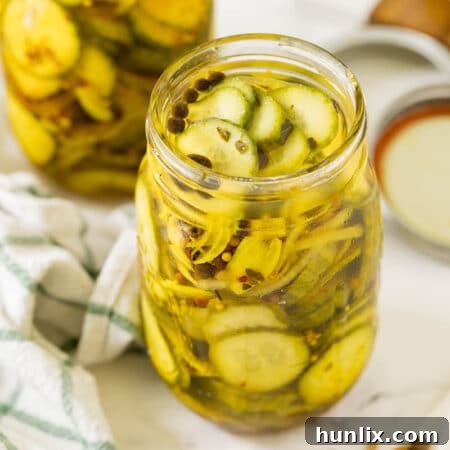
Refrigerator Bread and Butter Pickles
Ingredients
- 4 cups cucumbers thinly sliced
- 1 sweet onion thinly sliced
- 1 ½ cups white vinegar
- ¾ cup sugar
- ¾ tsp salt
- ½ tsp mustard seeds
- ½ tsp celery salt
- ½ tsp turmeric
- ½ tsp red pepper flakes
- ¼ tsp pepper
- 4 cloves garlic peeled and thinly sliced
Instructions
-
Divide the sliced cucumbers into 2 mason jars and top with sliced onions.
-
Bring vinegar and the rest of the ingredients to a boil in a pot on the stove. Boil for 1 minute and remove from the heat.
-
Pour the vinegar mixture evenly into each mason jar. Let them cool with the lid off until it reaches room temperature.
-
Place the lids on the mason jars and refrigerate for 4 days before enjoying.
Notes
Equipment
-
Mason jars
-
Large pot
-
Measuring cups
Nutrition
The information shown is an estimate provided by an online nutrition calculator. It should not be considered a substitute for a professional nutritionist’s advice.
Explore More Pickle-Inspired Creations
If you’re a true pickle enthusiast, the flavor doesn’t have to stop at just jarred cucumbers! Pickles and their distinct tang can be wonderfully incorporated into a variety of dishes, adding a unique zest and complexity. Dive into these other exciting pickle-themed recipes to satisfy your cravings:
- Dill Pickle Dip: A creamy, tangy dip perfect for parties or a snack, bursting with the savory flavor of dill pickles.
- Crockpot Pickle Chicken: An unexpected yet incredibly tender and flavorful chicken dish slow-cooked with the zesty kick of pickles.
- Dill Pickle Roast Beef: Elevate your traditional roast beef with the bold, savory, and slightly sour notes of dill pickles.
- Slow Cooker Dill Pickle Soup: A comforting and unique soup featuring the distinctive taste of dill pickles, perfect for a cozy evening.
- Air Fryer Fried Pickles: Crispy on the outside, tangy on the inside, these air-fried delights are a healthier take on a classic appetizer.
We hope you enjoy making and savoring these delightful Refrigerator Bread and Butter Pickles! Share your culinary creations and tag us on social media.