
It’s a scenario all home cooks and bakers dread: you’re deep into preparing a delicious meal or a delightful batch of cookies, the kitchen is filled with inviting aromas, and then it hits you – you’ve run out of a crucial ingredient. The sudden realization can trigger a brief moment of panic. Do you stop everything, toss on your shoes, and make a last-minute dash to the grocery store? Or perhaps consider the awkwardness of knocking on a neighbor’s door, hoping they might have that one obscure item you need? For many, there’s a far more appealing third option: finding an emergency ingredient substitution.

While an ingredient substitution might not always be the absolute ideal choice, it serves as an invaluable kitchen hack when you’re short on time and desperate to avoid derailing your culinary project. Sometimes, a substitution might subtly alter the flavor or texture of your dish, creating a unique twist. Other times, the swap is so seamless that no one will ever know the difference. Regardless, it’s almost always preferable to abandoning your recipe entirely or making an unplanned trip out! Mastering the art of emergency ingredient substitutions can transform you into a more confident, adaptable, and resourceful chef.
Unlock Your Inner Kitchen Alchemist: The Power of Ingredient Substitutions
Beyond simply rescuing a recipe, knowing how to substitute ingredients offers a wealth of benefits that enhance your cooking experience. It’s not just about avoiding a grocery run; it’s about efficiency, creativity, and minimizing food waste. Imagine saving precious time and fuel by not having to leave your home, especially during a busy weeknight or a crucial baking session. This flexibility also empowers you to adapt recipes to dietary needs or preferences, making dishes suitable for allergies or specific diets without needing to find an entirely new recipe.
Furthermore, ingredient substitutions encourage you to be more intuitive in the kitchen. Instead of rigidly following instructions, you start to understand the function of each component – why butter is used, what role eggs play, or how leavening agents work. This deeper understanding builds culinary confidence, allowing you to experiment more freely and even develop your own signature twists on classic dishes. Ultimately, a well-placed substitution can be the difference between kitchen disaster and culinary triumph, turning potential frustration into a moment of clever resourcefulness.
Essential Tips for Seamless Ingredient Swaps
Before diving into specific substitutions, it’s helpful to understand a few general principles that will guide your decision-making and lead to more successful outcomes:
- Understand the Ingredient’s Role: What does the original ingredient contribute to the recipe? Is it for moisture, fat, flavor, texture, leavening, or binding? A good substitute should ideally fulfill the same primary function. For instance, if milk is for moisture, another liquid might work. If an egg is for binding, a flax egg could be suitable.
- Consider the Recipe Type: Baking is often a precise science, so substitutions here require more caution and accuracy. Cooking, on the other hand, is more forgiving and allows for greater flexibility. A tablespoon of a substituted spice in a stew is less likely to cause issues than a substituted leavening agent in a cake.
- Taste and Test: If you’re unsure about a substitute, especially for flavor, start with a smaller amount and taste as you go. This is more applicable to savory dishes than baking.
- Be Mindful of Flavor and Texture Changes: While a substitute might work functionally, it could alter the final taste or texture. Be prepared for subtle differences and embrace them as part of the creative process. For example, using yogurt instead of sour cream will introduce a slightly tangier flavor.
- Allergies and Dietary Restrictions: If you’re substituting due to an allergy or dietary choice, double-check that your replacement truly meets those requirements. For example, not all plant-based milks are suitable for all allergies.
- Quantity Matters: Pay close attention to the recommended substitution ratios. Sometimes a 1:1 swap works, other times you might need more or less of the substitute.
Your Comprehensive Guide to Emergency Ingredient Substitutions
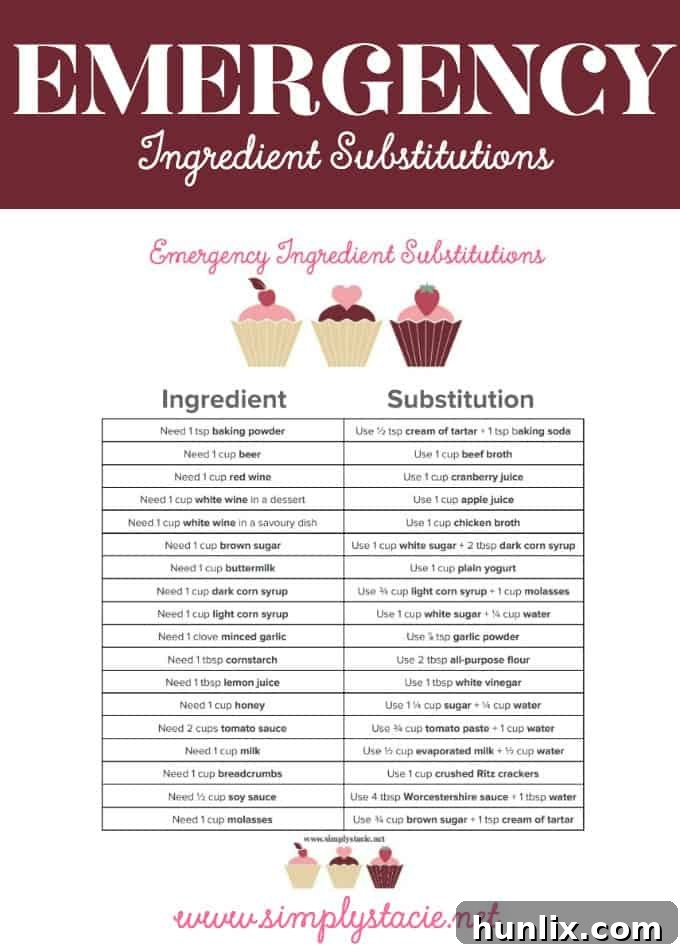
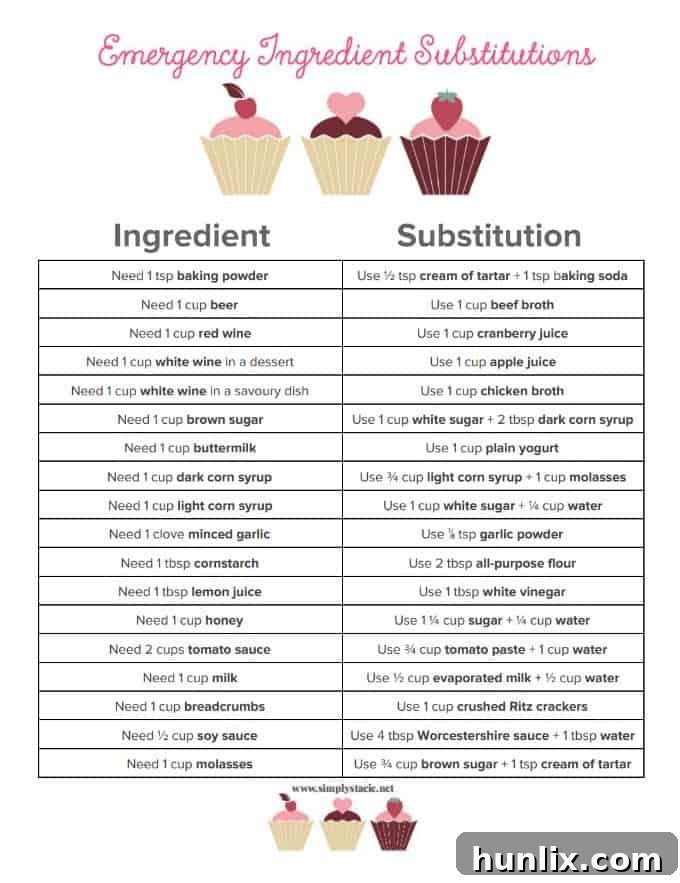
Here’s a handy list of common ingredient substitutions that can save you in a pinch. Keep this guide bookmarked or even print it out for quick reference on your fridge or in your kitchen binder.
Dairy & Milk Substitutions
- Buttermilk: For 1 cup of buttermilk, use 1 cup of regular milk (whole, skim, or non-dairy) mixed with 1 tablespoon of lemon juice or white vinegar. Let it sit for 5-10 minutes until it slightly curdles.
- Milk (Any Type): For 1 cup of milk, you can often substitute with 1/2 cup evaporated milk diluted with 1/2 cup water, or 1/2 cup cream + 1/2 cup water. For baking, almond milk, soy milk, or oat milk can often be used cup for cup.
- Sour Cream: For 1 cup of sour cream, use 1 cup of plain full-fat yogurt (Greek or regular), or 1 cup of buttermilk (though this will be thinner), or 1 cup of crème fraîche.
- Heavy Cream: For 1 cup of heavy cream, use 1 cup evaporated milk (undiluted) for cooking, or for a lighter option, 3/4 cup milk + 1/4 cup melted butter. For whipping, coconut cream (chilled) can sometimes work.
- Cream Cheese: For 1 cup of cream cheese, use 1 cup of plain Greek yogurt (drained of excess liquid), or a combination of ricotta cheese and a little lemon juice, or even pureed cottage cheese for consistency.
- Butter: For 1 cup (2 sticks) of butter, use 1 cup of margarine, or 7/8 cup vegetable oil (a bit less oil due to its higher fat content), or 1 cup of shortening. For baking, remember butter adds flavor and texture that oil might not perfectly replicate.
Egg Substitutions
- One Large Egg:
- 1/4 cup unsweetened applesauce (best for moisture, can affect flavor slightly).
- 1/4 cup mashed ripe banana (adds flavor, good for binding).
- 1 tablespoon ground flaxseed meal mixed with 3 tablespoons water (let sit for 5 minutes until gel-like – often called a “flax egg,” great for binding).
- 1 tablespoon chia seeds mixed with 3 tablespoons water (similar to flax egg).
- 1/4 cup pureed silken tofu.
- Commercial egg replacers (follow package directions).
Note: For recipes requiring multiple eggs (like custards), substitutions become more challenging and might alter the outcome significantly.
Fats & Oils Substitutions
- Vegetable Oil (Canola, Sunflower, etc.): For 1 cup of vegetable oil, use 1 cup of melted butter, 1 cup of shortening (melted), or 1 cup of apple sauce (for baking, this reduces fat but adds moisture, may require adjusting other liquids).
- Shortening: For 1 cup of shortening, use 1 cup of butter or 1 cup of lard.
Leavening Agent Substitutions
- Baking Powder: For 1 teaspoon of baking powder, use 1/4 teaspoon baking soda + 1/2 teaspoon cream of tartar, or 1/4 teaspoon baking soda + 1/2 cup buttermilk (reduce other liquids in the recipe by 1/2 cup).
- Baking Soda: Baking soda requires an acid to activate. If your recipe calls for baking soda and no other acid, it’s difficult to substitute. If it does, for 1 teaspoon of baking soda, use 3 teaspoons of baking powder (and omit any other acids in the recipe).
Sweetener Substitutions
- Granulated Sugar: For 1 cup of granulated sugar, use 1 cup packed light or dark brown sugar, or 3/4 cup honey (reduce other liquids by 1/4 cup), or 3/4 cup maple syrup (reduce other liquids by 1/4 cup), or 1 cup agave nectar (reduce other liquids by 1/4 cup).
- Brown Sugar: For 1 cup packed brown sugar, use 1 cup granulated sugar + 1 tablespoon molasses (mix well), or 1 cup dark corn syrup (reduce other liquids).
- Honey/Maple Syrup: For 1 cup of honey or maple syrup, use 1 1/4 cups granulated sugar + 1/4 cup liquid (water, milk, or juice), or 1 cup light corn syrup.
Thickener Substitutions
- Cornstarch: For 1 tablespoon of cornstarch (for thickening), use 2 tablespoons of all-purpose flour, or 1 tablespoon of arrowroot powder, or 1 tablespoon of potato starch.
- All-Purpose Flour (as a thickener): For 1 tablespoon of flour, use 1/2 tablespoon of cornstarch (or arrowroot/potato starch).
Acids & Flavorings Substitutions
- Lemon Juice: For 1 teaspoon of lemon juice, use 1/2 teaspoon of white vinegar, or 1 teaspoon of lime juice.
- Vanilla Extract: For 1 teaspoon of vanilla extract, use 1 teaspoon of maple syrup (for sweetness and a hint of flavor, best in baked goods), or an equal amount of almond extract for certain recipes where the flavor profile works.
- Garlic (Fresh): For 1 clove of fresh garlic, use 1/4 teaspoon of garlic powder, or 1/2 teaspoon of granulated garlic, or 1/2 teaspoon of minced garlic from a jar.
- Onion (Fresh): For 1 medium fresh onion, use 1 tablespoon of onion powder, or 1/4 cup dried minced onion (rehydrated if necessary).
- Fresh Herbs: For 1 tablespoon of fresh herbs, use 1 teaspoon of dried herbs (the flavor is more concentrated).
Flour Substitutions
- All-Purpose Flour: For 1 cup of all-purpose flour, use 1 cup of bread flour (for a chewier result), or 1 cup of whole wheat pastry flour (for a slightly denser, nuttier result). For gluten-free, use a 1:1 gluten-free flour blend.
- Self-Rising Flour: For 1 cup of self-rising flour, use 1 cup of all-purpose flour + 1 1/2 teaspoons baking powder + 1/2 teaspoon salt.
Miscellaneous Substitutions
- Breadcrumbs: For 1 cup of breadcrumbs, use 1 cup of crushed cornflakes or crackers, or 1 cup of panko breadcrumbs, or 1 cup of rolled oats (pulsed in a food processor).
- Tomato Paste: For 1 tablespoon of tomato paste, use 2-3 tablespoons of tomato sauce (reduce liquid elsewhere in the recipe), or 1 tablespoon of ketchup (if sweetness and vinegar notes are acceptable).
When to Exercise Caution: Recipes Where Substitutions are Risky
While substitutions are incredibly useful, there are certain culinary situations where playing fast and loose with ingredients can lead to disappointing results. Recipes that rely heavily on precise chemical reactions, delicate textures, or specific flavors are often less forgiving. Highly specialized baking, such as soufflés, macarons, or intricate pastries, often requires exact measurements and specific ingredient properties to achieve their desired structure and airiness. Similarly, extremely delicate sauces or custards where the balance of fat, acid, and thickeners is critical might not respond well to major swaps.
If an ingredient is the star of the show – for example, a specific type of cheese in a classic Italian dish, or a unique spice blend in an authentic ethnic recipe – substituting it might fundamentally change the character of the dish. In these cases, it might be better to postpone cooking until you have the correct ingredient, or to find an entirely different recipe that accommodates your available pantry items.
Beyond the Emergency: Cultivating a Well-Stocked Pantry
The best way to minimize the need for emergency ingredient substitutions is to maintain a reasonably well-stocked pantry. Regularly checking your inventory of staples like flour, sugar, baking soda, baking powder, oils, vinegars, common spices, and canned goods can prevent those last-minute surprises. Having a few long-lasting dairy alternatives or shelf-stable milk options can also be a lifesaver. A proactive approach to pantry management ensures that you’re always prepared, transforming cooking from a potential stressor into a consistently enjoyable and seamless activity.
Your Kitchen Confidence Starts Here
Running out of an ingredient doesn’t have to spell disaster for your meal. With this comprehensive guide to emergency ingredient substitutions, you’re equipped to handle most kitchen crises with ease and confidence. Embrace the flexibility these swaps offer, experiment wisely, and enjoy the satisfaction of never letting a missing ingredient stand between you and a delicious homemade dish. Happy cooking!
Have you ever run out of an ingredient and successfully used a substitution? Share your favorite kitchen saviors!