
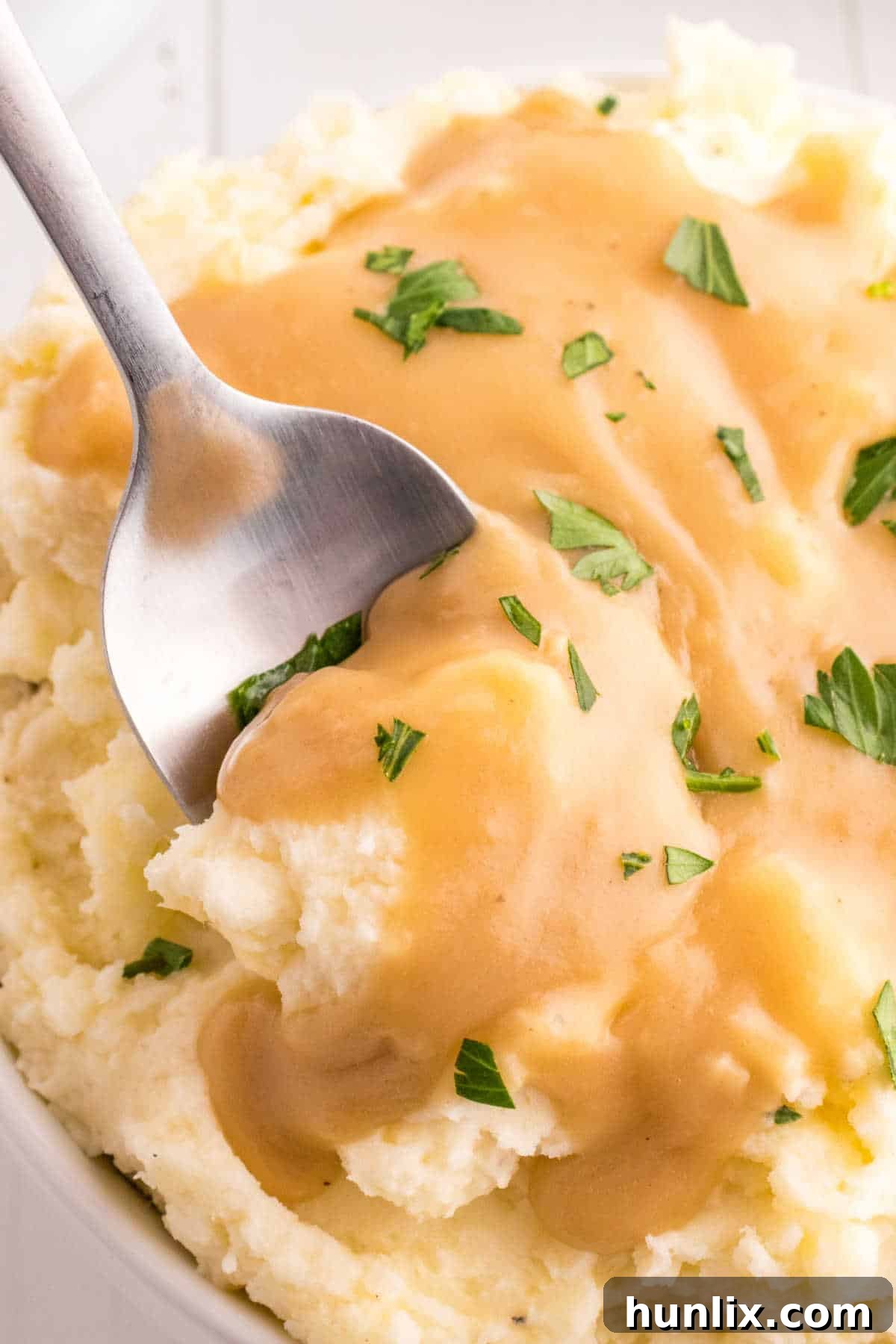
Unlock the secret to a rich, savory homemade brown gravy without a single drop of pan drippings. This culinary marvel is far simpler to create than you might imagine, yet it delivers a classic, comforting topping that elevates everything from fluffy mashed potatoes and hearty noodles to gourmet sandwiches. Crafted from scratch, this exquisitely smooth and deeply flavorful sauce is poised to become your kitchen’s best-kept secret, adding an indispensable touch of perfection to any meal.
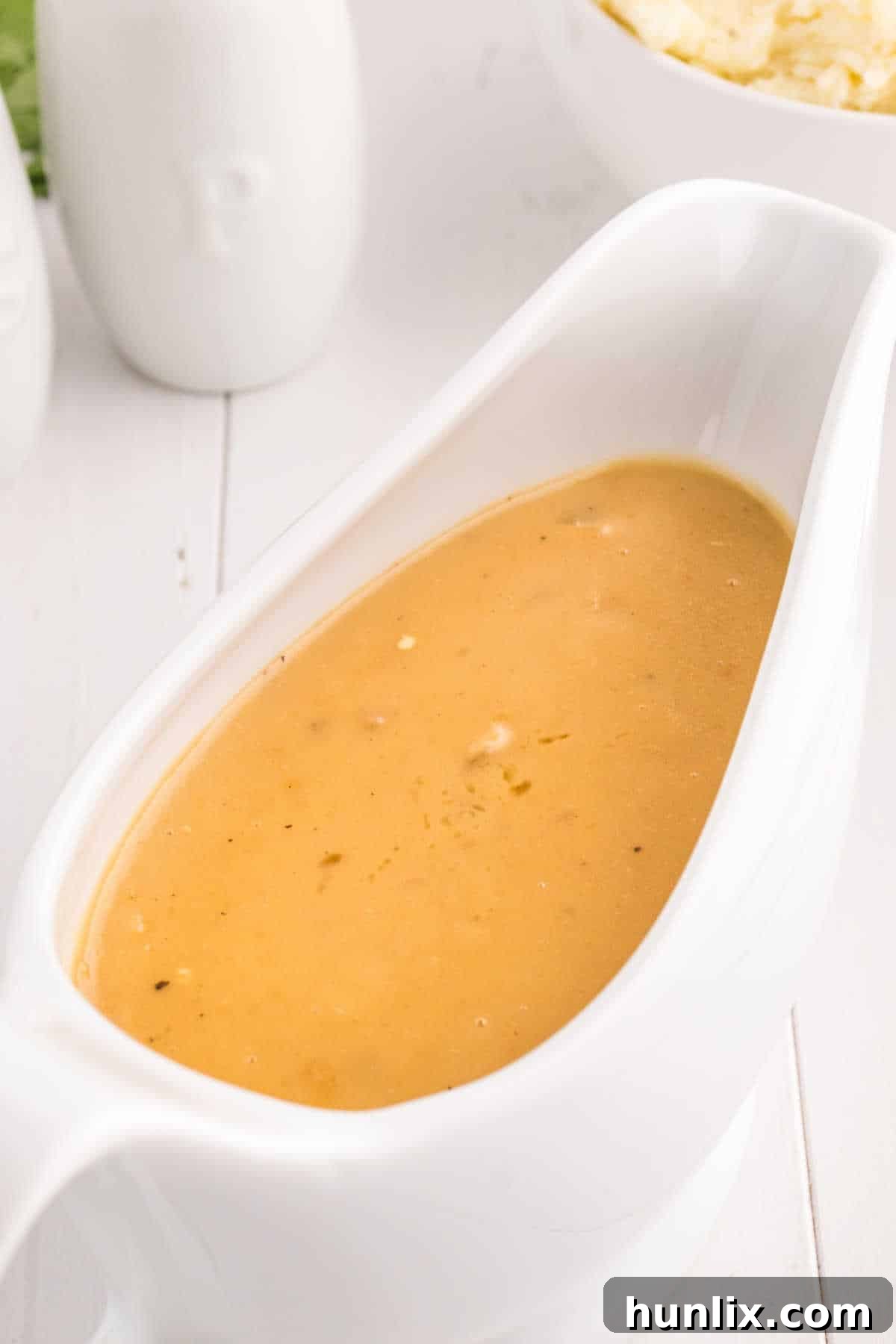
This remarkable homemade brown gravy is a true game-changer, demonstrating that you don’t need meat drippings to achieve incredible depth of flavor. Its profile is beautifully enhanced by the aromatic duo of fresh garlic and finely chopped onions, complemented by the subtle, earthy notes of fresh thyme and bright, herbaceous parsley. A delightful kick from Worcestershire sauce adds a layer of umami that makes this savory creation truly stand out. This versatile sauce isn’t just for special occasions; it’s a magnificent accompaniment that can transform any dish, from a succulent roast turkey or tender pork chops to creamy mashed potatoes and perfectly roasted vegetables, making your everyday meals and holiday feasts taste exceptionally fantastic. Once you experience the unparalleled taste and texture of this simple yet sophisticated recipe, you’ll be eager to make it a staple in your culinary repertoire.
Why This Homemade Brown Gravy Will Become Your Favorite
Discover the myriad reasons why this easy-to-make brown gravy recipe is destined to become a beloved staple in your home:
- Effortless Preparation: Forget complicated techniques or hours in the kitchen. This brown gravy recipe is designed for simplicity, requiring just a handful of common ingredients and minimal time. You’ll be amazed at how quickly you can whip up such a deeply flavorful sauce, making it perfect for both spontaneous weeknight dinners and planned holiday gatherings.
- Unmatched Versatility: The adaptability of brown gravy knows no bounds. Its rich, savory profile pairs wonderfully with an extensive array of dishes. Drizzle it generously over perfectly seared steaks, roasted chicken, or comforting pot roasts. Transform plain mashed potatoes into a culinary delight, or use it as a flavorful dip for crusty bread and crisp vegetables. This gravy effortlessly enhances countless meals, adding a touch of gourmet sophistication without the fuss.
- Ultimate Comfort Food: There’s something inherently heartwarming about a perfectly made brown gravy. Its warmth, richness, and familiar savory notes embody the essence of comfort food. This sauce offers a nostalgic embrace, making any home-cooked meal feel more inviting and satisfying. It’s the ideal topping to infuse your favorite dishes with an extra layer of soul-soothing flavor.
- Exceptional Flavor Enhancement: Brown gravy has the unique ability to elevate and round out the flavors of other dishes. It can magically rescue a slightly dry cut of meat, turning it into a tender, juicy experience. It transforms ordinary vegetables into enticing side dishes and makes mashed potatoes extraordinarily delicious, creating a cohesive and satisfying meal.
- Guaranteed Crowd-Pleaser: Universally adored for its rich taste and comforting appeal, brown gravy is a surefire hit at any table. Whether you’re hosting a small family dinner or a large festive gathering, this gravy is a safe and welcomed choice that is guaranteed to delight every palate and earn you rave reviews.
Essential Ingredients for Your Perfect Brown Gravy
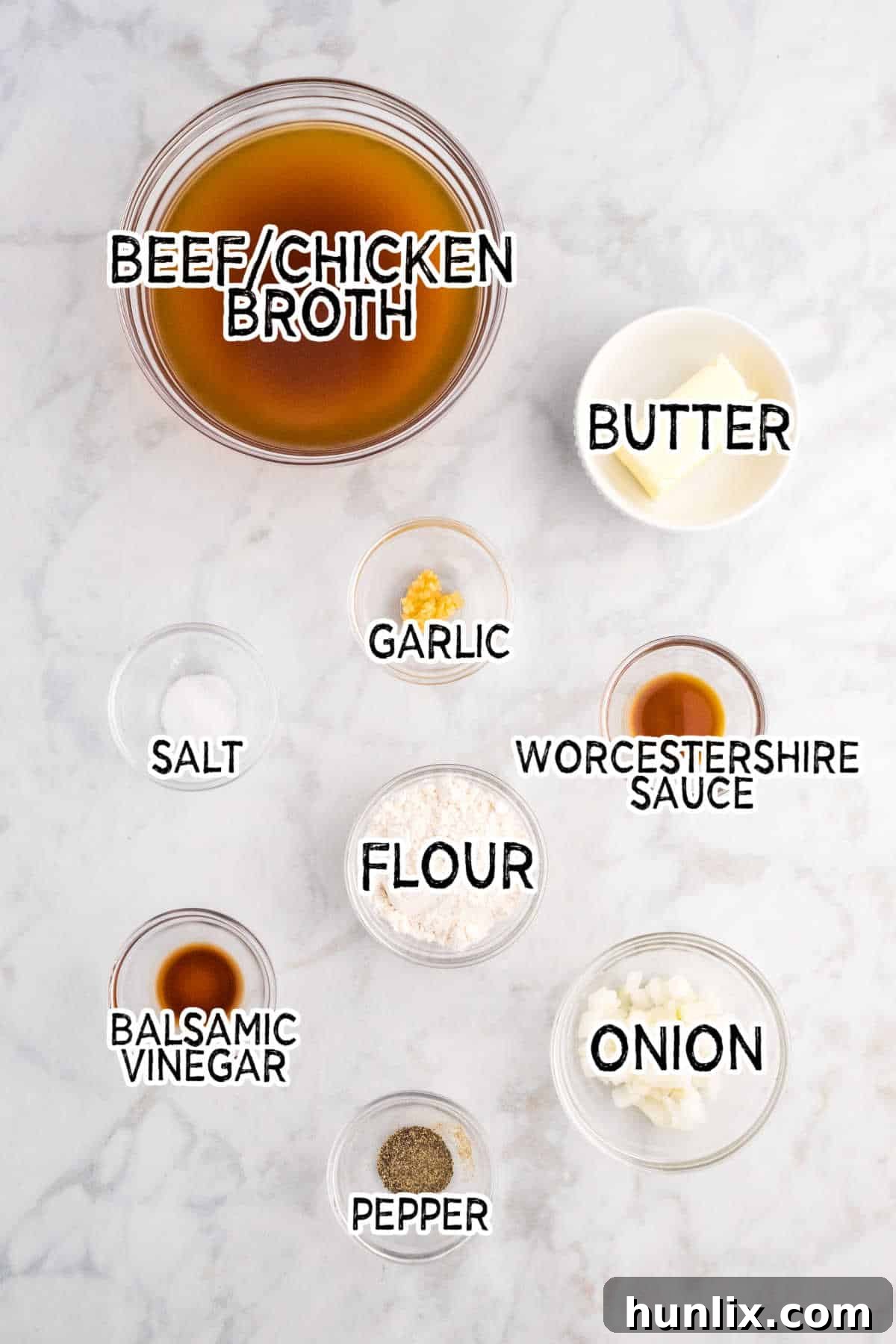
Crafting this incredible brown gravy requires only a few pantry staples and fresh aromatics. The detailed measurements and instructions can be found in the comprehensive recipe card towards the end of this article.
- Butter: Forms the essential base of our roux, providing richness and a smooth texture.
- All-Purpose Flour: The thickening agent that transforms butter into a velvety roux, crucial for the gravy’s consistency.
- Onion: Finely chopped, it adds a foundational layer of savory sweetness and aromatic depth.
- Garlic: Minced fresh garlic infuses the gravy with its distinctive pungent and sweet notes, enhancing the overall aroma.
- Low-Sodium Beef or Chicken Broth: The liquid base, chosen for its robust flavor. Opting for low-sodium allows for precise seasoning control.
- Balsamic Vinegar: A secret weapon that adds a subtle tang, a hint of sweetness, and a beautiful dark hue to the gravy.
- Worcestershire Sauce: Delivers a complex umami boost, adding depth and a savory punch that truly defines the gravy’s character.
- Salt and Black Pepper: Fundamental seasonings to balance and enhance all the flavors, adjusted to your personal preference.
- Fresh Thyme or Parsley: An optional but highly recommended garnish, offering a burst of fresh flavor and vibrant color just before serving.
Simple Steps to Crafting Delicious Brown Gravy
Follow these easy instructions to create a flawless, flavorful brown gravy from scratch:
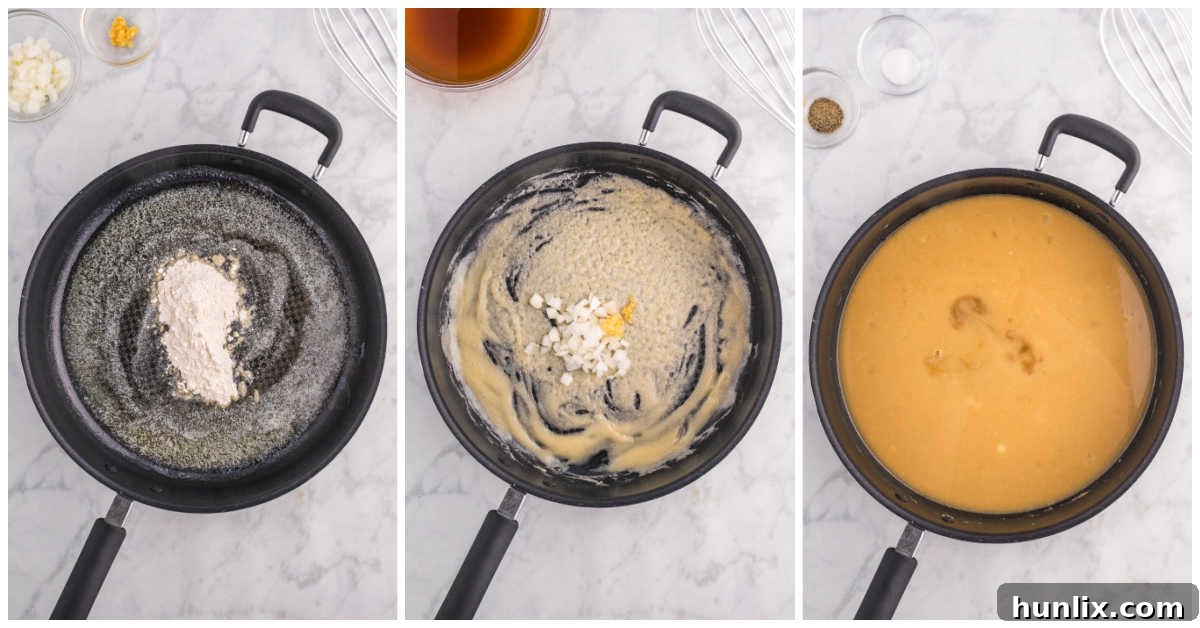
- Step One: Create the Roux. In a medium-sized saucepan, melt the butter over medium heat. Once fully melted, add the all-purpose flour. Immediately begin whisking constantly and vigorously to form a smooth, lump-free paste, known as a roux. Continue cooking and whisking for approximately 2 to 3 minutes until the roux achieves a light golden color. This crucial step not only thickens the gravy but also cooks out the raw flour taste, contributing to a richer flavor.
- Step Two: Infuse Aromatics. Reduce the heat to medium-low. Stir in the finely chopped onion and minced garlic. Sauté gently for another 2 to 3 minutes, or until the onions become translucent and the delightful aromas of the garlic and onion fill your kitchen. Be careful not to brown them excessively, as this can affect the gravy’s final color and flavor.
- Step Three: Incorporate the Broth. Slowly, pour the beef or chicken broth into the saucepan. It is vital to whisk continuously as you add the liquid to prevent any lumps from forming. The roux will gradually absorb the broth and the mixture will begin to thicken into a smooth, luscious gravy.
- Step Four: Enhance with Flavor Boosters. Stir in the balsamic vinegar and Worcestershire sauce until they are thoroughly combined with the gravy. Taste the mixture and, if desired, add a touch more of these ingredients to achieve a more robust and complex flavor profile that suits your preference.
- Step Five: Season to Perfection. Season the gravy with salt and freshly ground black pepper to taste. Start with small amounts and adjust as needed, remembering that it’s easier to add more seasoning than to correct an over-seasoned dish.
- Step Six: Simmer and Thicken. Reduce the heat to low and allow the gravy to simmer gently for 10 to 15 minutes. This simmering period is essential for the flavors to meld and deepen, and for the gravy to reach its optimal thick and velvety consistency. Stir occasionally to prevent sticking.
- Step Seven: Optional Straining for Smoothness. If you desire an exceptionally smooth gravy, you may strain it through a fine-mesh strainer to remove any bits of onion or garlic. This step is entirely optional and depends on your textural preference; some enjoy the subtle texture of the aromatics.
- Step Eight: Garnish and Serve. Just before serving, finely chop some fresh thyme or parsley and sprinkle it over the gravy for a beautiful pop of color and an added layer of fresh herbaceous flavor. Transfer the perfectly homestyle brown gravy to a elegant gravy boat or a decorative serving dish and present it proudly.
Essential Equipment for Gravy Making
You’ll need just a few basic kitchen tools to create this delightful brown gravy:
- Medium Saucepan: For preparing the roux and simmering the gravy.
- Whisk: Indispensable for creating a smooth roux and preventing lumps.
- Fine Mesh Strainer: Optional, for achieving an extra-smooth gravy.
What to Serve with Your Perfect Brown Gravy
This versatile homemade brown gravy is the ideal complement to an impressive array of dishes. No matter your choice, this rich, savory sauce promises to elevate your favorite meals, adding depth and a gourmet touch:
- Classic French Fries: Transform a simple side of fries into a decadent treat, perhaps even venturing into poutine territory.
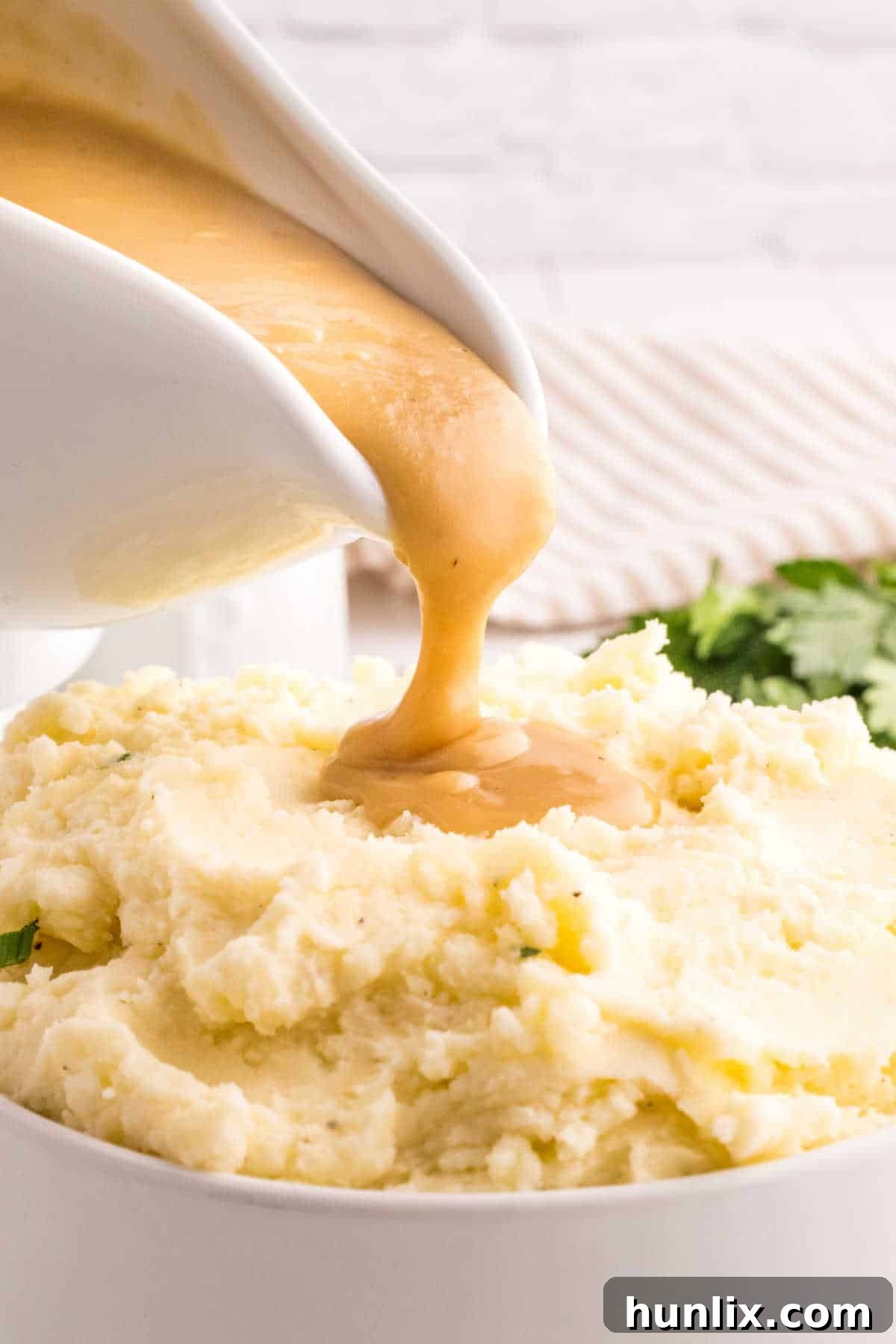
- Slow Cooker Rosemary Garlic Mashed Potatoes: A match made in heaven! The creamy potatoes soak up the gravy beautifully.
- Perfectly Cooked Pork Chops: The gravy’s richness balances the savory notes of pork, creating a harmonious meal.
- Hearty Meatloaf: Gravy is an absolute must-have for meatloaf, enhancing its comforting, homestyle appeal.
- Roasted Turkey: A holiday essential, this gravy makes your turkey even more moist and flavorful.
- Olive Oil Mashed Potatoes with Kale and Herbs: An elegant pairing that adds a layer of sophisticated flavor to herbaceous potatoes.
- Succulent Roast Beef: A classic combination where the gravy brings out the best in the tender beef.
- Comforting Pot Roast: Gravy is essential for any pot roast, tying all the tender meat and vegetables together.
- Crispy Fried Chicken: A surprisingly delicious pairing, adding a creamy, savory contrast to the crunchy chicken.
Creative Variations and Flavorful Substitutions
Experiment with these exciting twists to customize your brown gravy and suit any palate or occasion:
- Rich Mushroom Gravy: Elevate your gravy with an earthy dimension. Sauté sliced mushrooms (such as cremini or button) in a separate pan until they release their moisture and turn a beautiful golden brown. Stir these flavorful mushrooms directly into your simmering gravy for an intensely rich and savory experience.
- Sophisticated Red Wine Gravy: For a more elegant and deeply flavored gravy, substitute a portion of the beef or chicken broth with a good quality dry red wine (like Cabernet Sauvignon or Merlot). The wine will add a beautiful complexity and a subtle fruity note that pairs wonderfully with red meats. Allow it to simmer a bit longer to cook off the alcohol and concentrate the flavors.
- Aromatic Herb-Infused Gravy: Unleash your inner chef by experimenting with different fresh herbs. Fresh rosemary, sage, or tarragon can impart unique and highly aromatic notes to your gravy. Add these finely chopped herbs towards the end of the cooking process to preserve their vibrant flavors. Consider a blend of your favorite herbs for a truly personalized twist.
- Zesty Citrus Gravy: For a bright and fresh counterpoint, particularly excellent with poultry, add a hint of lemon or orange zest to your gravy. The subtle citrus oils provide a delicate zing that cuts through the richness, offering a surprising and delightful flavor profile.
- Spicy Kick Gravy: If you enjoy a touch of heat, a pinch of cayenne pepper, a few red pepper flakes, or a dash of your favorite hot sauce can add a fantastic kick to your gravy. Start with a small amount and increase to your desired level of spice.
- Diverse Onion Varieties: Play with different types of onions to subtly alter the flavor base. Shallots offer a milder, sweeter, and more refined onion flavor, while red onions can provide a slightly sharper, more complex taste that carmelizes beautifully.
- Broth Versatility: While beef or chicken broth are standard, feel free to explore other liquid bases. Vegetable broth makes this gravy vegetarian-friendly, mushroom broth adds an extra layer of umami, and turkey stock is perfect for holiday leftovers. Always opt for low-sodium varieties to have full control over the salt content of your final gravy.
- Luxuriously Creamy Gravy: For a richer, more indulgent gravy, stir in a splash of heavy cream or a touch of milk during the final simmering stage. This addition will impart a luscious, velvety texture and a milder, creamier flavor, transforming your gravy into an even more decadent sauce.
Storage and Reheating Instructions
Properly storing and reheating your delicious homemade brown gravy ensures you can enjoy its comforting flavors for days to come:
Storage Instructions
If you find yourself with leftover brown gravy (a rare occurrence!), it can be stored for later enjoyment. First, allow the gravy to cool completely to room temperature. This is crucial to prevent condensation and bacterial growth. Once cooled, transfer the gravy to an airtight container. It will keep beautifully in the refrigerator for 2 to 3 days, maintaining its freshness and flavor.
Can I Freeze Brown Gravy?
It is generally advisable to steer clear of freezing brown gravy made with a flour-based roux, as this can significantly compromise its texture and flavor. The freezing and thawing process often causes the gravy to separate into its individual components, resulting in a grainy, watery, or unappealing consistency. You might also notice a subtle change in taste, as the richness can diminish. For the best culinary experience, it’s always preferable to whip up a fresh batch of gravy when you need it or simply store any leftovers in the refrigerator for a few days. This approach guarantees that your gravy will remain smooth, rich, and delicious!
Expert Tips and Tricks for the Best Brown Gravy
Achieve gravy perfection every time with these valuable insights and cooking hacks:
- Master the Perfect Roux: The foundation of a silky-smooth gravy lies in a perfectly cooked roux. After melting the butter, thoroughly whisk in the flour and continue cooking over medium heat until it reaches a beautiful light golden color. This step is essential not only for developing a nutty flavor but also for eliminating any raw flour taste, which can detract from the gravy’s overall appeal.
- Adjust Onion and Garlic Flavor: The cooking time for your onions and garlic directly impacts their intensity. For a milder, more subtle aromatic presence, sauté them for a shorter duration until just translucent. If you crave a deeper, more robust flavor, cook them a little longer until they begin to caramelize slightly, unlocking their sweet and savory potential.
- Gradual Broth Addition is Key: To avoid dreaded lumps and ensure a perfectly smooth gravy, pour the broth into the roux very slowly and steadily. Simultaneously, whisk continuously and vigorously. This gradual incorporation allows the flour particles to evenly disperse into the liquid, preventing them from clumping together and resulting in a flawlessly smooth texture.
- Customize Thickness to Your Liking: Gravy consistency is a matter of personal preference. If your gravy appears too thick, simply whisk in a little more broth, a tablespoon at a time, until it reaches your desired pourable consistency. Conversely, if it’s too thin, let it simmer gently for a few more minutes, stirring occasionally, to allow it to naturally reduce and thicken. This easy adjustment ensures your gravy is always just right.
- Fresh Herbs for a Bright Finish: While dried herbs can be used, fresh thyme and parsley add a vibrant burst of color and a superior fresh flavor. Add them right at the very end of the cooking process, just before serving, to preserve their delicate aroma and potency. Remember, a little goes a long way with fresh herbs, so use them judiciously.
- The Art of Straining (Optional): Straining your gravy is a matter of personal preference regarding texture. If you prefer an utterly smooth gravy, free from any small bits of onion or garlic, simply pass it through a fine-mesh strainer after simmering. This step ensures an elegant, restaurant-quality consistency while retaining all the delicious flavor.

What Exactly is Brown Gravy?
Brown gravy is a beloved, rich, and savory sauce that typically forms the backbone of many comforting meals. At its heart, it’s a thickened liquid, traditionally made by combining a fat (like butter or drippings) with flour to create a roux, which is then slowly cooked with a flavorful broth (beef, chicken, or vegetable) and seasoned to perfection. This versatile condiment is celebrated for its ability to enhance a wide variety of dishes, from succulent roast meats to creamy mashed potatoes, making them incredibly more delicious and satisfying. The beauty of this particular recipe lies in its simplicity and accessibility: you don’t need any beef drippings from a roasted meat to achieve an intensely flavorful and beautifully brown gravy, making it a perfect anytime staple.
How to Ensure Lump-Free Gravy Every Time
Lumpy gravy can be a real disappointment, but with a few simple techniques, you can guarantee a consistently smooth and velvety sauce:
- Begin with a Perfect Roux: The first and most critical step is to create a flawlessly smooth roux. Start by melting your chosen fat (butter, in this recipe) in a saucepan. Gradually add the all-purpose flour, and immediately begin whisking continuously. Continue whisking as the mixture cooks, aiming for a smooth, paste-like consistency. Cooking it until it achieves a light golden color not only adds depth of flavor but also ensures the raw flour taste is cooked out, which is key to a superior gravy.
- Gradual Broth Addition: When it’s time to introduce the liquid, do so very slowly. Pour the broth in a thin, steady stream while whisking continuously and vigorously. Adding the liquid gradually allows the roux to absorb it evenly, preventing pockets of dry flour from forming lumps. This patient approach is a game-changer for achieving silkiness.
- Maintain Consistent Whisking: Keep your whisk moving! Constant stirring or whisking is your best defense against lumps. This ensures that the roux and liquid are thoroughly blended, creating a homogenous mixture from the very start and minimizing any chance for clumps to develop.
- The Strainer as a Last Resort: Even with the best technique, sometimes a stubborn lump might appear. If you prefer an ultra-smooth, restaurant-quality gravy, don’t hesitate to use a fine-mesh strainer. Simply pour your finished gravy through the strainer before serving. This will effectively catch any remaining lumps, onion, or garlic bits, leaving you with a beautifully smooth and refined sauce.
How to Reheat Leftover Brown Gravy
Reheating leftover gravy is simple, but a few tips will help maintain its smooth texture and rich flavor. When you’re ready to enjoy your delicious gravy again, transfer it to a small saucepan. Place it over low heat on your stovetop. Gravy tends to thicken as it cools, so it might appear too dense when cold. If this is the case, gradually add a small amount of water or additional broth (beef or chicken) to thin it out to your desired consistency. Stir occasionally while it heats through to prevent scorching and ensure even warming. Heat until it’s simmering gently and thoroughly warmed, then serve immediately.
Understanding Roux vs. Slurry for Thickening
When it comes to thickening sauces and gravies, two common methods often come up: using a roux or a slurry. While both achieve a thicker consistency, they differ significantly in their composition, application, and the resulting texture and flavor profile.
A roux is a cooked mixture of fat (traditionally butter, but can also be oil or rendered meat fat) and flour, cooked together over heat. The fat coats the starch molecules of the flour, preventing them from clumping when liquid is added. The cooking time of the roux dictates its color and flavor: a white roux is cooked briefly and offers maximum thickening power, while a blonde or brown roux is cooked longer, developing a nutty flavor and richer color, albeit with slightly less thickening ability. Roux provides a rich, opaque, and stable thickening, making it ideal for classic French sauces, hearty gravies, béchamel, and many soups, contributing both body and a depth of flavor.
A slurry, on the other hand, is a simple mixture of a liquid (such as water, broth, or even wine) and a pure starch, most commonly cornstarch or arrowroot powder. Unlike a roux, a slurry is not cooked on its own. It’s typically whisked into a simmering liquid at the end of the cooking process. The starch granules swell and thicken the sauce quickly, producing a clear, glossy, and often lighter consistency. Slurries are favored in dishes where a clean flavor and translucent finish are desired, such as Asian stir-fries, fruit pie fillings, or quick pan sauces, as they don’t add the opaque richness or flavor that a roux does. The choice between a roux and a slurry depends entirely on the desired texture, flavor contribution, and the specific requirements of your recipe.
How to Make Gravy with Meat Drippings
For those times you’ve roasted a delicious cut of meat, harnessing the flavorful pan drippings for gravy is a fantastic way to capture those rich essences. To make gravy with drippings, first carefully pour off any excess fat from your roasting pan, leaving behind the concentrated, flavorful meat juices and browned bits (fond). Place the roasting pan directly on your stovetop over medium heat. Add a tablespoon or two of flour directly into the drippings, and whisk constantly to create a savory roux. Deglaze the pan as you whisk, scraping up any browned bits from the bottom. Gradually incorporate your chosen broth (beef, chicken, or vegetable), stirring continuously to prevent lumps and ensure a smooth consistency. Allow the gravy to simmer gently, continuing to whisk until it thickens to your preference. Finally, season the gravy with salt and pepper to taste. This method creates an incredibly rich and personalized homemade gravy, infused with the flavors of your roast.
How to Easily Thicken Gravy
If your gravy turns out thinner than desired, don’t fret! It’s an easy fix. The most common and effective way to thicken gravy is by creating a simple slurry. In a small bowl, mix a small amount of all-purpose flour or cornstarch with an equal amount of cold water or broth until you form a smooth, lump-free paste. It’s crucial that the liquid is cold to prevent the starch from clumping. Gradually whisk this slurry into your simmering gravy. Continue to stir gently and cook for another minute or two, allowing the starch granules to expand and thicken the gravy. Add more slurry, little by little, until your gravy reaches the perfect, luscious thickness you desire. Remember, cornstarch thickens more powerfully and creates a glossier finish, while flour provides a more opaque and traditional texture.

Frequently Asked Questions About Brown Gravy
Here are some common questions about making and enjoying this delicious brown gravy:
How long does this easy recipe take to make?
This truly is the best brown gravy recipe because of its efficiency without compromising on flavor. The total hands-on preparation time is only about 10 minutes, followed by a gentle simmering and cooking time of approximately 25 minutes. This means you can enjoy a perfect, homemade gravy in only about 35 minutes from start to finish, making it an ideal choice for both busy weeknights and special occasions where time is of the essence.
How many servings does this recipe make?
This recipe is perfectly portioned to yield 6 to 8 generous servings of brown gravy. This makes it suitable for a family meal or a small gathering. Should you need more or less, the recipe can be very easily doubled or halved to precisely suit your specific needs without altering the quality or flavor of the gravy.
What kind of broth is best for brown gravy?
For a classic brown gravy, low-sodium beef broth is often preferred for its rich, robust flavor and deep color. However, low-sodium chicken broth works wonderfully too, offering a slightly lighter, yet still savory, profile. You can also use vegetable broth for a vegetarian option. The key is choosing low-sodium so you can control the seasoning.
Can I make this gravy vegetarian or vegan?
Absolutely! To make this gravy vegetarian, simply substitute the beef or chicken broth with a good quality vegetable or mushroom broth, ensuring it’s low-sodium. For a vegan version, use a plant-based butter alternative for the roux and, again, opt for vegetable or mushroom broth. Ensure your Worcestershire sauce is also vegan (some brands contain anchovies).
Why is my gravy separating or looking oily?
Gravy can sometimes separate if the fat and liquid haven’t emulsified properly, or if it has been held at an incorrect temperature for too long. If it looks oily, it might be due to too much fat in the roux or insufficient whisking during the liquid addition. To fix it, try whisking vigorously over low heat to re-emulsify. If it’s still separating, slowly whisk in a tablespoon of cold broth or water to help bring it back together.
More Delicious Recipes Featuring Gravy
If you’re a fan of the comforting goodness of gravy, you’ll love these other recipes that incorporate this rich sauce:
- Country Gravy: A creamy, peppery classic, perfect for biscuits and breakfast.
- Poutine: The iconic Canadian dish featuring fries, cheese curds, and luscious gravy.
- Crockpot Pickle Chicken: A unique and flavorful chicken dish that benefits from a savory sauce.
- Mushroom Swiss Steak: Tender steak smothered in a rich mushroom gravy.
- Slow Cooker Beef and Noodles: A hearty and comforting meal where gravy brings all the components together.
- Sausage Gravy: Another breakfast favorite, especially delightful over warm biscuits.
And for the perfect accompaniment to any gravy, be sure to try these Sour Cream Biscuits.

Homemade Brown Gravy (Without Drippings)
Ingredients
- ¼ cup salted butter
- ¼ cup all-purpose flour
- ¼ cup yellow onion finely chopped
- 2 cloves garlic minced
- 2 cups beef or chicken broth low sodium
- 1 tsp balsamic vinegar
- 1 tsp Worcestershire sauce
- salt and pepper to taste
- Fresh thyme or parsley finely chopped, for garnish, optional
Instructions
-
In a medium saucepan, melt the butter over medium heat. Add the flour and whisk constantly to form a smooth roux. Cook for about 2 to 3 minutes until the roux is a light golden color.
-
Reduce the heat to medium-low. Stir in the chopped onion and garlic. Cook for an additional 2 to 3 minutes or until the onions are translucent.
-
Slowly pour in the beef or chicken broth while whisking continuously to avoid lumps. The mixture will thicken as you whisk.
-
Add the balsamic vinegar and Worcestershire sauce, mix until well combined. Taste and add more if you’d like a stronger flavor.
-
Season the gravy with salt and pepper to taste.
-
Reduce the heat to low and let the gravy simmer gently for about 10 to 15 minutes.
-
If you prefer a smoother gravy, you can strain it through a fine mesh strainer to remove any onions or garlic bits. This step is optional.
-
Before serving, garnish with fresh thyme or parsley, if desired. Transfer the gravy to a serving dish or gravy boat.
Notes
Equipment
-
Saucepan
-
Whisk
Nutrition
The information shown is an estimate provided by an online nutrition calculator. It should not be considered a substitute for a professional nutritionist’s advice.
Want Even More Recipes?
Join Moms Best Recipes to find more delicious family recipes.