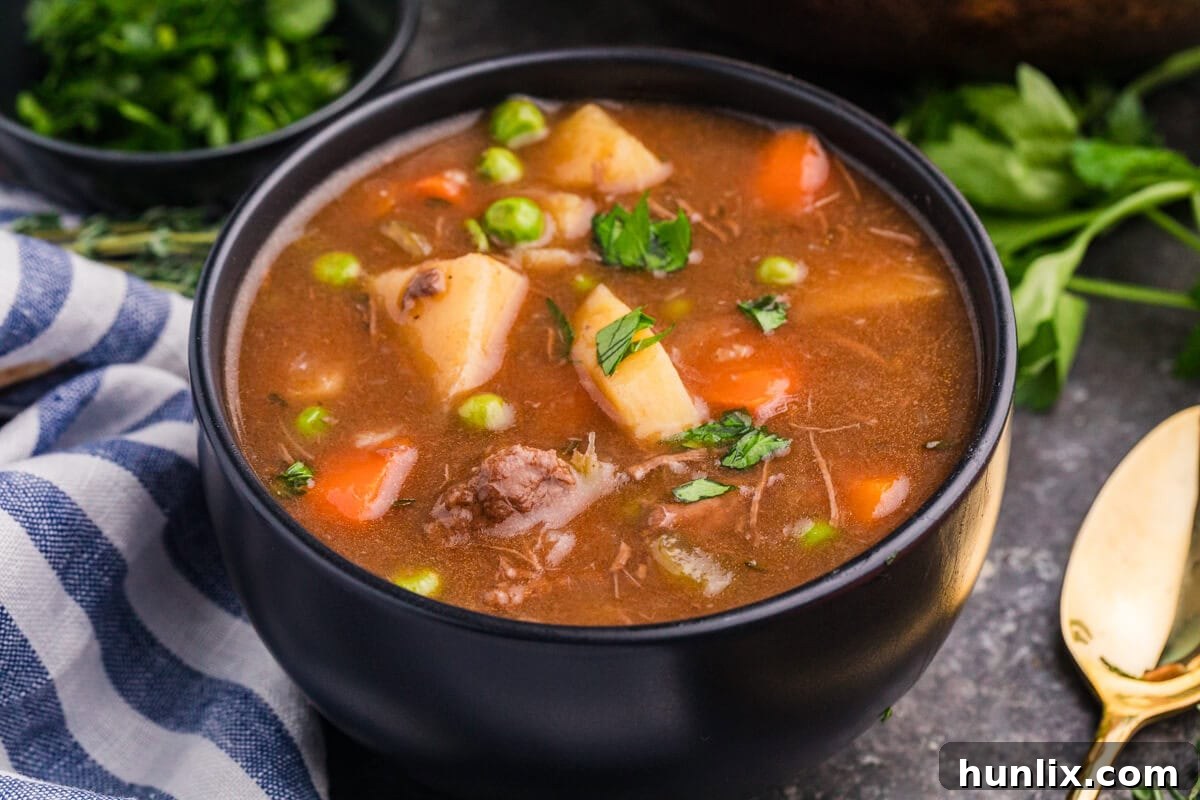
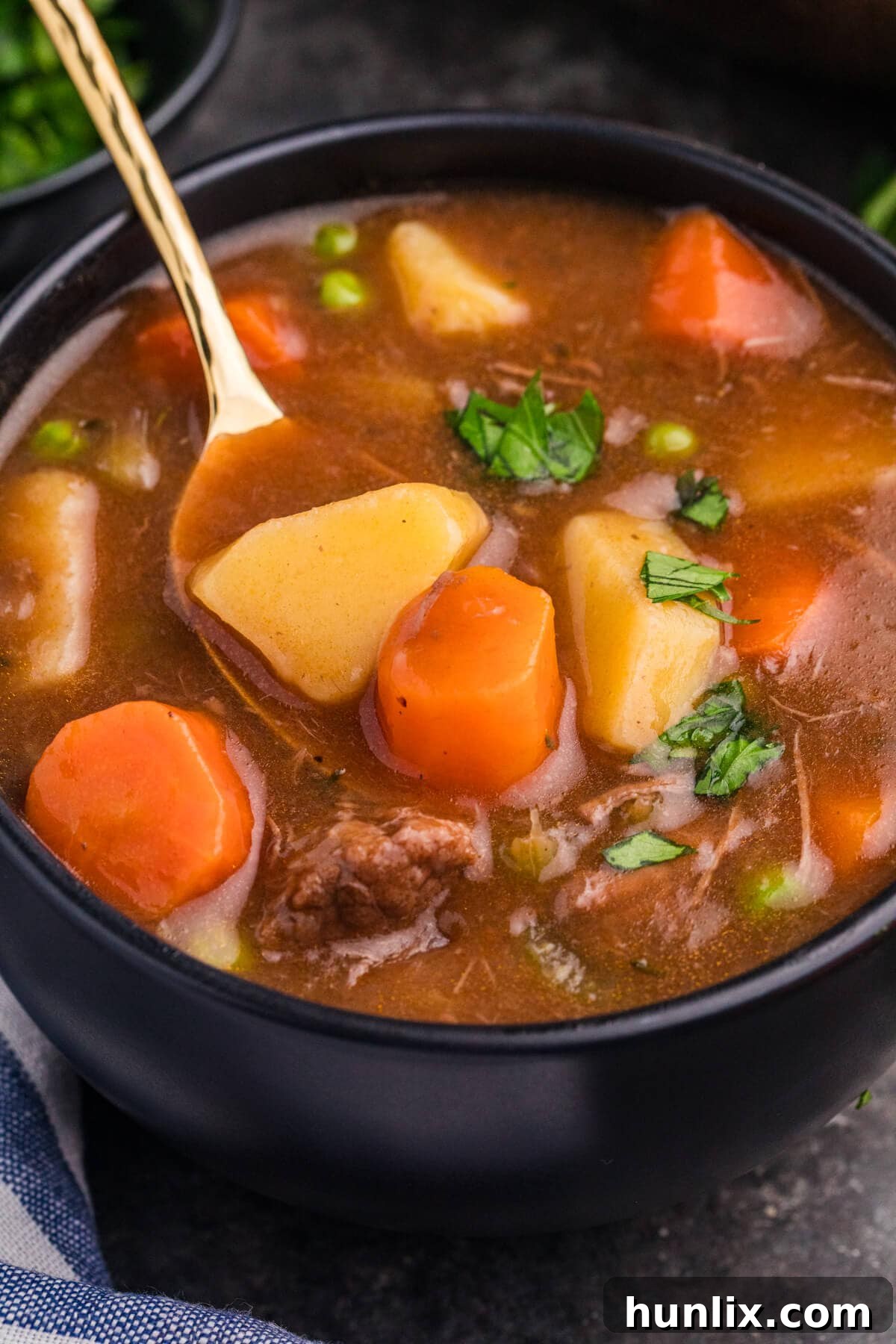
There’s nothing quite like a pot of simmering Old Fashioned Beef Stew to bring warmth and comfort to your home. Imagine tender, succulent chunks of beef, robust carrots, and creamy potatoes, all swimming in a rich, deeply savory broth. This isn’t just a meal; it’s a culinary embrace, a comforting classic that transcends seasons but truly shines on a chilly evening, a leisurely Sunday, or whenever you crave that quintessential taste of home.
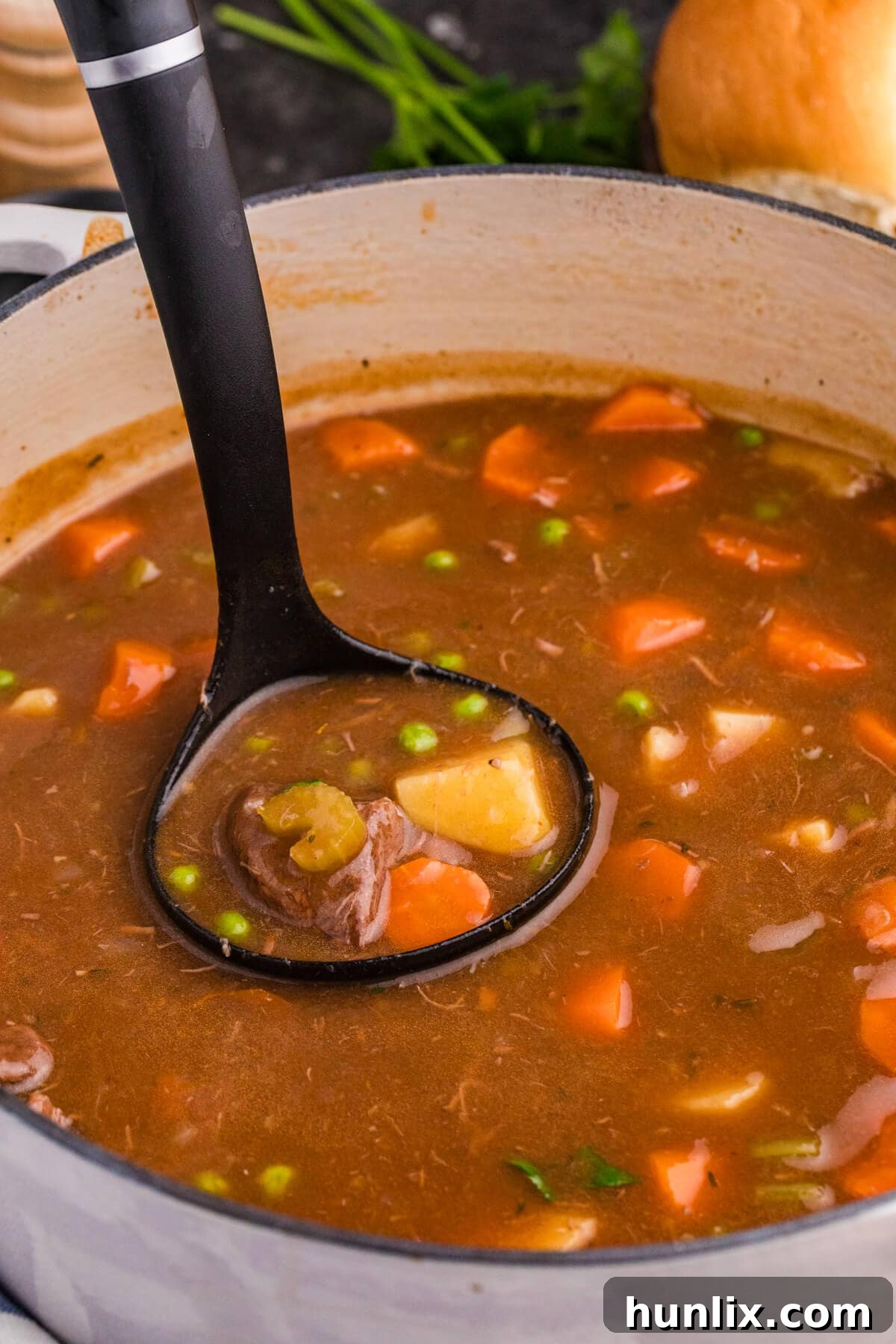
This timeless beef stew recipe is the kind many of us remember from our childhoods. It embodies simplicity, uses wholesome ingredients, and requires the patience to allow flavors to meld beautifully over time. No shortcuts are taken, ensuring every spoonful delivers a depth of flavor that only slow cooking can achieve. It’s the ultimate hearty dish, perfect for gathering the family around the table and creating cherished memories with good, honest food.
Grandma Stacie’s Kitchen: A Taste of Nostalgia
This classic beef stew recipe holds a special place in my heart, reminiscent of the kind of hearty fare my Grandma Stacie would lovingly prepare. Her kitchen was always a hub of warmth and delicious aromas, especially when she wanted to put something truly satisfying and filling on the table. It made perfect sense, too, given that her long-time partner, Clarence, was a beef farmer. Meat and potatoes were practically staples, always taking center stage at their meals, and this rich, slow-cooked stew was a natural fit.
They both adored those “stick-to-your-ribs” kind of meals – dishes that not only filled you up but left you feeling deeply content and nourished for hours. You simply never left their home with an empty stomach or an unsatisfied craving. Preparing this traditional beef stew today instantly transports me back to those fond memories: full bowls, happy bellies, and the simple joy of sharing good food and laughter around their kitchen table. It’s more than just a recipe; it’s a tribute to a generation that understood the power of nourishing food and the comfort it brings.
Essential Ingredients for the Perfect Old Fashioned Beef Stew
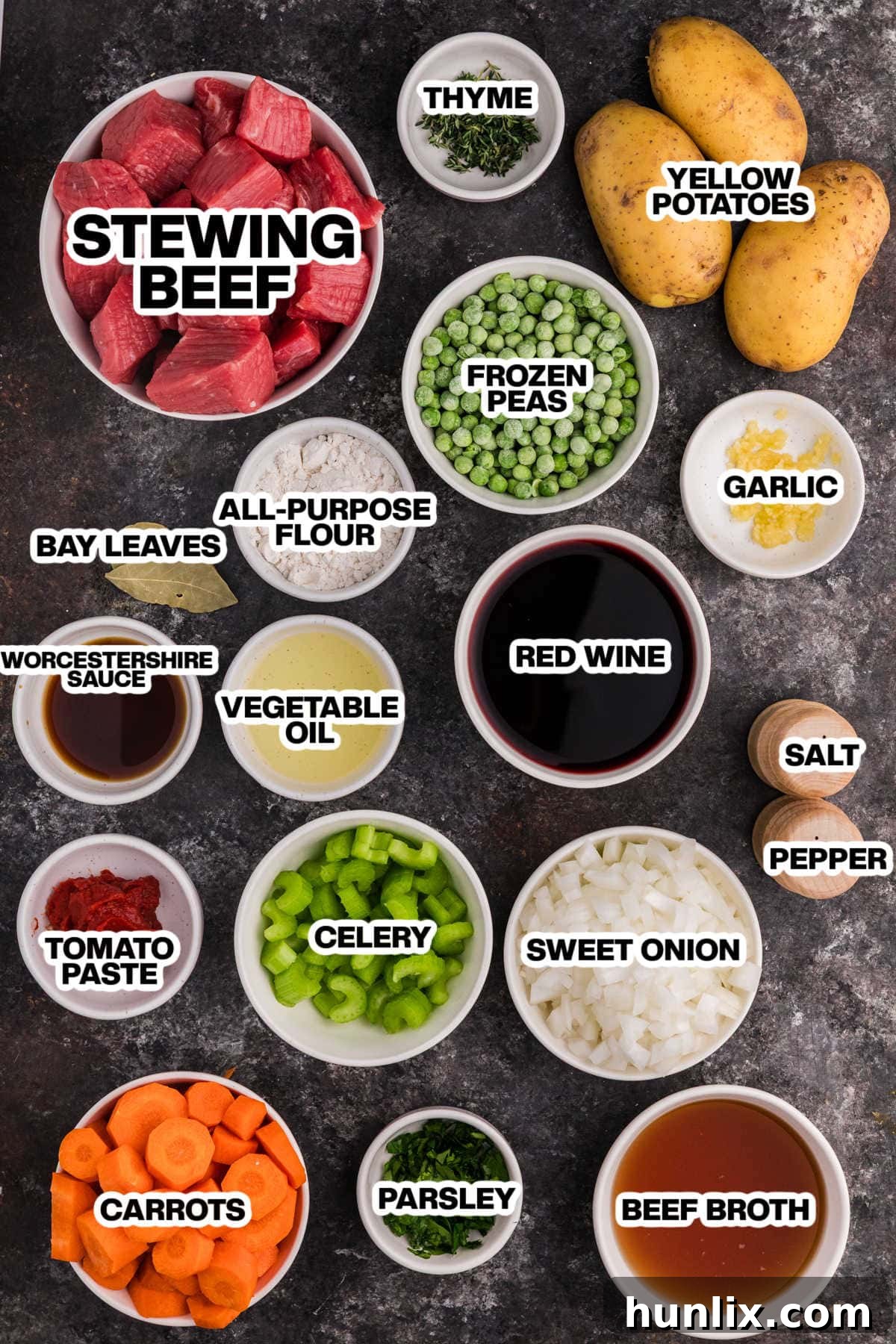
Crafting an exceptional beef stew begins with selecting the right ingredients. Each component plays a vital role in building the robust flavor profile and comforting texture that makes this dish so beloved. Here’s a closer look at what you’ll need and why:
- Stewing Beef or Beef Chuck: The star of our show! For the most tender, fall-apart beef in your stew, choose well-marbled beef chuck. This cut is ideal because its connective tissues break down beautifully during long, slow cooking, resulting in incredibly flavorful and tender meat. Pre-cut stew beef cubes are a convenient time-saver, but ensure they are still from a good cut like chuck for optimal results. Cut the beef into uniform 1 ½-inch cubes to ensure even cooking and a substantial bite in every spoonful.
- Vegetable Oil: A neutral oil with a high smoke point, such as vegetable oil or canola oil, is essential for properly browning the beef without it burning. Browning the meat is a crucial step that builds the foundational depth of flavor for the entire stew through the Maillard reaction.
- Salt and Pepper: These fundamental seasonings are critical. Don’t be shy about seasoning the beef generously before browning. Layering flavors from the very beginning ensures a well-rounded and deeply satisfying taste in the final dish. You’ll adjust the seasoning again at the end, but a good start is key.
- Sweet Onion: Diced evenly, a sweet onion provides a crucial aromatic base for the stew. As it softens, it releases natural sugars that caramelize slightly, adding a subtle sweetness and depth to the broth. Uniform dicing ensures it cooks evenly and blends seamlessly into the stew.
- Garlic: Freshly minced garlic adds an irresistible aromatic punch. It should be finely minced so its flavor permeates the broth without overpowering the other ingredients. A garlic press is perfect for achieving this consistency, ensuring maximum flavor release.
- All-Purpose Flour: This acts as a thickening agent, creating a rich, luscious texture for the stew’s broth. Cooking the flour briefly with the onions after sautéing ensures any raw flour taste is eliminated, leaving behind a smooth, flavorful base for the liquid.
- Beef Broth: The quality of your beef broth profoundly impacts the overall flavor of your stew. Opt for a good-quality, flavorful beef broth. Choosing a low-sodium version allows you to have greater control over the salt content, ensuring your stew is perfectly seasoned to your preference.
- Red Wine (Optional): A dry red wine like Cabernet Sauvignon, Merlot, or Shiraz adds incredible depth, richness, and complexity to the stew. The alcohol cooks off, leaving behind a nuanced, savory flavor. If you prefer to skip the wine, simply replace it with an equal amount of beef broth, and your stew will still be delicious.
- Tomato Paste: This concentrated paste contributes a subtle tang, a beautiful rich color, and a layer of umami that deepens the overall savory profile of the stew. “Blooming” it by cooking it for a minute with the aromatics helps unlock its full flavor potential.
- Worcestershire Sauce: A secret weapon for many savory dishes, Worcestershire sauce delivers a unique savory boost and a touch of tangy complexity that enhances and rounds out the stew’s deep flavors, making them even more irresistible.
- Thyme: Whether fresh or dried, thyme is a classic herb for beef stew, lending an earthy, slightly minty, and peppery note. Fresh thyme offers a brighter, more vibrant flavor, while dried thyme provides a more concentrated, rustic essence. Both work beautifully.
- Bay Leaves: These fragrant leaves infuse the broth with a subtle, earthy, and slightly floral aroma during cooking. Remember to remove them before serving, as they are meant to impart flavor, not to be eaten.
- Carrots: Sweet and vibrant, carrots add a touch of natural sweetness and essential nutrients. Cutting them into large, uniform 1-inch chunks ensures they hold their shape during the long cooking process and don’t turn mushy, providing a satisfying bite.
- Yellow Potatoes: Ideal for stew, yellow potatoes (like Yukon Golds) become incredibly tender and creamy inside while maintaining their structural integrity. Their waxy texture prevents them from completely disintegrating, making them perfect for soaking up the rich broth. Red potatoes are another excellent alternative.
- Celery: A key component of the aromatic trio (alongside onion and carrots), celery adds a subtle, earthy, and slightly peppery flavor to the broth. Slice it evenly so it cooks uniformly and contributes to the stew’s overall texture.
- Frozen Peas: Stirred in at the very end of cooking, frozen peas add a pop of bright green color and a delicate sweetness. Adding them late preserves their vibrant hue and ensures they remain slightly crisp, rather than becoming soft and dull. No need to thaw them beforehand.
- Cornstarch and Cold Water (Optional): If you prefer a noticeably thicker stew, a cornstarch slurry (a mixture of cornstarch and cold water) is your best friend. Mixing it with cold water first is crucial to prevent lumps when adding it to the hot stew.
- Fresh Parsley: A final sprinkle of fresh parsley just before serving adds a beautiful pop of color and a fresh, herbaceous garnish that brightens the rich flavors of the stew. It’s an optional but highly recommended touch.
Mastering the Art of Old Fashioned Beef Stew: Step-by-Step Guide
Creating this classic beef stew is a rewarding process that combines simple steps with patient cooking to achieve truly spectacular results. Follow these detailed instructions for a rich and flavorful stew every time:
- Prepare the Beef: Begin by patting your stewing beef chunks thoroughly dry with paper towels. This crucial step helps achieve a good sear. Once dry, season the beef generously on all sides with salt and freshly ground black pepper. This initial seasoning builds flavor right from the start.
- Heat the Pot: In a large Dutch oven or a heavy-bottomed pot (ideal for even heat distribution), heat 1 tablespoon of vegetable oil over medium-high heat. Ensure the oil is shimmering but not smoking before adding the beef.
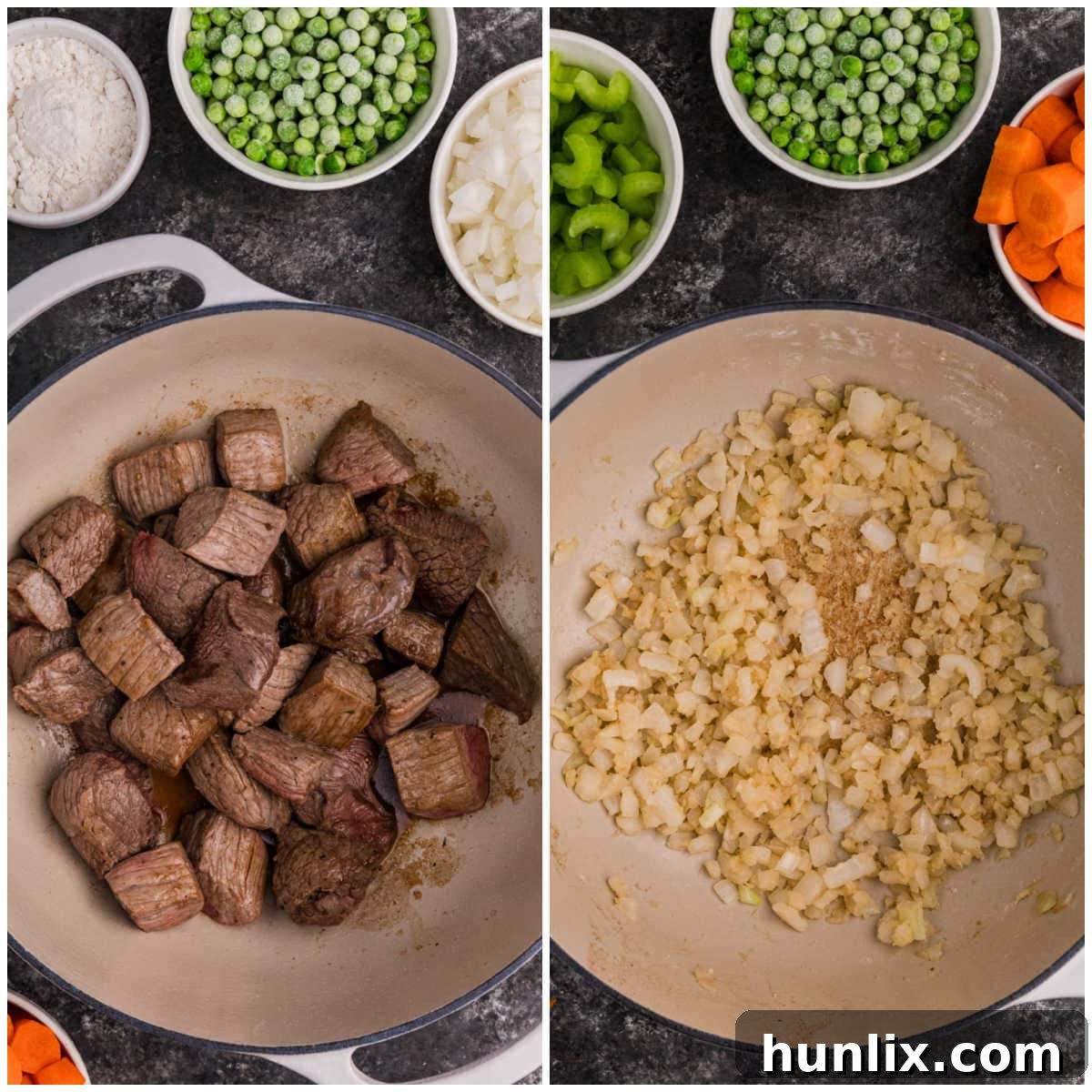
- Sear the Beef: Working in batches to avoid overcrowding the pot, sear the beef on all sides until it develops a deep, rich brown crust. This process, known as the Maillard reaction, takes about 4–5 minutes per batch and is fundamental for creating incredible flavor. Remove the browned beef to a clean plate and set aside, along with any accumulated juices.
- Sauté Aromatics: Reduce the heat to medium. Add the remaining 1 tablespoon of vegetable oil to the pot, followed by the diced sweet onion. Cook, stirring occasionally, until the onion softens and becomes translucent, which usually takes about 5 minutes. Scrape up any browned bits from the bottom of the pot as you stir.
- Add Garlic: Stir in the minced garlic and cook for just 30 seconds until it becomes wonderfully fragrant. Be careful not to burn the garlic, as it can turn bitter quickly.
- Thicken with Flour: Sprinkle the all-purpose flour evenly over the softened onions and garlic. Stir well to coat all the aromatics, creating a paste. Cook for 1 minute, continuing to stir, to cook out the raw flour taste. This forms the roux that will thicken your stew.
- Deglaze with Wine: Carefully whisk in the red wine (if using). As you pour and whisk, make sure to scrape up any browned bits (fond) stuck to the bottom of the pot. These bits are packed with flavor and will dissolve into the liquid, adding incredible depth to your stew. If skipping wine, use additional beef broth here.
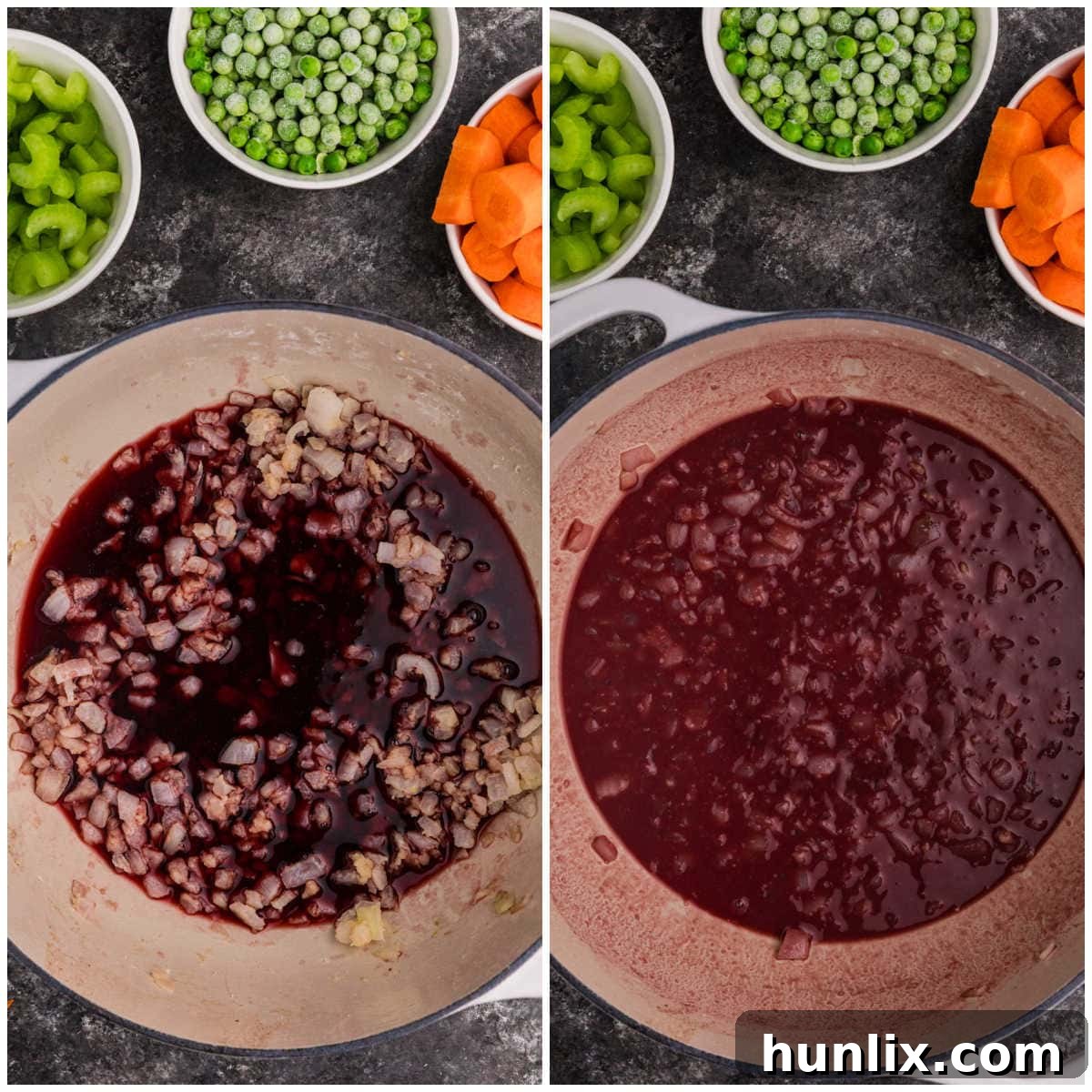
- Build the Broth: Stir in the beef broth, tomato paste, Worcestershire sauce, fresh or dried thyme, and bay leaves. Combine all ingredients thoroughly, ensuring the tomato paste is well incorporated.
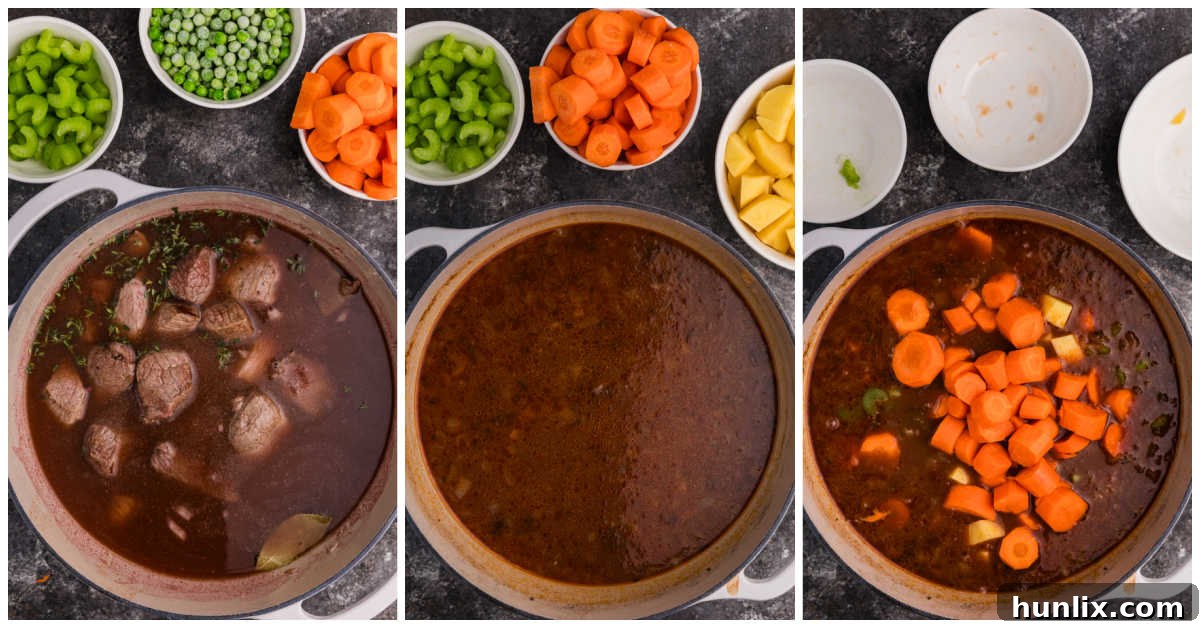
- Return Beef and Simmer: Return the browned beef and any accumulated juices from the plate to the pot. Bring the liquid to a gentle boil over medium-high heat, then immediately reduce the heat to low.
- Slow Simmer for Tenderness: Cover the pot with a tight-fitting lid and let the stew simmer for 1 ½ hours. Stir occasionally to prevent sticking and ensure even cooking. During this time, the beef will become wonderfully tender, slowly breaking down and absorbing the rich flavors of the broth.
- Add Vegetables: After 1 ½ hours, stir in the carrots, potatoes, and celery. Re-cover the pot and continue to simmer for another 45 minutes, or until both the vegetables and the beef are fork-tender. The vegetables should be cooked through but still hold their shape.
- Remove Bay Leaves: Before proceeding, carefully locate and remove the bay leaves from the stew.
- Optional Thickening Slurry: If you prefer an even thicker stew, create a cornstarch slurry. In a small bowl, whisk together the 3 tablespoons of cornstarch with 3 tablespoons of cold water until smooth and lump-free.
- Finish with Peas: Stir in the frozen peas and the cornstarch slurry (if using). Cook for another 5 minutes, or until the peas are heated through and the stew has reached your desired thickness. The peas will retain their vibrant color and slight sweetness.
- Season and Serve: Taste the stew and adjust the seasoning as needed with additional salt and pepper. Serve hot, garnished with a sprinkle of fresh parsley for a touch of freshness and color.
Discover Essential Kitchen Tools!
From essential cookware that forms the heart of your kitchen to ingenious handy gadgets that simplify everyday tasks, delve into my hand-picked selection of favorite products. These are the very tools I rely on to effortlessly create delicious, family-friendly recipes like this comforting beef stew. Elevate your culinary journey with quality items that make cooking a joy, not a chore!
Shop Recommended Products Here!
Creative Variations and Substitutions for Your Beef Stew
While this old-fashioned beef stew recipe is perfect as written, it also serves as a fantastic base for customization. Feel free to get creative and tailor it to your preferences or what you have on hand:
- Skip the Wine for a Richer Broth: If you prefer to cook without alcohol, simply replace the red wine with an equal amount of good-quality beef broth or even a dark beer for a different, malty depth of flavor. You could also use a non-alcoholic red wine substitute or a splash of balsamic vinegar to add a similar acidic note without the alcohol.
- Explore Different Root Vegetables: Beyond carrots and potatoes, this stew welcomes a variety of hearty vegetables. Consider adding parsnips, turnips, rutabaga, or even sweet potatoes for a different flavor profile and texture. For a touch of green, green beans or corn can be added alongside the peas towards the end of cooking. Sautéed mushrooms also make a wonderful addition, bringing an earthy, umami depth to the broth.
- Experiment with Herb Combinations: Fresh thyme provides a bright, classic flavor, but dried thyme works perfectly fine. For a slightly different herbal note, consider adding a small sprig of fresh rosemary, a pinch of marjoram, or even a touch of sage. Herbs like bay leaves are great for subtle background notes.
- Adjust the Thickness to Your Liking: If you desire a thicker stew, the cornstarch slurry is an excellent, quick solution. Alternatively, for a more rustic approach, you can mash a few of the cooked potatoes directly into the pot, which will naturally thicken the broth. If you find your stew too thick, simply thin it out with a bit more beef broth until it reaches your preferred consistency.
- Try Alternative Beef Cuts: While beef chuck is the classic choice for its rich marbling and tender results, other cuts can work well too. Bottom round or blade roast can be used, but ensure they are cut into larger chunks to prevent them from drying out during the long simmer. Beef short ribs, while more expensive, offer an incredibly rich, melt-in-your-mouth experience.
- Add a Touch of Heat: For those who enjoy a little spice, a pinch of red pepper flakes, a dash of your favorite hot sauce, or a finely diced jalapeño can add a delightful kick to your stew. Stir them in along with the other seasonings.
- Make it Gluten-Free: To make this stew suitable for a gluten-free diet, simply omit the all-purpose flour. You can thicken the stew using a cornstarch slurry (ensure your beef broth is also gluten-free), or allow the stew to simmer uncovered for a bit longer during the final stages, allowing the broth to naturally reduce and thicken.
- Slow Cooker or Instant Pot Method: This recipe adapts beautifully to modern cooking methods. After browning the beef and sautéing the onions and garlic as directed, transfer all ingredients (except the peas) to your slow cooker. Cook on low for 7-8 hours or on high for 4-5 hours. Stir in the frozen peas during the last 30 minutes of cooking. For an Instant Pot, follow similar initial steps, then pressure cook for 35-45 minutes with a natural release, adding peas at the end.
Storing and Reheating Your Hearty Beef Stew
One of the many wonderful qualities of beef stew is that it often tastes even better the next day! This makes it an excellent candidate for meal prep and ensures you can enjoy its comforting flavors for days to come. Here’s how to store and reheat your stew properly:
- Refrigerator: Once your beef stew has cooled completely to room temperature (this is critical for food safety), transfer it to an airtight container. Store it in the refrigerator for up to 4 days. The flavors will continue to meld and deepen, making for an even more delicious meal.
- Freezer: This stew is remarkably freezer-friendly, making it perfect for preparing in larger batches. Allow the stew to cool completely before portioning it into freezer-safe containers or heavy-duty freezer bags. Lay bags flat to save space. It can be stored in the freezer for up to 3 months. When you’re ready to enjoy it, thaw the stew overnight in the refrigerator before reheating.
- Reheating: For best results, reheat your beef stew gently on the stovetop over medium-low heat. Stir occasionally to ensure even heating and prevent sticking. If the stew appears too thick, you can add a splash of beef broth or water to reach your desired consistency. Individual portions can also be reheated in the microwave, stirring halfway through, until thoroughly heated.
- Make-Ahead Magic: Beef stew is an ideal make-ahead meal. You can prepare the entire pot a day in advance, refrigerate it, and then simply reheat it before serving. The extra time allows all the delicious flavors to fully develop and integrate, resulting in an even richer and more satisfying dish. It’s perfect for entertaining or busy weeknights.
Expert Tips for the Best Old Fashioned Beef Stew
Achieving the perfect, restaurant-quality beef stew at home is easier than you think with a few simple techniques and considerations. These tips will ensure your stew is consistently flavorful, tender, and utterly satisfying:
- Take Your Time to Brown the Beef: This cannot be stressed enough – browning the beef is the absolute cornerstone of a flavorful stew. Don’t overcrowd the pot; sear the beef in small batches. The deep brown crust created through the Maillard reaction contributes immense savory depth and complexity that cannot be replicated. Rushing this step will result in a less flavorful stew.
- Scrape Up Those Browned Bits (Fond): After browning the beef and sautéing the aromatics, when you add the wine or broth, be sure to vigorously scrape the bottom of the pot with a wooden spoon. Those caramelized, browned bits, known as “fond,” are packed with concentrated flavor. Deglazing the pot and incorporating the fond into your liquid base is essential for a rich, deeply flavored broth.
- Taste and Adjust Seasoning at the End: It’s always a good practice to season lightly at the beginning of cooking, especially when using beef broth, which can vary in sodium content. The flavors will concentrate as the stew simmers, so wait until the very end, just before serving, to taste and adjust the salt, pepper, and other seasonings. This ensures your stew is perfectly balanced.
- Allow It to Rest Before Serving: Just like a beautifully roasted piece of meat, allowing your stew to rest for 10 to 15 minutes after it’s finished cooking makes a significant difference. This brief resting period allows the flavors to truly meld and deepen, and it also gives the broth a chance to slightly thicken to its optimal consistency, making every spoonful richer and more satisfying.
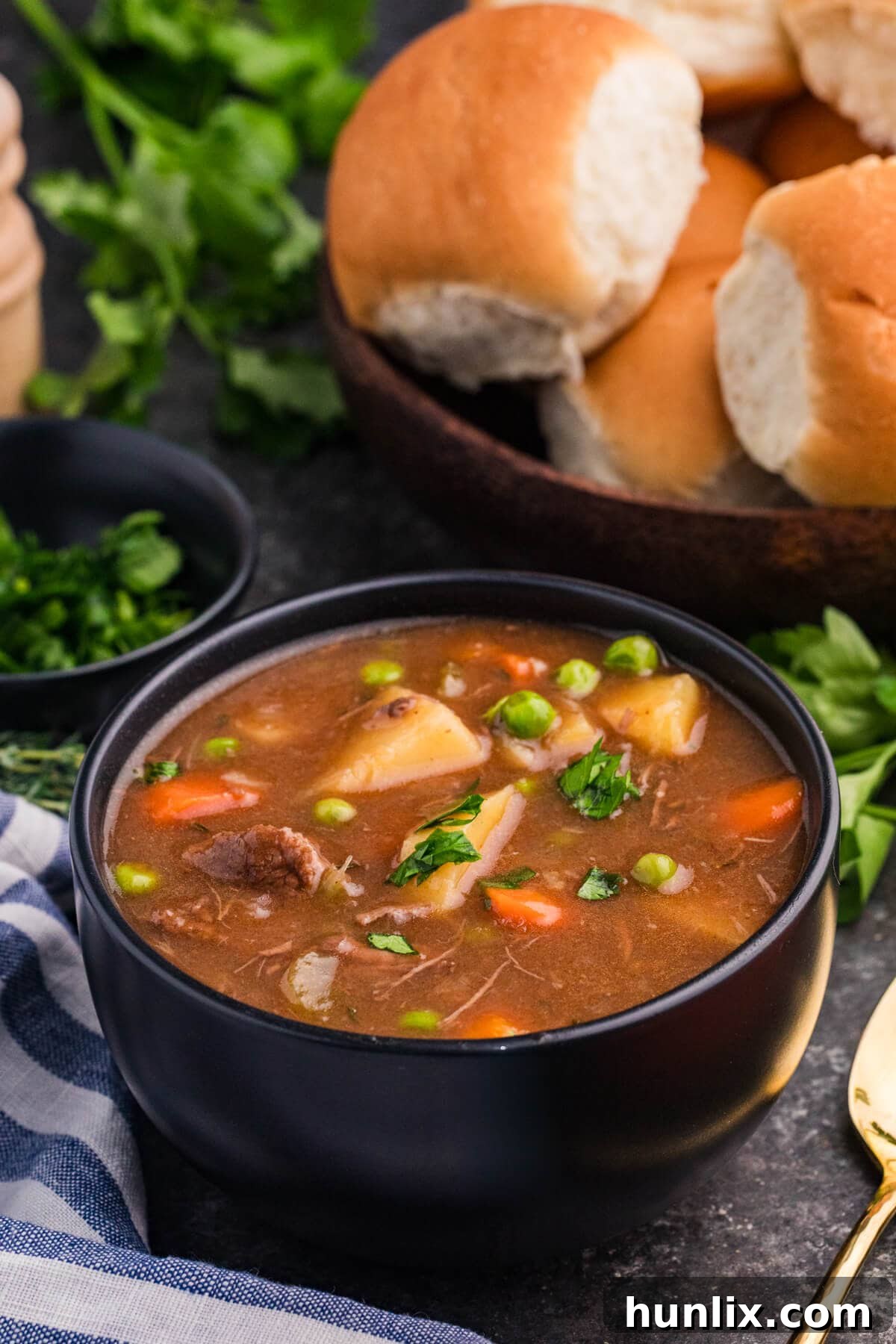
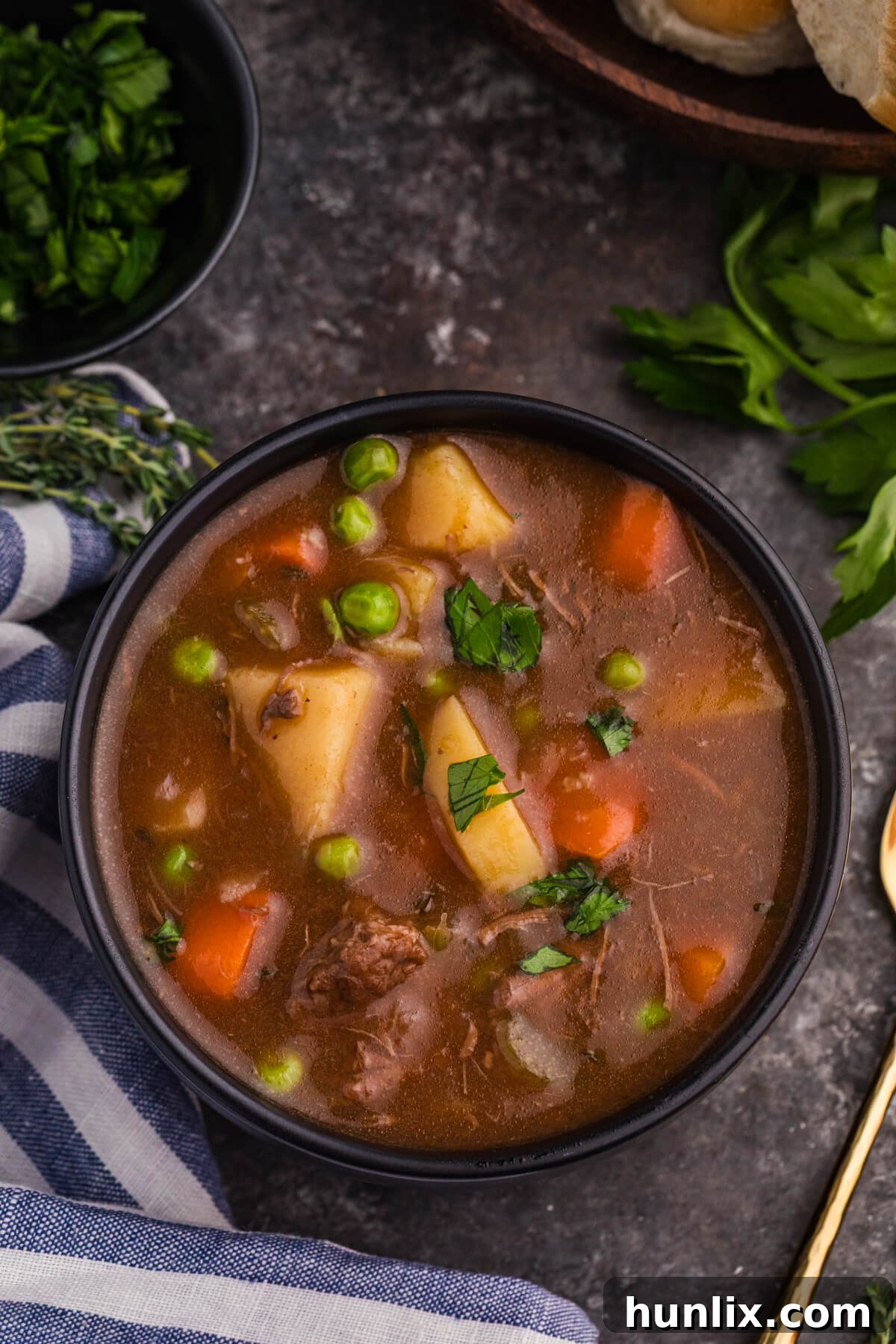
- Serve It Simply, But Thoughtfully: This hearty beef stew is wonderfully satisfying on its own, but it truly shines when served with accompaniments perfect for soaking up every last drop of that incredible broth. Crusty bread, fluffy sour cream biscuits, warm cheesy garlic biscuits, or soft buttered rolls are classic choices. For a different twist, serve it over creamy mashed potatoes, polenta, or even rice.
More Comforting Stew Recipes to Explore
If you’ve fallen in love with the warmth and richness of this Old Fashioned Beef Stew, you’ll be delighted to discover other comforting stew recipes that are perfect for any occasion. Each offers its unique blend of flavors and ingredients, promising another satisfying meal:
- Hearty Cowboy Stew: A robust and flavorful stew packed with ground beef, beans, and classic cowboy flavors, perfect for a hearty family dinner.
- Slow Cooker Mississippi Beef Stew: An incredibly easy and flavorful stew, featuring tender beef, ranch seasoning, and pepperoncini peppers for a unique tangy kick.
- Slow Cooker Guinness Irish Beef Stew: A traditional Irish stew made effortlessly in your slow cooker, with tender beef, root vegetables, and the rich, malty flavor of Guinness stout.
Follow me on Instagram @simplystacieblog, Facebook at Simply Stacie, TikTok @simplystacierecipes or Pinterest at @simplystacie and let me know how you liked this recipe and my other recipes. Your feedback and shares inspire me to keep creating delicious dishes!
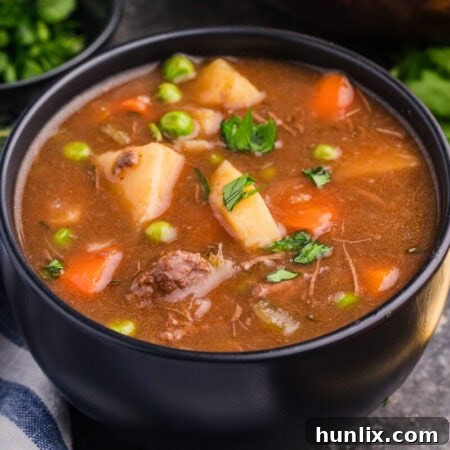
Old Fashioned Beef Stew
Created by Stacie Vaughan
Servings: 6
Prep Time: 20 minutes
Cook Time: 2 hours 15 minutes
Total Time: 2 hours 35 minutes
Old-fashioned beef stew made with tender beef, hearty vegetables, and a rich, savory broth. A classic comfort food recipe perfect for cozy family dinners.
Ingredients
- 2 lbs stewing beef or beef chuck, cut into 1 ½ inch cubes
- 2 tbsp vegetable oil, divided
- Salt and pepper to taste
- 1 large sweet onion, diced
- 3 cloves garlic, minced
- 3 tbsp all-purpose flour
- 4 cups beef broth
- 1 cup red wine (optional, can use extra broth)
- 2 tbsp tomato paste
- 2 tsp Worcestershire sauce
- 1 tbsp fresh thyme (or 1 tsp dried thyme)
- 2 bay leaves
- 4 large carrots, peeled and cut into 1-inch chunks
- 3 large yellow potatoes, peeled and cut into 1 ½-inch chunks
- 2 stalks celery, sliced
- 1 cup frozen peas
- 3 tbsp cornstarch (optional, for thickening)
- 3 tbsp cold water (optional, for thickening slurry)
- Fresh parsley for garnish (optional)
Instructions
- Pat beef dry with paper towels and season generously with salt and pepper.
- Heat 1 tablespoon of oil in a large Dutch oven or heavy-bottomed pot over medium-high heat.
- Working in batches, sear beef on all sides until browned, about 4–5 minutes per batch. Remove to a plate.
- Reduce heat to medium. Add remaining oil and onion. Cook until softened, about 5 minutes.
- Stir in garlic and cook for 30 seconds until fragrant.
- Sprinkle flour over the onions and stir well to coat. Cook for 1 minute to remove the raw flour taste.
- Whisk in red wine, scraping up browned bits from the bottom of the pot.
- Stir in beef broth, tomato paste, Worcestershire sauce, thyme, and bay leaves.
- Return browned beef and any juices to the pot. Bring to a boil, then reduce heat to low.
- Cover and simmer for 1 ½ hours, stirring occasionally, until beef is tender.
- Stir in carrots, potatoes, and celery. Simmer, covered, for another 45 minutes, until vegetables and beef are fork-tender.
- Remove bay leaves.
- Optional: Mix together the cornstarch and cold water to make a slurry if you prefer a thicker stew.
- Stir in peas and cornstarch slurry, if using, and cook for 5 minutes until heated through.
- Taste and adjust seasoning with salt and pepper.
- Garnish with fresh parsley before serving.
Notes
- Make-Ahead Friendly: This beef stew tastes even better the next day as the flavors deepen. Perfect for meal prep or leftovers.
- Freezer-Friendly: Store in an airtight container and freeze for up to 3 months. Thaw in the fridge overnight before reheating.
- Thickening Tip: For a thicker stew, mash a few potatoes into the broth or add a cornstarch slurry.
- Serving Ideas: Pair with crusty bread or soft dinner rolls to soak up the savory broth.
Nutrition
The following nutritional information is an estimate per serving (based on 6 servings):
- Calories: 451 kcal
- Carbohydrates: 35 g
- Protein: 40 g
- Fat: 13 g
- Saturated Fat: 4 g
- Polyunsaturated Fat: 3 g
- Monounsaturated Fat: 4 g
- Trans Fat: 0.03 g
- Cholesterol: 94 mg
- Sodium: 872 mg
- Potassium: 1334 mg
- Fiber: 5 g
- Sugar: 6 g
- Vitamin A: 7629 IU
- Vitamin C: 28 mg
- Calcium: 96 mg
- Iron: 6 mg
The information shown is an estimate provided by an online nutrition calculator. It should not be considered a substitute for a professional nutritionist’s advice.
Course: Soup
Cuisine: American
Keyword: beef stew, old fashioned beef stew, classic beef stew, hearty beef stew
Did you make this recipe?
We’d love to see it! Share your creation on your favorite social media platform and tag us!
Want Even More Recipes?
Join Moms Best Recipes to find more delicious family recipes.