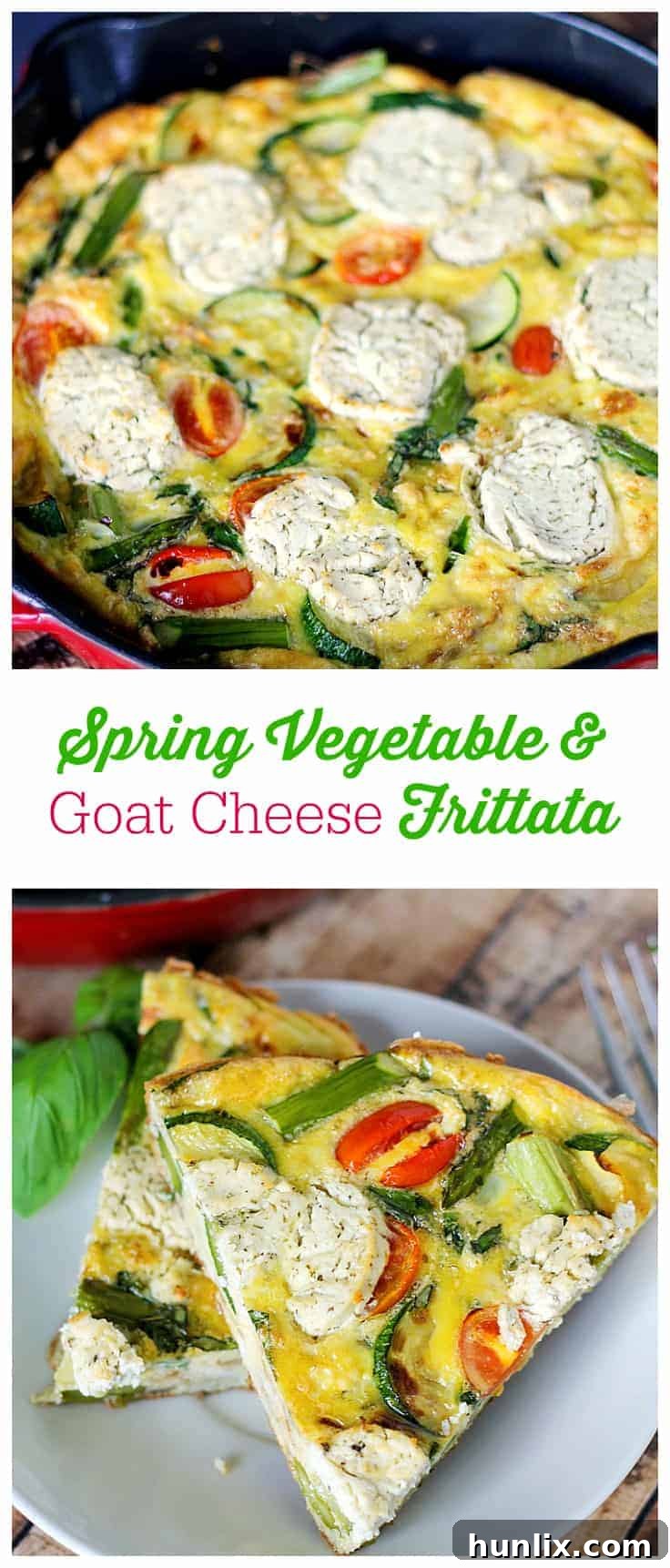
Easy & Delicious Spring Vegetable & Goat Cheese Frittata: Your Perfect Low-Carb Meal
As the days grow longer and gardens burst with fresh produce, there’s no better time to enjoy a meal that’s both light and incredibly satisfying. This Spring Vegetable & Goat Cheese Frittata embodies the essence of the season, packed with vibrant garden vegetables and rich, melted cheeses. It’s an effortlessly chic dish that serves as a quick lunch, a delightful brunch, or a simple, healthy dinner. Plus, for those embracing a low-carb lifestyle, this frittata is an absolute game-changer.
Since recommitting to a low-carb eating plan, I’ve found tremendous joy in discovering recipes that feel indulgent without compromising my goals. This frittata is a prime example – it’s real food, bursting with flavor, and truly makes you forget you’re “dieting.” It’s nourishing, incredibly tasty, and a fantastic way to incorporate more wholesome ingredients into your everyday meals. The blend of crisp spring vegetables with the creamy, tangy goat cheese creates a symphony of flavors that will leave you feeling satisfied and refreshed.
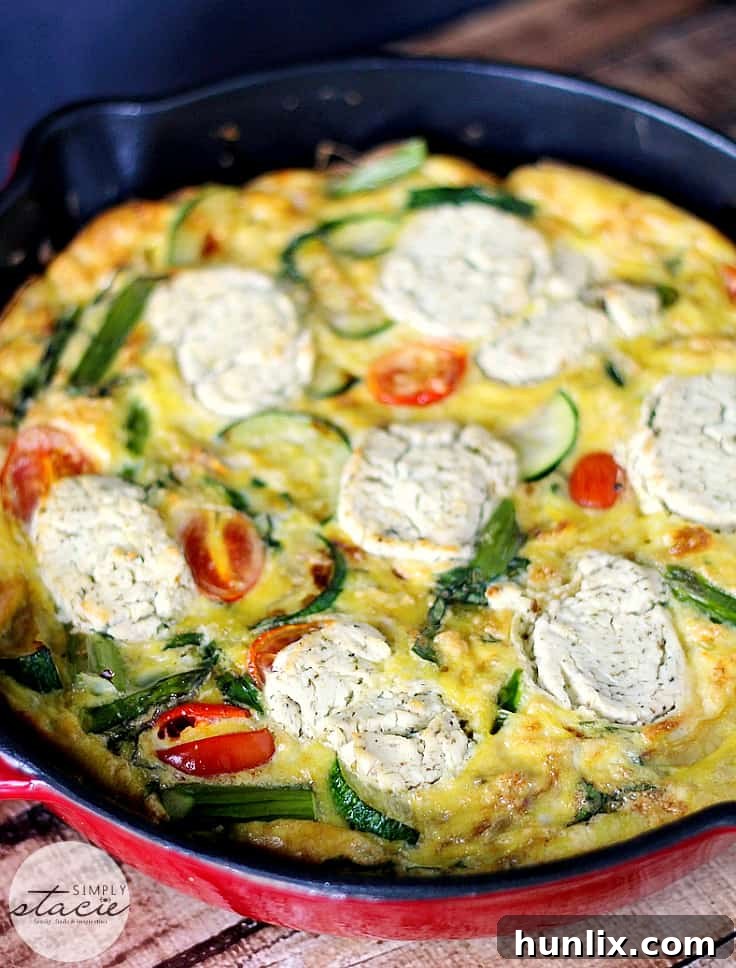
Why This Spring Vegetable & Goat Cheese Frittata is a Must-Try
Frittatas are truly culinary chameleons – versatile, forgiving, and endlessly adaptable. They are among my favorite low-carb meals because they allow for so much creativity and are perfect for utilizing whatever fresh ingredients or leftovers you have on hand. Beyond their flexibility, frittatas are incredibly quick to prepare, making them ideal for busy weekdays or relaxed weekends.
Embracing the Low-Carb Lifestyle with Flavor
One of the biggest misconceptions about low-carb eating is that it’s restrictive or boring. This frittata proves quite the opposite! By focusing on nutrient-dense vegetables and quality protein from eggs and cheese, you create a meal that is filling, delicious, and naturally low in carbohydrates. This approach helps maintain stable blood sugar levels, provides sustained energy, and supports overall well-being without feeling deprived. It’s about enjoying wholesome, satisfying food, and this frittata delivers on all fronts.
The Heart of Spring: Key Ingredients in Your Frittata
This frittata celebrates the bounty of spring, featuring a delightful medley of fresh produce that brings both flavor and texture to every bite. The combination of ingredients isn’t just delicious; it’s designed to be nutritionally balanced and wonderfully aromatic.
Asparagus: A Springtime Delight
Asparagus is a quintessential spring vegetable, known for its distinct earthy flavor and tender-crisp texture. It’s a fantastic source of vitamins K, A, C, and folate, and its mild bitterness perfectly complements the creamy cheeses in this dish. Choosing fresh asparagus is key for the best flavor. Look for firm, bright green stalks with tight, closed tips. Thinner spears tend to be more tender, while thicker ones offer a meatier bite.
How to Prep Asparagus: Proper preparation ensures your asparagus is free from grit and perfectly tender. Start by thoroughly washing the spears under cool running water to remove any dirt or debris. The lower ends of asparagus stalks are woody and fibrous, and nobody wants that in their frittata! To easily remove these tough ends, simply hold each spear at both ends and gently bend it. The stalk will naturally snap where the woody part meets the tender part. Discard the snapped-off ends. Alternatively, you can use a sharp kitchen knife to slice off the bottom inch or two of the stalks. After trimming, pat the asparagus dry with a kitchen towel or paper towel before chopping into 1-inch pieces, ready for sautéing.
Zucchini & Tomatoes: Freshness and Flavor
Zucchini adds a delicate sweetness and moisture to the frittata, softening beautifully as it cooks. It’s a low-calorie vegetable rich in antioxidants and fiber. Cherry or grape tomatoes, when halved, release their sweet-tart juices, adding bright pops of color and flavor throughout the dish. They provide a lovely contrast to the savory eggs and cheese, while also offering a dose of Vitamin C. These two vegetables are not just nutritious; they contribute significantly to the fresh, vibrant profile of a spring frittata.
The Creamy Tang of Goat Cheese & Fontina
The selection of cheeses is paramount in a frittata, and this recipe features a winning combination. Goat cheese brings a distinct tangy, earthy flavor and a wonderfully creamy texture that melts beautifully into the egg mixture. Its unique profile elevates the dish, making it feel gourmet without extra effort. Fontina cheese, on the other hand, offers a more subtle richness.
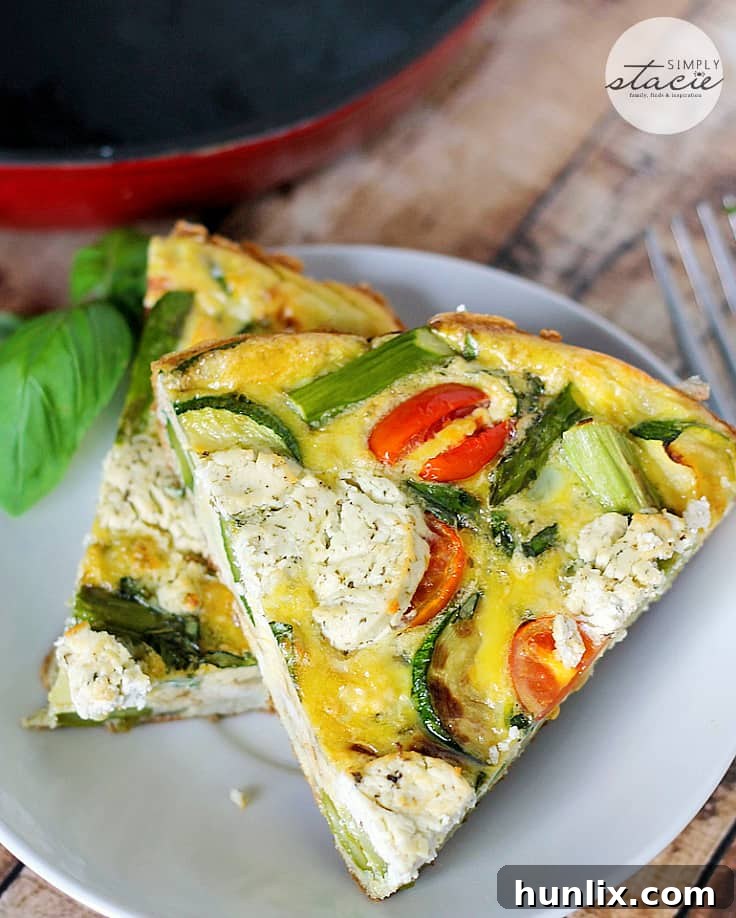
What is Fontina Cheese? Fontina is a semi-soft, buttery cheese typically made from cow’s milk. Originating from Italy, specifically the Aosta Valley, it’s celebrated for its smooth texture and mild, slightly nutty, and earthy flavor. It melts exceptionally well, making it a perfect choice for frittatas and other baked dishes where you want a rich, gooey consistency without an overpowering taste. Its gentle creaminess pairs exquisitely with the more pronounced tang of goat cheese and beautifully complements the fresh spring vegetables.
Fontina Cheese Substitutes: If Fontina cheese isn’t readily available, or if you simply prefer other varieties, several alternatives can work wonderfully in this recipe.
- Gruyere: A Swiss cheese with a rich, nutty, and savory flavor. It melts beautifully and adds complexity.
- Gouda: A Dutch cheese known for its buttery and slightly sweet taste. Younger Goudas are milder, while aged Goudas have more depth.
- Mild Provolone: An Italian cheese that is a good melting cheese with a mild, slightly sharp flavor.
- Mozzarella (low-moisture, part-skim): While not as complex in flavor, it melts incredibly well and will provide a creamy texture.
- Swiss Cheese: Similar to Gruyere but often milder, offering a pleasant nutty flavor.
Any of these mild, good-melting cheeses will provide an excellent texture and flavor balance alongside the goat cheese and vegetables.
The Importance of Fresh Herbs: Fresh basil adds a sweet, peppery aroma, while dried oregano and thyme contribute earthy, savory notes. These herbs are crucial for bringing out the freshness of the vegetables and adding depth to the overall flavor profile of the frittata. Don’t skip them if you want that truly garden-fresh taste!
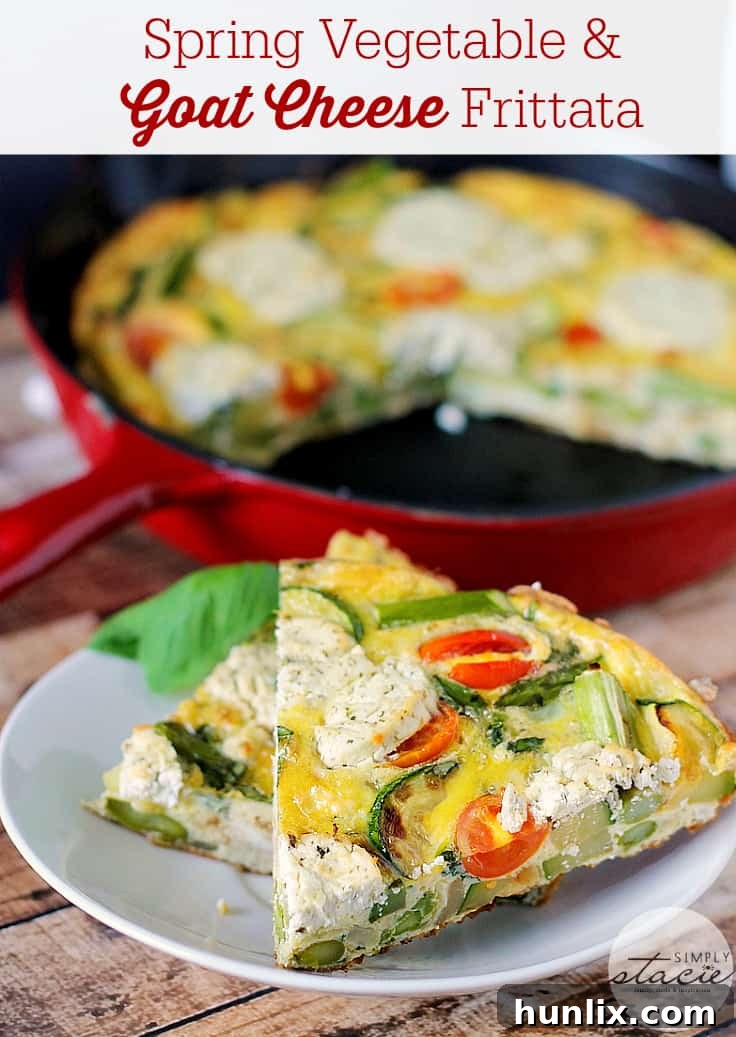
Beyond the Basic: Frittata Versatility & Recipe Inspiration
Frittatas are not just simple; they are smart cooking. They are excellent for using up leftover bits of cooked vegetables or meats from previous meals, transforming them into a brand new, exciting dish. This makes them incredibly economical and helps reduce food waste, all while creating something delicious.
Craving More Frittata Recipes?
If you fall in love with the ease and deliciousness of frittatas, you’re in luck! There’s a whole world of variations to explore. Here are a few other inspiring frittata ideas to keep your culinary adventures going:
- Sausage and Red Pepper Frittata: A hearty option with savory sausage and sweet bell peppers.
- Bacon and Gouda Frittata: The smoky crunch of bacon with the buttery flavor of Gouda.
- Broccoli Frittata: A simple and nutritious option featuring tender broccoli florets.
- Turkey Bacon Frittata: A leaner protein choice that still delivers on flavor.
- Caramelized Onion, Red Pepper and Zucchini Frittata: Sweet caramelized onions add incredible depth to this veggie-packed version.
- Pancetta and Onion Frittata: Crispy pancetta brings a salty, savory kick.
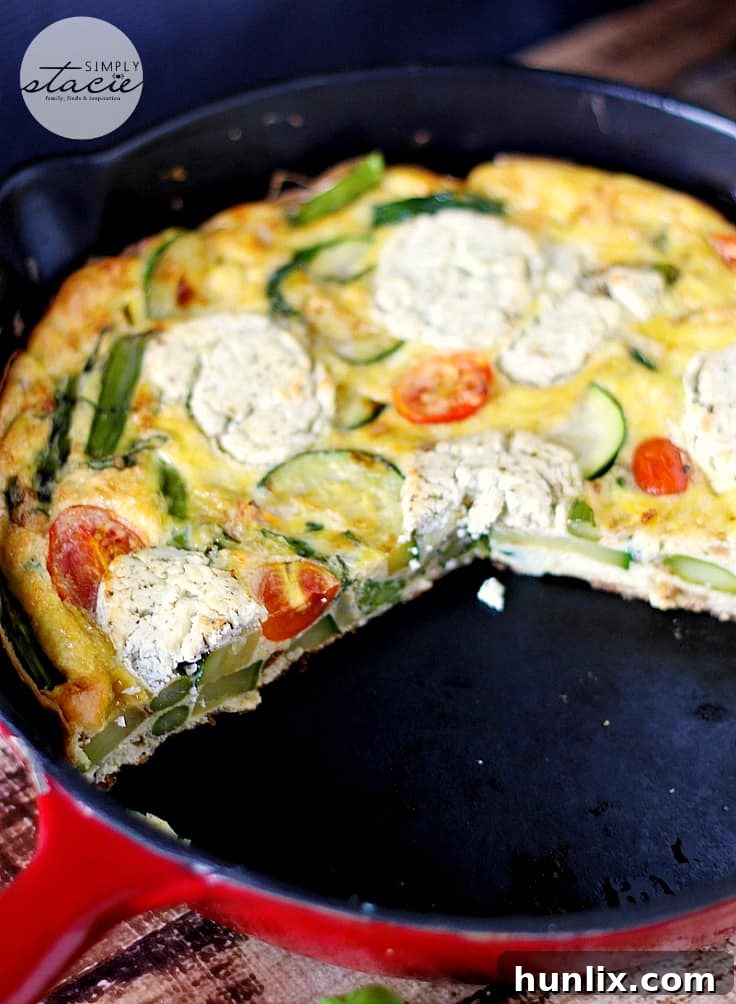
Mastering Your Spring Vegetable Frittata: Step-by-Step Guide
Crafting the perfect frittata is simpler than you might think. With a few key techniques, you’ll be serving up a masterpiece in no time. Follow these steps for a flawless Spring Vegetable & Goat Cheese Frittata every time.
Preparing Your Ingredients
Ensure all your vegetables are washed, prepped, and chopped according to the recipe instructions before you begin cooking. This “mise en place” approach makes the cooking process smooth and enjoyable. Remember to have your eggs, cheeses, and seasonings ready as well.
The Sauté Stage: Building Flavor
In a medium, oven-proof skillet (ensure it can safely go into the oven – check your manufacturer’s instructions, or cover plastic/rubber handles with foil), spray lightly with a nonstick spray or add a teaspoon of extra virgin olive oil. Over medium-high heat, add your thinly sliced onions, chopped zucchini, and asparagus pieces. Sauté these vegetables for approximately five minutes, or until the onions become translucent and the zucchini starts to brown slightly. This initial sauté step is crucial for developing deep flavors and ensuring your vegetables are tender when the frittata is finished.
The Egg Mixture: Binding It All Together
While your vegetables are sautéing, prepare your egg mixture. In a large bowl, crack eight large eggs and beat them thoroughly until the yolks and whites are completely blended and slightly frothy. Then, add the grated Fontina cheese (or your chosen substitute), halved cherry or grape tomatoes, chopped fresh basil, salt, black pepper, garlic powder, dried oregano, and dried thyme. Whisk everything together robustly until all ingredients are well combined and evenly distributed. Set this flavorful mixture aside.
Baking to Perfection
Once your vegetables are perfectly sautéed and the onions are translucent, pour the prepared egg mixture into the skillet with the vegetables. Stir quickly, once or twice, to ensure the vegetables are evenly incorporated throughout the eggs. Now, resist the urge to stir further! Let the frittata cook undisturbed on the stovetop over medium heat for about two minutes. This allows the bottom to set and begin to form a crust.
After two minutes, it’s time for the star cheese. Slice your very cold goat cheese log into ½-inch rounds. Arrange these slices artfully on top of the partially set frittata. Immediately transfer the skillet to your preheated oven. Bake for 12-15 minutes, or until the eggs are completely set and the frittata is lightly golden. The goat cheese will become wonderfully soft and slightly bubbly.
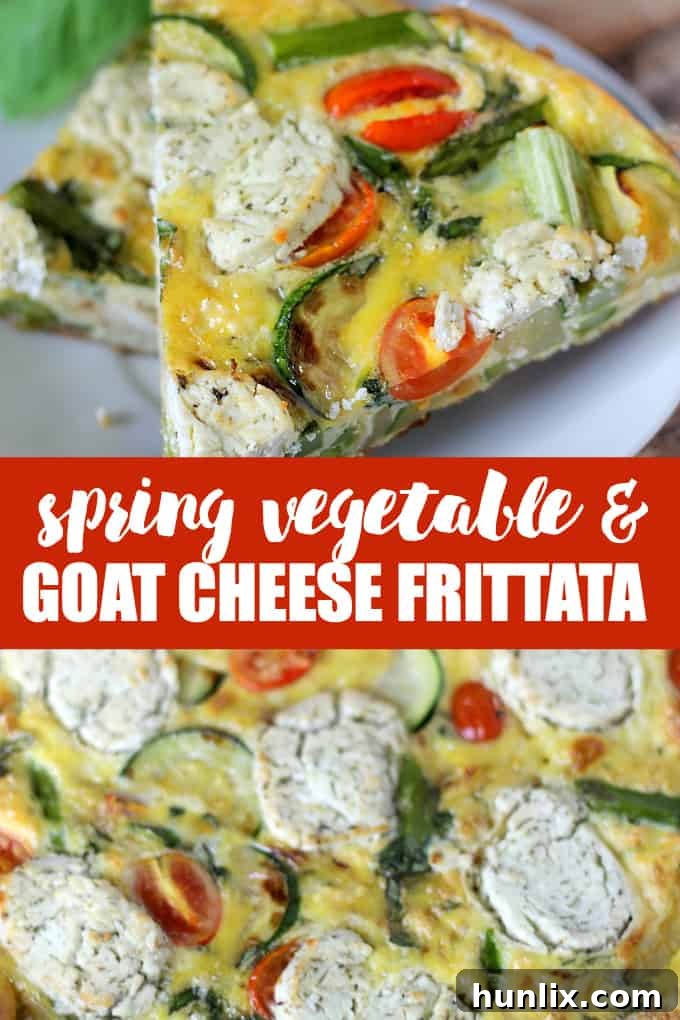
How to Know When a Frittata is Done
A perfectly cooked frittata should be set in the center but still retain a moist texture. You can test for doneness by gently inserting a toothpick or a thin knife into the center; it should come out clean. Another visual cue is when the edges of the frittata begin to pull away slightly from the sides of the skillet. The surface will also look firm and lightly golden, and the goat cheese will be warm and softened.
Pan Considerations: Oven-Safe Skillets
It’s vital to use an oven-safe skillet for this recipe. Cast iron or stainless steel skillets are excellent choices. If your skillet has a handle made of plastic or rubber, it’s crucial to cover it completely and securely with aluminum foil before placing it in the oven. This prevents the handle from melting or burning. Always exercise extreme caution when removing the hot skillet from the oven; the handle will be very hot!
Serving, Storing, and Enjoying Your Frittata
Once your Spring Vegetable & Goat Cheese Frittata emerges from the oven, allow it to cool for a few minutes before slicing. This helps it set further and makes for cleaner cuts. Then, it’s ready to be enjoyed!
Optimal Serving Temperature: Hot or Cold?
Frittatas are wonderfully versatile in terms of serving temperature. While they are undoubtedly best when served warm, fresh from the oven, with the cheeses slightly gooey and the herbs fragrant, they are also delicious at room temperature. Some people even enjoy a chilled frittata, especially during warmer months. This particular Spring Vegetable & Goat Cheese Frittata, with its fresh flavors, truly shines when served warm. Just be sure to let it cool slightly after baking to prevent any accidental burns from the piping hot pan or cheese.
What to Serve with Your Spring Frittata
A frittata is a complete meal on its own, but it can also be elegantly paired with a variety of sides depending on the occasion.
- For a light lunch or dinner: Serve it with a crisp, refreshing garden salad tossed with a simple vinaigrette, or a bowl of your favorite fresh fruit.
- For a heartier breakfast or brunch: Complement the savory frittata with breakfast meats like a flavorful ham steak, crispy bacon, or savory breakfast sausage.
- For a more indulgent spread: Pair it with carb-based sides such as fluffy croissants, warm pancakes, or golden waffles.
- Other excellent additions: Crusty bread for dipping, roasted potatoes, or a light vegetable soup.
The choice truly depends on your preference and the overall meal you’re aiming to create.
Storing Leftover Frittata
If you find yourself with leftover frittata (a rare occurrence, perhaps!), storing it properly ensures you can enjoy it for days to come. Allow the frittata to cool completely to room temperature before storing. Then, transfer slices to an airtight container, or wrap individual pieces tightly in plastic wrap. Stored this way, your frittata will keep beautifully in the refrigerator for 3-4 days. To reheat, simply warm individual pieces in the microwave until heated through, or gently in a skillet on the stovetop.
Can You Freeze Frittata?
Yes, frittatas are surprisingly freezer-friendly, making them excellent for meal prep! To freeze, ensure the frittata has cooled down entirely. Slice it into individual portions, then wrap each piece tightly in plastic wrap, followed by a layer of aluminum foil to prevent freezer burn. Place the wrapped portions in a freezer-safe bag or container. It will last in the freezer for 2-3 months.
When you’re ready to enjoy a frozen frittata, transfer it to the refrigerator the night before to thaw. Reheat it in the microwave for a quick meal, or for a better texture, warm it in a preheated oven (around 350°F or 175°C) until heated through, which helps restore its original consistency more effectively than microwaving. This makes for a convenient and delicious meal any time you need it.
Have you ever experienced the delightful freshness of a spring vegetable frittata? It’s truly a seasonal treat!
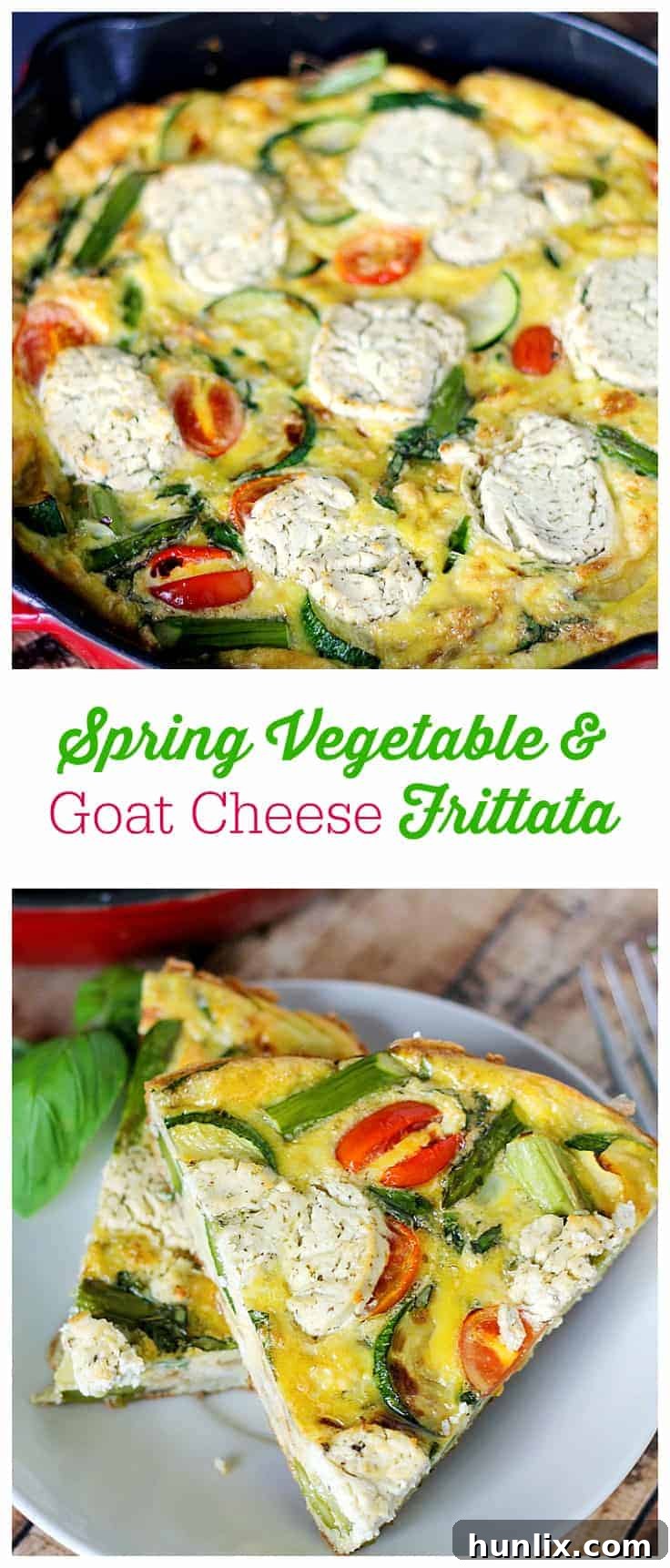
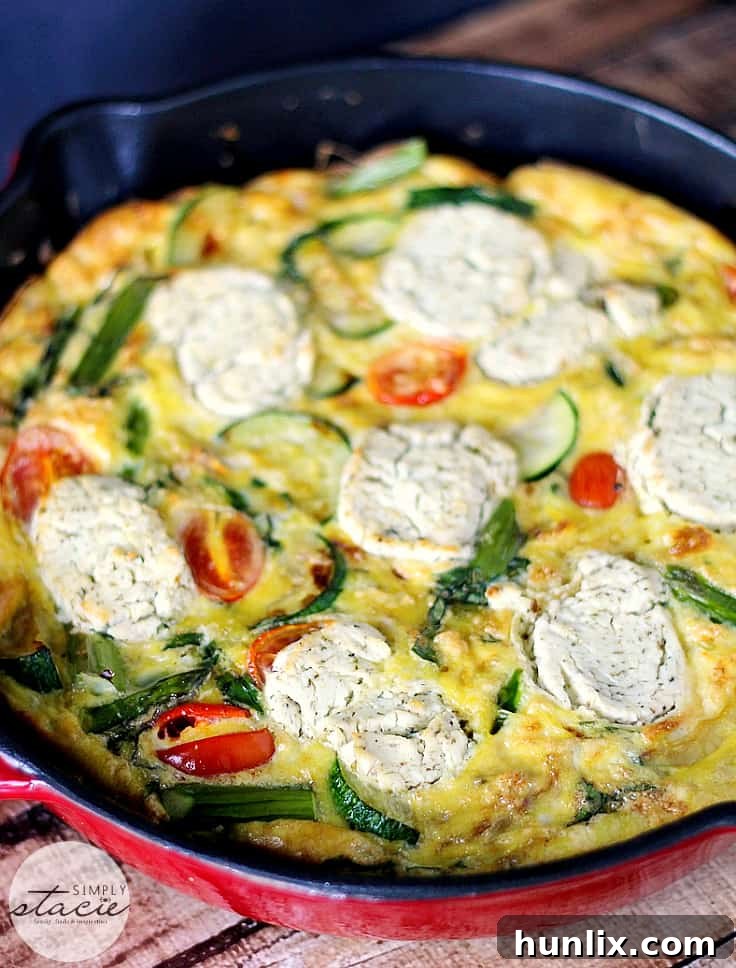
Spring Vegetable & Goat Cheese Frittata
Rating: 5 out of 5 stars (based on 2 votes)
Created by: Stacie Vaughan
Servings: 6
Prep Time: 15 minutes
Cook Time: 22 minutes
Total Time: 37 minutes
Loaded with the fresh flavours of spring, featuring asparagus, zucchini, tomatoes and the creamy tang of goat cheese, this frittata is very versatile. It can be served warm or at room temperature and is a great breakfast, lunch, or paired with salad, and quick, light dinner option.
Ingredients
- 1 tsp extra virgin olive oil
- 1 medium zucchini, cut in half and chopped
- ½ lb asparagus spears, chopped in 1 inch pieces
- 1 small onion, sliced thinly
- 8 large eggs
- ½ cup cherry or grape tomatoes, halved
- ¼ cup Fontina cheese (or any mild cheese), grated
- 1 tbsp chopped fresh basil (about 8 large leaves)
- ½ tsp salt
- ⅛ tsp black pepper
- ¼ tsp garlic powder
- ¼ tsp dried oregano
- ¼ tsp dried thyme
- 4 oz goat cheese log, very cold (put in freezer while preparing everything)
Instructions
- Preheat oven to 435°F (220°C).
- In a large bowl, add eggs and beat well. Add grated cheese, tomatoes, basil, salt, pepper, garlic powder, oregano, and thyme; whisk well to combine; set aside.
- In a medium ovenproof skillet sprayed with non-stick spray (or with 1 tsp olive oil), add onions, zucchini, and asparagus pieces; sauté over medium-high heat for about 5 minutes or until onions are translucent and zucchini is browned.
- Pour egg mixture into skillet, and stir once or twice to combine with vegetables. Cook for 2 minutes over medium heat, without stirring.
- Cut goat cheese into ½ inch slices and place on top of the frittata. Transfer skillet to the oven. Cook for 12-15 minutes or until eggs are set.
- Slice and serve immediately.
- *If your skillet has a plastic or rubber handle, cover it completely with aluminum foil. Most skillets can safely go into the oven this way. Be careful when removing any skillet from the oven, the handle is HOT.
Equipment
- Cheese grater
- Non-stick oven-safe skillet
- Mixing bowl
Nutrition
Serving: 1g | Calories: 200kcal | Carbohydrates: 6g | Protein: 15g | Fat: 13g | Saturated Fat: 6g | Polyunsaturated Fat: 6g | Cholesterol: 262mg | Sodium: 422mg | Fiber: 2g | Sugar: 4g
The information shown is an estimate provided by an online nutrition calculator. It should not be considered a substitute for a professional nutritionist’s advice.
Course: Breakfasts
Cuisine: American
Keyword: Spring Vegetable & Goat Cheese Frittata