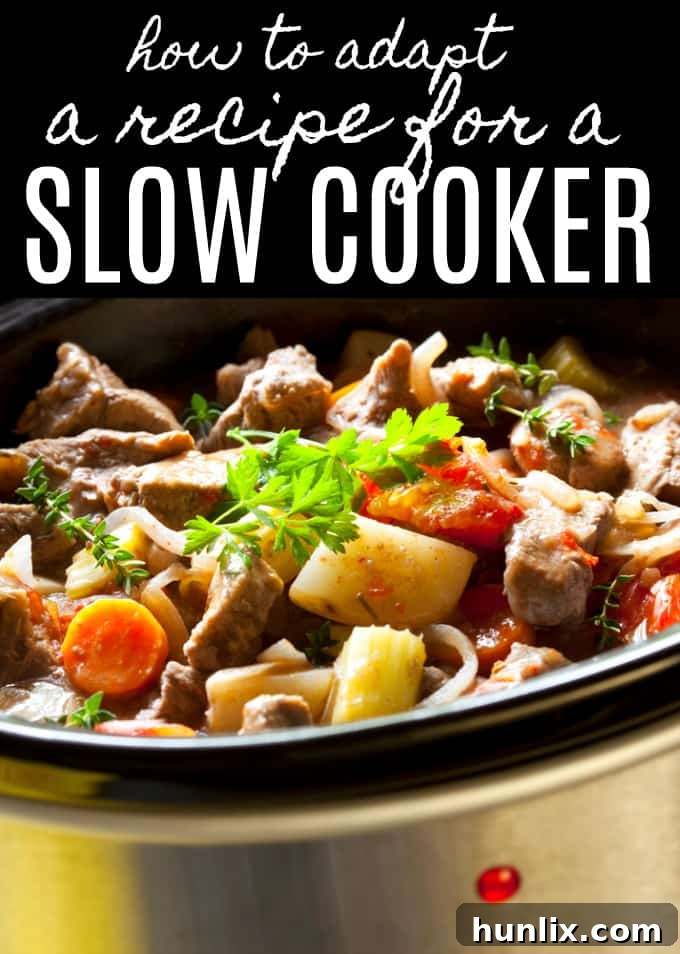
No, it doesn’t involve doing your prep work in slow motion! In fact, quite the opposite. Slow cookers, often affectionately known as crock pots, are revolutionary kitchen appliances designed to simplify meal preparation and bring out incredibly rich, tender flavors in your food with minimal effort. They are a true boon for busy weeknights, meal prepping, or simply enjoying a hearty, home-cooked meal without being tethered to the stove.
However, many home cooks find themselves hesitant to use their slow cooker for beloved family recipes, fearing that the unique cooking environment won’t yield the same delicious results. It’s true that not every food or recipe lends itself perfectly to the moist, low-heat conditions of slow cooker cooking. Delicate textures can turn mushy, spices can intensify unpredictably, and liquids don’t evaporate as they would on a stovetop or in an oven.
But here’s the exciting news: with a few clever tips and tricks, you can confidently convert a vast array of your weekly regulars into slow cooker spectaculars! Imagine transforming your grandma’s classic beef stew, a vibrant chicken curry, or even a comforting pot roast into an effortless, hands-off dish that practically cooks itself while you go about your day. This comprehensive guide will equip you with the knowledge to expertly adapt your cherished recipes, ensuring consistently delicious outcomes every time you plug in your slow cooker.
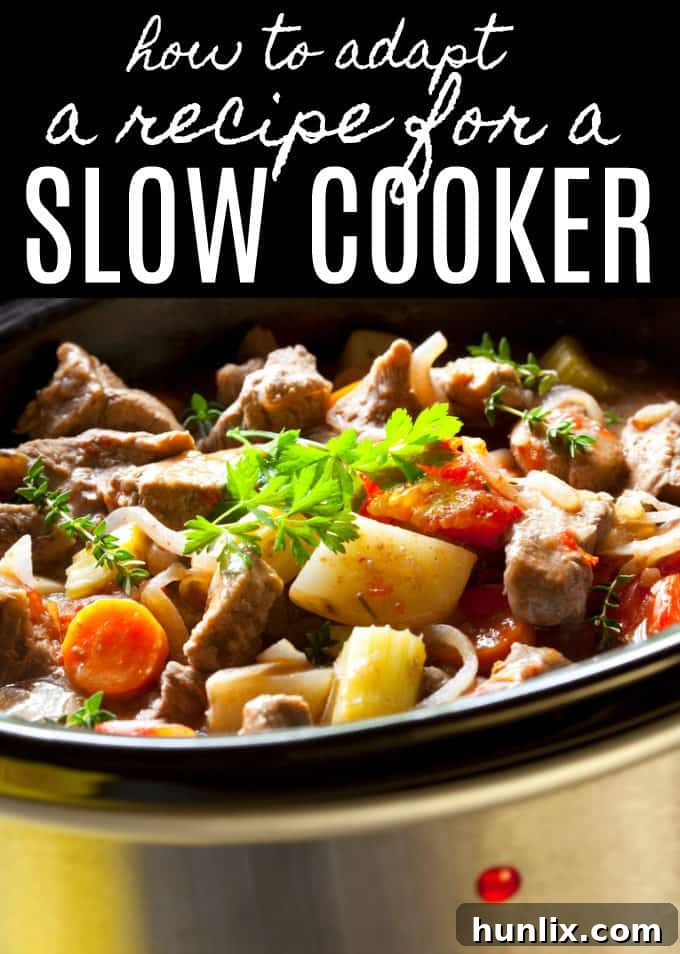
How to Adapt a Recipe for a Slow Cooker: Your Ultimate Guide to Effortless Meals
Mastering the art of slow cooker adaptation can truly revolutionize your cooking routine. Here are the essential tips to help you transform your favorite dishes:
Tip #1 — Embrace the Art of Trial and Error (and Keep a Journal!)
Adapting recipes from one cooking method to another is less of an exact science and more of an intuitive art form. Don’t expect perfection on your very first try, and that’s perfectly okay! Think of it as an exciting culinary experiment. The best approach is to start with a recipe you know well and love, perhaps a simple stovetop stew or a roast. Begin with lower stakes meals; your boss and their spouse might not be the ideal dinner guests for your inaugural slow cooker conversion attempt!
The key to success here is iteration and observation. Pay close attention to how ingredients behave, how flavors develop, and what changes you make along the way. Consider keeping a small cooking journal where you note down the original recipe, your slow cooker modifications (e.g., “reduced liquid by half,” “added garlic later”), and the final outcome. This habit will quickly build your intuition and confidence, turning guesswork into informed decisions. The satisfaction of successfully adapting a deeply personal, tried-and-true family recipe into a convenient slow cooker meal is incredibly rewarding.
Tip #2 — Be Realistic: Understanding What Thrives and What Fails
The unique environment of a slow cooker makes it a champion for certain types of dishes, while others are simply better suited for traditional cooking methods. Knowing the difference is crucial for successful adaptation.
- What Thrives: The slow cooker excels at dishes that benefit from long, moist, low-heat cooking. This includes:
- Soups and Stews: The extended simmering time allows flavors to meld beautifully, creating rich, complex broths.
- Hearty Casseroles: Dishes with robust ingredients that can stand up to long cooking times.
- Roasts and Tougher Cuts of Meat: Brisket, chuck roast, pork shoulder, lamb shanks, and oxtail are prime candidates. The low heat gradually breaks down tough collagen and connective tissues, transforming them into incredibly tender, fall-apart deliciousness that’s almost impossible to achieve with faster cooking methods. The moist environment prevents drying out, ensuring succulent results.
- Chilis and Curries: These dishes often feature complex spice blends that deepen in flavor over hours of slow cooking.
- Pulled Meats: Perfect for pulled pork, chicken, or beef, as the meat becomes incredibly easy to shred.
Basically, any recipe that asks you to let it simmer on the back of the stove for an hour or more is generally a good candidate for slow cooker conversion.
- What Fails (or Requires Significant Modification):
- Delicate Ingredients: Seafood like shrimp and scallops, or thin cuts of fish, will quickly become rubbery or mushy.
- Baked Goods or Layered Dishes: Anything requiring a crispy crust, a light texture, or distinct layers (like lasagna or enchiladas) will likely turn out soggy or poorly structured due to the lack of dry heat and evaporation. While some dedicated fabulous slow cooker dessert recipes exist, they are specifically designed for the appliance’s limitations.
- Fried Foods: Dishes meant to be crispy or deep-fried will not work in a slow cooker.
- Quick-Cooking Vegetables: Items like zucchini, mushrooms, and leafy greens can easily turn to mush if added too early.
Understanding these distinctions will save you from culinary disappointment.
Tip #3 — The Importance of Pre-Cooking and Browning Key Ingredients
One of the major appeals of the slow cooker is its “set it and forget it” convenience. However, for truly exceptional results, some ingredients benefit immensely, or even require, a little pre-cook TLC on the stovetop before joining the slow cooker party.
- Garlic and Onions: These aromatic powerhouses tend to intensify drastically in a slow cooker, sometimes far more than desired, leading to an overpowering or even bitter flavor. By pre-cooking them in a pan on the stovetop until softened and translucent, you can mellow and develop their sweetness, arresting their flavor intensity at a pleasant level. This also ensures a more consistent taste throughout your dish. Alternatively, if you want to avoid an extra pan, you can try reducing the amount of onion and garlic in your original recipe by half. Since taste is subjective, this is a prime example of a “trial and error” item to test for yourself!
- Ground Meat: Pre-browning ground meats (beef, turkey, sausage) on the stovetop is absolutely essential. If you skip this step, the result in the slow cooker will be a pasty texture and an excess of grease floating in your dish. Browning creates the Maillard reaction, which is responsible for those rich, savory flavors and appealing textures we associate with cooked meat. Always drain off any excess fat from the pan before adding the browned meat to your slow cooker for a healthier and more appetizing final product.
- Other Meats: For larger cuts of meat like roasts or stew meat, a quick sear on all sides before slow cooking can add a tremendous depth of flavor and a beautiful caramelized crust that the slow cooker simply can’t achieve on its own. While optional, it significantly elevates the dish.
- Certain Vegetables: Browning root vegetables like carrots or potatoes slightly can also add a layer of caramelization and flavor before they go into the slow cooker.
Tip #4 — Master the Art of Flavor Management: Spices, Herbs, and Alcohol
The slow cooker’s sealed, low-heat environment concentrates flavors, which can be both a blessing and a curse. You need to adjust how you treat your aromatics and liquids.
- Spices: Just like onion and garlic, hot spices (chili powder, cayenne pepper) tend to intensify significantly in the slow cooker. If your recipe calls for a specific amount, start by reducing it by one-third to one-half. You can always taste and add more toward the end of the cooking process if needed. For vibrant, fresh spice notes, consider adding a dash of fresh paprika or cumin in the last hour or as a garnish. For those who love a fiery kick, simply serve extra hot sauce on the side!
- Alcohol (Wine, Beer, Spirits): Wine is another ingredient that doesn’t always improve when cooked entirely in a slow cooker. On a stovetop, deglazing with wine and allowing it to simmer and reduce concentrates its flavors while much of the alcohol evaporates. In a slow cooker, with nowhere for the alcohol to escape, you can end up with harsh, unbalanced, and often “off” flavors brewing in your sauce. If your recipe calls for wine, consider reducing it on the stovetop with other liquids before adding it to the slow cooker, or replace a portion of it with an equal amount of broth and a splash of vinegar or lemon juice for acidity.
- Acidic Ingredients: Large amounts of acidic ingredients like canned tomatoes, vinegar, or citrus juice can sometimes slow down the tenderization of meat in a slow cooker. While still usable, it’s something to be aware of and potentially adjust cooking times or add them slightly later.
Tip #5 — Preserve Fresh Herb Vibrancy: Timing is Everything
While dried herbs generally benefit from long cooking times in a slow cooker, fresh, delicate herbs are a different story. If your original recipe calls for adding fresh herbs like parsley, cilantro, basil, or chives during the main cooking process, you’ll want to rethink that strategy for the slow cooker.
The prolonged, moist heat in a slow cooker can cause tender green herbs to lose their vibrant color, fresh flavor, and even their nutritional value, often turning them into a rather unappetizing, limp green mush. To maximize their fresh taste and aromatic appeal, it’s best to add these delicate herbs in the last 5 to 15 minutes of cooking, or even better, sprinkle them generously on top of your dish after you’ve plated your wonderful dinner. This ensures their bright, herbaceous notes truly shine through.
For more robust fresh herbs like rosemary, thyme, or bay leaves, you can add them earlier in the cooking process, though they still might benefit from being added in the last hour or so for a fresher impact compared to the very beginning. Always taste and adjust!
Tip #6 — Mastering Liquid Ratios: Less is Often More… Unless It’s Not There!
This is arguably one of the most critical adjustments when converting a traditional recipe to a slow cooker, and it’s where many beginners go wrong. Whether your original recipe calls for stock, water, wine, or even canned tomatoes, you almost always need to cut back on the amount of liquid when using a slow cooker.
- The “Less is More” Principle: The low, moist-heat cooking process that occurs under that heavy, sealed glass lid creates a significant amount of excess moisture. Unlike stovetop cooking or oven roasting, there’s very little evaporation in a slow cooker. If you use the same amount of liquid that your original recipe calls for, you may very well end up with “roast soup” or a diluted, watery sauce instead of the rich, concentrated flavors you desire. A good starting point is to reduce the specified liquid by about one-third to one-half. Then, as with all adaptations, experiment from there. You can always add more liquid later if the dish looks too dry, but it’s much harder to remove excess liquid!
- The “Unless” Factor: Now for the “unless” from above. If your original recipe doesn’t call for *any* liquids, or calls for very little (e.g., a dish that typically roasts with just fat and natural juices), you *will* need to add some moisture to your slow cooker. Without sufficient liquid, your food risks scorching at the bottom of the pot. A half cup of broth or water is usually a good starting point for recipes without much inherent moisture. Keep an eye on it during your first attempt. Once you’ve perfected the recipe’s liquid balance, you can confidently leave it to cook on its own, without constant supervision.
- Thickening Agents: If your sauce is still too thin at the end of cooking, don’t despair! You can easily thicken it. Ladle out some of the hot liquid into a small bowl, whisk in a tablespoon or two of cornstarch or flour (creating a slurry), then stir it back into the slow cooker. Cook on high for another 15-30 minutes, or until thickened. You can also remove the lid for the last hour of cooking on high to encourage some minor evaporation.
Tip #7 — Decoding Slow Cooker Timings: High vs. Low Settings
Adapting your cooking time for the slow cooker isn’t always intuitive. While both “low” and “high” settings will eventually bring food to a safe internal temperature, they do so at different rates and can impact texture differently. “Low” cooks slower and is generally better for tenderizing tough cuts of meat over longer periods, while “high” cooks faster.
A General Rule of Thumb for Timing Conversion:
- For recipes that call for a cooking time up to 1 hour (on stovetop/oven): Use the High setting for 2-4 hours, or the Low setting for 6-8 hours. This category typically includes dishes with bone-in chicken pieces, lean fish, or shorter-cooking vegetables.
- For recipes that call for a cooking time over 1 hour (on stovetop/oven): Use the High setting for 4-6 hours, or the Low setting for 8-10 hours. Tougher cuts of meat like braising beef, pork shoulder, chili, and heartier soups can not only handle but are often improved by the longer, slower cooking time on the low setting, becoming incredibly tender and flavorful.
Remember that every slow cooker is slightly different, and factors like how full it is, the temperature of your ingredients, and your altitude can affect cooking times. Always check for doneness!
Some ingredients, like vegetables, truly benefit from specific timings (as discussed in Tip #8!), but there are one or two other ingredients that need special consideration:
- Dairy: Milk, cream, sour cream, yogurt, and cheese can curdle or separate if added too early and cooked for extended periods in a slow cooker. To prevent this, always add dairy products during the final 30-60 minutes of cooking, stirring them in gently until incorporated and heated through.
- Seafood: As mentioned, delicate seafood like shrimp, scallops, and flaky fish (e.g., cod, tilapia) have very short cooking times before they turn rubbery or fall apart. Hold these back until the final 15-30 minutes of cooking. Simply stir them into the hot liquid and let them cook gently until opaque.
- Pasta and Rice: While some specific slow cooker pasta recipes exist, generally, adding dry pasta or rice at the beginning of cooking can lead to a mushy, gluey texture and excessive liquid absorption. For most recipes, it’s best to cook pasta or rice separately on the stovetop and add it to the slow cooker dish just before serving. If you absolutely must cook it in the slow cooker, add it during the last 30-60 minutes with extra liquid, and choose sturdy pasta shapes.
Tip #8 — The Art of Cooking Vegetables in a Slow Cooker: Density Matters
Vegetables vary widely in density and moisture content, meaning they cook at very different rates in a slow cooker. Adding all your vegetables at the beginning can lead to some disintegrating into baby food mush while others remain undercooked. To achieve perfectly tender (but not mushy) vegetables, follow these guidelines:
- Hard Root Vegetables: Dense vegetables like potatoes, carrots, sweet potatoes, parsnips, rutabaga, and winter squash (e.g., butternut squash) can generally go into the slow cooker from the very beginning. They require the longest cooking times and benefit from being partially submerged in liquid. Ensure they are cut into uniform, bite-sized pieces for even cooking. For best results, place them at the bottom of the slow cooker, closer to the heat source.
- Medium-Hard Vegetables: Vegetables like bell peppers, celery, green beans, cauliflower florets, and broccoli stems fall into this category. If you’re doing a shorter cook (e.g., 4-6 hours on high), they might be okay from the start. However, if you’re cooking on low for 8-10 hours, you should add these vegetables at the halfway point (around 4-5 hours in) to prevent them from becoming too soft and losing their texture.
- Tender Vegetables and Leafy Greens: Delicate vegetables such as peas, corn kernels, zucchini, mushrooms, and leafy greens like spinach or kale require very little cooking time. Adding them at the beginning will almost certainly result in an unappetizing mush. These should only be added during the last 15-30 minutes of cooking. Stir them in gently and let them cook just until tender-crisp or wilted, ensuring they retain their flavor, color, and nutrients.
Beyond the Basics: Essential Slow Cooker Habits for Success
Once you’ve mastered adapting your recipes, embracing a few core slow cooker habits will further elevate your cooking game and ensure consistently perfect results:
- Resist the Urge to Peek!: We know it’s tempting to lift the lid and take a sniff, but opening the slow cooker releases a significant amount of heat and moisture. Each time you lift the lid, it can add an extra 20-30 minutes to your total cooking time as the appliance needs to recover its internal temperature. Let it do its magic undisturbed until closer to the suggested cooking time.
- Optimal Fill Level: For the best and most even cooking, aim to fill your slow cooker between half and two-thirds full. If it’s too empty, the food can overcook or dry out quickly. If it’s too full, it might take excessively long to reach a safe cooking temperature, and food near the top might not cook through properly.
- Strategic Layering: Maximize heat distribution by layering your ingredients thoughtfully. Place denser, slower-cooking items (like hard root vegetables and larger cuts of meat) at the bottom of the slow cooker, where the heat is most direct. More delicate or quicker-cooking ingredients can be placed on top or added later, as per the tips above.
- Food Safety First: Always ensure your slow cooker reaches and maintains safe internal temperatures. Food should not sit at room temperature for extended periods before or after cooking. For best results and food safety, always use fresh, thawed ingredients. If you’re making a dish ahead, cool leftovers quickly and refrigerate promptly.
- Uniform Cutting: For ingredients that cook at similar rates, like vegetables that go in at the same time, try to cut them into uniform sizes. This ensures they cook evenly and reach optimal tenderness simultaneously.
Now, it’s time to unleash your inner chef! Go through your recipe box, dust off those old cookbooks, or browse your online favorites. Take a fresh look at your family’s cherished recipes to see which ones can be expertly adapted for the slow cooker, and which ones are perhaps better left for those special nights when you have the time to cook them up the old-fashioned way. With these tips in hand, you’re ready to transform your kitchen routine and enjoy delicious, convenient meals more often.