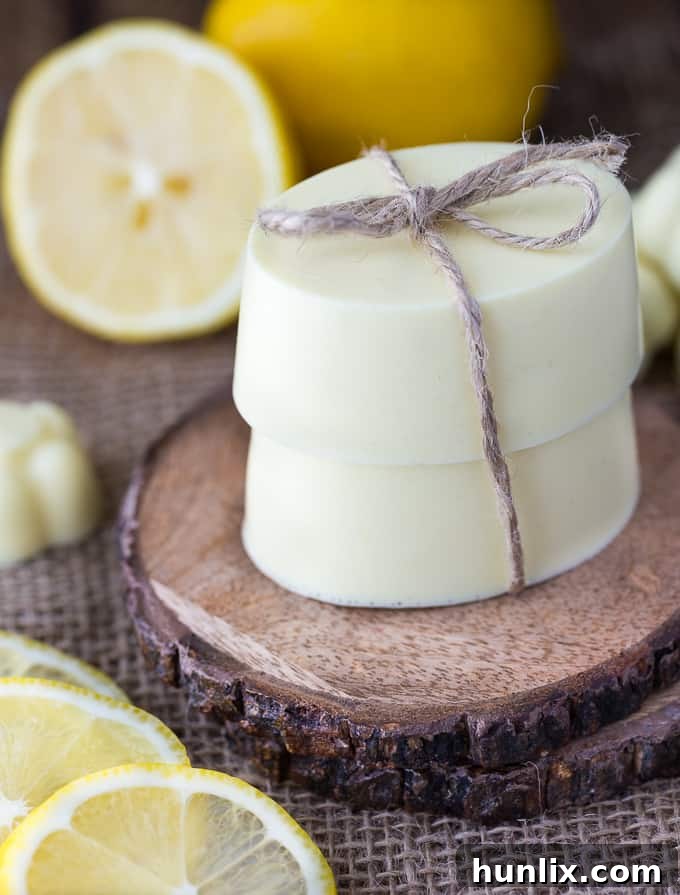
Transform your home into a fragrant oasis and unleash your inner artisan with the simple joy of creating handmade soap. This delightful Lemon Shea Butter Soap recipe is not just a craft; it’s an experience, resulting in luxurious bars that are incredibly soft on the skin and make for truly thoughtful, personalized gifts. Imagine the delight of your friends and family as they unwrap a beautifully crafted, fragrant bar of soap, knowing it was made with love. This particular recipe for Lemon Shea Butter Soap stands out as one of my absolute favorites, combining the nourishing power of shea butter with the invigorating scent of fresh lemons. I’ve already whipped up several batches, carefully wrapping each one, ready to surprise some special people. Shhh, don’t tell anyone yet!
This post contains affiliate links, meaning I may earn a small commission if you make a purchase through my links, at no extra cost to you.
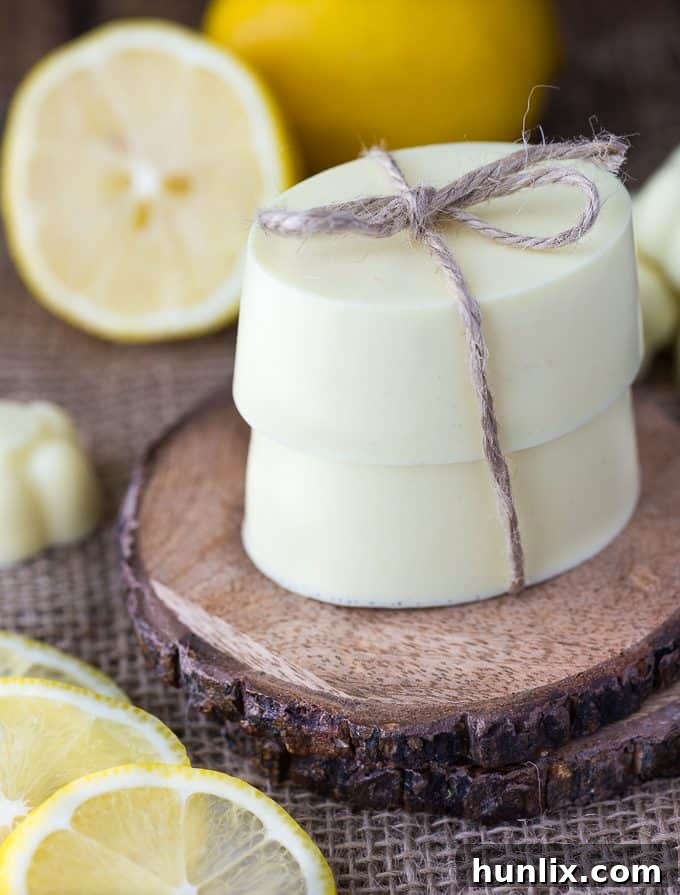
For anyone who appreciates a quick and rewarding DIY project, melt and pour soap bases are an absolute game-changer. They completely eliminate the complexities of handling lye, making soap making accessible to everyone, from beginners to seasoned crafters. This ease of use is precisely why it’s my preferred method for crafting my own soaps at home. You can conveniently find a wide selection of these high-quality soap bases at most craft stores, or with just a few clicks, you can order them directly from online retailers like Amazon, delivered right to your doorstep. The simplicity means less mess, less stress, and more time enjoying the creative process and the luxurious results.
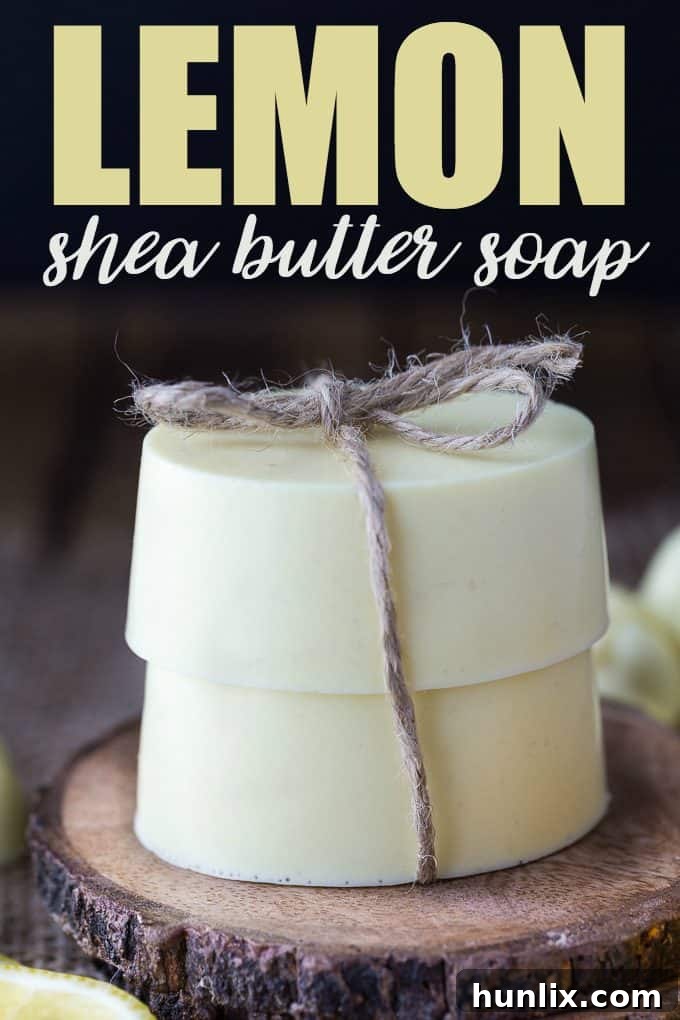
Ingredients for Lemon Shea Butter Soap
Crafting your own Lemon Shea Butter Soap requires just a few key ingredients, each chosen for its ability to deliver a moisturizing, fragrant, and visually appealing bar. The beauty of this melt and pour method lies in its simplicity, making it a perfect project for a relaxing afternoon.
- Shea butter melt & pour soap base, precisely cut into one-inch cubes for even melting. Shea butter is renowned for its deeply moisturizing properties, making this soap exceptionally nourishing for all skin types.
- Yellow soap colorant, to impart a delicate and inviting lemon hue. A little goes a long way to achieve that perfect, sunny shade.
- Lemon essential oil, the heart of this soap’s invigorating aroma. Not only does it provide a wonderfully fresh scent, but lemon essential oil also boasts natural cleansing and uplifting properties.
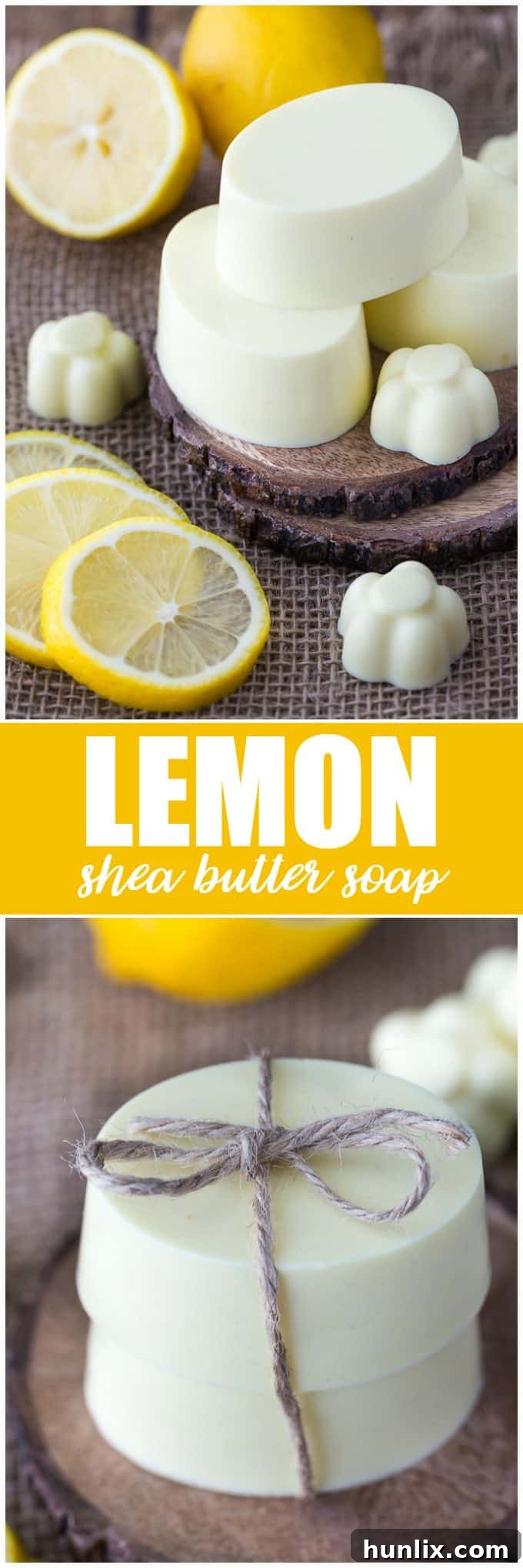
To enhance the visual appeal of these lemon-scented bars, I personally recommend using a high-quality yellow soap colorant. The one I sourced from Amazon provides a beautiful, soft, and natural-looking hue that perfectly complements the refreshing lemon scent without being overpowering. This subtle touch of color is essential for achieving that delightful homemade look. As for the captivating aroma, it all comes from the pure lemon essential oil. I am a firm believer in the power of essential oils, integrating them into many of my DIY beauty and home tutorials for their therapeutic benefits and wonderful fragrances. When choosing your essential oil, always opt for a reputable, pure brand to ensure both safety and effectiveness.
Another crucial recommendation for streamlining your soap-making process is to invest in a good quality silicone soap mold. Seriously, these molds will simplify your life immensely when it comes to demolding your handmade soaps. Forget the frustration of wrestling with cheap, rigid plastic molds that often crack or refuse to release your beautiful creations. Silicone molds are flexible, durable, and make releasing your finished soap bars an effortless task with a gentle push from the bottom. Plus, many silicone molds are incredibly versatile; they can often be used for baking delicious treats or making other crafts. Talk about multi-purpose for the win! Choosing the right equipment, especially a quality mold, makes all the difference in achieving perfect, professional-looking soap bars every time.
Do you know anyone who would love to receive a beautiful, fragrant, and moisturizing homemade soap? This Lemon Shea Butter Soap is an ideal choice for a personalized gift!
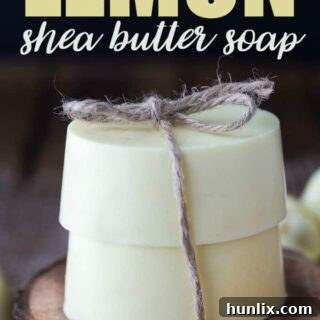
Lemon Shea Butter Soap
SAVE THIS RECIPE!
Enter your email and we’ll send this recipe to your inbox.
Ingredients
- 1 lb Shea butter melt & pour soap base cut into one-inch cubes
- 1 tsp yellow soap colorant
- 20 drops lemon essential oil
Instructions
-
Begin by carefully adding your pre-cut shea butter melt and pour soap base cubes into a microwave-safe bowl. It’s important to cut the base into smaller, uniform pieces to ensure it melts evenly and quickly, preventing hot spots and scorching. Place the bowl into the microwave and heat on high for 30 seconds. After the initial heating, remove the bowl and give the soap a good stir. Even if it doesn’t look fully melted, stirring helps distribute the heat. Continue to microwave in short 10-second intervals, stirring thoroughly after each interval. This staggered approach is key to achieving a smooth, fully melted soap base without overheating, which can degrade the soap’s quality and scent retention. Keep going until the soap base is completely liquid and free of any lumps.
-
Once your shea butter soap base is perfectly melted and clear, it’s time to add the enriching color and invigorating scent. Carefully stir in the yellow soap colorant. Start with just a few drops and add more gradually until you achieve your desired shade of lemon yellow. Remember, a lighter, more natural hue often looks more appealing for homemade soaps. Next, add the lemon essential oil. Stir gently but thoroughly, ensuring the colorant and essential oil are fully incorporated into the melted soap base. Proper mixing guarantees an even distribution of color and fragrance throughout your finished soap bars. Be mindful not to over-stir, as this can introduce air bubbles, which you want to minimize for a smooth finish.
-
With your fragrant, colored soap base ready, carefully pour the mixture into your chosen silicone molds. Pour slowly and steadily to minimize air bubbles. If you notice any small bubbles on the surface, a quick spritz of rubbing alcohol can help dissipate them. Allow the soap to sit undisturbed at room temperature for approximately 40 minutes to 1 hour, or until it has completely hardened. The hardening time may vary slightly depending on the room’s temperature and humidity. Do not rush this process by placing it in the refrigerator, as rapid cooling can sometimes lead to condensation and a dull finish. Once the soap is firm to the touch, gently remove it from the silicone mold by pressing on the bottom of each cavity and pushing the bar out. Your beautiful Lemon Shea Butter Soaps are now ready to enjoy or be lovingly wrapped as gifts!
Equipment
-
Microwave-Safe Bowl
-
Silicone Soap Mold
-
Spatula or Spoon for Stirring
Why Choose Handmade Soap?
There’s something truly special about a bar of handmade soap, especially when compared to mass-produced commercial varieties. For starters, you have complete control over the ingredients. This means no harsh chemicals, synthetic fragrances, or artificial dyes that can irritate sensitive skin. With recipes like our Lemon Shea Butter Soap, you’re choosing natural, nourishing components that genuinely benefit your skin. Shea butter, a star ingredient here, is renowned for its rich moisturizing properties, packed with vitamins A and E, which help to soothe, protect, and repair the skin, leaving it feeling incredibly soft and supple.
Beyond the skin benefits, making your own soap is an incredibly fulfilling creative outlet. It’s a chance to step away from screens and engage in a tactile, aromatic process that yields a beautiful, tangible product. It’s also a wonderfully sustainable choice, allowing you to reduce waste by avoiding plastic packaging often associated with liquid soaps or store-bought bars. Plus, as we’ve discussed, handmade soaps make for the most heartfelt gifts, showing recipients you’ve invested time and care into creating something truly unique for them.
Benefits of Shea Butter and Lemon Essential Oil
Let’s delve a little deeper into why shea butter and lemon essential oil are such a winning combination for this soap. Shea butter is extracted from the nuts of the African shea tree and has been used for centuries for its incredible healing and moisturizing properties. It’s a natural emollient, meaning it helps to lock moisture into the skin, creating a protective barrier without feeling greasy. It’s particularly beneficial for dry, cracked, or irritated skin, helping to calm inflammation and promote a healthy glow. Its mild nature makes it suitable for all skin types, including sensitive and baby skin.
Lemon essential oil, on the other hand, brings a burst of freshness and a host of therapeutic advantages. Its bright, citrusy aroma is known to be uplifting and energizing, perfect for starting your day on a positive note. Aromatherapy uses for lemon oil include reducing stress, improving mood, and boosting concentration. Topically, lemon essential oil is a natural cleanser and detoxifier. It can help to purify the skin, leaving it feeling refreshed and revitalized. It’s important to use high-quality, pure essential oils and to dilute them properly, as we do in this soap recipe. While lemon essential oil can be photosensitive, its inclusion in a wash-off product like soap in recommended amounts poses minimal risk, especially when combined with nourishing shea butter.
Customizing Your Handmade Soap
While this Lemon Shea Butter Soap recipe is fantastic as is, the world of melt and pour soap making offers endless possibilities for customization. Feel free to experiment with additional natural additives to make your soaps even more unique:
- Exfoliants: For a gentle exfoliating scrub, consider adding finely ground oatmeal, poppy seeds, or even a tiny amount of dried lemon zest (ensure it’s completely dry to prevent molding). Add these during the stirring phase with the colorant and essential oil.
- Other Essential Oils: While lemon is wonderful, you could blend it with other complementary essential oils. A touch of lavender or rosemary could add a different aromatic dimension, or spearmint for an extra refreshing kick. Always research safe usage rates for essential oils in soap.
- Dried Botanicals: For a visually appealing touch, a sprinkle of dried calendula petals or a few dried lemon slices (again, completely dry) on top of the poured soap before it sets can create a stunning effect.
- Different Molds: Experiment with various silicone mold shapes and sizes to create unique bars perfect for any occasion or recipient.
Remember that when adding any new ingredient, especially botanicals, consider how it will behave in the soap and on the skin. Always aim for natural, skin-safe additions to maintain the integrity and benefits of your handmade soap.
Tips for Storing and Gifting Your Lemon Shea Butter Soap
Proper storage is crucial for extending the life and preserving the quality of your handmade melt and pour soaps. Unlike cold process soaps that require a long cure, melt and pour soaps are ready to use once hardened. However, they can attract moisture from the air due to glycerin, a natural humectant that draws moisture to the skin. To prevent “sweating” and preserve freshness:
- Store your finished soap bars in an airtight container or individually wrap them tightly in plastic wrap (like cling film). This creates a barrier against humidity.
- Keep them in a cool, dry place away from direct sunlight and extreme temperatures.
- If gifting, wrap the soap in decorative paper, fabric, or cellophane, adding a personal label with ingredients and a “handmade by” touch.
When it comes to gifting, presentation is key. A beautifully wrapped bar of Lemon Shea Butter Soap is more than just a soap; it’s a small piece of luxury. Consider tying it with natural twine, adding a sprig of dried lavender or a small handwritten tag. These personal touches elevate your homemade gift and make it even more special for the lucky recipient.
The information shown is an estimate provided by an online nutrition calculator. It should not be considered a substitute for a professional nutritionist’s advice.
Did you make this recipe?
I’d love to see it! Make sure to share it on your favorite social platform and tag me!
Pin Recipe
Rate this Recipe
Want Even More Recipes?
Join Moms Best Recipes to find more delicious family recipes.